






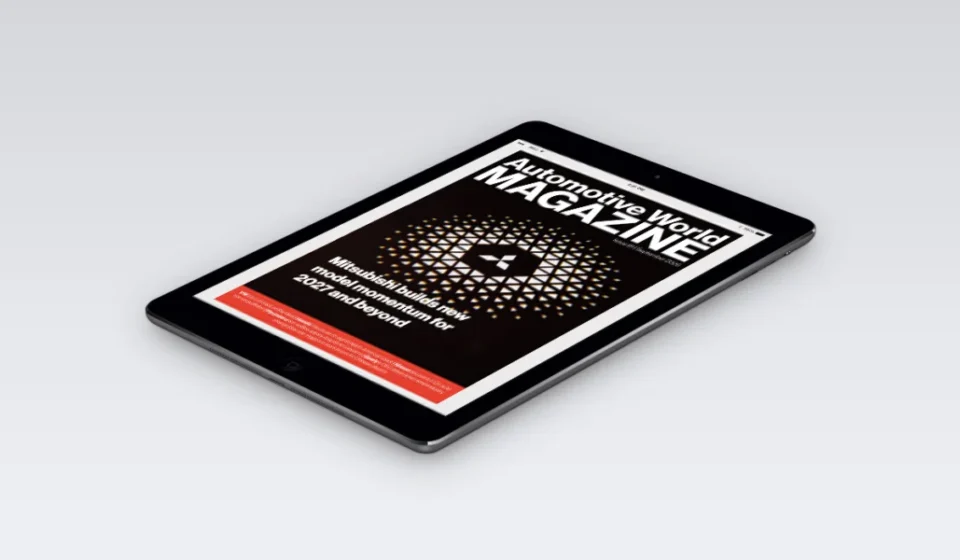
Navigating the Horizon: Inside the September 2026 Edition of Automotive World Magazine

LONDON — As the global automotive industry races toward a future defined by autonomy, electrification, and software architecture, stakeholders face a complex maze of technological, regulatory, and financial challenges. In its landmark September 2026 edition, Automotive World Magazine has released a comprehensive curation of the sharpest insights, deep-dive analyses, and forward-looking projections designed to decode the trajectory of modern mobility.
From the evolving economics of battery-electric vehicle (BEV) production to the intricate software supply chains governing software-defined vehicles (SDVs), this month’s publication serves as a vital compass for industry leaders. This report explores the core themes, chronological milestones, underlying data trends, official perspectives, and broader market implications highlighted in the September 2026 release.
Main Facts
The September 2026 issue of Automotive World Magazine aggregates critical developments across eight core pillars of the contemporary automotive landscape: Data, Financials, Strategy, Markets, E-Mobility, Autonomous Mobility, Software-Defined Vehicles (SDVs), and Manufacturing.
Key takeaways from this month’s curation include:
- The Software Shift: Automakers are increasingly pivoting from hardware-centric business models to continuous-revenue software ecosystems, forcing traditional Tier-1 suppliers to restructure or risk obsolescence.
- Capital Realignment: Financial markets are rewarding companies demonstrating disciplined capital allocation in electrification, steering away from speculative EV startups toward legacy manufacturers with robust scaling capabilities.
- Autonomous Realities: Level 3 and tentative Level 4 commercial deployments are expanding geographically, though regulatory harmonization across borders remains a formidable barrier.
- Manufacturing Resilience: Smart factory investments are shifting from experimental pilot plants to full-scale enterprise integrations, leveraging artificial intelligence (AI) and digital twins to combat supply chain volatility.
Chronology: The Road to September 2026
To understand how the automotive sector arrived at the juncture detailed in the September 2026 issue, it is essential to trace the pivotal milestones that have shaped the industry over the past 24 months:
- Late 2024: Global EV adoption rates experienced a temporary cooling period, forcing manufacturers to re-evaluate aggressive all-electric timelines and pivot toward flexible architectures supporting hybrid and plug-in hybrid (PHEV) powertrains.
- Mid-2025: Major software conglomerates and legacy OEMs formalized critical partnerships, establishing open-source vehicle operating system standards to combat proprietary fragmentation.
- Early 2026: Regulatory bodies in the European Union and North America finalized stringent cyber-security and over-the-air (OTA) update compliance frameworks, thrusting SDV architecture into the legal spotlight.
- Summer 2026: Supply chain stabilization efforts bore fruit as critical mineral sourcing diversified away from single-nation monopolies, easing production pressures for battery cell manufacturers.
- September 2026: Automotive World Magazine releases its definitive issue, synthesizing these compounding shifts into a cohesive roadmap for the remainder of the decade and beyond.
Supporting Data and Market Trends
The September 2026 issue highlights a wealth of quantitative shifts reshaping the global marketplace. While raw vehicle sales volume remains a primary metric, the underlying composition of revenue streams is undergoing a radical structural evolution.
1. Financial and Market Valuations
Public markets are placing a premium on operational efficiency. Legacy OEMs that successfully spun off their EV and software divisions are seeing higher price-to-earnings ratios compared to pure-play startups grappling with cash-burn rates. Capital expenditure (CapEx) targeting traditional internal combustion engine (ICE) development has dropped by an estimated 42% globally since 2024, redirected almost entirely toward electrification and cloud-connected vehicle platforms.
2. E-Mobility Metrics
Battery chemistry diversification is paying dividends. The average cost per kilowatt-hour (kWh) for battery packs has continued its downward trajectory, hovering near parity thresholds that make mass-market EVs economically viable without heavy government subsidies. Solid-state battery development has transitioned from laboratory milestones to pre-production validation lines, though mass commercial availability is now projected for the late 2020s.
3. Software and Autonomous Penetration
Subscription-based features—ranging from advanced driver-assistance systems (ADAS) to performance boosts—now account for a growing percentage of post-purchase automotive revenue. Market data indicates that over 65% of new vehicles sold in mature markets feature full OTA update capabilities, a dramatic leap from less than 30% at the start of the decade.
Official Responses and Industry Perspectives
Industry leaders, policymakers, and analysts featured in the September 2026 edition have offered candid assessments of the challenges and opportunities ahead.
"The automotive industry is no longer simply about bending metal and harnessing internal combustion. We are managing multi-layered tech stacks on wheels. The winners of this decade will not be those who build the fastest car, but those who build the most adaptable, secure, and updateable digital ecosystem."
— Lead Mobility Analyst, European Automotive Research Group
Speaking on the manufacturing challenges outlined in the magazine, a senior operations executive from a major global automaker emphasized the importance of flexibility:
"Rigid assembly lines are a relic of the past. Our investments in digital twins and AI-driven robotics allow us to pivot between EV platforms and hybrid architectures within hours rather than weeks. Agility is our primary defense against market unpredictability."
Meanwhile, regulatory affairs representatives have underscored the urgent need for international standards regarding autonomous vehicle operations. Without cross-border data-sharing agreements and unified safety validation protocols, the global scale of autonomous mobility risks fracturing into isolated regional silos.
Implications for the Future of Mobility
The insights compiled in Automotive World Magazine‘s September 2026 issue paint a clear picture of an industry undergoing profound metamorphosis. The implications of these trends extend far beyond factory floors and showroom sales:
For Traditional Manufacturers and Suppliers
The traditional Tier-1 supplier model is facing an existential reckoning. Suppliers that fail to master software integration, embedded systems security, and lightweight component manufacturing risk being commoditized. Conversely, agile suppliers offering modular, plug-and-play technological solutions are securing long-term contracts with major global brands.
For Consumers and Fleet Operators
End-users are poised to experience a fundamentally altered relationship with their vehicles. Mobility-as-a-Service (MaaS) and commercial fleet management are becoming increasingly automated, optimizing logistical efficiency while reducing urban congestion. For private vehicle owners, the shift toward software-defined ecosystems means cars will no longer depreciate uniformly; instead, they will gain functional value over time through remote software updates and feature upgrades.
For Global Infrastructure and Energy Grids
The rapid scaling of e-mobility highlighted in the magazine necessitates massive parallel investments in charging infrastructure and grid modernization. Bidirectional charging (Vehicle-to-Grid or V2G) is transitioning from a conceptual novelty to a critical stabilizing component for municipal energy grids, transforming parked EVs into distributed energy storage assets.
Conclusion
Automotive World Magazine‘s September 2026 edition captures an industry at the zenith of its transformation. By meticulously breaking down data trends, financial realities, strategic pivots, and technological breakthroughs across e-mobility, autonomy, and software development, the publication provides an indispensable resource for navigating the road ahead. As the mobility sector charges into the second half of the decade, the insights curated this month will undoubtedly serve as a foundational blueprint for engineers, executives, and policymakers alike.


