





Retail Supply Chains Go Green: Burlington, Walmart, and Gap Lead the Charge with Major Onsite Solar Investments

By Supply Chain Insights Desk
Published: September 15, 2026
Main Facts
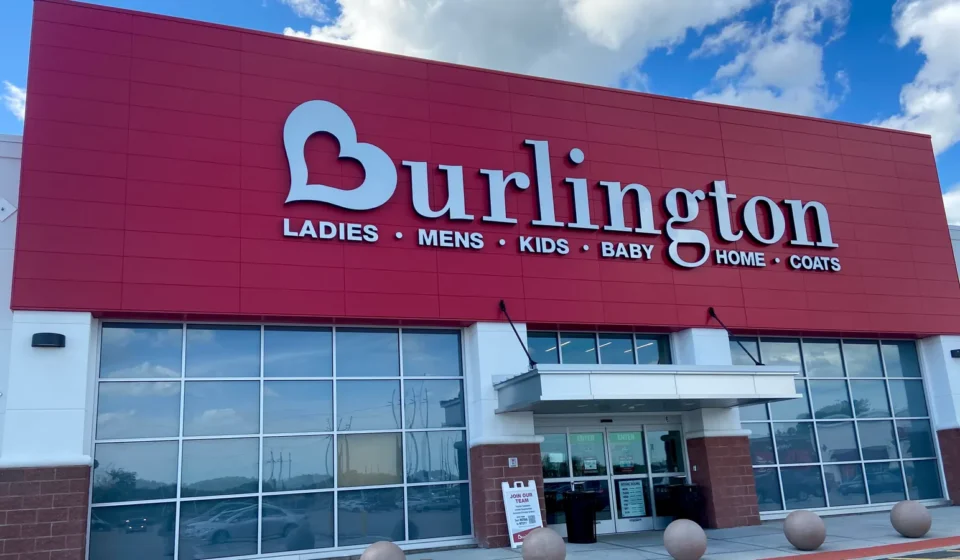
Major off-price and big-box retailers are aggressively accelerating their transitions toward renewable energy, centering their strategies on massive onsite and offsite solar power deployments at warehouses, fulfillment hubs, and distribution centers. Leading this charge is Burlington, which has announced upcoming solar installations at new facilities in Arizona and California, alongside a major upgrade to an existing warehouse in Georgia.
These strategic capital investments are part of a broader, industry-wide push to systematically slash supply chain emissions and lower operational overhead. Burlington has already dramatically outperformed its initial long-term sustainability metrics, reporting that 25% of its total electricity consumption came from renewable resources by the close of fiscal year 2025. This achievement far surpasses its original corporate goal of achieving 20% renewable energy reliance by 2030—a milestone that has encouraged executive leadership to raise the bar for subsequent years.
Burlington is not operating in a vacuum. A growing cohort of major retail giants—including Gap Inc., Walmart, TJX Companies, and Best Buy—are aggressively overhauling their supply chain infrastructure. By deploying rooftop solar arrays, ground-mounted solar fields, and regional wind and solar procurement agreements, these companies are fundamentally reshaping the carbon footprint of modern retail logistics.
Chronology of the Retail Solar Push
The timeline of corporate renewable integration in retail logistics highlights a rapid acceleration of green initiatives over the past several fiscal cycles:
- Pre-2024 (The Foundation Phase): Retailers primarily focused on energy-efficient lighting upgrades, HVAC modernizations, and basic recycling programs within distribution networks. Renewable energy was largely limited to localized pilot programs or minor offsite power purchase agreements (PPAs).
- Fiscal Year 2025 (The Acceleration Phase): Burlington officially hits and surpasses its 2030 sustainability targets five years early, registering 25% renewable electricity reliance. Burlington executes major onsite solar agreements across key operational hubs in New Jersey, California, and Massachusetts, while expanding clean energy supply contracts across the Midwest, Mid-Atlantic, and West Coast.
- Early 2026 (Strategic Expansion): Best Buy inaugurates its first dedicated solar field at a major distribution center in California, engineered to generate nearly 6 million kilowatt-hours of annual electricity. Simultaneously, Gap Inc. publishes its mid-year impact data, confirming that 46% of its company-operated facilities are powered by renewables.
- Mid-2026 (Current Developments): Burlington formally announces plans for new solar installations at upcoming warehouse and distribution facilities in Arizona and California, while retrofitting an established warehouse in Georgia. Concurrently, Walmart reports that its U.S. network alone has scaled onsite solar capacity to 125 megawatts spread across 303 individual operational facilities.
Supporting Data and Industry Metrics
To understand the sheer scale of the retail renewable energy transition, one must examine the comprehensive metrics released by key industry players in their recent environmental, social, and governance (ESG) disclosures:
Burlington
- Renewable Share (FY 2025): 25% of total electricity consumption.
- Original Target: 20% by 2030 (achieved and surpassed early).
- New Infrastructure Projects: Upcoming installations in Arizona and California facilities; retrofits at an existing Georgia warehouse; previous agreements finalized in New Jersey and Massachusetts.
Gap Inc.
- Renewable Share (FY 2025 / Ended Jan. 31, 2026): 46% across all company-operated facilities.
- Long-Term Goal: 100% renewable electricity by 2030.
- Key Asset: A major dedicated solar installation powering the company’s massive distribution center in Fresno, California.
Walmart
- Global Renewable Share (FY 2026): Over 53% of total global electricity consumption.
- Long-Term Goal: 100% renewable energy by 2035.
- U.S. Onsite Metrics: Generated 125 megawatts of total onsite solar capacity distributed across 303 retail and supply chain facilities.
TJX Companies & Best Buy
- TJX: Deployed robust onsite solar capabilities across key U.S. distribution and logistics centers in Arizona, Connecticut, Massachusetts, Nevada, and Texas.
- Best Buy: Successfully brought online its inaugural distribution center solar field in California, producing nearly 6 million kilowatt-hours annually.
Official Responses and Corporate Strategy
Corporate sustainability officers and supply chain executives emphasize that the shift toward solar power is no longer merely a public relations exercise—it is a core business strategy designed to hedge against volatile utility costs and future-proof supply chain operations.
"Integrating renewable energy directly into our distribution footprint allows us to decouple our operational expenses from traditional fossil-fuel market fluctuations," noted a corporate sustainability strategist tracking the off-price retail sector. "When you operate massive facilities that run around the clock to sort, pack, and ship millions of units of inventory, power consumption is one of our most significant overhead variables."
Retailers are utilizing a two-pronged strategy:
- Onsite Generation: Rooftop solar panels and ground-mount arrays installed directly on distribution centers and warehouses to supply immediate, localized power.
- Offsite Procurement: Large-scale Power Purchase Agreements (PPAs) that feed clean energy into regional power grids, offsetting the Scope 2 emissions generated by stores and corporate offices that cannot easily host solar infrastructure.
Gap Inc.’s executive team highlighted in their recent Impact Report that upgrading logistics hubs is critical because fulfillment centers are energy-dense environments requiring continuous operation of automated sorting systems, conveyors, and advanced warehouse management technologies. By targeting these specific nodes, retailers achieve massive reductions in greenhouse gas emissions per square foot.

Similarly, Walmart’s ESG disclosures stress that integrating clean energy into new facility construction, system remodels, and legacy distribution centers is essential for meeting their 2035 climate milestones. By embedding sustainability standards directly into the blueprint of new warehouses, companies eliminate the costly friction of retrofitting later.
Broader Implications for the Supply Chain Sector
The aggressive pivot toward onsite solar energy by Burlington, Walmart, Gap, and others carries profound implications for the broader logistics and retail industries:
1. Hedging Against Energy Price Volatility
Traditional commercial electricity rates are subject to regional grid congestion, fossil fuel price spikes, and regulatory shifts. By generating a significant percentage of their own power via onsite solar arrays, retailers establish a predictable, fixed-cost energy baseline for their most energy-intensive nodes: the distribution center.
2. Supply Chain Decarbonization and Scope 2 Reductions
Scope 2 emissions—those associated with the generation of purchased electricity consumed by a company—represent a massive chunk of a retailer’s corporate carbon footprint. Because supply chain logistics generate outsized emissions through warehousing and regional transportation, greening the warehouse network is the most direct way for executive teams to meet strict ESG mandates and satisfy investor scrutiny.
3. Resilience and Grid Independence
Onsite solar installations, particularly when paired with commercial battery energy storage systems (BESS), offer a degree of resilience against local power outages, rolling blackouts, and grid failures. For a modern retail supply chain where an hour of downtime can delay thousands of store deliveries, energy reliability is synonymous with supply chain continuity.

4. A New Standard for Facility Development
As Burlington expands its solar footprint into fast-growing logistics markets like Arizona, California, and Georgia, it sets a competitive precedent. Real estate developers building speculative warehouses are increasingly finding that tenants demand roof structures capable of supporting heavy solar arrays. Industrial real estate that lacks renewable readiness risks becoming obsolete as green lease requirements become standard across the retail sector.
As the industry pushes deeper into the latter half of the decade, the race to 100% renewable energy is transforming distribution centers from passive storage boxes into active, clean-energy microgrids. For Burlington and its peers, the sun is rapidly becoming one of the most reliable partners in modern supply chain management.