



The Age of Autonomy: Global Industrial Robot Stock Hits Record 5 Million Units

The global manufacturing landscape has reached a historic inflection point. According to the latest World Robotics report from the International Federation of Robotics (IFR), the total number of industrial robots operating in factories worldwide has surged to a record-breaking 5 million units as of 2025. This 9% year-over-year increase underscores a fundamental shift in how goods are produced, as businesses across the globe scramble to offset labor shortages, enhance supply chain resilience, and embrace the transformative power of artificial intelligence.
Main Facts: The Acceleration of Automation
The data released by the IFR paints a picture of an industry moving at unprecedented velocity. The 5 million-unit milestone is not merely a statistical achievement; it represents a doubling of the global operational stock in just seven years. This rapid expansion was fueled by a robust 11% jump in annual installations, with more than 600,000 new units deployed across factory floors in 2025 alone.
"Industrial automation is progressing at high speed," stated Jane Heffner, President of the IFR. "The new mark of 5 million robots operational in factories worldwide is more than double the number seven years ago. We are seeing a distinct regional hierarchy: the strongest growth is currently concentrated in Asia, followed by the Americas, while Europe’s adoption rate continues to move forward at a more tempered pace."
Chronology and Market Evolution
To understand the current state of robotics, one must look at the arc of the last five years. Since 2020, the industry has transitioned from a steady, incremental growth model to one defined by aggressive, necessity-driven adoption.
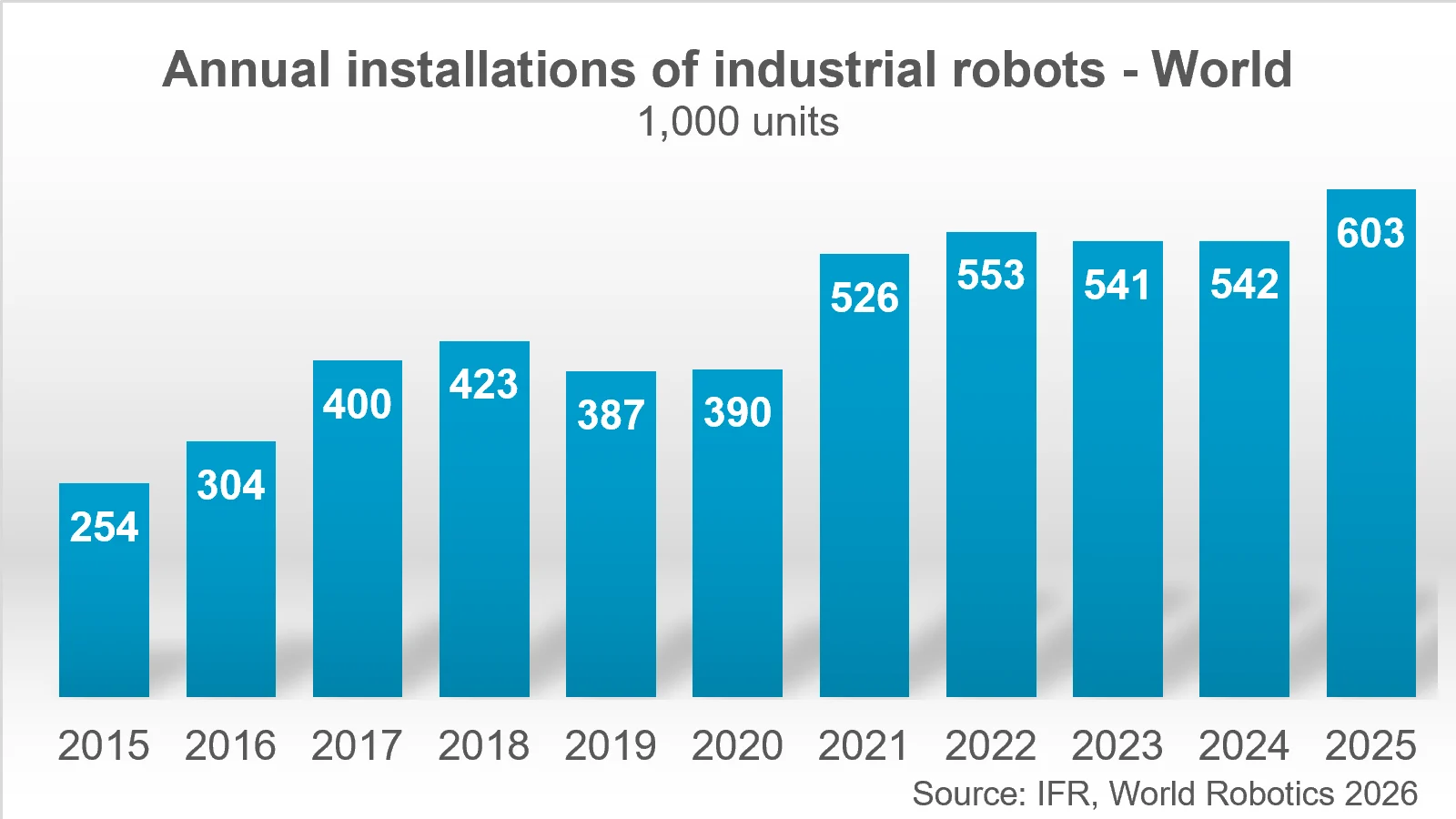
- 2020-2022: The immediate post-pandemic era saw a "pivot to resilience." Manufacturers, stung by global supply chain fractures, began prioritizing regionalization.
- 2023-2024: A period of technological integration where artificial intelligence and machine learning began to move from R&D labs to the factory floor, making robots easier to program and more adaptable.
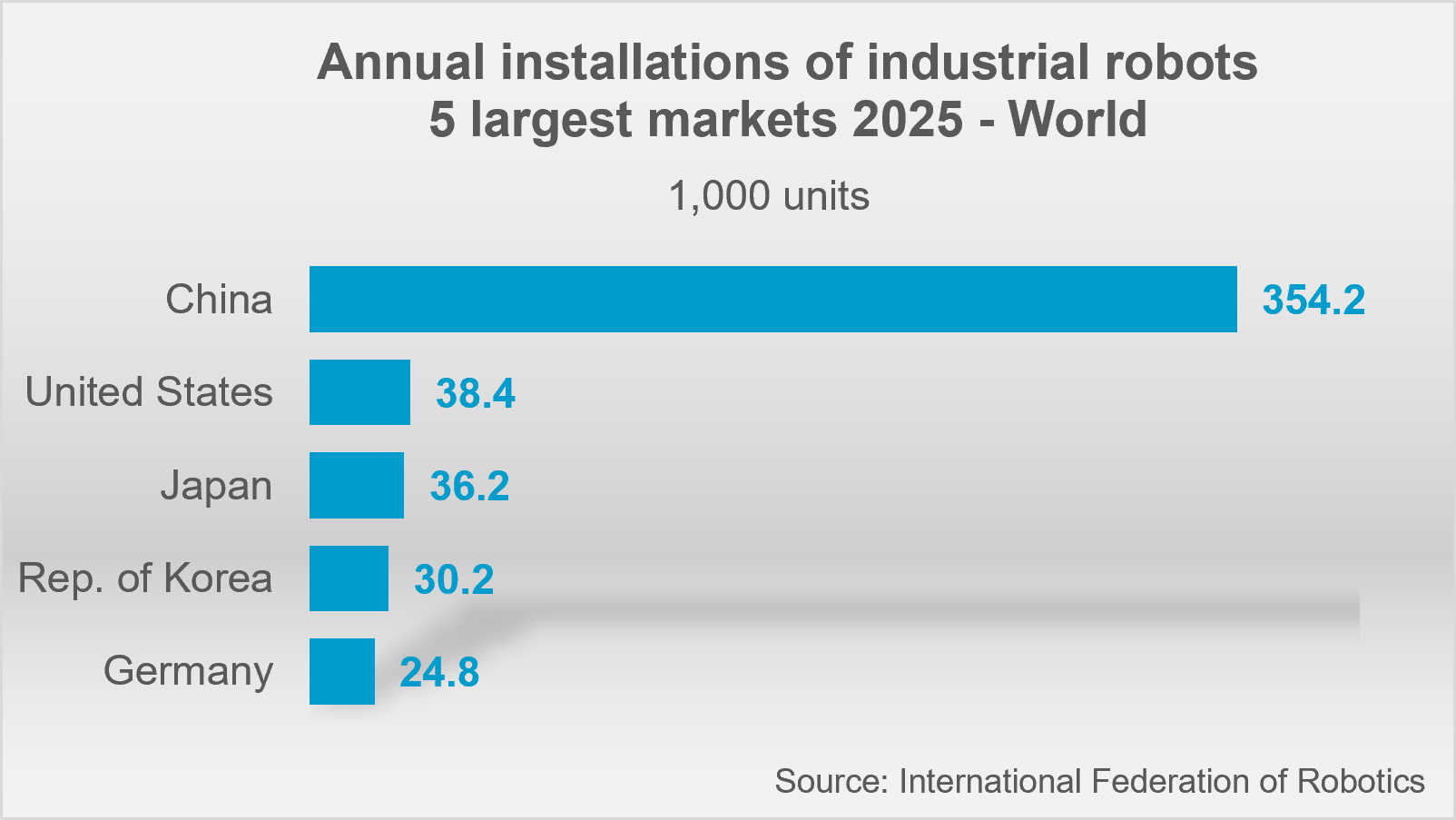
- 2025: The current year, characterized by record-breaking installation numbers and a significant shift in market leadership, with the United States overtaking Japan as the world’s second-largest market for industrial robotics.
Supporting Data: Regional Performance Deep Dive
Asia: The Unrivaled Titan
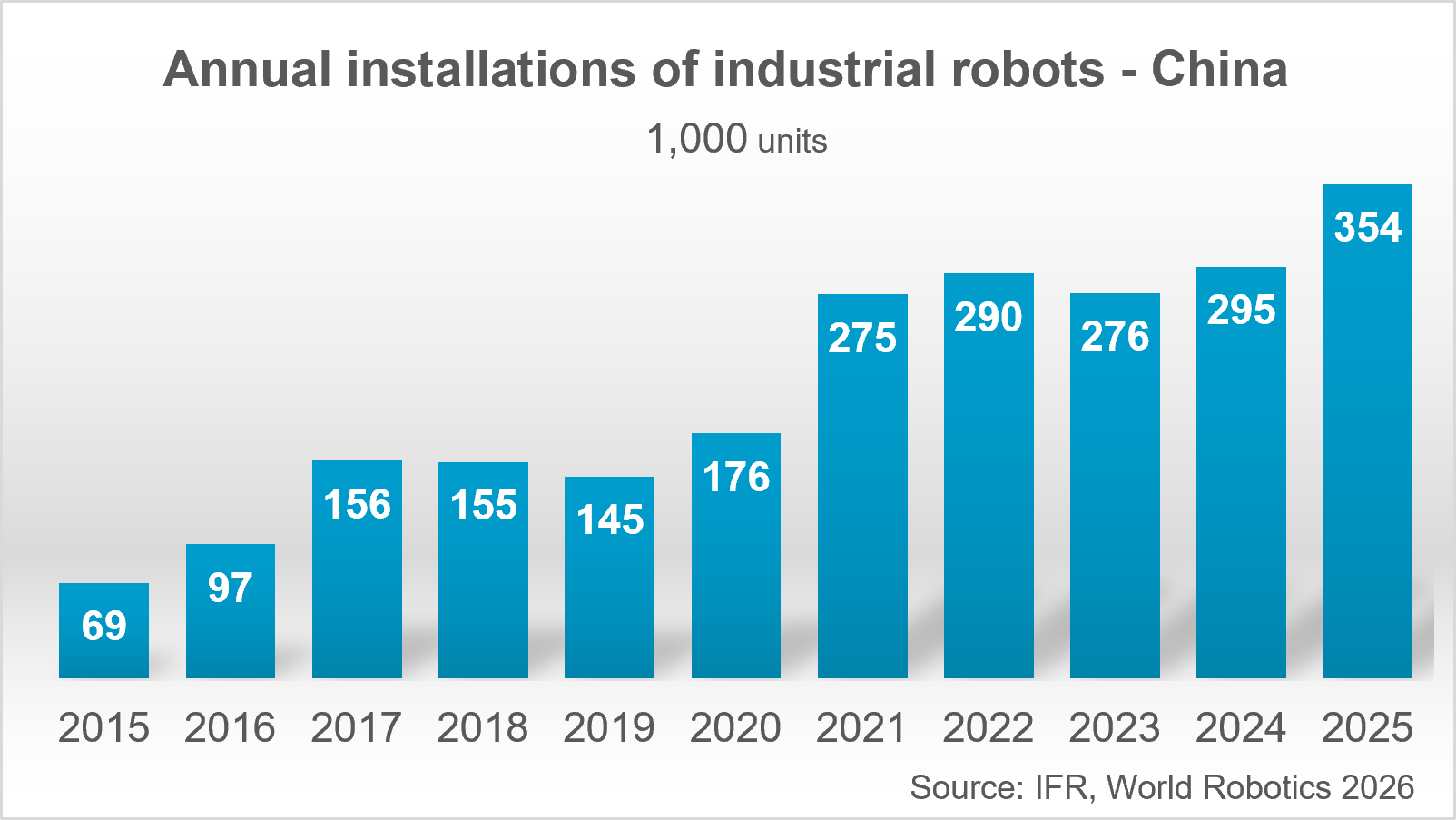
Asia remains the engine room of the global robotics market. China, in particular, has solidified its position as the world leader, with annual installations growing by a staggering 20% year-over-year. China now accounts for 59% of all global deployments. In 2025, Chinese manufacturers installed 354,000 industrial robots, nearly 60,000 more than the previous year. Notably, domestic Chinese manufacturers are gaining ground, capturing a 55% share of their home market.
Conversely, Japan, once the undisputed pioneer of industrial automation, has faced a cooling period. With 36,219 units installed in 2025—a 19% decrease—the country has slid to the third position globally. The IFR anticipates that while demand will grow slightly, a major market rebound in Japan is unlikely in the immediate future. Similarly, the Republic of Korea saw a 1% decline, though analysts remain optimistic that upcoming automotive sector investments will spark a resurgence by 2027.
The Americas: A New Competitive Landscape
The most significant shift in the 2025 report is the ascension of the United States. With installations growing 12% to nearly 38,500 units, the U.S. has claimed the second-largest market spot globally.
Brazil has emerged as an unexpected growth story, recording a 38% increase in installations. This surge is largely attributed to aggressive investment from Chinese automotive manufacturers setting up production facilities within the country, demonstrating how geopolitical trade strategies are directly influencing local automation trends. Canada continues its steady climb with a 5% increase, while Mexico has struggled, experiencing its third consecutive year of decline.
Europe: Navigating Stagnation
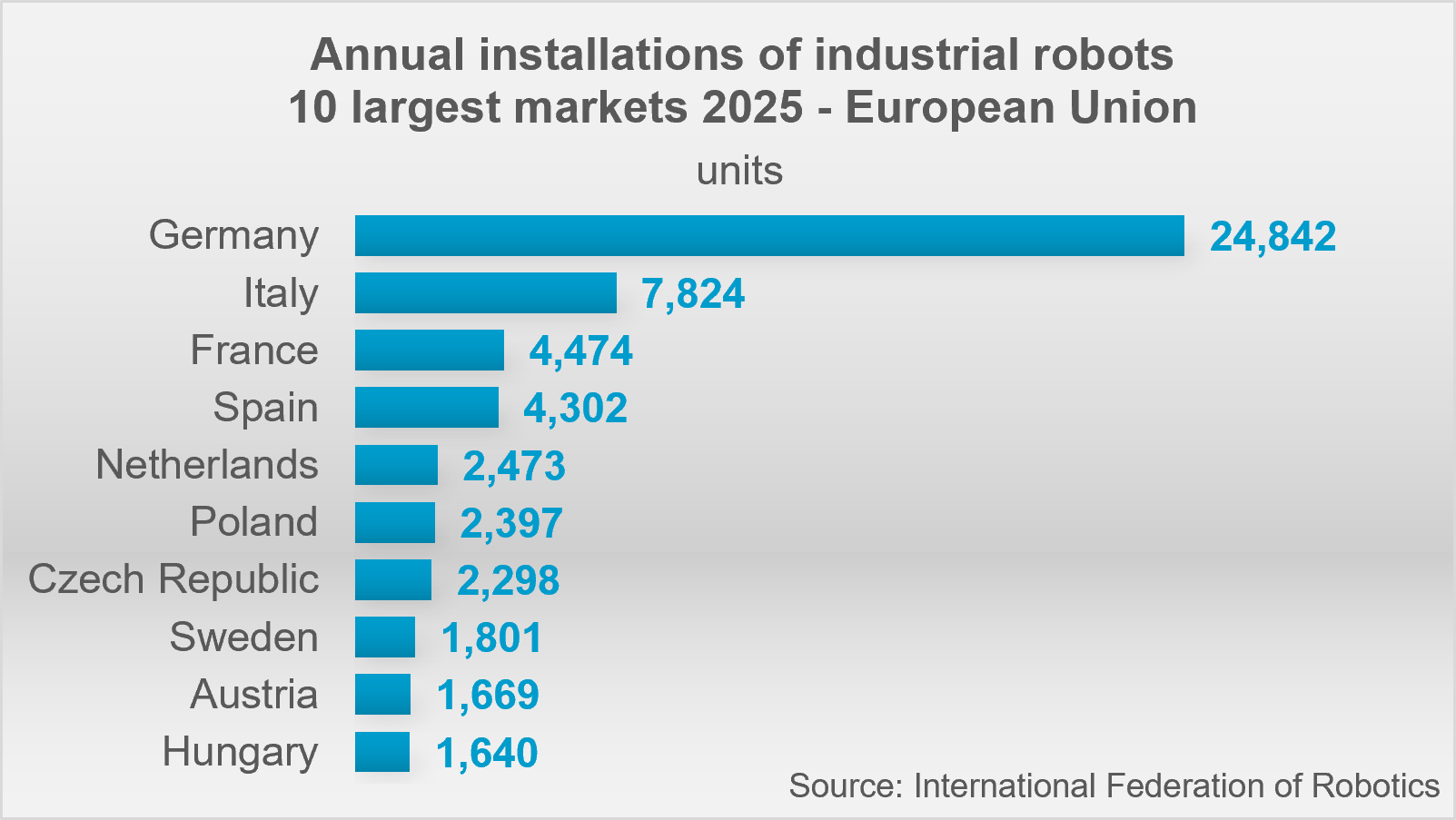
Europe’s performance in 2025 reflects a more cautious economic environment. Germany remains the regional leader, holding 41% of the European Union’s total installations. However, even Germany saw an 8% drop in sales, falling to fewer than 25,000 units. The decline was mirrored across the continent, with Italy (down 11%), France (down 8%), and Spain (down 15%) all facing headwinds. The IFR attributes this to a softening in the traditional automotive sector, which has long been the primary driver of robot demand in the region.
Official Responses and Expert Insights
Industry leaders view this trend as a response to an unavoidable economic reality. Jon Quick, CEO of Launchpad Build AI, argues that the current environment is the most fertile ground for robotics development in history.
"It’s a good time to be building robots," Quick noted. "Capabilities are increasing exponentially, while costs are coming down. Everyone is awake and attuned to the possibilities. China’s dominance is impressive, but it won’t be enough to solve its long-term export or consumption challenges. For manufacturers in other parts of the world, this is a wake-up call to innovate."
Regarding the labor crisis, Quick was blunt: "We have a massive problem. There are hundreds of thousands of open manufacturing and assembly jobs today, and projections suggest that number could reach 2 million by 2030. We simply do not have enough people willing to do these jobs. Robots are not here to replace humans; they are here to handle the dangerous, repetitive tasks that no one wants to do."
Implications: The Road to 2029
The IFR’s long-term forecast suggests that the era of the industrial robot is far from its peak. Projections estimate that installations will rise to 655,000 units in 2026 and continue upward to 806,000 units by 2029. Several key drivers will dictate this growth:
1. Reshoring and Nearshoring
As trade policies shift and geopolitical tensions rise, companies are increasingly moving production closer to home. This "nearshoring" necessitates high levels of automation to remain cost-competitive with overseas labor markets.
2. The AI Integration Revolution
The next generation of robots will be defined by "intelligence." Advancements in machine vision, predictive maintenance, and natural language programming (allowing workers to "talk" to robots rather than code them) will lower the barrier to entry for small- and medium-sized enterprises (SMEs).
3. Sustainability and Safety
Beyond economic efficiency, automation is being driven by the need for safer workplaces. By offloading hazardous, high-strain tasks to robots, companies are seeing a reduction in workplace injuries and the associated long-term economic drain.
4. A New Economic Philosophy
The widespread adoption of robots is forcing a re-evaluation of the manufacturing workforce. The goal is no longer to eliminate human labor but to augment it. In this new ecosystem, human workers are increasingly moving into supervisory, analytical, and creative roles, managing fleets of autonomous systems rather than performing manual labor.
Conclusion
The 5 million-unit milestone is a testament to the fact that industrial robotics has transitioned from a high-cost luxury for elite manufacturers to a fundamental pillar of global economic stability. While regional disparities exist—with Asia leading, the U.S. gaining ground, and Europe seeking to stabilize—the trajectory is unified.
As we look toward 2026 and beyond, the narrative of industrial robotics will continue to evolve from mere mechanical efficiency to cognitive, adaptive performance. For those at the forefront of this shift, such as attendees of the upcoming RoboBusiness 2026 in Santa Clara, the focus will be on how to harness these tools to build a more resilient, efficient, and safer global manufacturing future. The robots are already on the floor; the next challenge is ensuring that our strategies for utilizing them keep pace with their capabilities.