






The Atomic Secret of Gold: How Tulane Researchers Cracked the Code of Eternal Luster

For millennia, gold has occupied a singular position in human civilization. From the funerary masks of Egyptian pharaohs to the delicate filigree of Renaissance jewelry and the high-performance connectors inside modern smartphones, gold’s defining characteristic has been its unyielding resistance to the ravages of time. Unlike iron, which rusts, or silver, which dulls under a coat of dark oxidation, gold retains its brilliant, reflective luster indefinitely.
For years, the scientific community operated under a widely accepted, albeit incomplete, assumption: gold does not tarnish simply because it is chemically "lazy"—it does not interact strongly with oxygen. However, new research from Tulane University has fundamentally rewritten our understanding of this noble metal. By peeling back the layers of atomic-scale behavior, researchers have discovered that gold’s durability is not merely a byproduct of its chemical identity, but the result of a sophisticated, self-assembling structural defense mechanism.
The Main Facts: A Structural Defense Mechanism
A study recently published in the prestigious journal Physical Review Letters provides the first definitive explanation for gold’s legendary resistance to tarnishing. Led by Matthew Montemore, an associate professor of chemical engineering at Tulane University’s School of Science and Engineering, the team discovered that the atoms on the surface of gold do not remain static. Instead, they naturally shift into specific, protective geometric patterns.
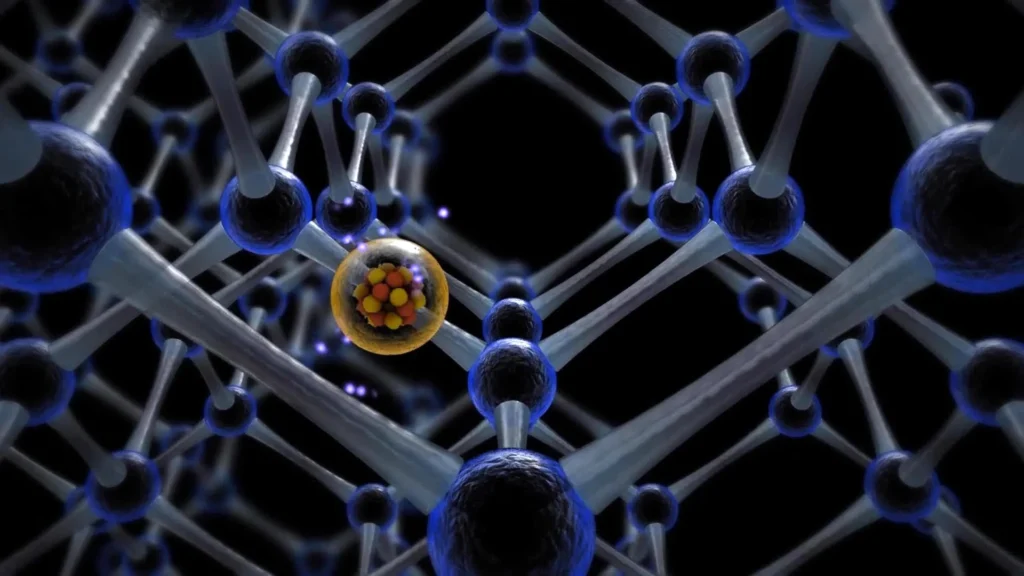
These configurations create an atomic-scale shield that makes it exceptionally difficult for oxygen molecules to bind with or react with the metal. This finding moves the conversation beyond basic chemistry and into the realm of surface physics, revealing that gold’s "noble" status is as much about the physical arrangement of its atoms as it is about its electron configuration.
Chronology of the Discovery: From Simulation to Revelation
The journey to this discovery began not in a traditional wet-lab, but within the complex architecture of computer simulations. Montemore and co-author Santu Biswas, a postdoctoral fellow in Tulane’s Department of Chemical & Biomolecular Engineering, sought to model the microscopic dance of atoms and electrons on two of the most common gold surface types.
The Simulation Phase
The researchers utilized high-powered computational models to observe how oxygen molecules approach and interact with gold surfaces. Historically, scientists hypothesized that oxygen simply bounced off gold due to low affinity. However, the simulation data told a different story. The models revealed that if the surface atoms of gold remained in a rigid, predicted lattice, oxygen molecules would actually have the potential to split apart and react with the gold.
The Realization
The breakthrough occurred when the team observed the surface atoms actively "rearranging" themselves. Rather than holding a static position, the gold atoms shifted into a lower-energy configuration the moment they were exposed to potential oxidative stress. This dynamic restructuring acts as a gatekeeper, blocking the oxygen molecules from finding the "handholds" they need to initiate a chemical reaction.
The Quantitative Impact
By comparing the "rearranged" surfaces to hypothetical static surfaces, the researchers calculated a staggering difference in reactivity. The study found that these reorganized surfaces reduce oxygen reactions by a factor of a billion to a trillion. This effectively creates a near-impenetrable barrier, explaining why a gold coin buried for centuries can be unearthed with its original, brilliant shine intact.
Supporting Data: Understanding the Atomic Geometry
The research highlights a fundamental principle of materials science: structure dictates function. In the world of gold, the geometry of the surface is the primary deterrent against corrosion.
To understand the scale of this defense, one must look at how molecules break down. For oxidation to occur, an oxygen molecule must dissociate—or break its double bond—to bond with the gold surface. The Tulane study demonstrates that the natural rearrangement of gold atoms increases the energy required for this dissociation to an insurmountable level.
The researchers examined two primary surface orientations. In both instances, the atomic "shield" formed spontaneously. This suggests that the resistance to tarnishing is an intrinsic property of the metal’s crystal structure. When oxygen approaches, the gold atoms do not just sit there; they "reconfigure" their surface topology to deny the oxygen a reactive site. This observation provides the empirical evidence needed to move beyond the "gold is just inert" narrative, replacing it with a more nuanced view of gold as an active, self-protecting material.
Official Responses: The Scientific Perspective
"People have generally thought gold doesn’t tarnish simply because it doesn’t interact strongly with oxygen," said Matthew Montemore, reflecting on the paradigm shift the study represents. "What we show is that for two of the most common gold surface types, the surface atoms actually rearrange themselves in a way that makes the gold much more resistant to oxidation."
Montemore emphasizes that this is not a random occurrence but a systemic, predictable behavior of the metal. For the scientific community, this provides a new lens through which to view noble metals. By identifying this "hidden atomic defense," the researchers have provided a framework that can be applied to other materials, potentially leading to the design of new alloys that possess similar self-healing or self-protecting properties.
Santu Biswas, co-author of the study, notes that the implications for computational chemistry are equally significant. "Using these simulations allowed us to see into the ‘hidden’ life of an atom," Biswas noted. "We weren’t just watching chemistry; we were watching physics in action—atoms moving to optimize their environment against external threats."
Implications: The Future of Catalysis
While the discovery solves a historical mystery, its most profound impact may lie in the future of industrial manufacturing. Gold is a prized material for catalysis—the process of speeding up chemical reactions—yet its extreme stability has historically been a double-edged sword.
The Gold-Catalyst Paradox
In industrial settings, gold is often used in the production of vinyl acetate, a key component in plastics, adhesives, and paints. It is also being investigated for the removal of toxic carbon monoxide from vehicle exhaust and in the production of propylene oxide. The paradox is that the very property that makes gold perfect for a wedding ring—its refusal to react—makes it difficult to "activate" when it is needed to drive a chemical reaction.
A New Engineering Strategy
The findings from Tulane offer a potential roadmap for "tricking" gold. If scientists can understand the specific conditions that trigger the protective surface rearrangement, they may be able to manipulate those conditions to reverse or prevent the effect.
"If you can trick gold into dissociating oxygen, it can actually become a very effective catalyst for certain reactions," Montemore explained. "Our work suggests a new strategy for potentially doing that by preventing or reversing these surface rearrangements."
By controlling the geometry of the gold surface—perhaps through the introduction of specific additives or by engineering the substrate on which the gold is placed—researchers could "lock" the gold atoms in a state that is more reactive. This would allow engineers to design catalysts that are as efficient as they are durable.
Beyond Jewelry and Electronics
The potential applications are wide-reaching:
- Clean Energy: More efficient gold-based catalysts could lower the energy requirements for hydrogen fuel cell production.
- Environmental Remediation: Enhanced gold catalysts could lead to more effective filters for scrubbing pollutants from industrial smokestacks and vehicle exhaust.
- Green Chemistry: By making reactions more efficient, gold catalysts could reduce waste and the use of toxic solvents in chemical manufacturing.
Conclusion: A Legacy of Brilliance
The research conducted at Tulane University marks a significant milestone in our relationship with one of the earth’s oldest known elements. By uncovering the atomic "dance" that keeps gold pristine, Montemore and Biswas have bridged the gap between ancient wonder and modern engineering.
For the general public, the study confirms what we have observed for millennia: gold is special. But for the scientific community, it serves as a powerful reminder that there is always more to discover beneath the surface. As we move toward a future defined by sustainable technology and advanced manufacturing, the secret of gold’s durability may well become the blueprint for the next generation of industrial innovation. Gold, it turns out, was not just sitting there quietly for all these years—it was actively guarding its brilliance, waiting for us to understand how it does it.