

Toyota’s Quiet Robotics Revolution: Inside the Automaker’s Multi-Billion-Dollar Push to Teach Machines by Watching Human Masters

By Stewart Burnett
The future of automotive manufacturing may not belong to the flashy, bipedal humanoids dominating tech headlines, but rather to a pragmatic, wheeled machine named Eley.
In a strategic pivot that prioritizes mechanical reliability and organic data generation over sci-fi aesthetics, Toyota Motor Corporation is laying the groundwork for a massive automation overhaul. The Japanese automotive giant estimates it could invest up to ¥1 trillion (approximately US$6.4 billion) annually starting in 2028 to automate its global production lines. The ambitious roadmap envisions the deployment of roughly 400,000 robots across its own manufacturing plants and those of its major tier-one suppliers.
While the headline figures are staggering, the true innovation lies beneath the surface: Toyota is teaching its robots how to work not through artificial simulations or external datasets, but by watching its most skilled human workers on the factory floor. By capturing the physical expertise of veteran craftsmen through direct observation, Toyota is solving one of the most stubborn bottlenecks in modern robotics—generating rich, real-world training data at scale.
Main Facts: The Scope of Toyota’s Automation Strategy
Toyota’s comprehensive automation blueprint is designed to reshape its global industrial footprint. According to briefings shared with investors, the automaker plans to distribute approximately 400,000 robots across its ecosystem. Of this total, 150,000 units are slated for Toyota’s wholly owned manufacturing plants, while the remaining 250,000 will be deployed across group company and major supplier facilities.
The investment envelope—peaked at a potential ¥1 trillion annually from 2028 onward—covers a diverse fleet of both humanoid and non-humanoid machines. Crucially, this figure accounts for the replacement of aging factory equipment as the company transitions its decades-old infrastructure into a modernized, software-defined operational environment.
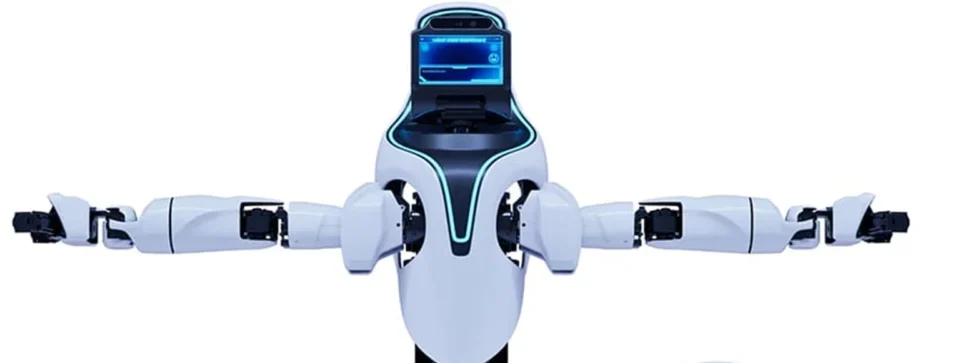
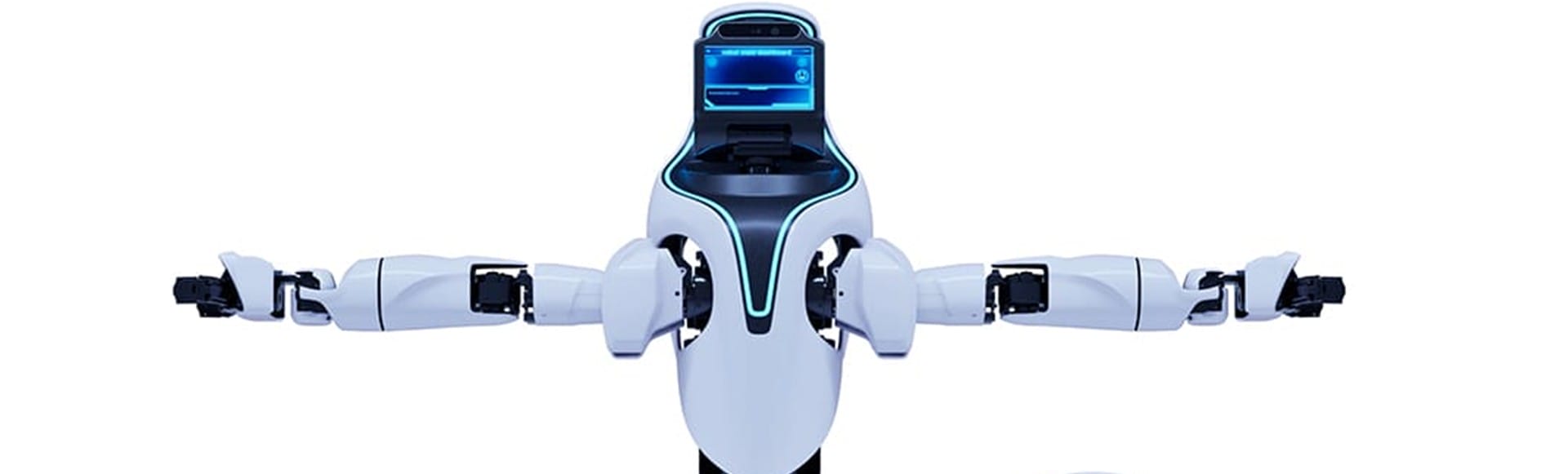
At the center of this strategy is Eley, Toyota’s flagship semi-humanoid robot. Weighing in at 50 kilograms, Eley intentionally diverges from the bipedal models pursued by competitors like Tesla (Optimus) and Figure. Instead of walking on two legs, Eley moves on a reliable, power-cord or battery-driven wheeled base. Furthermore, rather than attempting to replicate a complex five-fingered human hand, Eley utilizes a streamlined two-fingered gripper.
According to Toyota engineers, this is a calculated trade-off. By sacrificing human-like locomotion and complex hand dexterity, the company gains vastly superior mechanical stability, energy efficiency, and operational reliability—qualities that are paramount in high-stakes, 24/7 automotive production environments.
Rather than programming Eley with manually coded instructions or relying on generalized web-scale datasets, Toyota has pioneered an observational learning paradigm. Human employees wear specialized, finger-shaped jigs modeled precisely after the robot’s end-effectors while performing routine tasks. Eley watches these demonstrations, absorbing the techniques organically. At a recent technology briefing at Toyota’s European headquarters, an Eley unit successfully demonstrated this capability by folding T-shirts with near-perfect accuracy after just 1,500 practice sessions spread across two weeks.
Chronology: Two Decades of Robotics Research and the Path to Eley
To understand how Toyota arrived at Eley and its observational learning models, it is necessary to look back at the company’s long-standing, understated history in robotics—one that predates the recent humanoid hype cycle by decades.
The Early Years: Caregiving and Rehabilitation (2000s–2010s)
Toyota’s interest in robotics did not begin on the automotive assembly line; it started in healthcare and assistive technology. For more than twenty years, the automaker has quietly developed specialized robotics to address Japan’s rapidly aging demographic. Notable milestones from this era include:
- The Human Support Robot (HSR): A cylindrical, teleoperated household assistant designed to help elderly or disabled individuals fetch items and navigate indoor spaces.
- The Welwalk Exoskeleton: A robotic rehabilitation device engineered to assist stroke patients with lower-limb motor recovery.
- The T-HR3 Humanoid: A sophisticated, teleoperated humanoid robot capable of mirroring a human operator’s movements in real-time with high fidelity.
The Shift to Generative AI and Large Behavior Models (Late 2010s–Present)
As artificial intelligence matured, Toyota pivoted its research focus from hardware teleoperation to advanced software cognition. Through the Toyota Research Institute (TRI), the company began developing Large Behavior Models (LBMs).
Utilizing diffusion-based generative AI, these models allow robots to learn complex physical skills—such as pouring liquids, using hand tools, or manipulating flexible materials—from just a few minutes of human demonstration, bypassing the need for tedious, line-by-line programming.
In parallel, Toyota has explored commercial partnerships to accelerate its logistics automation. The automaker partnered with Agility Robotics to test and deploy bipedal Digit humanoids for tote handling and heavy logistics tasks at facilities such as Toyota Motor Manufacturing Canada.
The 2028 Horizon: Industrial Scaling
Now, Toyota is consolidating these disparate threads—advanced AI behavioral models, logistics partnerships, and proprietary hardware designs like Eley—into a unified industrial deployment strategy slated to hit full stride by 2028.
Supporting Data: Infrastructure, Workforce, and Global Scaling
Scaling robotics across a global manufacturing empire requires more than just capable hardware; it demands robust data infrastructure and a deep integration between human and machine labor.
The Power of the "Takumi"
Toyota operates 60 manufacturing plants worldwide. Within these facilities work approximately 18,000 veteran craftspeople known as takumi. These workers represent the pinnacle of automotive manufacturing expertise, possessing intuitive understandings of metal stamping, paint application, assembly tolerances, and quality control that cannot be easily captured in text books or standard engineering manuals.
Toyota’s strategy relies heavily on capturing the movements and decision-making processes of these takumi workers and converting them into training datasets. Furthermore, the company envisions a symbiotic workspace where these robots eventually assist in training newly hired human employees, creating a continuous feedback loop of skill transfer.
Centralized Data Sharing Across Global Networks
Once a robot learns a specific skill at one plant—whether through a takumi demonstration or routine assembly practice—Toyota plans to aggregate and upload that training data to a central cloud repository.
This infrastructure allows robots in completely different countries and time zones to instantly acquire the same physical skills without needing to undergo local retraining. However, this deployment model also presents a unique challenge: it must integrate smoothly into Toyota’s existing manufacturing infrastructure, much of which has been built up over decades. Rather than starting from a clean slate in a greenfield digital factory, Toyota’s robots must adapt to legacy facilities.
Comparative Landscape: Toyota vs. Competitors
| Automaker / Tech Firm | Flagship Robot | Locomotion | Primary Learning Methodology | Strategic Focus |
|---|---|---|---|---|
| Toyota | Eley | Wheeled | Observational learning via human demonstration (Jigs & LBMs) | Near-term factory reliability, fine manual skills, high-volume deployment |
| Tesla | Optimus | Bipedal (Walking) | Simulation, neural networks, motion capture | Long-term general-purpose autonomy, human-like versatility |
| Hyundai (Boston Dynamics) | Atlas | Bipedal (Hydraulic/Electric) | Advanced control algorithms, reinforcement learning | Dynamic mobility, heavy industrial manipulation |
Official Responses: Balancing Automation with Human Coexistence
As with any major industrial transformation promising massive workforce shifts, Toyota’s robotics initiative has sparked debate regarding the future of human labor. Company executives have been careful to frame the multi-billion-dollar automation push not as a replacement for human workers, but as a collaborative evolution.
"We aim for a world where robots coexist with humans, rather than replacing them," stated Hiroki Nakajima, Executive Vice President of Toyota, during a corporate strategy briefing.
Nakajima’s phrasing has naturally drawn scrutiny from industry analysts and labor watchdogs. Critics point out that the operative word in the executive’s statement is "aim," noting that the deployment of 400,000 automated machines over the coming decade will inevitably alter the labor dynamics within Toyota’s global factories.
Industry observers note that while Toyota has historically maintained a commitment to retaining its skilled human workforce—even during economic downturns—the sheer economic pressures of global manufacturing competition make operational efficiency an unavoidable priority. By designing robots that work alongside humans rather than substituting for every human capability, Toyota hopes to cushion the transition, positioning machines to handle repetitive, ergonomic strain while humans focus on quality oversight and complex problem-solving.
Implications: What Toyota’s Strategy Means for the Future of Robotics
Toyota’s calculated divergence from the prevailing robotics meta carries profound implications for the entire automation sector.
1. The Death of the "Simulation Bottleneck"
For years, the robotics industry has chased the holy grail of simulation-to-real ("sim-to-real") transfer. Companies train robots inside virtual physics engines for millions of hours, hoping the learned behaviors will translate successfully to the messy, unpredictable physical world.
Toyota’s approach bypasses this multi-million-dollar computational hurdle. By having workers wear motion-capturing jigs and letting robots watch routine tasks directly on the factory floor, Toyota generates organic, ground-truth training data natively. This method could establish a new blueprint for industrial AI training that other manufacturing sectors quickly adopt.
2. Pragmatism Over Peddling Hype
While investors and tech enthusiasts remain captivated by bipedal humanoids walking down red carpets or performing scripted dances, Toyota is quietly betting that industrial utility trumps theatrical versatility.
A wheeled robot with a two-fingered gripper may not capture viral social media headlines like a walking humanoid, but it won’t fall over on an oily factory floor, it consumes significantly less power, and it is far cheaper to manufacture and maintain. Toyota’s 2028 roadmap suggests that the immediate commercial winners of the robotics boom will be those who solve mundane factory problems reliably, rather than those who achieve generalized human mimicry.
3. The Re-Envisioning of the Global Supply Chain
By planning to deploy 250,000 robots across group companies and major suppliers, Toyota is effectively attempting to future-proof its entire upstream supply chain. In an era marked by demographic decline in industrialized nations, rising labor costs, and supply chain fragility, providing suppliers with standardized, easily trainable robotic labor could ensure the long-term resilience of the automotive ecosystem.
Conclusion
Toyota’s ¥1 trillion automation bet is much more than a routine capital expenditure update; it is a masterclass in industrial pragmatism. By teaching machines to watch, learn, and collaborate alongside veteran takumi workers, Toyota is bridging the gap between centuries-old craftsmanship and cutting-edge generative AI. As 2028 approaches, the rest of the automotive and robotics industries will be watching closely to see if Toyota’s quiet, wheeled revolution outpaces the flashy bipedal future promised by its tech-world rivals.