By Danielle Naidu | Enriched & Expanded Editorial Report
Main Facts
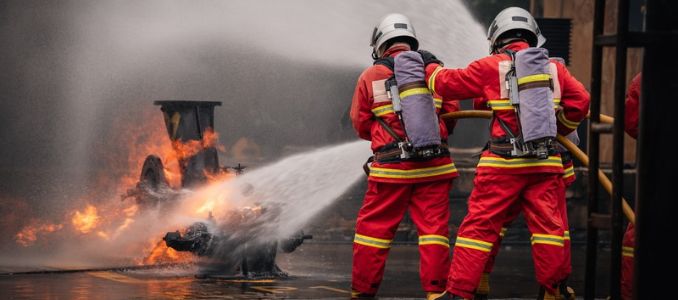
In an era where technological advancement continuously redefines the boundaries of occupational safety, structural firefighting remains one of the most hazardous professions in the world. Recognizing the critical need for improved operational efficiency, reduced physical fatigue, and—above all—advanced personnel tracking in zero-visibility environments, safety equipment manufacturer MSA Safety has introduced its latest breakthrough: the G1 City Edition Self-Contained Breathing Apparatus (SCBA).
The G1 City Edition is not merely an incremental update to an existing line; it represents a comprehensive reimagining of firefighter ergonomics, digital connectivity, and life-safety tracking. At the core of its innovative design is the integration of MSA’s LUNAR Beacon Technology directly into the unit’s power module. This transformative feature addresses one of the most terrifying scenarios on the fireground: a lost, trapped, or incapacitated firefighter.
When a firefighter wearing the G1 City Edition triggers an alarm—whether manually or automatically via a pass-device function—crew members equipped with a handheld connected device can immediately track their colleague. By leveraging LUNAR Beacon Technology, the handheld unit provides precise directional information, guiding rescuers directly to the precise location of the distressed firefighter.
Furthermore, the system’s connectivity extends beyond immediate line-of-sight tracking. When paired with the SCBA, the handheld device continuously displays vital telemetry data, including real-time air-pressure information, the wearer’s active alarm status, and precise positioning coordinates. For Incident Commanders monitoring the scene from a distance, this critical data can also be fed directly into MSA’s FireGrid Monitor application, provided that active data or radio connectivity is established on the scene.
Beyond its cutting-edge digital tracking capabilities, the G1 City Edition has been engineered to alleviate the physical burdens traditionally placed on emergency responders. In its standard configuration, the new model weighs up to half a pound less than its predecessor, the standard G1 model. This weight reduction is achieved through a redesigned cylinder-retention system coupled with a low-profile, swiveling lumbar pad. These architectural changes are designed to improve overall balance, enhance comfort, and dramatically reduce user fatigue during prolonged, strenuous operations.
Crucially, the G1 City Edition is fully compliant with the stringent benchmarks established by the 2025 edition of NFPA 1970—the newly consolidated performance standard covering protective ensembles for structural and proximity firefighting. By meeting these rigorous standards, MSA Safety ensures that departments investing in the G1 City Edition are outfitting their personnel with gear that meets the absolute pinnacle of modern safety, durability, and performance regulations.
Chronology
To understand the significance of the G1 City Edition’s release, it is essential to examine the trajectory of SCBA development and the technological evolution that paved the way for modern connected firegrounds.
The Evolution of Breathing Apparatuses
Late 20th Century: SCBA technology primarily focused on the delivery of breathable air in hazardous atmospheres, with little to no integration of digital telemetry or electronic tracking. Firefighters relied heavily on traditional rope lines, voice communication, and manual Personal Alert Safety System (PASS) alarms that emitted high-pitched audio tones—which were often difficult to localize in chaotic environments.
The Digital Shift (2010s): As digital microprocessors became smaller and more reliable, manufacturers began integrating telemetry into SCBAs. Heads-up displays (HUDs) inside facepieces started showing cylinder pressure, and basic radio signals allowed for remote monitoring of air levels. However, tracking a lost firefighter inside a burning, labyrinthine structure remained a significant logistical challenge.
The Introduction of LUNAR Technology: MSA Safety developed the LUNAR device as a standalone, cloud-connected handheld search-and-rescue tool designed to operate independently or alongside SCBA units, utilizing radar and peer-to-peer ranging to locate missing personnel.
The Convergence (Present Day): Recognizing the need for streamlined gear that does not encumber firefighters with excessive standalone gadgets, MSA Safety successfully integrated LUNAR Beacon Technology directly into the power module of the new G1 City Edition SCBA. This marks a pivotal milestone: turning the breathing apparatus itself into an active, intelligent node within a connected safety network.
Compliance and Standardization (2025): With the release of the NFPA 1970 consolidated standard, safety equipment manufacturers were challenged to unify and elevate performance metrics across structural and proximity firefighting equipment. The G1 City Edition was meticulously engineered to meet and exceed these 2025 standards, setting a new benchmark for regulatory compliance and operational readiness.
Supporting Data
The operational advantages of the G1 City Edition are underscored by hard data regarding weight reduction, ergonomic enhancements, and digital telemetry capabilities. The following metrics illustrate the tangible improvements engineered into this new model:
Weight Reduction: Up to 0.5 lbs (8 ounces) lighter in standard configuration compared to the legacy G1 model. While half a pound may seem modest, cumulative weight savings across shoulder harnesses, backplates, and air cylinders dramatically reduce metabolic strain and caloric expenditure during extended structural fires.
Ergonomic Restructuring:
Cylinder-Retention System: Redesigned to shift the center of gravity closer to the firefighter’s spine, improving posture and reducing lower back strain.
Swiveling Lumbar Pad: Features a low-profile, articulating design that moves organically with the firefighter’s torso, enhancing flexibility and balance when bending, crawling, or climbing ladders.
Tactile Accessibility for Gloved Hands:
Regulator and Cylinder-Valve Controls: Built with significantly thicker profiles to allow effortless operation while wearing heavy, wet structural firefighting gloves.
Shoulder Pads and Adjustment Straps: Incorporates thinner shoulder pads to prevent interference with heavy turnout gear and weapon/radio straps, paired with longer adjustment straps to accommodate a wider percentile range of body types.
Digital Telemetry & Connectivity:
Control-Module Display: Provides crystal-clear, real-time readouts of remaining cylinder pressure and estimated breathing-air time remaining based on current exertion levels.
Beacon Frequency & Range: Utilizes peer-to-peer radio frequency connectivity to bridge the gap between handheld devices and the incapacitated firefighter’s power module, bypassing traditional GPS limitations common inside concrete and steel structures.
Cloud Integration: Seamlessly interfaces with the FireGrid Monitor application to aggregate team-wide data for Incident Commanders.
Official Responses
The introduction of the G1 City Edition has generated considerable discussion within the fire service, manufacturing sectors, and occupational safety communities. Industry experts and safety advocates have weighed in on how this technology transforms modern fireground tactics.
Industry and Manufacturer Perspective
Representatives from MSA Safety emphasize that the primary objective behind the G1 City Edition was to eliminate the "isolation factor" that firefighters often experience inside hazardous environments.
"In high-stress, zero-visibility environments, every second counts, and the physical toll on the firefighter directly impacts decision-making and endurance," noted product development leads at MSA Safety during the initial rollout. "By embedding LUNAR Beacon Technology directly into the power module of the G1 City Edition, we are removing the friction of extra gear. The SCBA is no longer just a passive life-support system—it is an active beacon that speaks directly to the rescue team. Coupled with a noticeable reduction in weight and refined ergonomics, this system protects the firefighter physically while they are working, and safeguards them socially when things go wrong."
Fire Service Reception
Initial reviews from urban and suburban fire departments participating in beta testing and early evaluations have highlighted the practical utility of the design upgrades. Safety officers have been particularly vocal about the improvements made to glove compatibility and digital tracking.
On Ergonomics: Veteran captains noted that the reduction of half a pound, combined with the swiveling lumbar pad, noticeably reduces shoulder fatigue during long-duration overhaul operations. Firefighters reported feeling less pinned down by their equipment, allowing for greater agility when navigating tight residential or commercial spaces.
On Search and Rescue Capabilities: Training divisions utilizing the integrated LUNAR Beacon Technology reported drastically reduced search times during simulated "Mayday" rescue drills. Instructors noted that removing the guesswork from locating a downed firefighter changes the survivability profile of structural firefighting entirely. Rather than relying solely on audio cues that can be masked by background noise or structural acoustics, rescuers can follow a direct digital heading.
Implications
The launch of the MSA G1 City Edition SCBA extends far beyond a simple product announcement; it carries profound implications for the future of firefighting tactics, departmental budgeting, firefighter health, and overall occupational safety standards.
1. Paradigm Shift in Rapid Intervention Operations (RIO)
For decades, Rapid Intervention Crews (RIC) have trained extensively on search methodologies—such as the "wall-breaching" technique or systematic grid searches—to locate lost or trapped brothers and sisters. While these tactical skills remain foundational, the integration of precise directional beacon technology shifts the paradigm from searching to navigating. When every second dictates whether an unconscious firefighter can be pulled out before air supplies run completely dry, a digital heading provided by a handheld unit can shave critical minutes off a rescue operation, ultimately reducing line-of-duty injuries and fatalities.
2. Mitigation of Chronic Occupational Injuries
Firefighting is notorious for causing chronic musculoskeletal disorders, particularly lumbar disc degeneration and shoulder impingements caused by carrying asymmetric loads over decades. By engineering a lighter framework, optimizing the center of gravity via a redesigned cylinder-retention mechanism, and introducing an articulating lumbar pad, MSA Safety is actively addressing the long-term health of firefighters. Reductions in physical fatigue not only preserve physical health over a 20-to-30-year career but also enhance cognitive alertness on the fireground, preventing accidents caused by exhaustion.
3. The Rise of the "Connected Firefighter" Ecosystem
The integration of SCBA data with cloud-based platforms like FireGrid Monitor highlights an unstoppable trend toward the Internet of Things (IoT) in emergency services. Incident Commanders are no longer forced to rely purely on radio check-ins and guesswork regarding air status. By having real-time visibility over team air reserves, thermal stress indicators, and emergency activations, command staff can make data-driven decisions—such as ordering tactical retreats or dispatching RIC teams—long before a catastrophic situation unfolds.
4. Regulatory Benchmarking and Procurement Trends
With the enforcement and widespread adoption of the 2025 NFPA 1970 standard, fire departments globally are evaluating their existing inventories. Departments operating older, non-compliant equipment face increasing pressure to modernize their fleets. The G1 City Edition serves as a prime example of how manufacturers are rising to meet these comprehensive performance standards. Consequently, municipal budget planners and fire chiefs will likely prioritize equipment that not only satisfies regulatory compliance but also integrates multi-functional capabilities (such as breathing apparatuses that double as rescue beacons) to maximize return on investment.
Conclusion
MSA Safety’s G1 City Edition SCBA represents a monumental leap forward in emergency response technology. By seamlessly merging physiological ergonomics, reduced weight, strict NFPA 1970 compliance, and advanced LUNAR Beacon Technology, the manufacturer has delivered a tool that directly addresses the dual perils of the modern fireground: physical exhaustion and the catastrophic risk of losing a firefighter in the smoke. As departments transition to these next-generation systems, the safety, efficiency, and survivability of frontline emergency personnel will reach unprecedented new heights.