


Strategic Alliance: Honda and Nissan Forge Path Toward Software-Defined Vehicle Standardization

In a landmark shift for the global automotive landscape, Japanese titans Honda Motor Co. and Nissan Motor Co. are embarking on a collaborative mission to redefine the architecture of future mobility. As the industry pivots aggressively toward Software-Defined Vehicles (SDVs), the two manufacturers have entered high-level discussions to standardize the electronic control units (ECUs) that will serve as the "brains" of their next-generation fleets.
This partnership, which aims for a rollout as early as 2029, represents a pragmatic response to the soaring costs of research and development (R&D) and the intense pressure to keep pace with rapid technological advancements in autonomous driving and electrification.
Main Facts: The Shift to Centralized Intelligence
The core of this collaboration lies in the transition from distributed vehicle architecture to centralized computing. Historically, conventional internal combustion engine vehicles have relied on a fragmented web of dozens of individual ECUs, each managing isolated tasks such as fuel injection, braking, or window control.
In contrast, the SDV paradigm requires a high-performance, centralized ECU capable of orchestrating the entire vehicle’s ecosystem. This central processor must handle complex data streams, manage over-the-air (OTA) software updates, and maintain the robust security protocols necessary for autonomous-driving features. Developing this technology in-house is an astronomically expensive endeavor, fraught with technical risks.
By aligning their development roadmaps, Honda and Nissan aim to create a shared hardware platform. The project is not merely limited to the physical units; the companies are exploring the standardization of the underlying software stacks. Furthermore, the scope of this alliance may extend to Mitsubishi Motors Corp., in which Nissan holds a 26 percent stake, creating a massive, integrated manufacturing bloc capable of achieving significant economies of scale.
Chronology: From Potential Merger to Pragmatic Partnership
The road to this collaboration has been unconventional. Industry observers have long speculated about a deeper, structural consolidation between the two Japanese giants.
- Initial Speculation: Persistent rumors of a full-scale merger between Honda and Nissan circulated in recent years, fueled by the existential threat posed by tech-native rivals like Tesla and Chinese EV manufacturers.
- The Scrapped Merger: Despite the hype, leadership at both firms eventually deemed a total merger impractical, citing the risks of corporate culture clashes and the logistical nightmare of integrating two distinct global supply chains.
- The Pivot to Component Synergy: Recognizing that complete integration was not the answer, executives shifted their focus to "component-level" cooperation. This approach allows both companies to maintain their brand identity and independent vehicle design while pooling resources for the expensive "under-the-hood" technology.
- Present Day: Honda and Nissan have moved beyond exploratory talks, formalizing their intent to co-develop central ECUs. This signifies a maturation of the Japanese automotive sector’s response to the digital transformation, prioritizing efficiency over traditional competitive silos.
Supporting Data: The Cost of Complexity
The urgency behind this move is backed by daunting fiscal realities. The automotive industry is currently witnessing an unprecedented "R&D crunch."
According to industry analysts, the development cost for a single advanced software-defined platform can exceed several billion dollars. When this cost is amortized over a limited number of units, it can significantly inflate the price of the final vehicle, threatening market competitiveness.
- Economies of Scale: By standardizing the central ECU, Honda and Nissan can spread these massive development costs across millions of vehicles, rather than two separate, smaller production runs.
- Time-to-Market: The integration of software development teams and hardware engineering groups is expected to compress the development lifecycle by 18 to 24 months. In a market where software is updated via the cloud every few weeks, such time savings are critical.
- Supply Chain Resilience: Standardizing components simplifies the supply chain, allowing for larger, more predictable purchase orders for semiconductors—a sector that has plagued automakers with shortages since 2020.
Official Responses and Strategic Rationale
While neither company has released a comprehensive technical manual for the joint ECU, official statements from both Tokyo headquarters emphasize the necessity of the alliance.
"We are moving from a world where hardware defines the vehicle to one where software defines the experience," noted a spokesperson close to the project. "To achieve this, we must reach a scale that allows us to invest heavily in both talent and infrastructure. Working with Nissan allows us to share the burden of this technological evolution while ensuring our vehicles remain at the forefront of safety and performance."
The strategy is viewed by market analysts as a "defensive offensive." By locking arms, the Japanese automakers are creating a protective moat against the rapid encroachment of software-centric competitors, specifically from Silicon Valley and the burgeoning Chinese EV sector, which has aggressively leveraged government subsidies to iterate software at record speeds.
Implications: A New Era for Automotive Assembly
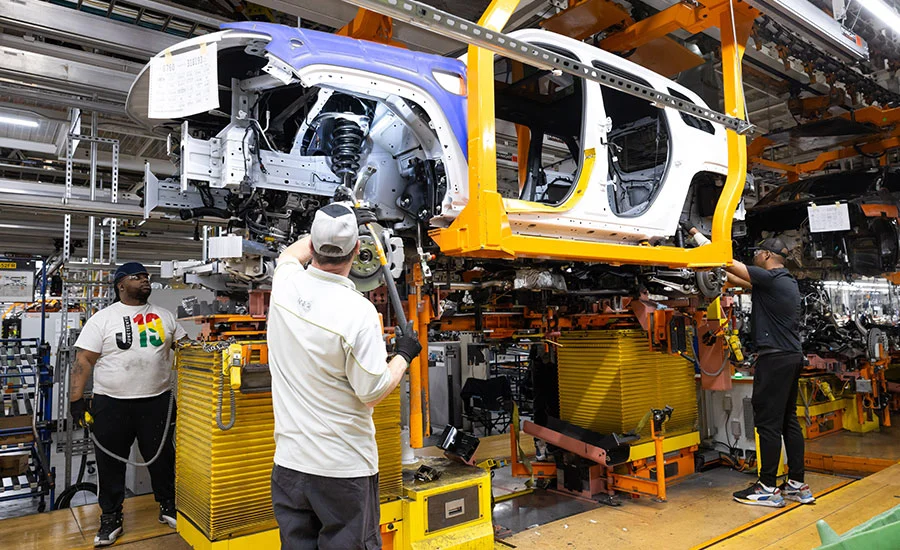
The collaboration will have profound implications for automotive assembly plants worldwide.

1. Simplification of the Production Line
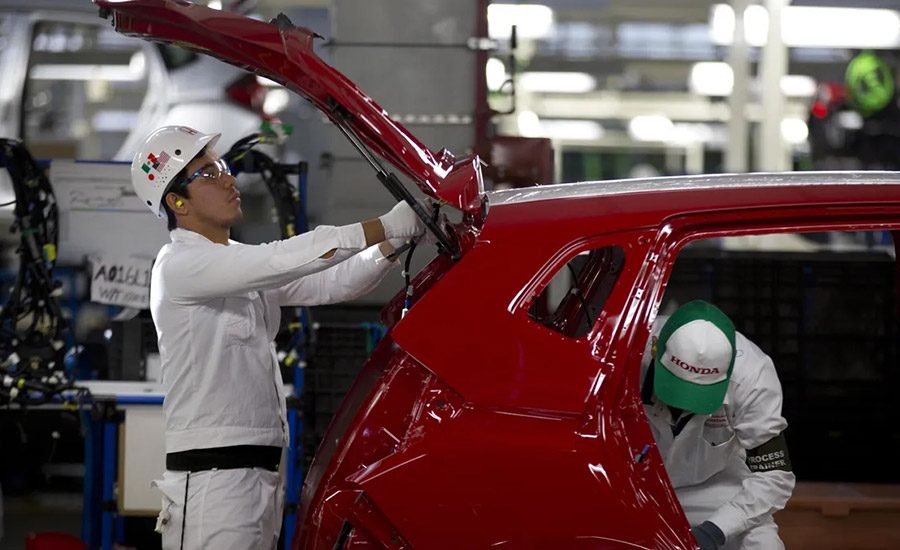
The shift toward a centralized ECU will fundamentally alter the assembly process. Instead of installing and calibrating 50 to 80 disparate ECUs, assembly lines will focus on installing a primary "compute hub." This reduces the complexity of wiring harnesses—a significant weight and cost saver—and streamlines the quality control process.
2. The Rise of the "Software-First" Technician
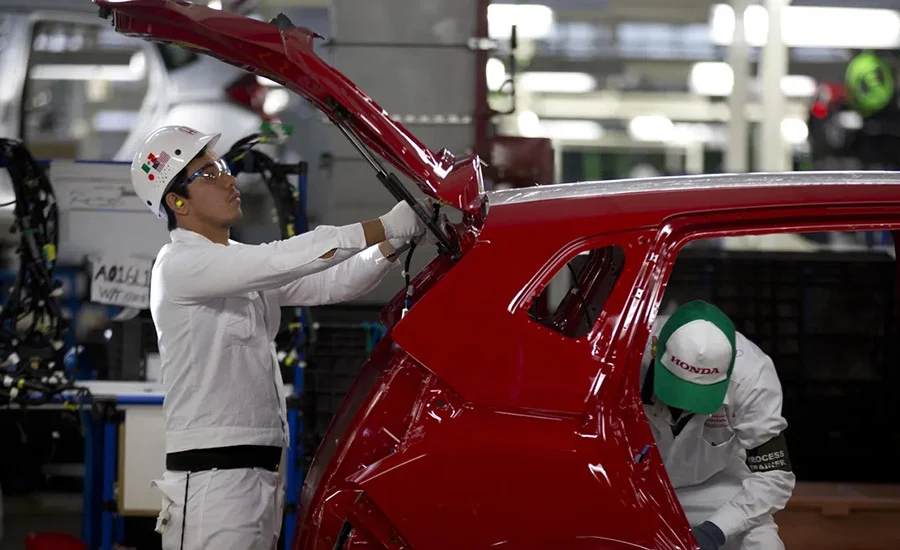
Assembly plants will require a workforce shift. As the hardware becomes more standardized and modular, the focus for manufacturing engineers will move toward software verification and OTA connectivity testing. Workers on the line will need to be as comfortable with diagnostic tablets and code-verification tools as they are with traditional pneumatic fastening tools.
3. Long-term Impact on the USMCA and Global Trade
Honda’s leadership has been vocal about the importance of stable international trade agreements, such as the USMCA (United States-Mexico-Canada Agreement). The ability to produce these standardized ECUs in one region and distribute them to assembly facilities across the globe is contingent upon frictionless trade. If Honda and Nissan can successfully implement this standardized architecture, they may set a new industry benchmark for how automakers manage global supply chains for critical electronic components.

4. Competitive Dynamics
For the consumer, the outcome should, in theory, be more reliable vehicles with better-integrated features. However, the move also signals a consolidation of the industry. As Honda and Nissan align their technological backbones, other automakers may be forced to follow suit, leading to an industry landscape defined by a few "mega-platforms" rather than dozens of proprietary systems.
Conclusion
The partnership between Honda and Nissan to standardize central ECUs is more than a cost-cutting measure; it is a fundamental recalibration of their business models. By abandoning the "do-it-all-in-house" mentality, these legacy manufacturers are proving that survival in the era of the Software-Defined Vehicle depends on strategic cooperation.
As they move toward their 2029 target, the world will be watching to see if this alliance can successfully bridge the gap between traditional automotive manufacturing excellence and the fluid, rapidly evolving world of digital software. If successful, this collaboration will likely serve as the blueprint for future industry alliances, signaling the end of the age of proprietary hardware silos and the dawn of a new, interconnected era of mobility.