


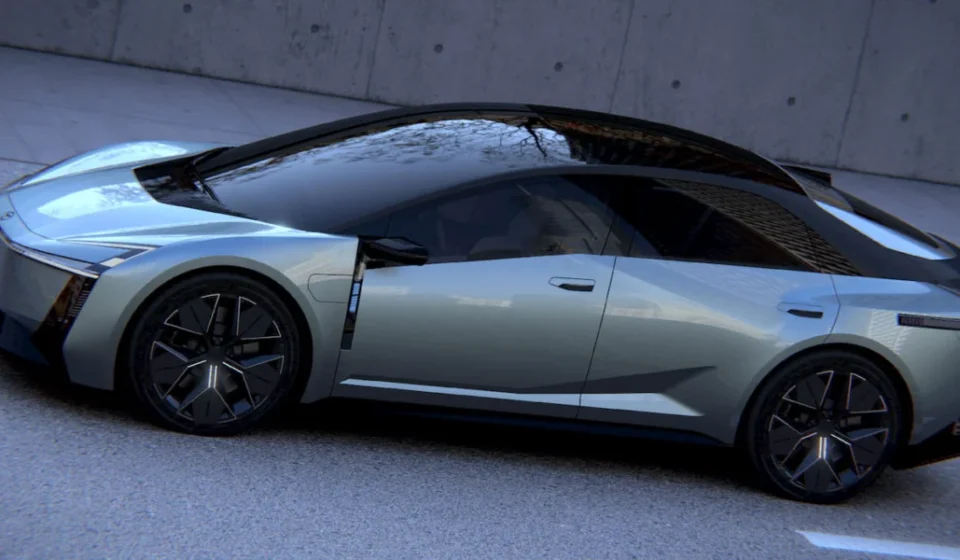
The Corolla Litmus Test: Inside Toyota’s High-Stakes Battle Against Complacency and the Chinese EV Surge

Main Facts: The Crisis of Relevance at the World’s Largest Automaker
Toyota Motor Corporation, the world’s largest automaker by volume, is facing an internal crisis of confidence as it navigates the transition toward electrification. Despite reporting record-breaking hybrid sales, the company’s leadership has sounded an alarm regarding its long-term competitive positioning. Toyota Chairman Akio Toyoda recently issued a stark warning, stating that the company is engaged in a "genuine fight for relevance" and revealing that a deep "sense of crisis" has permeated the organization.
The focal point of this internal struggle is the development of the next-generation Toyota Corolla. Historically the best-selling vehicle in automotive history—with over 57 million units sold across 12 generations over the past 60 years—the Corolla is being treated as a critical litmus test for Toyota’s ability to survive in a rapidly electrifying global market.
To defend its market share, Toyota is relying on its signature "multi-pathway" engineering strategy. The next-generation Corolla will be built on a highly flexible platform designed to support battery-electric (BEV), plug-in hybrid (PHEV), conventional hybrid (HEV), and internal combustion engine (ICE) powertrains simultaneously. This platform will support diverse body styles, including sedans, hatchbacks, crossovers, and high-performance GR variants.
However, this multi-powertrain approach has sparked intense debate within the company and across the wider automotive industry. While Toyota’s hybrid-heavy strategy delivers massive profits today, engineers and industry analysts warn that refusing to commit to a dedicated, ground-up BEV architecture could permanently compromise the vehicle’s competitiveness in cost, packaging, and performance. This internal tension was underscored by a Toyota development engineer who candidly admitted to Japanese public broadcaster NHK, "I think we are losing to China."
Chronology: From Hybrid Pioneer to Defensive Player
The current strategic crossroads is the culmination of decades of industry leadership, shifting geopolitical dynamics, and the rapid rise of new competitors.
[Late 1990s - 2010s] ------------------> [2021 - 2023] -----------------------> [2025 - 2026]
Toyota dominates global                  Akio Toyoda steps down as CEO;         Record hybrid sales (42%);
hybrid market (Prius legacy);            launches "multi-pathway" strategy;      Lexus LF-ZC cancelled;
advocates slow BEV transition.           criticized for slow BEV adoption.      BYD targets global leadership.
The Hybrid Era and Early BEV Skepticism (1997–2021)
In 1997, Toyota pioneered the mass-market electrified vehicle segment with the launch of the Prius. For the next two decades, Toyota dominated the global hybrid market, establishing an unmatched reputation for reliability, fuel efficiency, and manufacturing prowess. However, this success fostered a deep-seated belief within the company that hybrid technology, rather than pure battery electrification, remained the most practical path to global decarbonization. Under the leadership of then-CEO Akio Toyoda, the company repeatedly voiced skepticism regarding a rapid transition to pure BEVs, citing grid limitations, raw material shortages, and high consumer costs.
The Rise of Chinese Competitors and Strategic Pivots (2021–2024)
As Tesla scaled global production and Chinese domestic manufacturers—led by BYD—began exporting high-tech, low-cost EVs, Toyota found itself on the defensive. In late 2021, Toyota attempted to quiet critics by showcasing 16 conceptual BEVs and pledging 4 trillion yen ($28 billion) to accelerate its EV development.
In 2023, Akio Toyoda stepped down as CEO, handing the reins to Koji Sato, who promised a "BEV-first" mindset while maintaining the overarching multi-pathway strategy. Despite this pivot, Toyota’s first dedicated global BEV, the bZ4X, suffered from a rocky launch, plagued by recalls and mediocre range specifications compared to its rivals.
The Current Crux (June 2025–Present)
The pressure on Toyota intensified significantly in June 2025. BYD overtook Ford in global sales volume and openly declared its target to become the world’s largest automotive group within five years.
Simultaneously, Toyota quietly made a major strategic retreat: it cancelled the Lexus LF-ZC. Intended to be the brand’s flagship next-generation BEV, the LF-ZC was designed to showcase revolutionary solid-state and advanced prismatic battery technologies alongside "gigacasting" manufacturing techniques. Its cancellation signaled to the market that Toyota was struggling to productionize its most advanced BEV concepts, forcing the company to rely even more heavily on the upcoming multi-pathway Corolla platform to prove its technological viability.
Supporting Data: The Divergence of Current Profits and Future Risks
A granular look at Toyota’s sales data reveals a stark contrast between its current financial strength and its potential vulnerability in a rapidly changing market.
Current Commercial Dominance
Toyota’s financial engine continues to perform exceptionally well, driven by global demand for hybrids:
- Global Sales (2025): Toyota and Lexus sold 11.3 million vehicles globally.
- Hybrid Market Share: Conventional hybrids made up approximately 42% of those 11.3 million sales.
- US Market Penetration: Electrified vehicles (predominantly traditional hybrids) accounted for 47% of Toyota’s total US sales.
- Pure BEV Sales: Fully electric vehicles accounted for a mere 1.9% of Toyota’s global sales volume.
These figures validate Toyota’s near-term business model. Hybrids generate high margins, require no public charging infrastructure, and remain highly attractive to mainstream consumers in North America and developing markets.
The Chinese Development and Cost Disadvantage
While Toyota enjoys robust margins on its current lineup, Chinese competitors are moving at a pace that threatens to render traditional development cycles obsolete:
| Metric | Toyota Motor Corp. | Chinese Competitors (e.g., BYD, Geely) |
|---|---|---|
| Development Cycle (Concept to Production) | 48 to 60 months (4–5 years) | 18 to 24 months (1.5–2 years) |
| Platform Strategy | Multi-pathway (compromised packaging) | Dedicated BEV/PHEV architectures |
| Software Integration | Traditional tier-1 supplier software | In-house, software-defined vehicle (SDV) platforms |
| PHEV Pricing Power | High premium over ICE equivalents | Price parity or lower than ICE equivalents |
Furthermore, BYD’s extreme vertical integration—owning its entire battery supply chain through its FinDreams division, semiconductor manufacturing, and even its own car-transporting cargo ships—allows it to price plug-in hybrids and BEVs at margins that traditional legacy automakers cannot match.
Official Responses and Perspectives: The Philosophical Divide
The internal tension within Toyota highlights a broader philosophical division regarding how the global automotive industry should approach decarbonization and market competition.
The View from Toyota Leadership: Akio Toyoda
Speaking to Japanese broadcaster NHK during an intimate look at the Corolla’s development site, Chairman Akio Toyoda framed the primary threat to the company not as external competition, but as internal complacency.
"There seems to be a considerable sense of crisis within the company. If [complacency] happens, it’s over."
— Akio Toyoda, Chairman of Toyota Motor Corporation
Toyoda also expressed deep concern over Japan’s broader geopolitical and industrial standing. If the nation’s automotive crown jewel loses its technological edge, the domestic economy could face severe consequences:
"Unless Japan is a country chosen by every other country, it cannot survive."
The Engineering Reality
Behind the scenes, Toyota’s engineering staff are feeling the pressure of competing against highly agile Chinese rivals. One development engineer working on the next-generation Corolla told NHK bluntly:
"I think we are losing to China."
This sentiment reflects the difficulty of designing a single platform that must accommodate a heavy battery pack for a BEV, a fuel tank and exhaust system for an ICE/hybrid, and a complex dual-motor setup for a plug-in hybrid.
The Competitor’s Ambition: BYD
In contrast to Toyota’s defensive posture, Chinese automakers are aggressively expanding their global footprint. In June 2025, BYD Chief Executive Wang Chuanfu outlined the company’s trajectory, emphasizing that its rapid development cycles and cost structures would reshape the global automotive landscape. Having already surpassed legacy giants like Ford, BYD is positioning itself to challenge Toyota directly for the global volume crown.
Toyota’s Environmental Defense
Toyota’s official corporate position remains highly defensive of its multi-pathway strategy. The automaker argues that pushing solely for BEVs is counterproductive to global emissions reductions. Toyota points out that in many developing regions, the electrical grids used to charge BEVs are still heavily reliant on coal and other high-emission fossil fuels. In such scenarios, a highly efficient hybrid vehicle can result in lower lifetime carbon emissions than a BEV charged on a dirty grid, while remaining far more affordable for local consumers.
Implications: The Long-Term Risks of a Compromised Platform
Toyota’s decision to build the next-generation Corolla on a shared, multi-pathway platform rather than a dedicated BEV architecture carries significant engineering, economic, and geopolitical risks.
The Engineering Compromise of "One-Size-Fits-All"
In automotive engineering, a platform designed to do everything rarely does any single thing optimally. By forcing the next-generation Corolla to accommodate internal combustion engines alongside large battery packs, Toyota faces several distinct engineering challenges:
- Packaging and Space Efficiency: Dedicated BEVs utilize a "skateboard" architecture, pushing the wheels to the corners and creating a flat cabin floor. A multi-pathway platform must retain transmission tunnels, engine bay space, and exhaust routing areas, reducing interior cabin space and cargo capacity for the BEV variant.
- Weight and Structural Efficiency: BEVs require structural reinforcement to protect the battery pack in a crash. When these reinforcements are integrated into a multi-pathway platform, they can add unnecessary weight to the hybrid and gasoline variants, hurting their fuel efficiency. Conversely, if the platform is kept light for ICE variants, the BEV version may require heavy, auxiliary structural bracing.
- Aerodynamics: ICE and hybrid vehicles require front grilles and radiators for engine cooling, which hurts aerodynamics. Dedicated BEVs can be designed with ultra-low drag coefficients. A shared platform often results in a compromised frontal area, reducing the real-world highway range of the BEV version.
The Speed and Software Gap
The stark difference in development cycles (18–24 months for Chinese OEMs vs. 4–5 years for Toyota) means that by the time Toyota launches a new vehicle, its infotainment, autonomous driving features, and battery chemistry may already be a generation behind. Chinese automakers treat vehicles as "smartphones on wheels," updating software-defined features constantly. Toyota’s traditional reliance on a complex web of Tier-1 suppliers makes rapid software iteration exceptionally difficult.
+-----------------------------------------------------------------------+
|                       THE COGNITIVE GAP                               |
+-----------------------------------------------------------------------+
|  TOYOTA'S METRIC:                                                     |
|  [Strong Hybrid Sales Today (42%)] ---> "We are winning the market"    |
+-----------------------------------------------------------------------+
|  THE MARKET'S TRAJECTORY:                                             |
|  [Chinese Speed & Cost Integration] ---> "The future is passing us"   |
+-----------------------------------------------------------------------+
Geopolitical and Economic Fallout
The stakes extend far beyond Toyota’s balance sheet. The automotive sector is the backbone of the Japanese economy, supporting millions of jobs and accounting for a massive share of the country’s exports. If Toyota cedes its leadership in technology and affordability to Chinese rivals, the economic fallout could impact Japan’s national GDP and its trade relationships.
While Toyota’s hybrid strategy continues to generate massive profits today, these metrics reflect where the market has been, rather than where it is going. The multi-pathway Corolla is a high-stakes gamble that Toyota can use its current hybrid dominance to fund a gradual transition to electrification. If Chinese competitors continue to widen their lead in software, cost, and development speed, Toyota’s pragmatic middle ground may ultimately leave it stranded between a declining internal combustion past and an electric future it was too slow to fully embrace.