

Revolutionizing Automotive Safety: STMicroelectronics Unveils the ST SafeSense VD56GA Intelligent Image Sensor

In the rapidly evolving landscape of automotive safety, the convergence of artificial intelligence, high-performance sensing, and compact system integration is no longer a luxury—it is a requirement. STMicroelectronics, a global leader in semiconductor solutions, has taken a significant leap forward in this domain with the announcement of the ST SafeSense VD56GA.
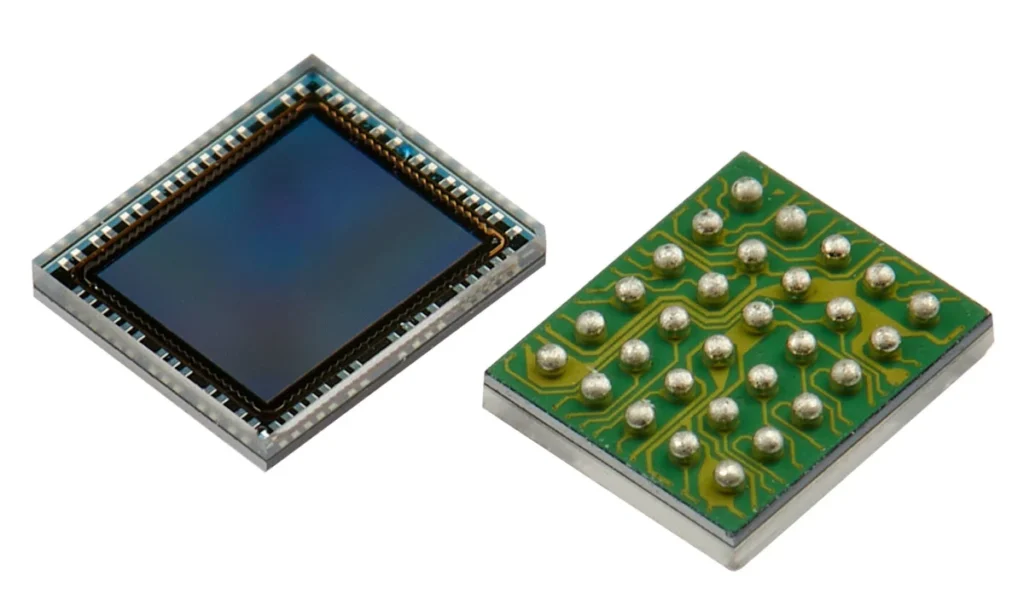
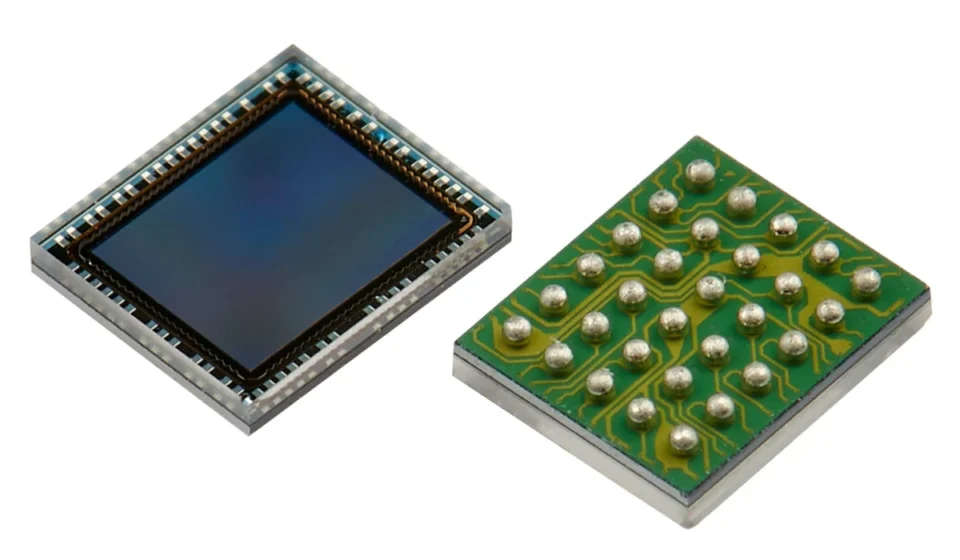
Designed specifically for the rigorous demands of automotive driver and occupant monitoring systems (DMS/OMS), this 1.1-megapixel image sensor integrates sophisticated processing capabilities directly onto the chip. By reducing the reliance on external processing hardware, ST is enabling automotive manufacturers to design sleeker, more efficient, and highly responsive safety systems that can be deployed in the most space-constrained areas of a vehicle cabin.
The Core Innovation: Main Facts of the VD56GA
At its heart, the ST SafeSense VD56GA is an engineering marvel designed to tackle the unique challenges of infrared (IR) imaging in varying cabin lighting conditions.
Technical Specifications
- Resolution: 1.1 Megapixels.
- Package Dimensions: An ultra-compact 3.7 mm x 3.2 mm Chip Scale Package (CSP).
- Core Architecture: Utilizes ST’s proprietary DeepNIR pixel architecture.
- Data Flexibility: Supports both RAW and YUV output formats.
- Embedded Intelligence: Features integrated functions including mirror, crop, dark calibration, auto-exposure, and piecewise-linear (PWL) processing.
The defining characteristic of the VD56GA is its "intelligence at the edge." By embedding image-processing functions directly into the sensor module, STMicroelectronics has effectively offloaded tasks that typically consume valuable CPU cycles on the vehicle’s main Electronic Control Units (ECUs). This allows for faster response times, a critical factor when the sensor is tasked with detecting driver fatigue or distraction in milliseconds.
Chronology of Development: The Road to SafeSense
The journey toward the VD56GA did not happen in a vacuum. It is the culmination of years of R&D in photonics and automotive-grade silicon manufacturing.
Phase 1: The Rise of Cabin Monitoring (2020–2022)
As regulatory bodies worldwide began mandating safety features such as Driver Monitoring Systems (DMS) to combat drowsy and distracted driving, STMicroelectronics identified a gap in the market. Existing sensors were either too bulky for discreet integration into dashboards or lacked the high-performance IR sensitivity required for nighttime operation.
Phase 2: Perfecting the DeepNIR Architecture (2023–2025)
ST invested heavily in its DeepNIR pixel technology. Standard CMOS sensors often struggle with near-infrared light, which is essential for cabin monitoring at night or in low-light conditions. The DeepNIR architecture was developed to achieve superior quantum efficiency in the IR spectrum, ensuring that the sensor provides crisp, clear images even when the vehicle cabin is dark.
Phase 3: The Integration Breakthrough (2026)
The final stage of development focused on miniaturization. By integrating processing logic into the silicon, ST reduced the footprint of the sensor to the current 3.7 mm x 3.2 mm form factor. This allows automotive designers to tuck the camera into rearview mirrors, A-pillars, or instrument clusters without compromising the vehicle’s aesthetic design or interior ergonomics.

Supporting Data: Why Embedded Processing Matters
To understand the impact of the VD56GA, one must look at the data bottlenecks inherent in traditional automotive vision systems.
Reducing Latency
In traditional systems, raw data must be transmitted from the sensor to an external Image Signal Processor (ISP). This transmission consumes bandwidth and introduces latency. By performing tasks like "dark calibration" and "auto-exposure" on the sensor itself, the VD56GA delivers processed, ready-to-use data. This reduction in overhead is vital for real-time safety applications where a 50-millisecond delay could be the difference between a system warning the driver in time and a collision occurring.
Power Efficiency
Embedded processing also allows for power optimization. By eliminating the need for the central processor to constantly perform image conditioning, the total power draw of the cabin monitoring system is reduced. For electric vehicles (EVs), where every watt counts toward range, this efficiency is a distinct competitive advantage.
Performance in Challenging Light
The integration of piecewise-linear (PWL) processing is particularly significant. Vehicle cabins are notoriously difficult lighting environments. A driver might be under bright sunlight, then drive into a tunnel, then navigate a dark parking garage. PWL allows the sensor to manage high dynamic range (HDR) scenes effectively, ensuring that the driver’s face is always visible to the software algorithms, regardless of the harsh contrasts in light.
Official Perspectives: Industry Implications
STMicroelectronics has framed the VD56GA as a foundational component for the next generation of "Software-Defined Vehicles."
The OEM Perspective
For automotive OEMs, the shift toward embedded sensors simplifies the supply chain. Because the VD56GA handles the heavy lifting of image conditioning, manufacturers can utilize less expensive, lower-spec host processors for their DMS/OMS software, reducing the overall bill of materials (BOM) cost for the vehicle.
The Safety Perspective
Safety advocates have long pushed for the standardization of occupant monitoring. With the VD56GA’s small size, it becomes easier to install multiple cameras throughout a vehicle—not just for the driver, but for monitoring passengers, pet safety, and even detecting if a child has been left behind in the back seat. The ability to do this with a single, reliable, and small sensor architecture is a massive boost for mass-market safety adoption.
Implications: The Future of In-Cabin Intelligence
The introduction of the ST SafeSense VD56GA signals a broader shift in the semiconductor industry toward "Smart Sensors."

1. The Era of Intelligent Interior Sensing
We are moving beyond simple camera inputs toward cameras that "understand" the environment. With the VD56GA’s ability to perform crop and mirror operations internally, the sensor can be configured to focus specifically on the driver’s eyes or the passenger’s head position, sending only the relevant, processed metadata to the vehicle’s brain.
2. Streamlining Design for Tier-1 Suppliers
Tier-1 automotive suppliers, who build the modules that end up in cars, will find the VD56GA particularly attractive. Its compact nature means fewer mechanical constraints. The reduced need for external image processing logic simplifies PCB design, reduces heat generation, and shortens the validation cycle for new vehicle models.
3. Privacy and Data Security
By performing processing on the sensor, there is a potential for enhanced privacy. If the sensor is configured to output metadata (e.g., "driver is distracted") rather than a high-resolution raw video stream, it inherently limits the amount of sensitive image data that needs to be transmitted or stored within the vehicle’s network, thereby reducing the "attack surface" for cyber-security threats.
Conclusion: A Benchmark for Automotive Vision
The ST SafeSense VD56GA is more than just an image sensor; it is a testament to the sophistication of modern automotive engineering. By combining high-resolution IR imaging, deep-trench pixel technology, and intelligent embedded processing into a package no larger than a grain of rice, STMicroelectronics has provided the automotive industry with a versatile tool to solve some of its most pressing challenges.
As the industry moves toward autonomous driving and highly personalized vehicle experiences, the importance of knowing what is happening inside the cabin will only grow. The VD56GA provides the clarity, reliability, and intelligence required to make the cabin of the future not only more comfortable but fundamentally safer.
With the rollout of this technology, we can expect to see a new generation of DMS/OMS systems that are more responsive, more compact, and more capable than ever before. STMicroelectronics has successfully set a new benchmark, and it will be fascinating to see how the rest of the automotive semiconductor sector responds to this push toward greater sensor autonomy.
Technical Summary Table
| Feature | Specification | Benefit |
|---|---|---|
| Sensor Type | 1.1 MP Infrared | High-detail monitoring in all light conditions. |
| Package Size | 3.7 mm x 3.2 mm | Fits into tight spaces (mirrors, pillars). |
| Architecture | DeepNIR | Superior performance in low-light/IR environments. |
| Embedded Functions | Mirror, Crop, Dark Cal, AE, PWL | Reduces host processor load and latency. |
| Data Format | RAW / YUV | Compatibility with various AI/CV software stacks. |
For more information on the VD56GA and other STMicroelectronics automotive solutions, visit their official portal at www.st.com.