


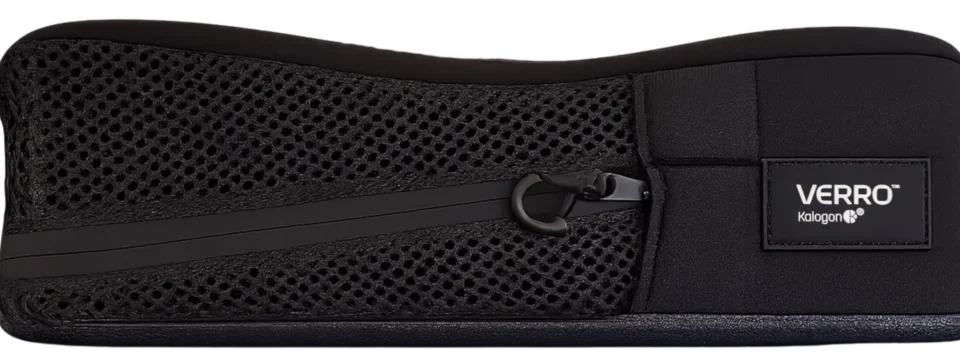
Revolutionizing Mobility: Kalogon Unveils Verro, a Custom 3D-Printed Cushion Line for Complex Postural Needs

In the specialized world of medical seating, the "one-size-fits-all" approach has long been a source of frustration for clinicians and a barrier to quality of life for patients. Recognizing a critical gap in the market for users with significant postural challenges—such as pelvic obliquity, windswept posture, and severe asymmetry—Florida-based medical technology firm Kalogon has officially launched its new Verro custom wheelchair cushion line.
By merging advanced additive manufacturing with clinical precision, the Verro line aims to provide a bespoke seating solution that is not only Medicare-coded (E2609) but also engineered to solve the complex physical hurdles that traditional off-the-shelf cushions fail to address.
Main Facts: A Dual Approach to Custom Seating
Kalogon’s entry into the custom seating market is defined by its versatility. The Verro line is available in two distinct configurations, each designed to meet different clinical requirements:
- Verro Lattice: The flagship offering utilizes a patent-pending 3D-printed elastomer construction. This variable-density lattice allows for precise control over the mechanical response of the cushion, providing rigid support where stabilization is required and increased compliance where pressure relief is essential.
- Verro Foam: For scenarios requiring a more traditional feel, the Verro Foam model pairs a custom-cut, dense foam base with a soft foam topper. Unlike static foam cushions, this base is adjustable post-delivery, allowing seating specialists to make minor modifications as the patient’s physical needs evolve.
The core innovation lies in the "Launch Pad," Kalogon’s proprietary real-time configurator. This digital platform streamlines the ordering process, allowing clinicians to input body measurements or upload 3D scans of a physical mold. Regardless of the input method, Kalogon guarantees shipment within 14 days, a significant improvement over the typical lead times associated with custom medical equipment.
Chronology: From Sensor Technology to Additive Manufacturing
Founded in 2019, Kalogon’s journey to the Verro line is marked by a steady evolution from data-driven monitoring to active physical intervention.
The Early Days: The Smart Cushion Era
Kalogon first gained industry attention by developing "smart" pressure relief cushions. These early iterations featured integrated sensors and adaptive surfaces designed to monitor user posture and mitigate pressure injuries. By gathering real-world data on how patients sit and shift throughout the day, the company gained invaluable insights into the deficiencies of standard cushions.
The Shift to Customization
As the company analyzed data from its smart cushions, it became evident that monitoring was only half the battle. Clinicians were consistently reporting that the most complex patients—those with chronic deformities or severe postural deviations—were essentially "falling through the cracks" of standard seating options.
2024–2025: Engineering the Verro Line
The development of Verro represented a pivot toward additive manufacturing. The team focused on the mechanical potential of lattice structures, which allow for "localized stiffness." By late 2025, the company had perfected the manufacturing process at its Melbourne, Florida facility, transitioning from the experimental prototype stage to a scalable, Medicare-reimbursable medical device.
Supporting Data: The Engineering of Lattice Structures
The effectiveness of the Verro Lattice model is rooted in advanced materials science. The 3D-printed elastomer is designed to manipulate the internal structure of the cushion to create varied mechanical responses within a single, continuous part.
Material Science and Hygiene
Beyond support, the lattice design serves a functional purpose in climate control. The open structure facilitates airflow, which is critical for moisture and temperature management—key factors in preventing skin breakdown. Furthermore, the material is hydrophobic, meaning it does not absorb liquids. This design choice enables the cushions to be cleaned easily, even in a top-rack dishwasher, ensuring that hygiene is not compromised by the complexity of the internal geometry.
Weight and Sustainability
In a field where mobility equipment is often heavy and cumbersome, the Verro Lattice offers a distinct advantage: it is up to two pounds lighter than the average medical cushion. This reduction in weight is a significant benefit for users who self-propel their wheelchairs, as it reduces the overall "rolling resistance" and physical exertion required for daily navigation.
Official Responses and Clinical Perspectives
The launch of Verro has been met with enthusiasm from the clinical community, who have long sought more flexible options for patients with complex needs.
"Every client is different, and seating specialists need options that reflect that," says Kelly Waugh, a prominent seating specialist and advisor to Kalogon. "That flexibility will allow Kalogon to serve a much wider population of people with complex seating needs than before."
Tim Balz, Founder and CEO of Kalogon, emphasizes that the product was born out of direct feedback. "We kept hearing from clinicians that their most complex patients were falling through the cracks," Balz noted during the launch. "We developed a technology that lets us 3D print the cushion with precise, localized control over where the body gets support and where it gets relief. This is about providing dignity and comfort through engineering."
Implications for the Future of Medical Seating
The introduction of the Verro line suggests a broader shift within the medical device industry toward the "industrialization of additive manufacturing." Kalogon is not alone in this; other innovators are applying similar lattice-design strategies across various fields.
A Broader Industry Trend
The strategy of varying internal cell alignment, layer count, and material density to control physical response is currently being explored by companies like Mahdi Naïm Studio, which utilized these principles for high-performance bicycle saddles, and Osprey Packs, which has patented 3D-printed lumbar support for backpacks.
By applying these high-performance engineering principles to the medical sector, Kalogon is effectively bridging the gap between luxury consumer technology and essential healthcare. The implications are profound:
- Reduced Lead Times: By utilizing a digital-first configurator and in-house 3D printing, Kalogon is setting a new standard for how quickly custom medical equipment can reach patients.
- Scalable Customization: As 3D printing technology matures, the ability to provide "mass customization"—offering a bespoke fit at a scale previously reserved for mass-market products—could reshape how insurance providers evaluate and reimburse medical equipment.
- Data-Driven Seating: As Kalogon integrates its background in smart sensors with its new additive manufacturing capabilities, the future of seating may involve "smart" custom cushions that are not only perfectly shaped for the user but also provide real-time feedback to prevent pressure ulcers before they form.
Closing the Gap
The medical seating industry has historically relied on manual foam carving and complex molding processes, which are prone to human error and difficult to reproduce accurately. With the launch of Verro, Kalogon has demonstrated that the future of orthopedic support lies in the marriage of patient-specific data and the geometric freedom of 3D printing.
As the company continues to scale its operations in Florida, the Verro line stands as a testament to the idea that complex postural needs do not require complex, archaic solutions—they require smarter, more precise engineering. For the thousands of wheelchair users who have struggled with inadequate seating, the shift to 3D-printed, variable-density support could mark the beginning of a more comfortable and mobile chapter.