




From Lab Prototype to Industrial Partner: The Decade-Long Evolution of Agility Robotics’ Digit

In the rapidly maturing landscape of robotics, few companies have navigated the transition from academic experimentation to industrial utility as decisively as Agility Robotics. Over the past decade, the Oregon-based firm has evolved from a spin-off of Oregon State University’s (OSU) Dynamic Robotics Lab into a powerhouse of automation, boasting over 400 employees and a sophisticated manufacturing facility capable of producing 10,000 humanoid robots annually.
At the heart of this transformation is Digit, a humanoid platform that has undergone five major iterations. As the company prepares for a landmark $2.5 billion valuation via a SPAC merger with Churchill Capital Corp. XI, the journey of Digit provides a masterclass in how to bridge the gap between "cool" robotics research and the grueling, high-stakes requirements of the modern supply chain.
The Foundations: From Cassie’s R&D to World Records
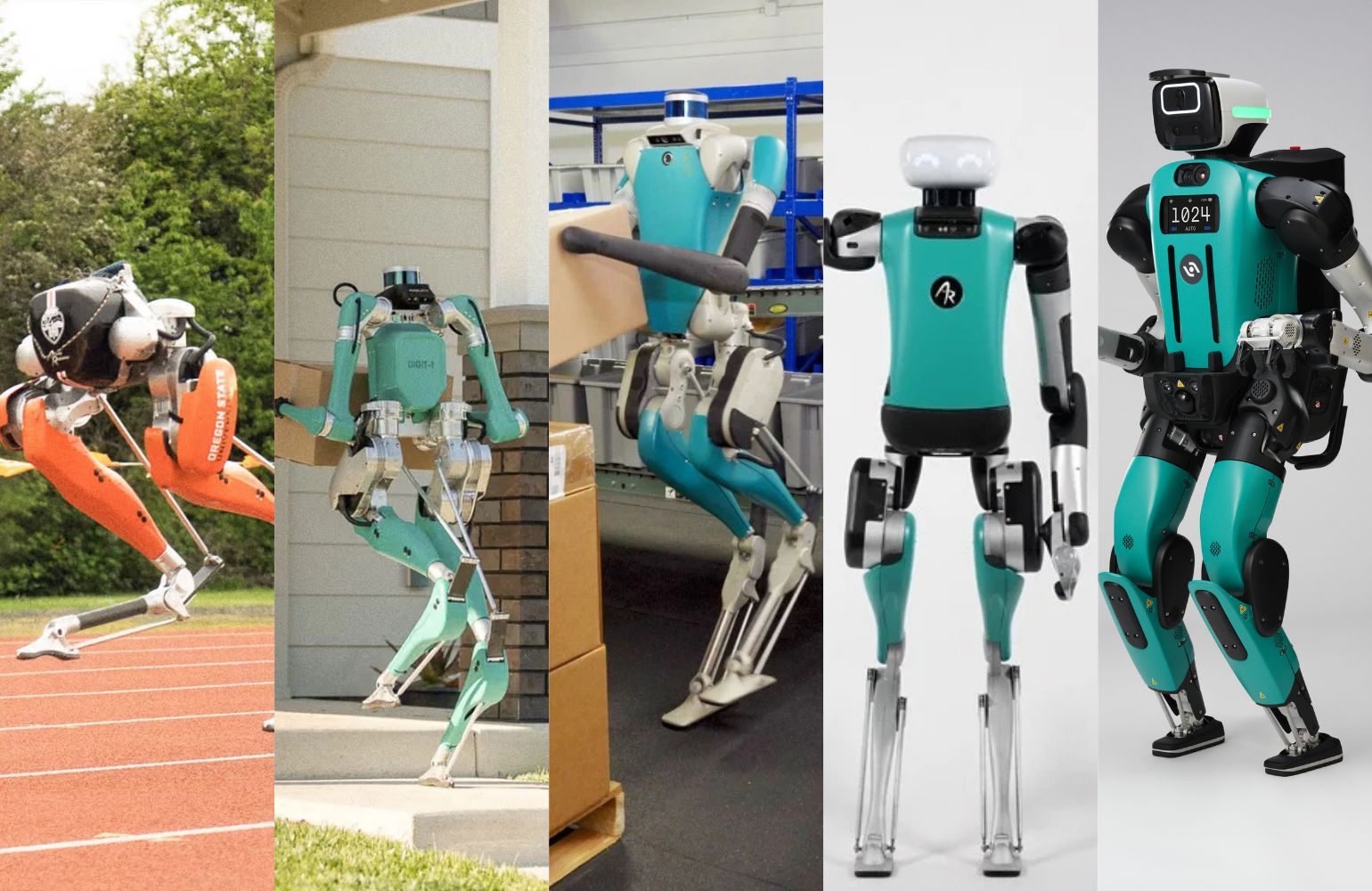
Before the polished, warehouse-ready versions of Digit made headlines, Agility Robotics cut its teeth on Cassie. Debuting in 2016, Cassie was not intended for the warehouse floor; it was a pure research-and-development platform designed to push the boundaries of bipedal locomotion.
Cassie’s signature, ostrich-like leg configuration was not a stylistic choice, but a functional imperative. "The fact that we even got to a leg configuration that looks like a bird was entirely coincidental, but promising and encouraging," says Jonathan Hurst, Co-Founder and Chief Robot Officer at Agility Robotics. "Ostriches can run 40 miles an hour and keep going all day long. We arrived at that configuration because we were trying to achieve that same goal: endurance and speed."
Cassie became an icon of robotic capability. In 2022, it etched its name into the history books by running 100 meters in just 24.73 seconds at OSU’s Whyte Track and Field Center—a Guinness World Record for the fastest 100-meter dash by a bipedal robot. While Agility ultimately retired the Cassie platform to focus on the commercialization of Digit, the lessons learned from Cassie’s bird-like legs regarding balance, energy efficiency, and dynamic gait planning served as the architectural bedrock for all subsequent iterations.
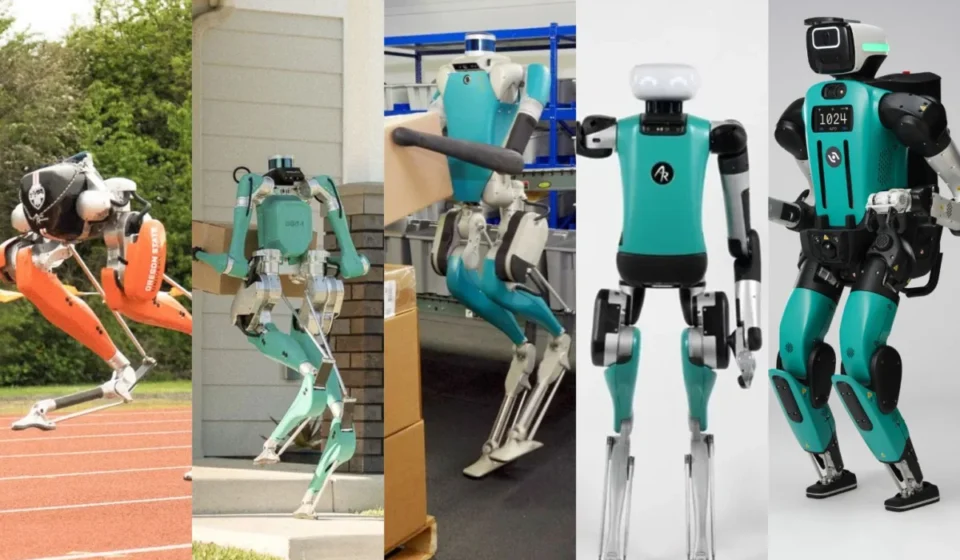
A Chronology of Innovation: The Iterative Path to Digit 5
The evolution of Digit is a story of narrowing scope. What began as a broad experiment in humanoids has become a laser-focused endeavor in industrial logistics.
2017: The Proof-of-Concept Era
When the first Digit was released in 2017, the humanoid market was largely theoretical. Agility was among the earliest entrants, positioning the robot as a tool for researchers to explore the potential of bipedal mobility in human-centric environments. This phase was defined by learning how to move through space without falling—a massive hurdle that the company cleared with early, impressive stability.
2019: Digit 3 and the Commercial Pivot
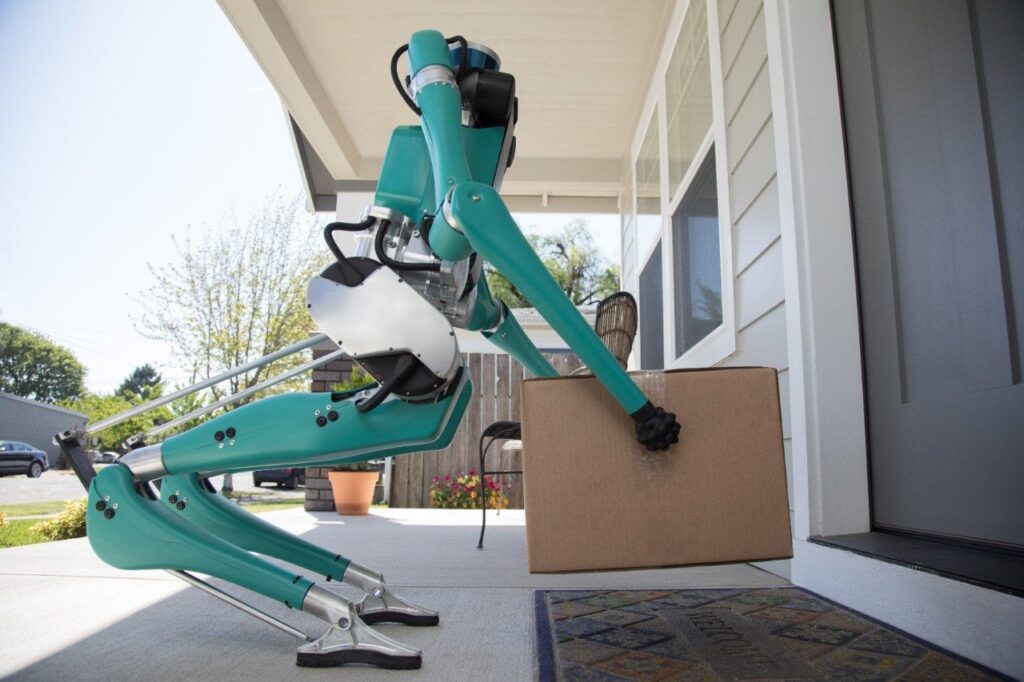
By 2019, Agility was ready to enter the commercial fray. Digit 3 was designed with a specific utility in mind: last-mile delivery and warehouse box stacking. It was during this period that the company secured a high-profile partnership with Ford Motor Company. The automaker purchased the first two production units to test the viability of robots in autonomous delivery vans, tasked with the "final 50 feet"—carrying a package from the vehicle to a customer’s doorstep. Digit 3 proved that humanoids could handle up to 40 pounds, providing a glimpse into a future where robots handle the physical drudgery of logistics.
2023: Digit 4 and Warehouse Specialization
Released in 2023, Digit 4 marked the end of the "experimental" phase. By this point, Agility had pivoted away from front-door delivery to focus on the more controlled, yet demanding, environments of e-commerce warehouses and distribution centers. With new end-effectors designed to manipulate totes, bins, and boxes, Digit 4 saw successful deployments with industry giants including Amazon, GXO Logistics, Toyota Motor Manufacturing Canada, and Schaeffler.
2026: Digit 5 and the Shift to Practicality
The introduction of Digit 5 marks a new, mature chapter for the company. The design philosophy has shifted from "make it move" to "make it work safely among humans." Digit 5 abandons the bird-leg geometry of its predecessors in favor of more human-like, strength-focused legs, signaling that for industrial work, raw force and stability outweigh the speed-focused agility of the Cassie era.
The Philosophy of "Human-Centric" Engineering
The shift in design from Digit 4 to Digit 5 is emblematic of Agility’s "real-world" approach. According to Hurst, the engineering constraints of the modern warehouse have dictated the robot’s physical evolution.
"This is where the engineering took us," Hurst explains. "Future configurations may look different depending on the requirements." The current requirement is simple: strength, battery longevity, and safety.
Perhaps the most critical advancement in Digit 5 is its ability to operate alongside humans. Current industrial robots are often caged or relegated to "roped-off" areas to prevent accidents. Digit 5 is designed to function as a collaborative colleague. It uses advanced, dynamic risk evaluation to adjust its speed and movement in real-time, effectively stopping if a human enters its immediate workspace. This autonomy eliminates the need for expensive, static safety zones, making it significantly easier for logistics providers to integrate robots into existing workflows.
Economic Implications and the Path to the Home
The implications of Agility’s trajectory are profound. With the company valued at $2.5 billion, the market is betting that humanoid robots are no longer science fiction, but essential infrastructure.
Agility’s strategy is a long-game approach. By starting in highly structured warehouse environments, they are solving the most difficult problems of bipedal mobility in a controlled, data-rich setting. Each unit deployed at a partner facility provides millions of data points that feed back into the central AI, refining the robot’s ability to navigate, grasp, and decide.
Hurst remains optimistic about the ultimate goal: the home. "Twenty or thirty years from now, we’ll have robots in our homes," he notes. "Being the first commercially deployed humanoid robot, and being the first functionally safe humanoid robot, those are important steps on getting to the home, and getting robots to be part of everyday life."
The State of the Industry: A Crowded Field
Agility Robotics is entering this new phase in a market that is arguably the most competitive in the history of robotics. As the company prepares to go public, it faces increasing pressure from both legacy industrial giants and well-funded startups. However, Agility holds a distinct advantage: a decade of "in-the-wild" deployment data.
While many competitors are still showing off robots that can perform tricks in a controlled demo, Agility’s machines are currently earning their keep by moving actual inventory for Fortune 500 companies. This transition from "demo-ware" to "production-ware" is where most humanoid companies fail. Agility’s success in managing this transition—moving from the ostrich-legged Cassie to the human-like, safe-by-design Digit 5—suggests they are well-positioned to maintain their lead.
Conclusion: A New Era for Humanoids
The story of Agility Robotics is not just about a robot; it is about the maturation of an entire industry. The evolution from the research-focused, record-breaking Cassie to the industrial, safety-conscious Digit 5 mirrors the broader trajectory of the robotics sector. We are moving away from the era of the "impressive prototype" and into the era of the "reliable employee."
As Jonathan Hurst and his team prepare to share their insights at the upcoming RoboBusiness conference, the focus will be less on the mechanics of walking and more on the logistics of integration. For Agility Robotics, the future is not about building a robot that can run fast—it is about building a robot that can work alongside us, safely and effectively, until the day that having a humanoid in the home is as natural as having a refrigerator.
Editor’s Note: Jonathan Hurst, Co-Founder and Chief Robot Officer at Agility Robotics, will be participating in the keynote "The Next 20 Years of Robotics" at RoboBusiness on October 20-21. Pras Velagapudi, Agility’s CTO, will also be featured in the "State of Humanoids" keynote. Industry professionals are encouraged to secure their conference passes to witness the next stage of this evolution firsthand.