


Beyond the Puree: Gastronology and Revogan Forge a Path for 3D-Printed Nutrition in European Healthcare

In a significant move toward the industrialization of food technology, Dutch 3D printing innovator Gastronology has announced a strategic partnership with the Belgian distributor Revogan. This collaboration is set to bring Gastronology’s proprietary "Dysphalicious" meal line into the heart of the Belgian healthcare system, with commercial orders slated to open in August 2026. This partnership represents more than a simple logistics agreement; it is a calculated effort to bridge the gap between high-tech additive manufacturing and the stringent, high-stakes requirements of clinical nutrition.
The Convergence of Technology and Care
For patients suffering from dysphagia—a medical condition characterized by difficulty swallowing—every meal is a potential safety risk. Traditionally, institutional kitchens have relied on manual pureeing and blending, methods notoriously prone to inconsistency. A meal pureed in the morning may have a different viscosity or aesthetic appeal than one prepared in the afternoon, creating a "lottery" of texture that can lead to malnutrition or, in severe cases, aspiration pneumonia.
Gastronology’s solution is to replace the variability of the kitchen blender with the precision of the 3D printer. By utilizing industrial-scale additive manufacturing, the company produces meals that are not only nutritionally balanced but also visually indistinguishable from their whole-food counterparts. Whether it is a perfectly shaped carrot, beetroot, or sweet potato, the food is reconstructed to meet the International Dysphagia Diet Standardisation Initiative (IDDSI) Level 4—the gold standard for pureed foods that require no chewing.
Chronology: From Lab-Bench to Bedside
The trajectory of Gastronology’s rise reflects the broader maturation of the food-tech sector.
- April 2024: Gastronology initiates large-scale production of its Dysphalicious range in partnership with Budelfood B.V. in Poortvliet, Netherlands. This shift from pilot production to industrial-scale output marked the company’s transition from a research-focused startup to a commercial supplier.
- 2024–2025: The company successfully integrates into the Dutch home-care market via the online delivery platform QSTA, proving that their product could be scaled and distributed to end-users beyond hospital walls.
- March 2026: A collaborative study involving Spellman Care, the University of Leeds, and PRINTFOODS UK begins investigating the feasibility of 3D-printed foods in active care home settings, highlighting the global interest in this technology.
- August 2026: Official opening of orders for the Belgian healthcare market via the Revogan partnership, marking the company’s first major international expansion.
Strategic Synergy: Why Revogan?
In the world of medical procurement, technical superiority is rarely the sole deciding factor. Healthcare institutions operate under complex regulatory frameworks and risk-averse purchasing policies. Gastronology’s decision to partner with Revogan is a strategic maneuver to bypass the "cold start" problem.
Revogan brings an established, decades-long rapport with Belgian dietitians, speech therapists, and hospital procurement boards. By leveraging an existing network of trust, Gastronology avoids the heavy lift of building a local sales infrastructure from scratch.
"We deliberately choose partners who, like us, work on the basis of scientific substantiation and professionalism," noted a spokesperson for Revogan. "Gastronology’s Dysphalicious products align seamlessly with our goal of providing healthcare professionals and their patients with nutritional solutions they can rely on."
For Gastronology, this partnership is a critical piece of a larger scaling puzzle. The company has publicly declared its ambition to grow its daily production capacity from 700 kilograms to 2,500 kilograms over the next few years. To reach these volumes, the company needs stable, high-volume channels—exactly what the Belgian care home network provides.
The Challenge of Institutional Adoption
Despite the technological promise, the road to widespread adoption is not without friction. The fundamental challenge remains: how to translate lab-grade precision into mass-market reliability.

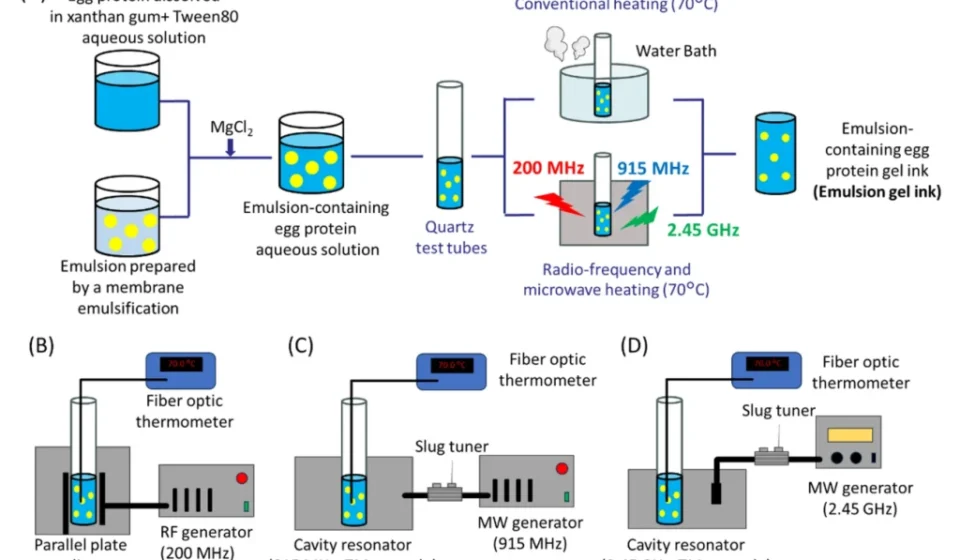
Current research underscores the difficulty of achieving consistent texture across different preparation methods. For example, in August 2025, researchers from Kyushu University and Cardiff University released findings regarding frequency-based heating methods for 3D-printed gels. Their work demonstrated that radiofrequency and microwave exposure could modulate the texture of printed food at a microscopic level. While groundbreaking, the fact that these researchers used LEGO Mindstorms to assemble their bioprinter highlights that the field is still in a state of rapid experimentation.
Gastronology occupies a rare middle ground: they are past the "LEGO stage" but still operating in an industry that is yet to be fully standardized. They must prove that their printed meals, while impressive, can withstand the rigors of hospital supply chains, heating, and serving protocols without losing their IDDSI compliance.
Implications for the Future of Nutrition
The implications of the Gastronology-Revogan partnership extend beyond the immediate Belgian market. It serves as a litmus test for the "industrialization of additive manufacturing" in the food sector.
1. The Shift to "Food-as-a-Service"
Gastronology is effectively treating food as a high-precision medical device. By selling in 50-gram frozen portions, they provide a standardized, plug-and-play solution for care facilities. This shift reduces the labor burden on hospital staff, allowing them to focus on patient care rather than the chemistry of food preparation.
2. Market Expansion and Sustainability
The focus on plant-based items—cauliflower, carrot, beetroot, and sweet potato—aligns with broader ESG (Environmental, Social, and Governance) goals within European healthcare. As hospitals face pressure to reduce their carbon footprints, the ability to source high-quality, plant-based, locally produced, and low-waste food solutions becomes a competitive advantage.
3. The "Institutional Filter"
The next two years will be a period of intense "institutional filtering." While early trials in the UK and Netherlands show promise, the question remains whether these solutions can penetrate the massive, slow-moving procurement engines of large national health services. If Gastronology succeeds in Belgium, it will provide a blueprint for how food-tech companies can scale by acting as a specialized supplier within existing distribution ecosystems rather than attempting to disrupt the entire supply chain alone.
Looking Ahead
The partnership between Gastronology and Revogan is a microcosm of the current state of food technology. We are moving away from the era of "3D printing as a novelty" and into an era of "3D printing as a clinical necessity."
The company’s ability to scale to 2,500 kilograms per day will be the ultimate indicator of success. If they can maintain the strict IDDSI requirements at that volume, the 3D-printed food sector will have moved from an academic curiosity to a cornerstone of modern geriatric and rehabilitative care.
For now, the eyes of the industry are on Belgium. If the logistical integration proves successful, the model could easily be replicated in neighboring markets, cementing 3D-printed nutrition as a vital component of the future healthcare landscape. As Gastronology moves closer to its August 2026 launch, the company is proving that in the quest to improve the quality of life for the elderly and those with dysphagia, the most effective tools are those that combine the art of the chef with the precision of the engineer.