
Breaking the Ceiling: How Destratification Solves the Hidden Cost of Industrial Temperature Imbalance

By Jamie Tuinstra, Modine Manufacturing
Posted May 28, 2026
In the modern industrial landscape, where precision, efficiency, and worker safety are the pillars of operational success, building maintenance teams face a relentless adversary: physics. Specifically, the physics of air movement. In large-scale manufacturing facilities, distribution centers, and warehouses, temperature stratification is a silent, persistent, and increasingly costly challenge. As facility managers strive to optimize energy consumption and meet sustainability targets, the solution to this atmospheric imbalance may be far simpler—and more effective—than traditional HVAC upgrades.
The Anatomy of a Thermal Problem: Understanding Stratification
Temperature stratification is a phenomenon where air behaves according to its density. Warm air, being less dense than cold air, naturally rises. In a residential setting with eight-foot ceilings, this effect is negligible. However, in the high-bay environments of industrial warehouses—where ceilings can soar to 30, 40, or even 50 feet—the disparity becomes dramatic.

The Physics of the "Heat Trap"
In a typical industrial facility during the winter months, a heating system works to pump warm air into the workspace. This air immediately begins to migrate upward, collecting in a thick, stagnant layer against the ceiling deck. While the thermostat at the floor level may register a chilly 60°F, the air trapped near the roof trusses can reach temperatures exceeding 80°F or 90°F.
This 20-degree-plus differential is not just a comfort issue; it is a financial drain. Because the thermostat is located at the floor level, it continues to call for heat, forcing the furnace or boiler to work overtime to "fill" the room, while the majority of the generated heat remains uselessly suspended overhead.
Chronology of a Facility Challenge
The evolution of this problem tracks alongside the growth of modern logistics and manufacturing.
- Early Industrial Era: Facilities were smaller, and heating was often localized via radiant or coal-fired systems, making stratification less of a priority compared to basic heat production.
- The Mid-Century Expansion: As warehouses grew in volume, the reliance on forced-air unit heaters increased. Building codes focused on safety and ventilation, but energy efficiency was secondary to operational capacity.
- The Energy Crisis Era (1970s): For the first time, facility managers began to calculate the cost-per-cubic-foot of heating. Insulation standards rose, but the "ceiling trap" remained a largely ignored factor.
- The Modern Sustainable Era (2020s–Present): With the advent of ESG (Environmental, Social, and Governance) mandates and the rising cost of natural gas and electricity, facility managers are now treating destratification as a critical component of a comprehensive HVAC strategy.
Supporting Data: The Economic and Safety Implications
The implications of ignoring stratification are twofold: fiscal erosion and human impact.
Financial Hemorrhaging
Energy modeling data suggests that for every foot of ceiling height, the temperature at the roof increases by approximately 0.5 to 1 degree Fahrenheit. In a 40-foot warehouse, the heating system is effectively trying to heat a much larger volume of air than is necessary for human occupants.
By installing destratification fans—specialized industrial units designed to push this trapped warm air down to the floor—facilities can typically reduce their heating energy consumption by 20% to 35%. This is not merely a marginal gain; it represents a significant reduction in the facility’s annual operating expenditure, often resulting in a return on investment (ROI) within 12 to 24 months.

Human Factors: Comfort and Productivity
Beyond the utility bill, the "cold-floor" effect is a major contributor to employee dissatisfaction. In a warehouse where workers are sedentary (e.g., packing stations or quality control desks), cold drafts at the floor level can lead to decreased productivity, increased absenteeism, and potential safety risks. Conversely, in the summer, stagnant air can lead to humidity pockets, which damage sensitive inventory, electronics, and stored materials.
Official Perspectives: The Role of Industrial Engineering
Industry experts, including those at Modine Manufacturing, emphasize that a "one-size-fits-all" approach to climate control is inherently flawed.
"We are engineering a cleaner, healthier world," notes the team at Modine. "Building on more than 100 years of excellence in thermal management, our focus is on providing systems that improve air quality while conserving natural resources."

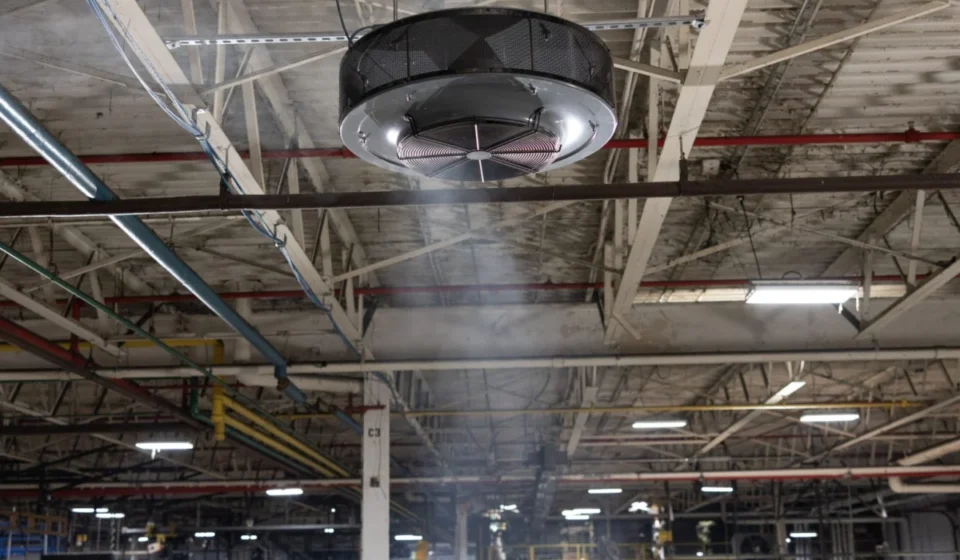
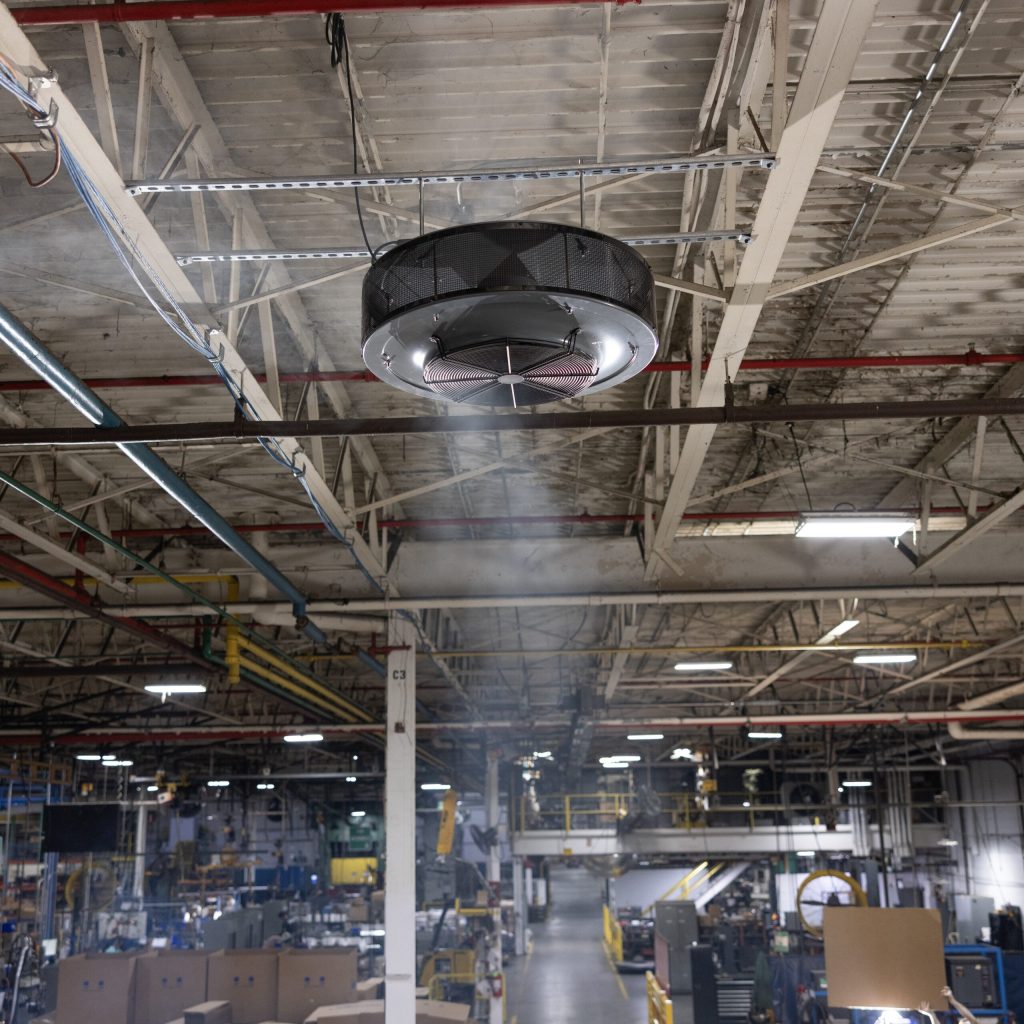
According to professional engineers, the key to successful destratification is proper air induction. Unlike standard ceiling fans, which are designed for comfort cooling, industrial destratification fans are high-velocity, low-volume (or high-volume) systems engineered to push air through a long vertical column, mixing the layers without creating a disruptive breeze at the floor level.
Implementing the Solution: Strategic Considerations
To effectively combat stratification, facility managers must move beyond off-the-shelf purchases and engage in strategic planning.
1. Spatial Analysis and Obstructions
Every facility has a unique topography. High-bay racking, overhead cranes, lighting fixtures, and ductwork create "dead zones" where air cannot circulate naturally. A professional assessment must map these obstructions to ensure that the fan placement provides consistent coverage rather than isolated pockets of airflow.
2. Zoning Strategies
Not every area of a facility requires the same climate. A shipping dock, which is frequently exposed to the elements, has different requirements than a climate-controlled assembly line. Advanced destratification systems allow for zoning, where specific fans can be programmed to run based on the occupancy and heat load of that specific section.
3. The Power of Automation
Manual control is rarely sufficient in large facilities. The modern standard involves integrating destratification fans with building management systems (BMS). Using temperature sensors placed at both the ceiling and floor, the fans can be programmed to activate only when a specific temperature differential (the "Delta T") is exceeded. This ensures the fans are only running when they are actually needed, further reducing electricity consumption.
The Long-Term View: A Smoother Operation
The adoption of destratification technology is more than a quick fix for a cold winter; it is an investment in the long-term health of industrial infrastructure.
Equipment Longevity
Constant cycling of heating equipment—firing up to reach a temperature that is immediately lost to the ceiling—accelerates mechanical wear. By stabilizing the internal environment, destratification reduces the workload on HVAC units. This leads to fewer maintenance calls, lower repair costs, and an extended lifespan for expensive heating and cooling equipment.
Sustainability and ESG
As global supply chains face pressure to reduce their carbon footprints, reducing energy intensity is the most direct path to lower Scope 2 emissions. A facility that consumes 30% less fuel to maintain the same comfort level is a facility that is demonstrably more sustainable. For corporations reporting to stakeholders on their environmental impact, these savings are tangible and reportable.
Conclusion: A Proactive Stance
For maintenance and reliability teams, the "out of sight, out of mind" approach to the ceiling space is no longer viable. The air sitting 30 feet above the floor is a wasted asset—a reservoir of heat that is currently being ignored.

By integrating engineered destratification solutions into their maintenance programs, facilities can transform their environment from a source of constant, costly adjustment into a stable, efficient, and comfortable workplace. Whether it is improving the morale of a night-shift crew or meeting aggressive corporate energy-reduction goals, the message is clear: the solution to high heating costs is already in the building. It just needs a little help moving from the ceiling to the floor.
Related Insights for the Modern Facility
As the industrial sector continues to embrace digital transformation, the synergy between climate control and other facility management tools becomes even more vital:
- BIM Integration: Leveraging Building Information Modeling (BIM) allows managers to simulate airflow patterns before a single fan is installed, ensuring maximum efficacy.
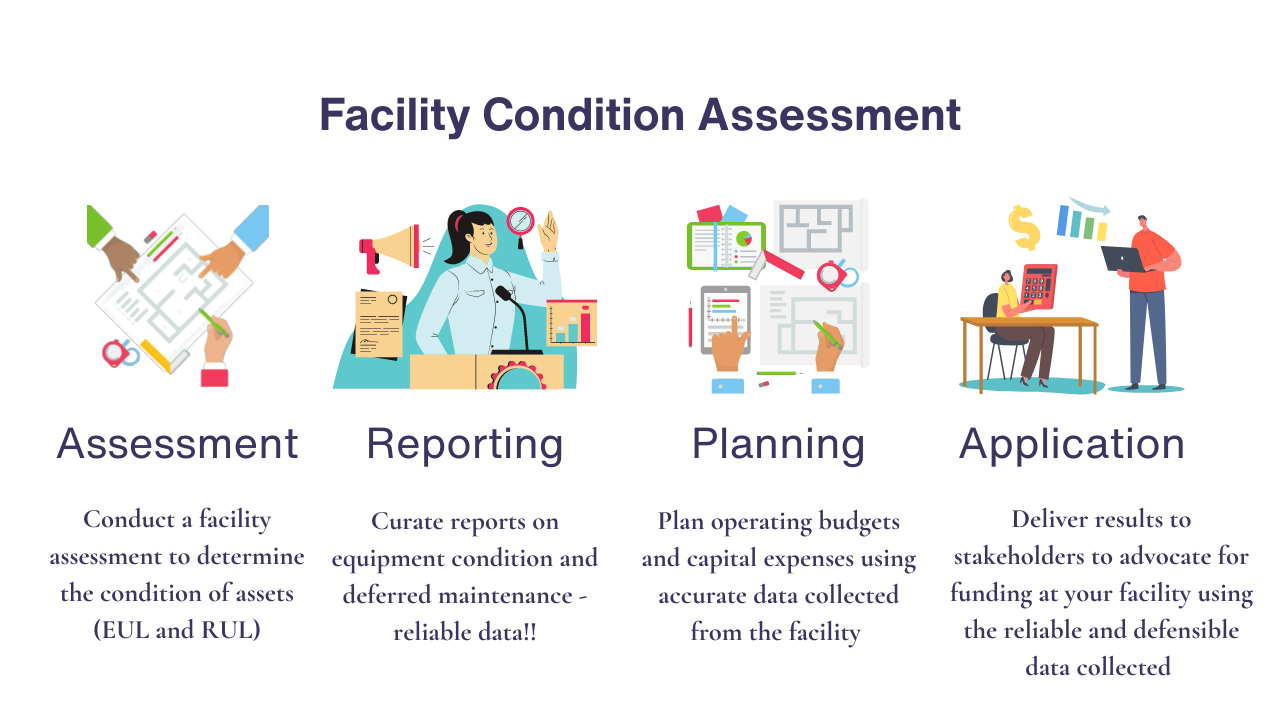
- Facility Condition Assessments (FCA): Regular assessments help prioritize the installation of energy-saving technologies like destratification fans within the broader capital expenditure budget.
- Total System Maintenance: Pairing destratification with regular maintenance of unit heaters and ventilation systems ensures that the entire thermal envelope of the building is performing at peak efficiency.
Jamie Tuinstra is a product manager at Modine Manufacturing. With over 25 years of experience in the HVAC industry, he specializes in developing solutions that address the unique thermal challenges of industrial and commercial spaces.