



Navigating the Decade: A Comprehensive Analysis of Renault Group’s Production Outlook to 2030

By Automotive Industry Correspondent
Published in association with Automotive World
Main Facts
As the global automotive industry navigates the most turbulent and transformative era in its history, legacy automakers are forced to redefine their operational identities. Among them, the Renault Group stands as a fascinating case study in industrial adaptation. A comprehensive production and performance forecast compiled by automotive analyst Jonathan Storey for Automotive World offers a detailed trajectory for the French multinational manufacturer through the year 2030.
The forecast highlights several pivotal shifts in Renault Group’s global manufacturing footprint, structural re-organizations, and technological pivots. Key takeaways from the forward-looking analysis include:
- The "Renaulution" Realities: The strategic turnaround plan initiated by Chief Executive Officer Luca de Meo is actively reshaping manufacturing outputs, shifting the company’s emphasis away from pure volume chasing toward profitability and high-value segments.
- Electrification Milestones: The data projects a steep acceleration in Battery Electric Vehicle (BEV) production, heavily anchored by the newly formed Ampere electric vehicle and software entity, alongside continued hybrid (HEV) integration across core legacy models.
- Geographical Realignment: Renault’s manufacturing footprint is undergoing significant rationalization, balancing European domestic strongholds with strategic export hubs in North Africa, Latin America, and strategic partnerships within the broader Renault-Nissan-Mitsubishi Alliance.
- Supply Chain and Macroeconomic Pressures: The forecast accounts for ongoing headwinds, including raw material cost volatility, geopolitical friction, and the complex transition from internal combustion engines (ICE) to zero-emission powertrains.
This deep dive examines the foundational drivers of Renault’s production forecast, tracing its historical context, evaluating its quantitative projections, assessing corporate and stakeholder responses, and analyzing the broader implications for the global automotive landscape.
Chronology: The Road from Crisis to Transformation
To understand where Renault Group is heading by 2030, it is vital to contextualize the timeline of events that laid the groundwork for the current manufacturing strategy.
2020–2021: The Pandemic Shock and the Dawn of "Renaulution"
- May 2020: In the wake of the COVID-19 pandemic and following the tumultuous ousting of former alliance leader Carlos Ghosn, Renault announced a drastic restructuring plan. The company stated it would cut roughly 15,000 jobs globally and reduce production capacity by nearly 20% to stabilize finances.
- January 2021: CEO Luca de Meo unveiled the "Renaulution" strategic plan. Abandoning the previous management’s obsession with volume, the strategy pivoted the company toward value creation, focusing on three core pillars: Resurgence (restoring margin and cash generation), Renovation (enriching product lineups), and Revolution (shifting business models toward tech, energy, and mobility).
2022–2023: Decoupling and Structural Independence
- November 2022: Renault and Nissan announced a fundamental restructuring of their two-decade-old Alliance. The agreement redefined cross-shareholdings to a balanced 15% stake, granting both entities greater operational independence while maintaining joint technological ventures.
- February 2023: Renault revealed details of "Horse," its internal combustion engine (ICE) joint venture with China’s Geely, designed to pool resources for efficient hybrid and legacy powertrains.
- November 2023: Renault officially laid the groundwork for "Ampere," its dedicated EV and software spin-off, designed to rival both legacy automakers and aggressive new entrants in the European EV space.
2024–2030: Execution, Scaling, and the Horizon
- 2024–2025: The rollout of crucial next-generation EV models—including the Renault 5 E-Tech and Renault 4 E-Tech—aims to democratize electric mobility in Europe while testing the efficiency of the newly separated Ampere manufacturing ecosystem.
- 2026–2030: The forecast period captured by Automotive World enters its critical phase. During these years, Renault is expected to achieve mass-scale cost parity between EVs and ICE vehicles, navigating the tightening regulatory environment leading up to the European Union’s 2035 phase-out of new ICE vehicle sales.
Supporting Data: Production Dynamics and Volume Projections
While full proprietary access to Jonathan Storey’s granular datasets requires a subscription to Automotive World, the structural contours of the forecast outline a fascinating paradigm shift in how Renault Group will manufacture vehicles over the remainder of the decade.
1. Volume vs. Value Optimization
Historically, Renault focused heavily on volume expansion in emerging markets and aggressive discounting in Europe to maintain factory utilization rates. The 2030 outlook demonstrates a permanent break from this philosophy. Production output is forecasted to stabilize rather than experience hyper-growth, prioritizing models with higher average selling prices (ASPs) and richer software-defined features.
2. The Powertrain Mix Shift
- Internal Combustion Engines (ICE): Expected to steadily decline as a percentage of total output, though they will not vanish entirely. Through the Horse joint venture, Renault will continue producing highly efficient ICE and hybrid powertrains for markets in Latin America, North Africa, and parts of Europe where EV infrastructure lags.
- Hybrids (HEVs and PHEVs): Serving as the bridge technology, hybrids are projected to occupy a significant share of mid-decade production volumes. Renault’s E-Tech full hybrid system has proven unexpectedly popular, shielding the company from the slower-than-anticipated adoption curves of pure BEVs in certain demographic segments.
- Battery Electric Vehicles (BEVs): Projected to scale exponentially. By 2030, the forecast indicates that BEVs will comprise a dominant plurality—if not a majority—of Renault-branded vehicle production in European facilities, heavily driven by the "ElectriCity" manufacturing cluster in northern France (comprising Douai, Maubeuge, and Ruitz).
3. Regional Manufacturing Footprint
- Europe: Remains the heartland for high-tech, high-margin production (EVs, light commercial vehicles). Factory utilization is projected to improve due to platform consolidation (moving away from legacy architectures to modern platforms like AmpR Small and AmpR Medium).
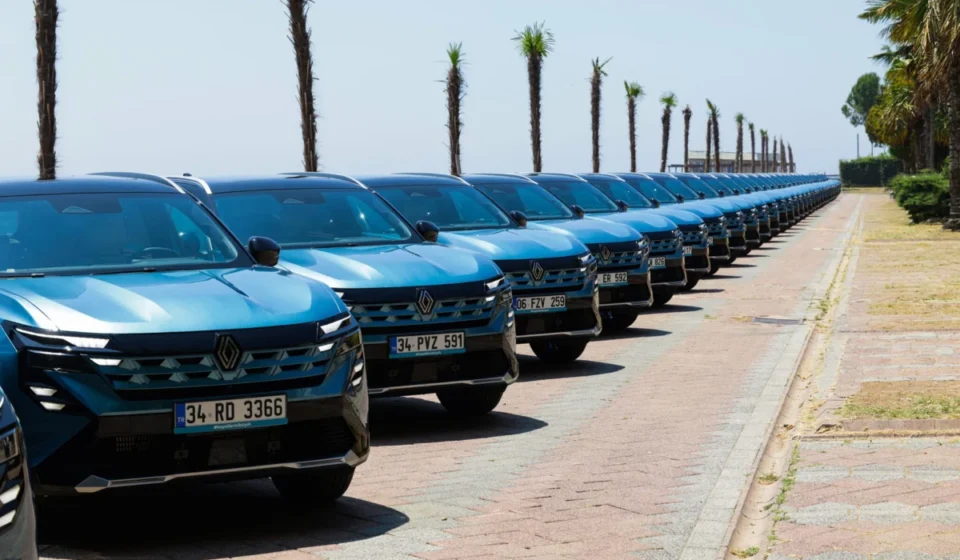
- International Hubs: Facilities in Turkey (Oyak Renault), Morocco (Tangier), and Latin America (Brazil) will continue to anchor the group’s cost-competitive production, supplying robust ICE and hybrid vehicles tailored to developing markets.
Official Responses and Corporate Strategy
Executives within the Renault Group have repeatedly emphasized that survival in the modern automotive climate requires unprecedented agility. Speaking on the strategic goals underpinning the company’s long-term industrial planning, CEO Luca de Meo has been vocal about the necessity of decoupling operational units to unlock agility.
"We are no longer playing the volume game; we are playing the value game," de Meo stated during a recent investor briefing addressing the company’s structural evolution. "The automotive industry is experiencing a compression of timelines. What used to take five years now needs to happen in three. Our manufacturing outlook reflects a disciplined approach to capital allocation, ensuring that every plant we operate is optimized for flexibility, digital integration, and carbon neutrality."
Renault’s Chief Technology Officer and head of Ampere, in separate commentary regarding manufacturing efficiency, highlighted the importance of industrial ecosystems:
"By concentrating our EV production within dedicated ecosystems like ElectriCity, we are reducing logistics costs, shrinking our carbon footprint, and compressing production times. Our goal is to bring the cost of manufacturing an EV down to parity with ICE vehicles ahead of regulatory deadlines, and our data shows we are on track to achieve significant cost reductions between now and 2030."
Labor unions and industrial partners have also weighed in. While restructuring has inevitably sparked friction regarding employment security at older legacy sites, agreements reached with French unions have largely secured the long-term futures of domestic plants by re-skilling workers for battery assembly, software integration, and advanced EV manufacturing.
Implications: What the 2030 Outlook Means for the Industry
The trajectory mapped out by Automotive World for Renault Group carries profound implications not just for the French automaker, but for the broader European automotive ecosystem and global competitors.
1. The Viability of the "Carve-Out" Business Model
Renault’s bold experiment of splitting its operations—separating EV and software development (Ampere) from legacy ICE and hybrid operations (Horse)—is being closely watched by industry observers. If the production and financial forecasts hold true, Renault will prove that traditional automakers can successfully incubate agile, tech-focused startup-like entities within legacy industrial structures. Conversely, any missteps in scaling Ampere could validate critics who argue that such corporate gymnastics create unnecessary bureaucratic friction.
2. Pressure on the European Supply Chain
As Renault scales its EV production toward the end of the decade, it will place immense pressure on European battery supply chains. The reliance on localized gigafactories—such as the Envision AESC plant in Dunkirk—will be critical. Failure to secure stable, cost-effective supplies of cathode, anode, and lithium materials could threaten the volume projections outlined in the 2030 forecast.
3. Competitive Positioning Against Chinese Entrants
With aggressive Chinese EV manufacturers aggressively expanding into the European market, Renault’s focus on affordable European-made EVs (such as the Renault 5 and upcoming models) is an existential defensive play. The 2030 production outlook underscores Renault’s gamble that local manufacturing, strong brand heritage, and localized dealer networks will insulate it from the pricing pressure exerted by import competitors.
4. Regulatory Resilience
With the European Union holding firm on its 2035 zero-emission mandate for new cars—and interim fleet emissions targets tightening sharply in 2025 and 2030—Renault’s aggressively forecasted pivot to BEVs is a regulatory necessity. Meeting these targets without sacrificing profitability will determine whether Renault remains a tier-one global player or retreats to a niche regional manufacturer.
Conclusion
The production and performance outlook for Renault Group through 2030, as analyzed by Automotive World, depicts a company actively rewriting its own DNA. Moving away from the volume-obsessed strategies of the past, Renault is positioning itself as a leaner, more technologically integrated manufacturer capable of weathering the storms of the energy transition.
While macroeconomic headwinds, supply chain vulnerabilities, and fierce global competition ensure that the road ahead will not be without obstacles, the foundational architecture of the "Renaulution" appears to have provided Renault with a viable compass for the remainder of the decade. All eyes will now turn to the execution of these manufacturing strategies as the industry marches toward 2030.