




Strengthening the Defense Supply Chain: Velo3D Joins GIDEP to Bolster Additive Manufacturing Integrity

In an era where the defense sector is increasingly reliant on advanced manufacturing, the necessity for ironclad reliability and supply-chain transparency has never been higher. Velo3D, a leader in metal additive manufacturing (AM), has officially announced its participation as a member of the Government-Industry Data Exchange Program (GIDEP). This strategic move marks a significant milestone in the company’s efforts to integrate its cutting-edge 3D printing technology into the rigorous, highly regulated landscape of national security and mission-critical defense production.
By joining GIDEP, Velo3D gains access to a vast, collaborative intelligence network that tracks technical specifications, quality control data, and reliability metrics across the U.S. government and its industrial partners. For a company that specializes in the complex, high-stakes fabrication of mission-critical metal components, this membership provides a vital layer of risk management that complements its existing proprietary quality assurance frameworks.
The Core Objective: Why GIDEP Matters
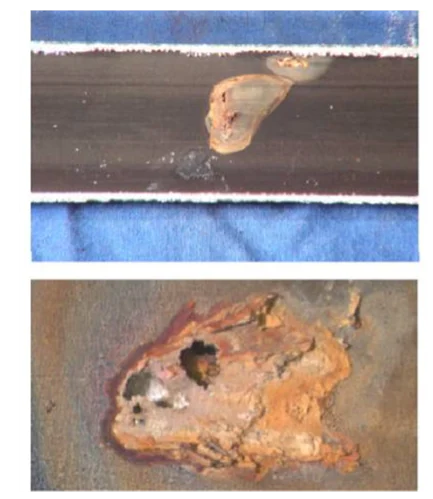
The Government-Industry Data Exchange Program is more than a simple database; it is a critical infrastructure component for the U.S. defense establishment. Managed by the Defense Standardization Program Office, GIDEP serves as a centralized repository for technical information, including reports on nonconforming parts, material failures, and obsolescence trends.
When a supplier or a government agency identifies a defect or a performance shortfall in a component, that information is shared through the GIDEP network. This allows other participants to identify similar vulnerabilities within their own supply chains before they escalate into catastrophic failures. For Velo3D, participating in this ecosystem means that its additive manufacturing operations—which produce highly complex geometries for aerospace, defense, and energy sectors—can now be cross-referenced against the collective historical data of the entire defense industrial base.
"Trust and reliability are essential when producing parts for mission-critical defense applications," said Arun Jeldi, CEO of Velo3D. "GIDEP gives Velo3D access to critical information shared across government and industry, complementing the quality and risk-management processes that support our defense manufacturing activities."
A Chronology of Strategic Integration
The journey toward this partnership is part of a broader trajectory for Velo3D as it aligns itself with the evolving standards of the U.S. Department of Defense (DoD).
- Foundation of Quality (2018–2022): Velo3D established its market presence through the development of its integrated Sapphire metal 3D printing platform, prioritizing in-process monitoring via its proprietary "Assure" quality control system.
- Rapid Production Expansion: The company expanded its capabilities through its Rapid Production Solutions (RPS) arm, providing manufacturing capacity to contractors who require high-performance, flight-ready components without the immediate need for capital investment in their own hardware.
- Defense Alignment (2023–2025): Recognizing the Pentagon’s shift toward the "industrialization" of additive manufacturing, Velo3D began refining its compliance protocols to meet the stringent demands of aerospace and defense prime contractors.
- The GIDEP Membership (2026): With this formal entry into GIDEP, Velo3D transitions from being a peripheral supplier to a fully integrated participant in the defense intelligence network, signaling its commitment to the long-term, standardized qualification of printed parts.
Supporting Data and Technological Synergy
Velo3D’s value proposition in the defense sector rests on its "Intelligent Fusion" manufacturing process. This software-driven approach manages the entire print lifecycle, from the "Flow" print preparation software to the physical build on the Sapphire system, culminating in the "Assure" quality system.
The "Assure" system is designed to provide comprehensive, per-part data tracking. By logging every layer of a build, the system creates a digital twin of the component. When combined with GIDEP’s macro-level data on material science and component failures, Velo3D creates a "dual-defense" strategy:
- Internal Validation: The Assure system catches potential defects in real-time during the build.
- External Intelligence: GIDEP provides the external context, alerting the company to broader supply chain risks, such as potential material batch defects or recurring issues with specific alloy formulations identified elsewhere in the defense sector.
This synthesis of internal and external data is vital. In metal additive manufacturing, the chemistry of the powder and the laser-melt dynamics are sensitive to minute changes. Having access to GIDEP’s shared knowledge ensures that if a specific powder batch or hardware calibration is flagged for inconsistency elsewhere in the industry, Velo3D can immediately apply that insight to its own production runs, preventing costly rework or, more importantly, field failures.
Official Perspectives and Industry Context
The integration of Velo3D into the GIDEP fold is reflective of a wider shift in the U.S. military’s approach to 3D printing. Historically, the hurdle to adopting additive manufacturing in defense was the "qualification gap"—the difficulty of proving that a 3D printed part is as reliable as a traditionally cast or machined one.

The Pentagon is actively working to bridge this gap through initiatives like the Joint Additive Manufacturing Acceptability (JAMA) program, funded by the Defense Logistics Agency. The goal of JAMA is to create universal qualification standards, ensuring that if one branch of the military approves a part for use, it is accepted by all, eliminating the redundant and costly testing that has previously stifled innovation.
Other industry bodies, such as America Makes, are tackling similar bottlenecks. With programs like "Delta Qual 2.0" and the "JAQS-SQ" (Joint Additive Manufacturing Qualification System – Supplier Qualification), the focus has moved from merely proving that a machine works, to proving that the entire supplier ecosystem can produce consistent, reliable results.
By joining GIDEP, Velo3D is aligning its corporate strategy with these federal initiatives. It is no longer enough to be a high-tech hardware provider; to survive in the defense sector, one must be a data-transparent partner capable of participating in the national security discourse on material integrity.
Implications for the Future of Defense Manufacturing
The implications of this move are twofold: they reflect the maturation of the additive manufacturing industry and the growing reliance of the military on decentralized, on-demand production.
1. Reducing the "Qualification Burden"
The primary benefit for Velo3D’s defense customers is the reduction in time-to-market. By leveraging GIDEP, the company can proactively address potential failure modes, which in turn simplifies the qualification process for defense prime contractors. When a contractor knows that their AM supplier is part of an information-sharing network that prioritizes failure detection, the level of trust in the end-part increases, potentially accelerating the transition from prototype to field-deployed component.
2. Standardization of Excellence
The defense industry is moving toward a "trust once, use everywhere" model. Programs like JAMA and GIDEP are the bedrock of this shift. Velo3D’s participation ensures it remains at the forefront of this standardization. As the industry moves toward digital certification of parts, companies that fail to integrate into these data-sharing frameworks risk obsolescence, as they will be unable to provide the level of granular, risk-mitigated data that the DoD now demands.
3. Cautionary Notes on Forward-Looking Risks
While the membership is a clear positive, Velo3D has been transparent about the limitations. In its forward-looking statements, the company notes that the benefits of GIDEP are not guaranteed. Success remains contingent upon:
- Compliance: The ongoing ability to adhere to strict GIDEP participation requirements and federal security clearances.
- Demand: The continued appetite of defense customers for metal additive components as they shift from traditional manufacturing methods.
- Economic Realities: The broader risks outlined in its SEC filings, including supply chain volatility and the intense competition within the high-end industrial AM market.
Conclusion: A New Standard for AM Reliability
The entry of Velo3D into the Government-Industry Data Exchange Program represents more than just a membership; it is a signal of the industrialization of additive manufacturing. By embracing the transparency and collaborative rigor of GIDEP, Velo3D is positioning itself not merely as a machine manufacturer, but as a critical node in the U.S. defense supply chain.
As the Department of Defense continues to push for faster, more agile, and more reliable manufacturing processes, the companies that succeed will be those that can prove their reliability through data. Through its combination of the Sapphire system, the Assure quality platform, and now the intelligence-sharing capabilities of GIDEP, Velo3D is building the infrastructure necessary to make 3D printing a permanent, trusted fixture of the modern battlefield. The road to the total adoption of additive manufacturing in defense is long, but with this partnership, the path has become significantly more secure.