


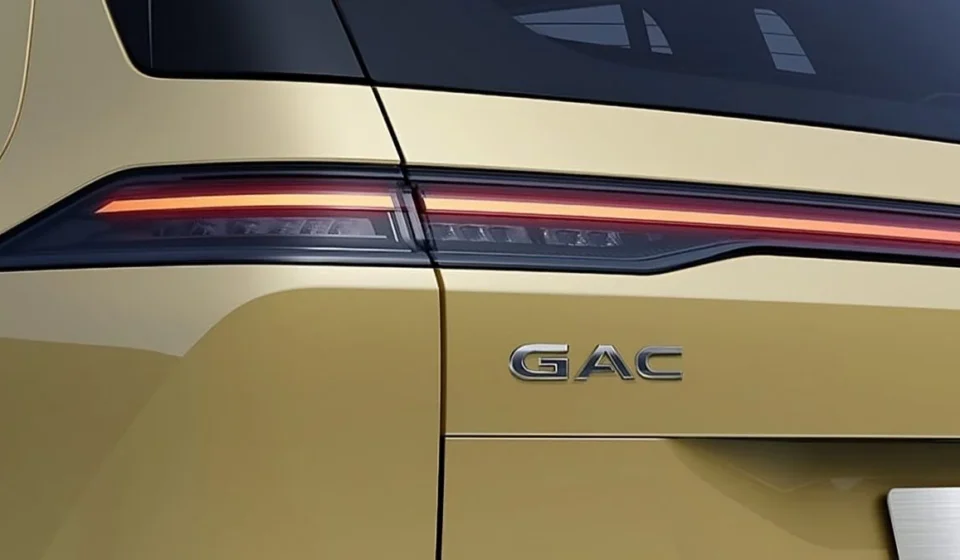
A Paradigm Shift in China’s Automotive Sector: GAC and FAW’s Landmark Reorganization Paves the Way for National OEM Consolidation

By Global Automotive Intelligence Desk
Published in partnership with industry analysis reports
Main Facts
In what could be the most significant structural realignment in China’s modern automotive history, state-backed giants Guangzhou Automobile Group (GAC) and FAW Group have initiated a high-stakes partnership. According to a regulatory filing released by the Shanghai Stock Exchange on September 14, GAC has officially signed a letter of intent to acquire an equity stake in an unnamed automotive joint venture currently owned by FAW Group.
Crucially, the agreement transcends a simple asset swap or routine joint-venture investment. Under the proposed terms of the transaction, FAW Group is slated to become GAC’s second-largest shareholder, forging an unprecedented capital and operational bridge between two of China’s most formidable state-owned automotive enterprises (SOEs).
While most financial and operational specifics remain tightly under wraps due to ongoing negotiations, preliminary disclosures indicate that the scope of the joint business operations is remarkably broad. The venture’s mandate spans the entire automotive value chain, encompassing:
- Advanced technical research and development (R&D)
- Core component manufacturing and supply chain integration
- Comprehensive vehicle sales, marketing, and distribution networks
For years, Beijing’s economic planners and industry ministry officials have diagnosed China’s sprawling automotive landscape as suffering from severe structural inefficiencies, overcapacity, and hyper-fragmentation. Despite repeated policy mandates from the central government urging Original Equipment Manufacturers (OEMs) to consolidate, the practical realization of these directives has historically proved elusive. Corporate provincialism, local protectionism, and conflicting regional economic incentives routinely stymied merger and acquisition (M&A) efforts among state-backed players.
The developing nexus between GAC—anchored in the southern economic powerhouse of Guangdong—and FAW—historically rooted in the northern industrial heartland of Jilin—signals a potential breaking of the ice. By aligning capital structures and operational footprints at the highest level, this deal provides a workable blueprint for how Beijing intends to streamline its automotive titans to compete more effectively on the global stage.
Chronology of Events: The Road to Consolidation
To understand the magnitude of the GAC-FAW alignment, it is necessary to trace the convergence of mounting economic pressures, strategic policy shifts, and corporate maneuvering that culminated in the September 14 disclosure.
Phase 1: The Policy Imperative (2018–2021)
Long before the current price wars swept through China’s electric vehicle (EV) market, the Ministry of Industry and Information Technology (MIIT) and other central government bodies recognized that the sheer number of vehicle manufacturers in China was unsustainable. During this period, Beijing began actively encouraging industry consolidation, urging larger SOEs to absorb smaller, weaker players or pool resources to avoid destructive, low-margin competition. However, early efforts yielded marginal results, largely restricted to provincial bailouts of failing local brands rather than cross-regional strategic mergers.
Phase 2: The New Energy Vehicle (NEV) Disruption (2022–2023)
The rapid ascendance of New Energy Vehicles fundamentally altered the competitive landscape. Legacy automakers found themselves squeezed between aggressive private enterprises like BYD and tech giants entering the automotive space, such as Huawei and Xiaomi. As profit margins eroded due to aggressive discounting across the domestic market, state-owned OEMs faced mounting fiscal pressures. The cost of independently funding parallel R&D tracks for internal combustion engines (ICE) and next-generation smart-EV architectures became untenable, forcing executive boards to reconsider external partnerships.
Phase 3: Strategic Probe and Preliminary Talks (Early–Mid 2024)
Behind closed doors, exploratory talks between GAC and FAW gathered momentum in the first half of 2024. Recognizing that neither company could afford to lag in the global race for software-defined vehicles, autonomous driving technologies, and solid-state battery commercialization, leadership teams began identifying synergies. Rather than executing a hostile or complex full-scale merger, the parties opted for a strategic equity cross-holding and joint venture model, minimizing immediate cultural friction while maximizing operational integration potential.
Phase 4: The Shanghai Stock Exchange Disclosure (September 14, 2024)
The formal announcement materialized via the Shanghai Stock Exchange on September 14. GAC’s regulatory filing confirmed the signing of the letter of intent regarding the acquisition of FAW’s unnamed joint venture equity and the subsequent elevation of FAW to GAC’s second-largest shareholder position. The market response was immediate, triggering renewed speculation regarding secondary and tertiary wave M&A activities across China’s automotive sector.
Supporting Data: The Scale of the Titans
To appreciate the systemic weight of the GAC-FAW reorganization, one must examine the sheer scale of the assets, production capacities, and market footprints involved.
Guangzhou Automobile Group (GAC)
- Founding and Base: Headquartered in Guangzhou, Guangdong Province; established as a major automotive manufacturing hub in southern China.
- Key Joint Ventures: Operates highly successful joint ventures with international legacy brands, notably GAC Toyota and GAC Honda, which have historically provided robust cash flows.
- New Energy Arm: Home to GAC Aion, one of China’s top-tier dedicated EV manufacturers, as well as Hyper (formerly Hyptec), targeting the luxury smart-EV segment.
- Market Position: Consistently ranked among the top automotive manufacturing groups in China, with an annual vehicle production and sales volume exceeding two million units in peak years.
FAW Group (First Automobile Works)
- Founding and Base: Headquartered in Changchun, Jilin Province; founded in 1953, making it the cradle of China’s automotive industry.
- Key Brands and JVs: Owner of the prestigious Hongqi (Red Flag) luxury brand and the Jiefang commercial vehicle brand. Also operates massive, long-standing joint ventures with foreign automotive groups, including FAW-Volkswagen and FAW-Toyota.
- Market Position: A cornerstone of China’s state-owned industrial apparatus, possessing immense capital reserves, deep manufacturing expertise, and extensive supply chain influence across northern China.
Macroeconomic Context: The State of China’s Automotive Sector
Recent data from the China Association of Automobile Manufacturers (CAAM) highlights the urgency driving this consolidation:
- Total Production and Sales: China’s annual automotive production surpassed 30 million units, with New Energy Vehicles accounting for well over 35% of total market share.
- The Margin Squeeze: Despite record sales volumes, average industry profit margins have declined steadily over the past three years, dropping below 5% due to a brutal, sustained price war initiated by domestic EV upstarts.
- Fragmented Landscape: Even with dozens of bankruptcies and restructurings among smaller tier-2 and tier-3 EV startups over the preceding 48 months, China still hosts upwards of 100 active passenger vehicle manufacturers—a figure that central planners view as excessively crowded.
Official Responses and Industry Perspectives
While formal statements from both GAC and FAW corporate communications departments have remained deliberately measured—emphasizing that definitive agreements are still subject to further due diligence and regulatory approvals—industry stakeholders, analysts, and government commentators have offered deep insights into the development.
Corporate Posture
In its regulatory filing, GAC stressed that the framework agreement is designed to "optimize resource allocation, enhance core technological competitiveness, and achieve high-quality synergistic development." Representatives from FAW echoed similar sentiments, noting that cross-regional cooperation among central and local state-owned enterprises is essential for navigating the complex transition toward intelligent and electrified mobility.
Regulatory and Policy Reception
Insiders close to the State-owned Assets Supervision and Administration Commission of the State Council (SASAC) have indicated quiet approval of the deal. For years, SASAC has sought mechanisms to eliminate redundant investments by state-backed entities. By encouraging cross-shareholdings rather than forced absorptions, Beijing is signaling a more pragmatic, market-oriented approach to industrial policy.
Analyst Reactions
Financial analysts covering the Chinese automotive sector have offered a generally bullish outlook on the transaction, tempered by cautionary notes regarding execution risk.
- Technology Sharing: "The primary bottleneck for legacy SOEs isn’t manufacturing capacity; it’s software integration and autonomous driving tech," notes an automotive equity research analyst based in Hong Kong. "By tying FAW and GAC together, they can pool massive R&D budgets to match the software prowess of tech giants like Huawei and Baidu."
- Supply Chain Efficiencies: Analysts point out that combining GAC’s southern supply chain agility with FAW’s northern industrial heft creates a nationwide procurement powerhouse capable of driving down component costs significantly.
Strategic Implications: What This Means for the Global Automotive Landscape
The GAC-FAW realignment is far more than a domestic corporate restructuring; it carries profound implications for the global automotive industry, international competitors, and future supply chain dynamics.
1. The Rise of the "National Champion" Blueprint
For over a decade, Western and Asian competitors watched China’s automotive market expand with a degree of bemusement at its chaotic, highly fragmented nature. Dozens of state-backed and private firms cannibalized one another’s margins. The GAC-FAW deal provides a tested template for how Beijing plans to prune the garden. If this cross-regional equity model proves successful, expect subsequent consolidation waves involving other major SOEs, such as Dongfeng Motor, Changan Automobile, and SAIC Motor. The result will be a smaller group of hyper-resilient, massively capitalized "national champions."
2. Accelerated Global Expansion (The Export Push)
As domestic price wars compress home-market profitability, Chinese OEMs are looking outward with unprecedented aggression. Consolidated state-backed giants possess the balance sheets required to fund aggressive international expansion strategies—covering everything from establishing European manufacturing plants and navigating complex regulatory hurdles to building out global shipping logistics networks. A unified GAC-FAW ecosystem commands the financial muscle to accelerate exports of both ICE vehicles and cutting-edge NEVs to markets across Europe, Southeast Asia, Latin America, and the Middle East.
3. Pressure on Global Legacy Automakers
For international legacy automakers—particularly German, Japanese, and American brands that have long relied on their Chinese joint ventures for global profitability—this consolidation poses a direct threat. As Chinese SOEs rationalize their operations and pool their technological resources, the traditional technological and brand-equity advantages held by foreign joint-venture partners continue to shrink. Foreign automakers will be forced to accelerate their own local software partnerships and cost-reduction initiatives simply to maintain market share within China.
4. R&D Synergies and the Next-Generation Battleground
The explicit inclusion of technical R&D and component manufacturing in the GAC-FAW scope indicates that the partnership’s core objective is winning the technological arms race. By sharing the immense capital expenditures required for solid-state battery development, centralized electronic/electrical (E/E) architectures, and artificial intelligence-driven cockpit systems, GAC and FAW can mitigate individual risk while scaling innovation much faster than they could independently.
Conclusion
The strategic alignment between Guangzhou Automobile Group and FAW Group marks a watershed moment for China’s automotive industry. By bridging regional divides and aligning capital structures, these two state-owned giants have done what Beijing has urged for years: they have chosen consolidation over fragmentation in the face of relentless market pressures.
As the details of the joint venture solidify and regulatory approvals clear in the coming months, the global automotive community would do well to watch closely. This is not merely a domestic corporate reorganization; it is the genesis of a streamlined, highly competitive structural paradigm designed to dominate the next era of global mobility.