





Hydraulic systems have long served as the heavy-duty muscle of the global industrial economy. From the massive force required in metal forming and plastics injection molding to the precision maneuvers of automated assembly lines, fluid power remains unparalleled in its power density, durability, and reliability. However, as global manufacturing faces a dual mandate—to drive higher productivity while simultaneously slashing carbon footprints—the hydraulic sector is undergoing a profound transformation.
The challenge is no longer just about generating force; it is about doing so with surgical precision and minimal energy waste. Today’s engineers are re-imagining hydraulic architecture, moving away from traditional "always-on" configurations toward intelligent, adaptive systems that align energy consumption with real-time operational demand.
The Core Challenge: Redefining Hydraulic Efficiency
At its most fundamental level, a hydraulic system is a converter of energy, transforming mechanical input into pressurized fluid flow, which is then translated back into mechanical work at the actuator. Every stage of this conversion involves inherent energy loss, primarily through heat, friction, and fluid turbulence.
Historically, industrial hydraulic systems were designed with significant "safety margins." To ensure absolute reliability and consistent performance across varying loads, systems were often oversized and operated at constant speeds. While this ensured that machines would not fail under peak stress, it created a scenario where energy was frequently wasted, particularly during idling or low-demand cycles.
Rather than viewing these inefficiencies as flaws, industry experts now categorize them as a balancing act. The priority has traditionally been stability and safety; the new frontier is maintaining those pillars while aggressively trimming the fat from the system’s energy budget.
Chronology of Innovation: From Constant Flow to Smart Hydraulics
The evolution of hydraulic efficiency has not been a single breakthrough, but a steady progression of technological integration:
- The Era of Constant Speed: For decades, fixed-displacement pumps driven by induction motors running at constant speeds were the standard. Excess flow was simply bypassed back to the reservoir, turning electrical energy into thermal waste.
- The Advent of Proportional Control: The introduction of proportional valves allowed for better flow management, enabling systems to modulate output rather than relying solely on binary "on/off" states.
- The Rise of VSDs (Variable Speed Drives): In the early 2000s, the integration of VSDs revolutionized the industry. By allowing the pump motor to match its speed to the specific hydraulic requirement, the system could effectively "throttle down" when demand dropped, drastically reducing energy consumption during non-peak operations.
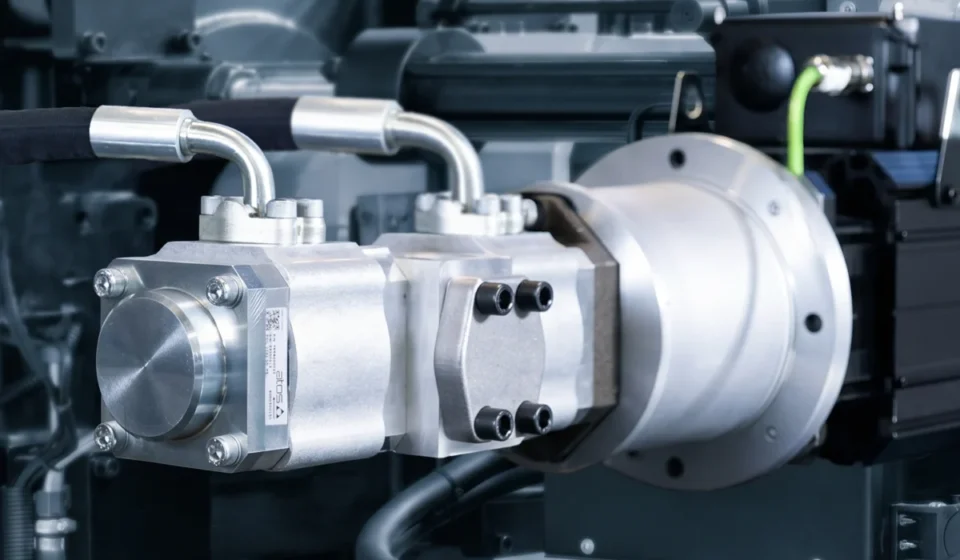
- The Digital/Electrohydraulic Convergence: Today, we are in the era of "Smart Hydraulics." By marrying sensors, high-speed digital controllers, and sophisticated algorithms, modern systems—such as the advanced servopump architectures championed by leaders like Atos—can adjust pressure and flow in milliseconds, turning hydraulic power units into highly responsive, energy-aware machines.
Supporting Data: Why Efficiency Matters
The push for energy efficiency is not merely an environmental preference; it is a hard-nosed economic necessity.
- Operational Costs: In typical manufacturing environments, energy consumption represents one of the largest ongoing operational costs. Studies suggest that by transitioning from constant-speed systems to VSD-controlled or electrohydraulic systems, facilities can reduce hydraulic energy usage by 30% to 50% in variable-load applications.
- Regulatory Pressure: Global mandates, such as the European Union’s Ecodesign Directive and similar initiatives in North America, are increasingly setting strict efficiency standards for industrial motors and fluid power equipment. Companies that fail to adapt risk not only higher utility bills but also regulatory non-compliance.
- Reliability Metrics: Contrary to the fear that "efficient" systems are more complex and therefore less reliable, modern digital monitoring provides a counter-argument. By using predictive maintenance enabled by sensor feedback, companies report a decrease in unplanned downtime, as systems can now "flag" wear or degradation before a failure occurs.
Engineering Solutions: How Modern Hydraulics Save Energy
Variable Speed Drives (VSDs)
VSDs allow the electric motor to run at the precise RPM required for the current hydraulic task. If a cylinder does not need to extend at maximum velocity, the motor slows down, eliminating the need for energy-draining flow-control valves that dump excess pressure.
Load-Sensing and Pressure Compensation
These systems are the "brains" of the hydraulic circuit. By continuously monitoring the pressure requirements of the load, the pump only delivers the exact amount of flow needed to overcome the resistance. This prevents the system from working harder than necessary, which is critical in machinery with fluctuating duty cycles.
The Power of Electrohydraulics
The integration of electronics into hydraulics—electrohydraulics—has changed the game. Sensors feed real-time data to a digital controller, which then modulates the pump or valve position. Advanced servopumps from companies like Atos exemplify this, allowing for closed-loop control that mimics the precision of electric drives while maintaining the immense power density that only hydraulics can provide.
Energy Recovery and Regenerative Circuits
Some modern machines are now designed to "harvest" energy. During a deceleration phase or a load-lowering operation, the energy that would typically be dissipated as heat can be captured using hydraulic accumulators or regenerative valve configurations. This stored energy is then reintroduced into the system for the next cycle, effectively recycling power.
Implications: The Industry Outlook
The transition toward energy-efficient hydraulics has significant implications for how factories are designed and managed.
A Holistic Design Philosophy
Efficiency is no longer an "add-on." Modern engineers are utilizing digital twin technology and advanced simulation software to model entire production cycles before a single valve is installed. This allows for the selection of components that are perfectly sized for the specific application, avoiding the "over-engineering" of the past.
The Human Element: Training and Skill Sets
As hydraulics become more "digital," the profile of the hydraulic technician is evolving. Today’s maintenance staff must be as comfortable with a laptop and diagnostic software as they are with a wrench. Organizations that invest in training their workforce to handle advanced control systems, AI-driven diagnostics, and digital monitoring tools will be the ones that gain a competitive edge.
The Role of Artificial Intelligence
The next frontier is the integration of machine learning. By analyzing thousands of hours of operating data, AI can predict when a hydraulic fluid is beginning to degrade or when a pump component is showing early signs of fatigue. This predictive maintenance prevents the catastrophic failures that lead to massive energy spikes and costly repairs, further optimizing the lifecycle of the machinery.
Conclusion: A Balanced Future
The narrative that hydraulics are being replaced by electromechanical actuators is a simplification that ignores the unique physical realities of heavy industry. Where high force, compact size, and durability are required, hydraulics remain the superior choice.
The future of fluid power is not about choosing between performance and efficiency; it is about synthesizing the two. By leveraging digital control, variable-speed technology, and intelligent system design, the hydraulic industry is proving that it can be a leader in the global transition toward sustainable manufacturing.
As we look toward the next decade, the integration of AI-driven optimization and smarter fluid management will ensure that hydraulic systems remain the heartbeat of the factory floor—smarter, cleaner, and more efficient than ever before. For manufacturers, the choice is clear: embracing these advancements is the surest way to align operational excellence with the urgent sustainability goals of the 21st century.
This article is brought to you as part of an ongoing series on industrial efficiency, sponsored by The Atos Group. Atos continues to lead the way in developing advanced electrohydraulic solutions that bridge the gap between traditional power and digital precision.