





Canatu’s Strategic Pivot: Accelerating Carbon Nanotube Commercialization Through Executive Rehaul

By Nitin Dahad, Executive Editor, EE Times
In the high-stakes world of advanced materials, the transition from laboratory curiosity to industrial ubiquity is rarely a smooth path. For Finland-based Canatu, a pioneer in carbon nanotube (CNT) technology, the current moment represents a pivotal juncture. Having spent two decades refining a proprietary, patented dry deposition process, the company is now signaling a shift in gears—moving from deep-tech development toward aggressive commercial execution.
Following the appointment of a new CEO earlier this spring, Canatu has finalized a major leadership restructuring, bringing in new veteran blood to oversee its Chief Technology Officer (CTO) and Chief Marketing Officer (CMO) functions. This executive refresh is designed to sharpen the company’s focus on three core verticals: advanced semiconductor manufacturing, automotive mobility, and medical diagnostics.
The New Executive Architecture
The strategic realignment began in May 2026, when Maximilian Slawinski assumed the role of CEO, taking the reins from long-serving leader Juha Kokkonen. Recognizing that technical brilliance alone would not guarantee market dominance, Slawinski quickly moved to solidify his executive cabinet.
Last week, Canatu announced the appointments of Walter Braun as CTO and Bernd Meier as CMO. These are not merely administrative changes; they represent a calculated injection of industry expertise. Braun arrives from Scrona, where he was deeply involved in microprinting technologies for advanced semiconductor packaging—a field that intersects directly with Canatu’s own ambitions. Meier, meanwhile, brings a wealth of experience from global heavyweights Teradyne and Infineon Technologies, suggesting that Canatu is preparing for a sophisticated global sales push.

Slawinski himself embodies the bridge between academic rigor and market application. With a background in materials science and extensive experience in the power electronics and OLED sectors—including stints at industry titans like Soitec and Infineon—he represents a new, commercially minded generation of leadership for the firm.
Chronology: From Aalto Spinout to Industrial Player
To understand where Canatu is heading, one must examine the foundation laid since its inception in 2004. Born as a spinout from the Aalto University nanomaterials group, the company spent its first decade focused on the "how" of carbon nanotubes.
- 2004–2015: The Research Phase. Canatu focused on perfecting its proprietary dry deposition reactor. Unlike traditional wet deposition—which often suffers from purity issues and structural defects—Canatu’s dry process allows for the precise, scalable creation of CNTs with superior electrical and mechanical properties.
- 2016–2025: Proof of Concept. During this period, the company began demonstrating the utility of its membranes and films in real-world scenarios. This included early testing for automotive film heaters and initial forays into the semiconductor supply chain.
- May 2026: Leadership Transition. Maximilian Slawinski is appointed CEO, signaling a shift toward commercial scaling.
- July 2026: Executive Expansion. The hiring of Walter Braun (CTO) and Bernd Meier (CMO) completes the leadership team, signaling that the "execution phase" is now fully operational.
Proprietary Technology: The "Dry Deposition" Advantage
The heart of Canatu’s value proposition lies in its patented dry deposition reactor. In the manufacture of advanced nanomaterials, "wet" processes (involving chemical solvents and liquid-phase synthesis) are the industry standard but are prone to leaving contaminants or failing to achieve the uniform density required for high-end electronics.
Canatu’s dry deposition creates a cleaner, more robust CNT network. This is critical for the company’s target markets:
- Semiconductor Manufacturing: Canatu’s CNT membranes for Extreme Ultraviolet (EUV) lithography serve as essential protection for photomasks. By providing superior thermal conductivity and mechanical strength, these membranes can withstand the intense power of EUV sources, ultimately increasing production yield.
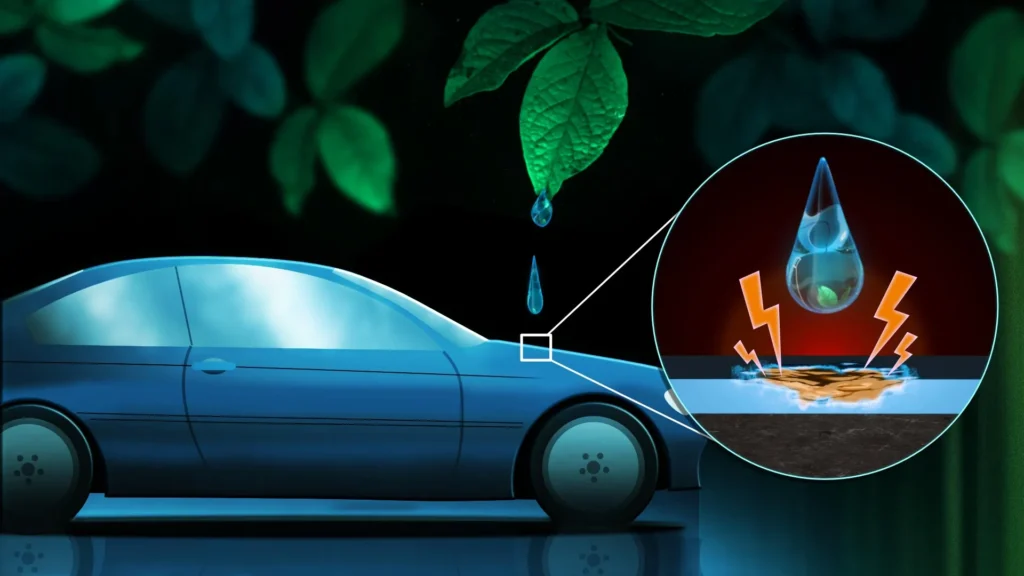
- Automotive ADAS: As vehicles transition to higher levels of autonomy, sensor reliability is paramount. Canatu’s CNT-based film heaters are designed to keep cameras and sensors clear in extreme weather, ensuring that autonomous driver-assistance systems (ADAS) remain operational regardless of environmental conditions.
- Medical Diagnostics: The company is utilizing its CNT sheets to create electrochemical sensors. The high surface area and conductivity of these sheets make them ideal for point-of-care diagnostics, where speed and sensitivity are non-negotiable.
Official Perspectives: The Mission to Enable Well-being
During a recent visit to London, CEO Maximilian Slawinski sat down with EE Times to discuss the philosophy driving this new era. When asked about his vision, he framed it through the lens of societal impact.

"Our mission is to enable the improvement of well-being in society," Slawinski stated. While initially appearing broad, he was quick to ground the sentiment in the concrete metrics of his target industries.
"In semiconductor manufacturing, it is about yield. We are looking at potential yield improvements of 8% to 15%," he explained. "When you enable more wafers to pass through production per hour, you are not just making a component—you are alleviating bottlenecks in the global semiconductor supply chain."
Slawinski’s transition from a technical background to a CEO role has been marked by a shift in perspective. He noted that after a decade in power semiconductors and five years in the OLED space, he felt compelled to move toward the "advanced node supply chain" that Canatu occupies. His goal is to transform the company from an engineering-led innovator into a customer-centric partner, focusing on scaling production and building deep trust with top-tier manufacturers.
Implications for the Semiconductor and Automotive Sectors
The implications of Canatu’s growth are significant. The semiconductor industry is currently grappling with the physical limits of Moore’s Law and the increasing complexity of EUV lithography. As nodes shrink to 2nm and below, the need for high-performance pellicles and advanced materials that do not introduce defects is critical. If Canatu can consistently deliver on its 8%–15% yield improvement claim, it will quickly become a "must-have" supplier in the global lithography ecosystem.
In the automotive sector, the rise of zonal architectures and 48V systems is creating a demand for smarter, more integrated sensor components. Canatu’s CNT films, which can be transparent and heat-generating, solve a fundamental problem: how to keep complex optical systems clear without adding excessive weight or power consumption.

Challenges Ahead
Despite the optimism surrounding the new leadership team, the path forward is not without hurdles. The primary challenge remains the "valley of death" that often plagues deep-tech companies: the transition from prototype to mass production.
Scaling a proprietary, patented dry deposition process requires significant capital expenditure and rigorous quality control. Canatu must prove that its CNT membranes can be manufactured at volume with the same consistency as its laboratory samples. Furthermore, it enters a market populated by established players who have deep-rooted relationships with the world’s largest semiconductor foundries and automotive OEMs.
Bernd Meier, the new CMO, will play a crucial role here. His experience at Infineon and Teradyne will be vital in navigating the complex procurement cycles of these massive industries. Meanwhile, CTO Walter Braun’s expertise in semiconductor packaging will be key to ensuring that Canatu’s integration into customer production lines is seamless.
Conclusion: A New Chapter
Canatu’s executive reshuffle is a clear signal that the company has moved past its "discovery" phase. By combining a proven technology foundation with a leadership team experienced in scaling global operations, Canatu is positioning itself to be a significant player in the future of advanced materials.
Whether it is in the clean rooms of leading-edge semiconductor fabs, the sensors of the next generation of autonomous vehicles, or the portable diagnostic tools of tomorrow’s healthcare systems, Canatu is betting that its carbon nanotubes will provide the structural and electrical backbone for the next wave of technological progress. The industry will be watching closely to see if the new management team can turn that potential into consistent, large-scale commercial reality.

As Slawinski noted, the goal is not just to sell materials—it is to solve the fundamental bottlenecks that prevent progress. If Canatu succeeds, the impact on yield, safety, and sensitivity in our most critical technologies could be profound.