By Paweł Bieś, Logistics and Maintenance Marketing Expert, QRmaint Published: August 25, 2026
Main Facts
The European food chain is an economic engine of monumental scale, defined by high levels of integration, strict regulatory oversight, and unforgiving operational timelines. In 2020 alone, the European Union’s food and beverage processing sector comprised approximately 291,000 enterprises, provided livelihoods for 4.6 million people, and generated a staggering €227 billion in added value. Operating across a vast spectrum—from primary agricultural producers to the 2.6 million distribution enterprises that feed the continent—the entire network relies on a foundational imperative: uninterrupted production and absolute supply chain integrity.
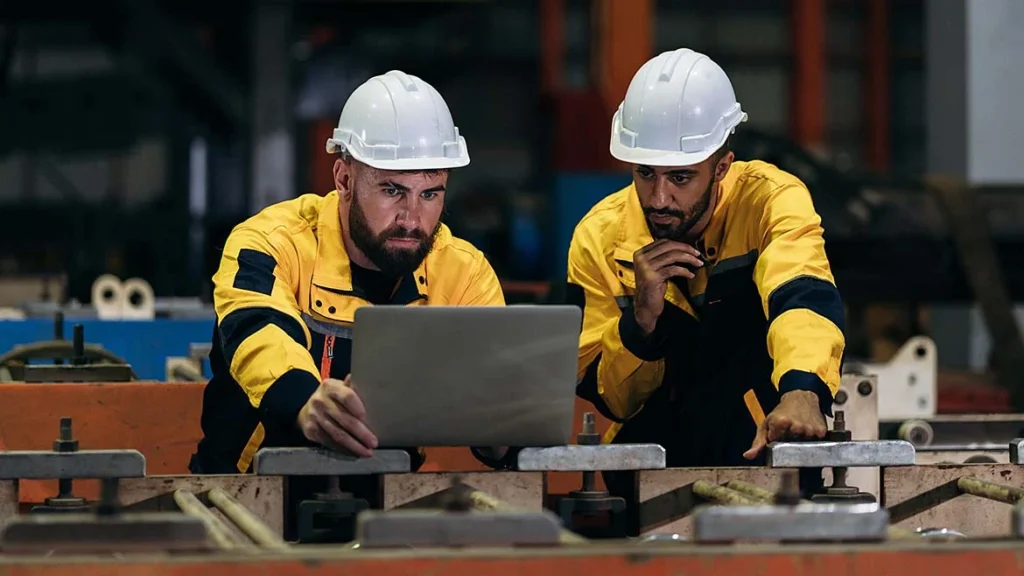
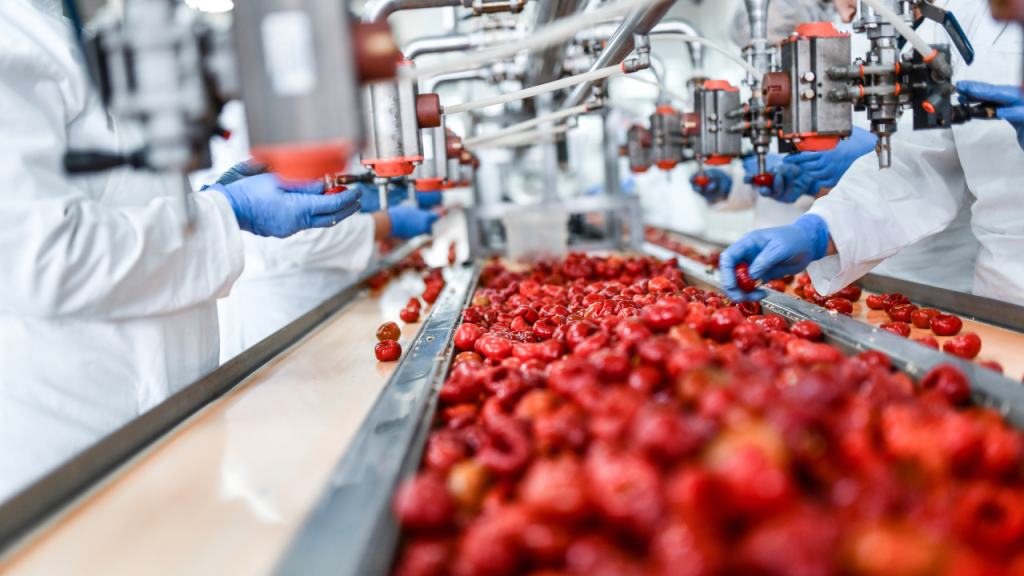
Within food manufacturing and Fast-Moving Consumer Goods (FMCG), maintenance is rarely treated as a routine back-office utility. Instead, it serves as a frontline driver of corporate profitability and operational resilience. Modern food producers track machinery stoppages down to micro-downtimes of one minute or less. Given tight profit margins, highly perishable raw materials, and rigorous hygiene standards, even a few minutes of unplanned downtime on a high-speed production line can trigger catastrophic financial losses, missed retail deliveries, and immense inventory waste.
Across Europe, leading producers are rapidly moving away from reactive "firefighting"—characterized by frantic phone calls, lost emails, and fragmented Excel spreadsheets—toward predictive, digitally managed maintenance ecosystems. Through direct industrial experience, three standout case studies from Central Europe—Cedrob Foods S.A., Dawtona Group, and Asprod S.A.—illustrate how digital modernization via Computerized Maintenance Management Systems (CMMS) is reshaping the future of food processing.
Chronology of Digital Transformation in Food Manufacturing
The transition from archaic, paper-based tracking to advanced predictive maintenance did not happen overnight. It represents a steady evolution driven by mounting market pressures, technological maturity, and the need for multi-plant visibility.
The Era of Siloed Operations (Pre-2020s): Historically, food manufacturing plants operated largely in isolation. Maintenance teams relied on memory, paper logs, and disparate spreadsheets. If a machine failed at a regional facility, engineers relied on telephone coordination to source spare parts, often leading to duplicated inventory orders and extended downtime.
The Multi-Plant Integration Phase (Early 2020s): As conglomerates expanded through acquisitions and greenfield projects, managing separate maintenance budgets and fragmented spare parts inventories became unsustainable. Companies began seeking centralized digital hubs to unify operations across regional sites.
The Shift to Predictive and Mobile-First Workflows (2024–2026): With the widespread adoption of cloud-based CMMS platforms and mobile applications, maintenance staff gained real-time data access directly on the factory floor or in mobile field units. Today, predictive analytics and automated work orders allow technicians to intercept mechanical failures before they interrupt production.
Supporting Data & Operational Realities
To understand why European food producers are heavily investing in digital maintenance platforms, one must examine the economic and operational realities of the sector.
The Cost of Micro-Downtimes
In high-volume FMCG environments, production lines operate at breakneck speeds. A bottling, canning, or packaging line can process thousands of units per minute. When an unpredicted mechanical failure halts the line, the loss compounds exponentially. Maintenance managers monitor these micro-stoppages meticulously because lost minutes translate directly into thousands of euros in unrealized revenue and discarded raw ingredients.
Regulatory and Quality Compliance
European food safety standards—enforced by rigorous national and EU-level bodies—demand complete traceability and verifiable equipment hygiene. Maintenance logs are no longer just internal operational notes; they are compliance documents. If a thermal processor or emulsifying machine fails temperature thresholds, the entire batch may face condemnation. Digital maintenance tracking ensures that every preventative inspection, parts replacement, and calibration is permanently logged, timestamped, and auditable.
Official Responses and Industry Insights
Industry leaders spearheading these digital transformations emphasize that modern CMMS adoption is as much about cultural and organizational alignment as it is about software features.
"The two biggest challenges in the FMCG industry are cost optimization while maintaining top quality and rapid response to orders. The very short shelf life of products requires faultless operation of the machinery fleet."
— Jakub Skowroński, Optimization Coordinator at Cedrob Foods
Skowroński notes that the core objective for modern maintenance teams is shifting the balance decisively toward prevention:
"I think the biggest challenge for the maintenance department is organizing work in a way that allows us to stay ahead of corrective actions through prevention and prediction, eliminating unplanned machine downtime."
Reflecting on the human element of software integration, Skowroński highlights a crucial victory:
"One of the main takeaways from implementing the system was its positive adoption—both technically and from the perspective of the maintenance staff who use it daily."
Multi-Plant Coordination at Dawtona
For family-owned fruit and vegetable processor Dawtona—which manages over 5,000 hectares of crops and multiple processing hubs like Milejów, Błoń, Leszno, and Lipno—centralization was the primary driver.
"The main task is following market trends and lowering costs. Products in our industry are low margin, so we must strictly control expenditures on machine fleet maintenance. A CMMS system is an extremely important tool for us in this regard," explains Maciej Słomka, Automation Engineer at Dawtona Milejów.
Słomka elaborates on the multi-plant strategy:
"The main goal of the implementation was to create a central spare parts warehouse for five plants. We wanted real-time visibility into what parts each plant holds. In case of a breakdown, we can react quickly without having to call each location separately."
He also praises the user experience:
"It is very user-friendly, feature-rich, and has a well-thought-out interface. Advanced functions are explained, and visual data representation makes daily work much easier for the team."
Managing Distributed Retail and Production Networks: Asprod S.A.
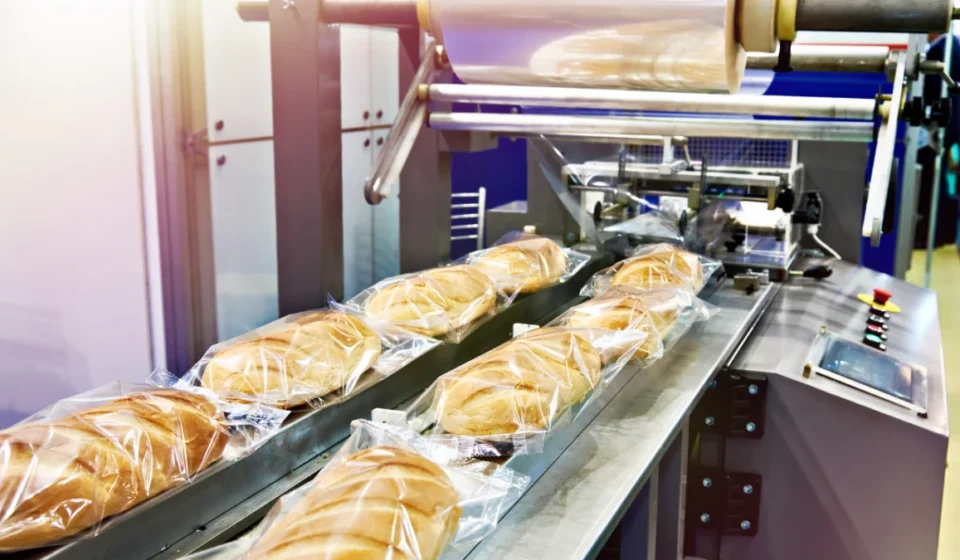
Bakeries and confectioneries face a unique dual challenge: continuous, time-sensitive factory production coupled with geographically dispersed retail networks. Asprod S.A. operates a modern production facility in Szczecin alongside a network of over 90 retail bakery-cafes and drive-thru outlets across northwestern Poland.
"The biggest challenge is ensuring that production and operations don’t stop, and maintaining full communication between dispatchers, field technicians, and staff at both the factory and retail counters," says Agnieszka Stachowicz, Maintenance Systems Assistant at Asprod S.A.
Stachowicz points out the danger of relying on human memory in complex operations:
"Human memory is fallible, whereas here we have messages or photos in black and white that can be useful in the future."
Following an implementation led by Maintenance Department Manager Lech Ziółkiewicz and supported by Stachowicz, the system has transformed daily operations over the past two years:
"The system works great for us. We’ve been using it for two years, and it makes things so much easier. We can quickly retrieve information because everything is logged. We don’t have to rely on memory, and quick keyword searches for a specific store or equipment are a huge asset."
Case Study Deep Dives
Case Study 1: Cedrob Foods S.A. – From Reactive to Predictive
As one of the European Union’s leading producers of high-quality poultry and meat products, Cedrob Foods supplies major international and domestic retail chains. Its flagship processing plant in Sosnowiec, Poland, relies on complex automated machinery—ranging from industrial emulsifiers and thermal cookers to high-speed packaging lines. By standardizing maintenance workflows across its five Polish production facilities using a centralized CMMS, Cedrob successfully eliminated data fragmentation and transitioned from emergency repairs to predictive scheduling.
Case Study 2: Dawtona Group – Multi-Plant Inventory Integration
Operating on a strict "from seed to can" model since 1991, Dawtona’s Milejów plant alone utilizes a 20-person maintenance crew overseeing over 100 sophisticated machines. Prior to CMMS implementation, siloed communication between regional facilities led to redundant parts purchasing and delayed breakdown responses. By deploying a unified digital platform, Dawtona established a centralized spare parts warehouse view across all five plants, slashing emergency response times and optimizing maintenance spending in a low-margin sector.
Case Study 3: Asprod S.A. – Securing Production Lines and 90+ Retail Outlets
Managing the maintenance needs of both a high-output bakery plant and more than 90 retail bakery-cafes requires rigorous coordination between factory technicians and mobile field units. Asprod’s maintenance team handles everything from industrial ovens and refrigeration units to HVAC systems. By introducing a centralized digital logging system complete with photographic records and instant search functionality, Asprod eliminated reliance on informal communications, securing continuous operations across both manufacturing and retail fronts.
Implications for the Future of European Manufacturing
The operational journeys undertaken by Cedrob Foods S.A., Dawtona Group, and Asprod S.A. highlight an undeniable reality for modern European food manufacturing: digitalizing maintenance is no longer an optional IT upgrade; it is a fundamental pillar of corporate profitability.
As regulatory pressures mount, profit margins tighten, and consumer demand for rapid delivery intensifies, food producers can no longer afford the hidden costs of reactive maintenance. Shifting from emergency firefighting to structured, data-driven preventive schedules stops costly bottlenecks on continuous production lines. Furthermore, unifying asset records and spare parts inventories across multiple regional facilities eradicates redundant spending.
Ultimately, modernizing maintenance processes transforms historical operational data into actionable foresight. By implementing robust CMMS solutions, food processing leaders are successfully stepping out of the reactive cycle, building resilient, transparent, and future-proof manufacturing operations ready to meet the challenges of tomorrow.
About the Author
Paweł Bieś is a Logistics and Maintenance Marketing Expert for QRmaint. He is a B2B marketer with 8 years of experience in the logistics industry in the Netherlands, specializing in business analysis of distribution and supply chain operations for high-tech companies across EMEA and APAC. He has directed, coordinated, and supervised transportation tasks and internal operations, and currently leads marketing initiatives for QRmaint’s industry-leading CMMS platforms.