





U.S. Proposes Prolonged Suspension of Section 301 China-Linked Vessel Fees, Aims to Buy Time for Ongoing Maritime Negotiations

WASHINGTON — In a move designed to avert immediate turbulence in international supply chains, the Office of the United States Trade Representative (USTR) has formally proposed a significant extension of its temporary suspension on contentious Section 301 fees targeting China-linked vessels. According to a Federal Register filing published on October 23, the trade agency is seeking to push the expiration date of the current freeze out to January 9, 2027.
The suspension, which was originally scheduled to lift on November 9, 2025, is being prolonged to "allow for further negotiation with China regarding the acts, policies, and practices at issue in this investigation," the federal filing stated. As the administration weighs the future of its ambitious maritime trade strategy, the agency has opened a remarkably compressed public comment window, setting a strict deadline of October 30 for stakeholders, industry groups, and the general public to submit their perspectives.
The proposed extension offers a temporary reprieve to an ocean shipping sector that has spent the better part of two years navigating shifting regulatory crosscurrents, fluctuating freight rates, and deep uncertainty over the ultimate cost of moving goods across the Pacific.
Main Facts
The core of the policy centers on Section 301 of the Trade Act of 1974, a powerful trade enforcement tool that permits the U.S. to take retaliatory action against foreign trade practices that burden or restrict U.S. commerce.
- The Proposed Extension: The USTR’s latest notice proposes moving the implementation deadline for Section 301 vessel fees from November 9, 2025, to January 9, 2027.
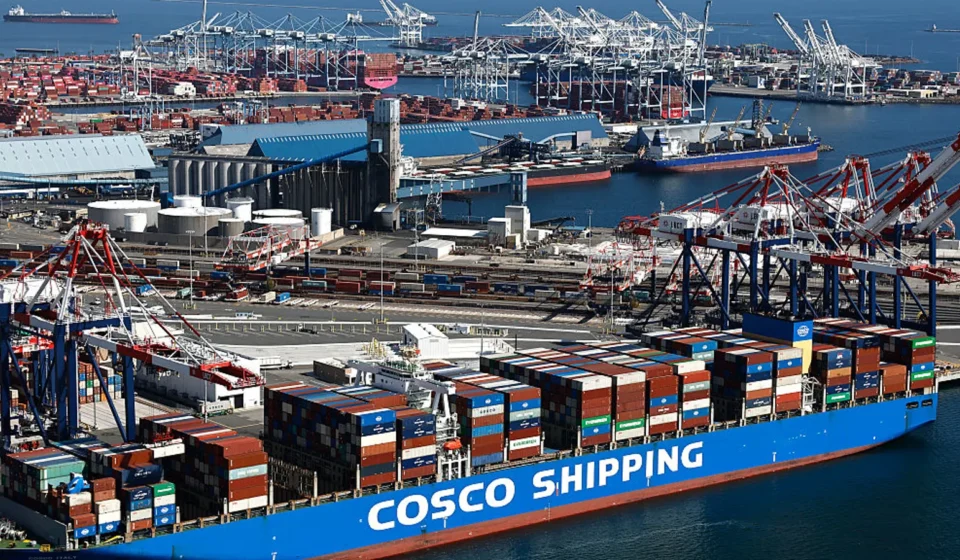
- The Target: The proposed fees are explicitly directed at China-linked, China-built, or China-operated vessels involved in the global maritime, logistics, and shipbuilding sectors.
- The Fee Structure: Under the framework announced last year, the USTR proposed steep financial penalties ranging from $18 per net ton up to $120 per container for applicable vessels docking at U.S. ports.
- The Strategic Objective: The overarching goal of the Section 301 action is to counteract what the U.S. government views as unfair, aggressive state-backed policies by Beijing designed to dominate global shipbuilding and maritime logistics. Simultaneously, the policy aims to incentivize domestic shipbuilding capabilities by offering vessel operators an exemption of up to three years from the punitive fees if they commit to ordering new vessels from U.S. shipyards.
- The Current Status: The fees have faced multiple delays. Although initially slated to take effect in late 2024, they were first paused until late 2025. The new proposal extends that moratorium by more than a year, pushing potential implementation well into 2027.
Chronology of Events
To understand the current regulatory landscape, it is necessary to retrace the timeline of the Section 301 maritime investigation and the cascading policy decisions that led to the USTR’s October 2025 proposal.
The Investigation and Initial Proposal
The genesis of the fees lies in a comprehensive Section 301 investigation into China’s targeting of the maritime, logistics, and shipbuilding sectors. U.S. officials and domestic labor unions argued that heavily subsidized Chinese state enterprises had systematically undermined American shipbuilding capacity and established near-monopolies over critical maritime infrastructure components.
Following the findings of this investigation, the USTR proposed a novel punitive fee structure designed to penalize vessels with structural or operational ties to China. To soften the blow for carriers willing to align with U.S. industrial policy goals, the agency built a conditional carve-out into the rule: any ocean carrier that placed an order for a new vessel to be constructed in a United States shipyard would receive a multi-year waiver from the punitive port fees.
The First Delay
The proposed fees were originally scheduled to take effect on October 14 of last year. However, mounting anxiety from supply chain leaders, agricultural exporters, and retail associations prompted the administration to intervene. Citing the need to carefully calibrate the economic impact and evaluate international feedback, the USTR first paused the implementation until November 2025.
The Industry Push for Extended Relief
As the November 2025 expiration date approached, logistics professionals, maritime associations, and cargo owners grew increasingly vocal. With global shipping lines already grappling with volatile freight rates, route diversions due to geopolitical conflicts in the Middle East, and persistent equipment imbalances, the prospect of sudden, localized U.S. port fees threatened to exacerbate operational costs.
Last month, a coalition of prominent trade associations and shipper groups formally petitioned U.S. Trade Representative Jamieson Greer. In an urgent joint letter, the stakeholders urged the administration to extend the existing pause, arguing that implementing the fees would trigger widespread economic disruption.
The October 2025 Federal Register Filing
Responding to industry concerns—and recognizing the utility of keeping diplomatic channels open—the USTR published its formal notice in the Federal Register on October 23, 2026. The filing initiated a rapid-fire comment period closing on October 30, paving the way for the formal extension through January 9, 2027.
Supporting Data and Economic Context
The debate over the Section 301 vessel fees cannot be viewed in a vacuum; it is underpinned by complex economic data reflecting the state of global maritime trade, U.S. port operations, and the structural deficit in domestic shipbuilding.
The Cost Burden on Logistics Operators
The fee structure proposed by the USTR—ranging from $18 per ton to $120 per container—is not insignificant. For mega-container ships capable of carrying upwards of 15,000 to 24,000 Twenty-Foot Equivalent Units (TEUs), a $120-per-container levy translates into millions of dollars in additional operational overhead per port call.
In a hyper-competitive ocean freight market where carrier operating margins fluctuate wildly based on supply and demand, shipping lines cannot easily absorb these costs. Industry analysts have consistently warned that such fees would inevitably be passed down to beneficial cargo owners (BCOs)—importers, exporters, and retailers—ultimately hitting American consumers in the form of higher retail prices.
The Domestic Shipbuilding Paradox
The primary policy rationale behind the fees is the revitalization of the U.S. commercial shipbuilding industrial base, which has withered over recent decades due to high labor costs, lack of federal subsidies compared to foreign competitors, and a primary focus on naval construction.
Proponents of the Section 301 action point out that the U.S. builds a minuscule fraction of the world’s large commercial ocean-going vessels. By tying fee exemptions to domestic shipbuilding orders, the policy attempts to force a captive market (ocean carriers calling on U.S. ports) to invest in U.S. yards.
However, critics and maritime economists argue that the carrot-and-stick approach is fundamentally flawed. U.S. shipyards currently lack the capacity, specialized supply chains, and workforce scale required to rapidly fulfill large-scale commercial orders for mega-container ships or bulk carriers. Consequently, critics argue, the fees act purely as a punitive tax on imports rather than a viable catalyst for domestic industrial renaissance, at least in the near-to-medium term.
Official Responses and Stakeholder Positions
The USTR’s latest proposal has drawn sharp reactions from across the maritime ecosystem, highlighting a deep philosophical divide between trade protectionists, labor unions, and international logistics providers.
The Shipper and Trade Association Perspective
The coalition of trade groups and shipper associations that lobbied U.S. Trade Representative Jamieson Greer last month remains steadfast in its opposition to the underlying fee structure, even as they welcome the proposed extension.
In their joint correspondence with the USTR, the stakeholders articulated a clear warning:
“[I]mposing new or resumed fees on China-built or China-linked vessels would create immediate and far-reaching consequences for U.S. companies that rely on ocean transportation to move goods into and out of the United States.”
These groups argue that American manufacturers, agricultural producers, and retail supply chains are still vulnerable to global economic shocks. Adding arbitrary port fees based on a vessel’s national linkage introduces unpredictable cost variables that complicate long-term logistics planning, warehousing, and inventory management.
The Labor and Domestic Manufacturing Stance
Conversely, domestic maritime labor unions and industrial manufacturing advocates view the Section 301 investigation and associated fees as a long-overdue reckoning. For decades, labor leaders have argued that China’s aggressive state capitalism and non-market policies have hollowed out America’s industrial capacity, making the nation dangerously reliant on foreign-built ships for its commercial and national security supply chains.
From this perspective, any delay in implementing the fees—while necessary for diplomatic maneuvering—must not dilute the ultimate objective: leveling the playing field for American workers and ensuring that the United States maintains a sovereign capability to build, repair, and operate its own merchant fleet.
The USTR’s Diplomatic Calculus
By extending the suspension to January 9, 2027, the USTR is signaling that the door to bilateral negotiations with Beijing remains open. The agency’s official rationale—that the pause provides space "for further negotiation… regarding the acts, policies, and practices at issue"—indicates that the administration hopes to extract concessions or structural reforms from China regarding its maritime industrial subsidies without necessarily triggering a full-scale trade war at U.S. ports.
Implications for Global Supply Chains and Future Outlook
As the public comment deadline of October 30 approaches, supply chain leaders, ocean carriers, and policymakers are assessing what a delay until 2027 means for the immediate and long-term future of international trade.
1. Short-Term Relief, Long-Term Uncertainty
For logistics managers and procurement professionals, the proposed extension offers a welcome window of predictability. Importers can breathe a sigh of relief knowing that, barring an unexpected reversal during the review process, they will not face sudden port fee spikes in late 2025. However, the overarching cloud of uncertainty has not lifted; it has merely been pushed down the road. Businesses must still factor the potential introduction of 2027 fees into their long-term supply chain modeling and carrier contracting negotiations.
2. The Trajectory of U.S.-China Trade Relations
The decision to extend the freeze reflects the delicate balancing act defining modern U.S. trade policy. While bipartisan consensus exists on the need to counter China’s economic dominance, trade authorities must carefully weigh the domestic economic collateral damage of aggressive unilateral tariffs and fees. How these negotiations unfold over the next fourteen months will serve as a crucial bellwether for the broader bilateral trade relationship across multiple sectors.
3. The Future of American Maritime Dominance
Ultimately, the Section 301 vessel fee debate forces a fundamental question: Can regulatory penalties effectively rebuild an industrial base, or do they simply penalize commercial actors for structural realities they cannot control? As the USTR evaluates public comments and pursues diplomatic talks through early 2027, the ultimate fate of America’s maritime policy hangs in the balance, caught between the imperatives of global supply chain efficiency and domestic industrial revitalization.