

Trailblazing Safety: Procter & Gamble’s Karen LaRue Honored with the prestigious 2026 National Safety Council Marion Martin Award

Main Facts
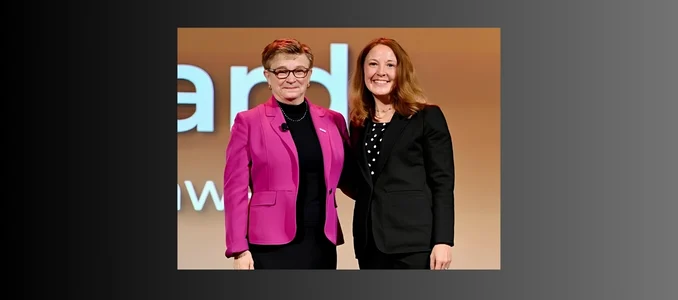
In an industry where vigilance, innovation, and unwavering commitment to human life are the ultimate metrics of success, few leaders stand out quite like Karen LaRue. On September 14, 2026, the National Safety Council (NSC) formally recognized LaRue’s monumental impact on workplace safety by presenting her with the esteemed 2026 Marion Martin Award. The high-profile presentation took place during the grand opening session of the 2026 NSC Safety Congress & Expo in Indianapolis, drawing applause from thousands of occupational health, safety, and environmental (HSE) professionals from around the globe.
LaRue, an accomplished Health, Safety, and Environmental Leader at consumer goods titan Procter & Gamble (P&G), has spent over three decades cementing her legacy as a visionary in the industrial safety sector. Throughout her distinguished 30-year career, she has consistently pushed the envelope of what is possible in corporate safety, moving beyond mere regulatory compliance to foster deeply ingrained cultures of proactive risk mitigation. Her portfolio of achievements spans the modernization of safety protocols, the seamless integration of cutting-edge industrial automation, and the championing of diversity within a historically male-dominated field.
The Marion Martin Award, established by the NSC in 2016, holds a unique and revered place within the occupational safety community. Named in honor of Marion Martin—a pioneering figure in labor standards and industrial safety—the annual accolade is reserved exclusively for women whose professional endeavors have not only transformed workplace safety standards but have actively paved the way, created opportunities, and cleared pathways for other women rising through the ranks of the profession. LaRue’s recognition underscores a career defined by operational excellence, technical foresight, and a profound dedication to mentorship and inclusive leadership.
Chronology of a Safety Legacy: Three Decades of Dedication
To understand the magnitude of Karen LaRue’s contribution to modern industrial safety, one must trace a career that spans eras of profound technological and cultural evolution within the workplace.
The Formative Years and Early Career
LaRue entered the occupational health and safety arena over thirty years ago, at a time when workplace safety was largely reactive—defined by hard hats, steel-toed boots, and mandatory reporting of incidents after they occurred. From her earliest days in the field, LaRue recognized that true safety could not be achieved merely by enforcing rules; it had to be woven into the very fabric of daily operations and corporate culture. Her early roles saw her navigating complex manufacturing environments, identifying hidden hazards, and learning the intricate dance between maintaining high production output and ensuring absolute worker well-being.
P&G Leadership and Technological Integration
As LaRue rose through the ranks at Procter & Gamble, she found herself at the intersection of traditional manufacturing and the Fourth Industrial Revolution. Over the past decade, her work has been instrumental in safely guiding P&G facilities through massive technological transformations. Recognizing that emerging technologies presented both novel hazards and unprecedented opportunities for harm reduction, LaRue spearheaded initiatives to integrate automation seamlessly into operational workflows.

Rather than viewing advanced robotics, artificial intelligence-driven monitoring, and complex automated material handling systems as threats to human labor, LaRue reframed them as vital tools to remove workers from high-risk environments. Under her guidance, P&G operations successfully deployed collaborative robots (cobots) and advanced sensor networks to take over monotonous, physically taxing, and dangerous tasks, thereby drastically lowering injury rates.
Furthermore, LaRue revolutionized the onboarding process for new employees. Understanding that injury rates often spike among newly hired workers who are unfamiliar with industrial environments, she helped design comprehensive, immersive safety onboarding programs. These frameworks ensured that safety education was not confined to a dry classroom orientation, but was experienced practically, building muscle memory and safety intuition from day one on the factory floor.
The Pinnacle: The 2026 NSC Safety Congress & Expo
The culmination of this three-decade journey arrived on a bustling Monday morning in Indianapolis. Standing on the grand stage of the 2026 NSC Safety Congress & Expo, LaRue accepted the Marion Martin Award before an audience of peers, mentors, and mentees. The moment was not only a personal career high-water mark but also a public acknowledgment of the evolving face of safety leadership—one where technical mastery and empathetic mentorship go hand in hand.

Supporting Data and Industry Context
The significance of LaRue’s recognition can be fully appreciated only when viewed against the backdrop of broader industry data concerning workplace safety, technological integration, and demographic shifts within the safety profession.
The State of Workplace Safety in Manufacturing
According to data compiled by the Bureau of Labor Statistics (BLS) and the National Safety Council, the manufacturing and consumer goods sectors continuously face the challenge of balancing high-speed production demands with worker protection. While slip, trip, and fall hazards remain persistent, modern industrial environments contend with complex mechanical interactions, ergonomic strains, and the integration of high-speed automation.
Safety leaders like LaRue operate in a high-stakes arena where the cost of failure is measured in human lives and well-being. Data from organizations utilizing advanced safety integration frameworks—such as those championed by LaRue at P&G—demonstrate a direct correlation between proactive technology integration and plummeting Total Recordable Incident Rates (TRIR). By embedding safety protocols into the design phase of automation projects rather than retrofitting them afterward, P&G has consistently maintained safety metrics that outpace industry averages.

The Rise of Women in Safety Leadership
Historically, occupational health and safety was overwhelmingly populated by men, often originating from military, heavy construction, or traditional engineering backgrounds. However, the demographic landscape has experienced a dramatic transformation over the past two decades.
Data from safety professional associations indicate that women now make up a rapidly growing percentage of the HSE workforce, particularly in mid-to-upper management roles. Despite this progress, systemic barriers to executive advancement have persisted. Awards like the Marion Martin recognition are vital data points in this cultural shift, highlighting the outsized contributions women are making to industrial resilience and operational innovation. By mentoring younger female engineers and safety specialists, leaders like LaRue actively address the leadership pipeline gap, ensuring that the next generation of safety executives reflects the diverse workforce it protects.
Official Responses and Perspectives
The announcement of Karen LaRue as the 2026 Marion Martin Award recipient drew widespread acclaim from corporate leadership, safety advocacy groups, and professional colleagues.

National Safety Council Perspective
Representatives from the NSC highlighted LaRue’s holistic approach to safety as the primary reason for her selection. In statements released during the Indianapolis expo, NSC leadership emphasized that the Marion Martin Award seeks individuals who look beyond the metrics of compliance to build sustainable, empowering workplace cultures.
"Karen LaRue embodies the absolute highest ideals of the safety profession," an NSC spokesperson noted during the event. "Her career proves that operational efficiency and uncompromising worker protection are not mutually exclusive. Through her innovative work with emerging technologies and her tireless advocacy for women in the field, she has left an indelible mark on Procter & Gamble and the industry at large."
Procter & Gamble Corporate Commendation
Executives at Procter & Gamble expressed immense pride in LaRue’s achievement, pointing to her leadership as a cornerstone of the company’s global safety ethos. P&G has long maintained a corporate philosophy centered on citizenship, ethics, and responsibility, with employee safety serving as a non-negotiable baseline.

In an internal communication celebrating the award, P&G leadership remarked: "Karen’s dedication to our people is unwavering. For over thirty years, she has challenged us to think differently about risk, innovation, and care. Her ability to harness new technologies to protect our workforce, combined with her dedication to lifting up other women in the profession, makes her an invaluable asset to our company and a true pioneer in the field of health and safety."
Reflections from the Recipient
Reflecting on her career and the receipt of the Marion Martin Award, LaRue emphasized that safety is fundamentally a collaborative endeavor. In remarks following the ceremony, she credited her colleagues, teams at P&G, and the network of mentors and mentees who have supported her journey.
"Safety is never the work of one person; it is a shared commitment that requires listening, adapting, and continuously caring for one another," LaRue stated. "Receiving the Marion Martin Award is a tremendous honor, but the true reward is seeing the evolution of our workplaces—seeing new technologies protect our people better than ever before, and seeing so many brilliant, capable women stepping into leadership roles and shaping the future of this vital profession."

Implications for the Future of Workplace Safety
Karen LaRue’s recognition is more than a retrospective celebration of a stellar 30-year career; it serves as a signpost for where the occupational health, safety, and environmental profession is heading in the years to come. Her achievements carry profound implications for industrial safety strategy, technological adoption, and workforce diversity.
Blueprint for Technological Integration
As industries worldwide race to adopt artificial intelligence, machine learning, and advanced robotics, safety professionals face the daunting task of risk-proofing environments that are changing faster than ever before. LaRue’s career provides a replicable blueprint for how HSE leaders can successfully partner with engineering and operations teams. By getting involved in technological deployments from conception to execution, safety leaders can ensure that automation eliminates human exposure to hazards rather than creating new, unforeseen risks.
Accelerating Diversity and Inclusion in HSE
The ongoing evolution of the safety profession requires diverse perspectives to solve increasingly complex workplace challenges. LaRue’s legacy of supporting women in safety highlights the strategic importance of mentorship and institutional backing. As organizations grapple with labor shortages and the need for fresh leadership, cultivating inclusive environments where diverse talents can thrive is no longer just a matter of social equity—it is a core business necessity. The visibility provided by awards like the Marion Martin accolade helps inspire young women pursuing STEM and industrial safety education, signaling that the highest echelons of corporate safety leadership are within reach.

Shifting from Compliance to Proactive Care
Perhaps the most enduring implication of LaRue’s work is the continued shift away from compliance-driven safety toward proactive, values-based care. When onboarding programs are designed to build safety intuition and when technologies are deployed to remove humans from harm’s way, safety transforms from a checklist of rules into a living, breathing component of company culture.
As the industrial world looks toward the remainder of the decade and beyond, the standards set by leaders like Karen LaRue will continue to guide the way. Her 30-year journey at Procter & Gamble stands as a powerful testament to the fact that with vision, empathy, and technical rigor, safe workplaces are not just an ideal to strive for—they are an achievable, everyday reality.