



Bridging the Terahertz Gap: Samtec’s 100-CM Series Revolutionizes Millimeter-Wave Connectivity

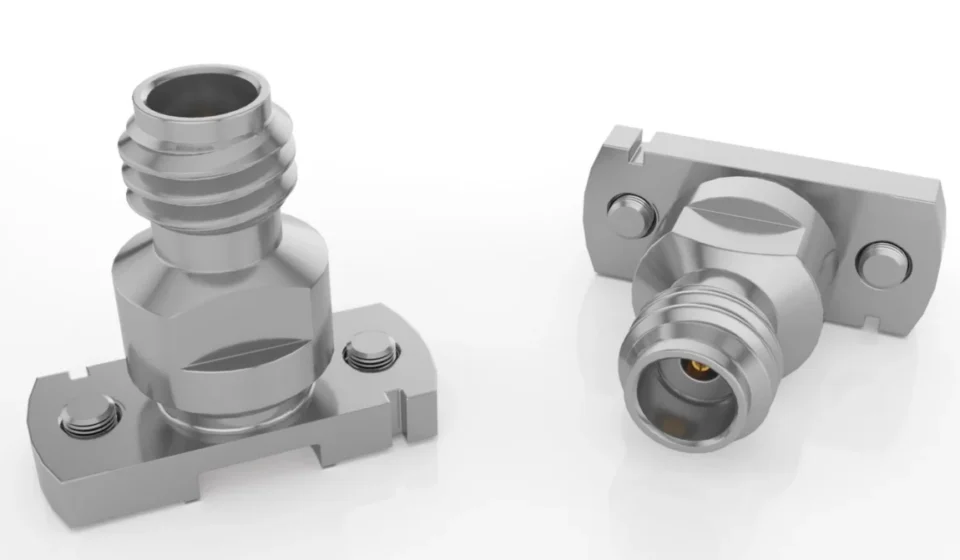
In the rapidly evolving landscape of high-frequency electronics, the barrier between theoretical performance and practical application is often defined by the physical limitations of interconnects. As telecommunications, radar, and aerospace industries push into the millimeter-wave (mmWave) spectrum, the demand for precision, repeatability, and ease of maintenance has reached a fever pitch. Addressing these critical engineering challenges, Samtec has officially unveiled its 100-CM Series, a 1.0 mm vertical compression-mount connector designed to perform reliably at frequencies up to 120 GHz.
This development marks a significant shift in how engineers approach board-level interconnects, moving away from labor-intensive, permanent soldering toward a modular, field-replaceable ecosystem.
Main Facts: Engineering Precision at 120 GHz
The Samtec 100-CM Series is engineered specifically for the most demanding test and measurement environments. At the heart of the product is its solderless, compression-mount architecture. By eliminating the need for soldering, the connector avoids the thermal stress and potential signal degradation associated with traditional mounting methods.
Technical Specifications at a Glance
The performance profile of the 100-CM series is tailored for ultra-wideband applications:
- Operating Frequency: DC to 120 GHz.
- VSWR (Voltage Standing Wave Ratio) Performance:
- 1.25:1 from DC to 40 GHz.
- 1.4:1 from 40 GHz to 110 GHz.
- 1.6:1 from 110 GHz to 120 GHz.
- Mounting Mechanism: Vertical compression-mount, facilitating rapid assembly and disassembly.
- Alignment Features: Integrated alignment grooves and PCB fiducials, ensuring precise landing pad registration.
By providing a stable interface that minimizes impedance discontinuities, Samtec enables design engineers to characterize components and circuits with higher confidence, ensuring that the connector itself does not introduce unwanted noise or signal loss into the measurement chain.
A Chronology of Connectivity: The Evolution toward Solderless Solutions
To understand the impact of the 100-CM series, one must look at the historical trajectory of RF (Radio Frequency) interconnects.
The Era of Soldered Constraints
For decades, high-frequency connectors required soldering to maintain a ground connection and signal integrity. While effective in stable environments, this created a significant bottleneck in prototyping and manufacturing. If a connector failed or if a board needed a different test configuration, the entire assembly often had to be scrapped or subjected to risky, high-heat rework processes that risked damaging the delicate traces of high-speed PCBs.
The Shift to Compression
As frequencies climbed into the 60 GHz, 80 GHz, and eventually the 100+ GHz range, the tolerance for mechanical error dropped to near-zero levels. Engineers began seeking "compression" or "push-fit" solutions. These designs rely on mechanical pressure to create contact, utilizing spring-loaded mechanisms or precise mounting screws to ensure the center conductor and the ground plane remain in perfect alignment with the PCB landing pad.

The Arrival of the 100-CM
Samtec’s introduction of the 100-CM series represents the culmination of this evolution. Over the past several years, the industry has seen a push toward higher integration density. Samtec’s internal research and development team identified that the "weakest link" in 100 GHz+ systems was not the semiconductor chip, but the transition from the cable to the PCB. By refining the geometry of the vertical compression mount, Samtec has bridged the gap between lab-grade test equipment and production-level reliability.
Supporting Data: Why Signal Integrity Matters
In the world of millimeter waves, the wavelength is incredibly short. At 120 GHz, the wavelength is approximately 2.5 millimeters. Any physical mismatch in the connector interface—even a fraction of a millimeter—acts as an antenna or a capacitive/inductive load that can reflect signals back to the source.
The Role of VSWR
The Voltage Standing Wave Ratio (VSWR) is the definitive metric for how efficiently radio-frequency power is transmitted from a source, through a transmission line, and into a load. A VSWR of 1.0:1 represents a perfect match (no reflections).
The 100-CM series’ performance of 1.25:1 at lower frequencies is industry-standard for high-end test gear, but the maintenance of 1.6:1 at 120 GHz is a notable achievement. This indicates that the physical design—the dielectric constant of the insulator, the precision of the gold-plated contacts, and the mechanical stability of the mounting hardware—is optimized to prevent signal distortion at speeds that were once considered the domain of specialized research laboratories.
PCB Layout Flexibility
One of the most praised aspects of the 100-CM series is its focus on PCB layout. The inclusion of alignment grooves and fiducials is not just a convenience; it is a design feature that mitigates "human error." In high-frequency design, the orientation of a connector relative to the ground plane vias is critical. By providing physical aids that lock the connector into the correct position, Samtec ensures that the simulation models created in software (like HFSS or CST) match the physical reality of the board once populated.
Official Perspectives and Industry Implications
Industry leaders and test equipment manufacturers have long called for a standardized, robust, and repeatable interface for mmWave testing. The 100-CM series answers this call by offering a solution that is as much about process efficiency as it is about electrical performance.
Implications for the Test and Measurement Industry
The ability to perform field replacements is perhaps the most significant implication of the 100-CM series. In a production environment, test fixtures are often subjected to thousands of mating cycles. If a connector wears out, the ability to replace it in minutes without soldering means that expensive test boards—often incorporating multi-layer high-frequency laminates that cost thousands of dollars—do not need to be discarded.
Broader Impact on Robotics and 5G/6G
As noted in industry filings, these connectors have significant utility beyond simple lab testing. They are finding their way into:

- 5G/6G Infrastructure: As base stations move toward higher frequency bands to increase data throughput, the hardware supporting these networks requires durable, high-performance interconnects.
- Robotics and End-Effectors: In modern industrial robotics, sensors and high-speed communication modules are increasingly integrated into end-effectors. The 100-CM series allows for modularity in these high-vibration, high-data-rate environments, where maintenance speed is critical to reducing downtime.
Looking Forward: The Future of High-Frequency Design
The release of the 100-CM series by Samtec is indicative of a broader trend: the "democratization" of millimeter-wave technology. As the world moves toward the era of 6G, autonomous vehicles, and sophisticated satellite communications, the infrastructure supporting these technologies must become more accessible and easier to implement.
The Shift Toward Modularization
We are entering a phase where the "black box" approach to RF design is becoming obsolete. Engineers now require transparent, predictable, and modular interconnect solutions that can be swapped out as design requirements change. Samtec’s focus on the vertical compression mount aligns with this trend, providing a high-performance foundation upon which next-generation systems can be built.
Final Technical Assessment
The 100-CM series succeeds because it respects the physics of high-frequency transmission while solving the practical constraints of the manufacturing floor. By focusing on:
- Mechanical Repeatability: Reducing the influence of operator skill on signal performance.
- Broadband Utility: Maintaining low VSWR from DC all the way to 120 GHz.
- Sustainability: Allowing for the reuse of expensive PCBs via solderless replacement.
This product is not merely a component; it is an enabler. For the test engineer, it means less time troubleshooting connector artifacts and more time characterizing the device under test. For the product designer, it means greater confidence in the signal path, from the antenna array to the processor.
As Samtec continues to innovate within the millimeter-wave space, the 100-CM series will likely serve as a benchmark for what is expected of modern, high-performance connectors. It represents the perfect intersection of academic-level electromagnetic performance and industrial-grade mechanical robustness—a balance that will be increasingly vital as our reliance on high-frequency communication continues to grow.
Conclusion
The Samtec 100-CM Series is a testament to the fact that in engineering, the smallest details—the precision of a groove, the tension of a compression mount—often determine the success of the largest projects. By streamlining the process of board-level interconnects at 120 GHz, Samtec has provided the industry with a tool that is as reliable as it is revolutionary. As the technological threshold of 120 GHz becomes the new baseline, the 100-CM series stands ready to support the next decade of wireless innovation.