
High-Stakes Diplomacy: Xi’s Proposed US Delegation of Blacklisted Tech and Auto Giants Tests Washington’s Resolve

By Stewart Burnett
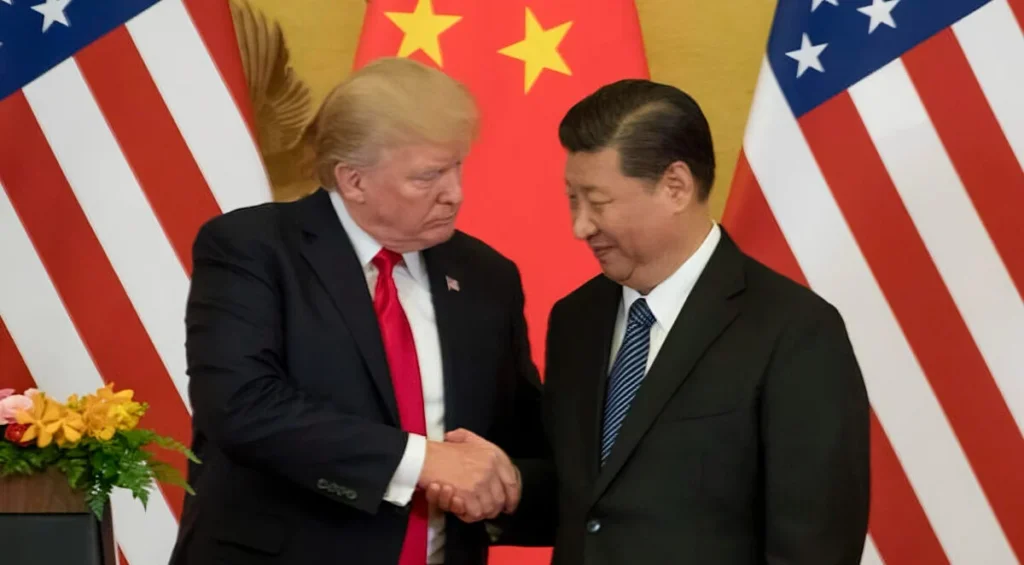
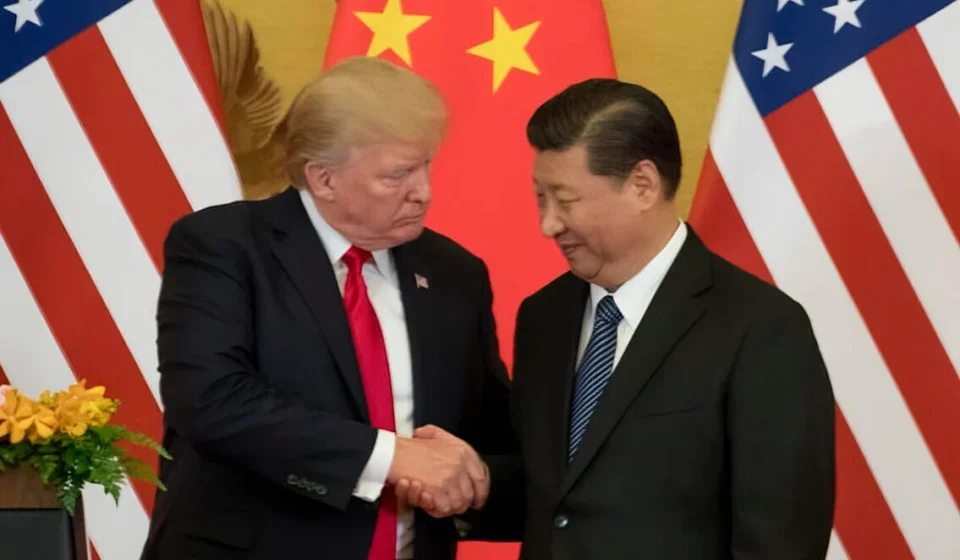
WASHINGTON — In high-stakes international diplomacy, the guest list often sends a louder message than the communiqué. As Washington and Beijing finalize the roster of Chinese business elite scheduled to accompany President Xi Jinping during his state visit to the United States on September 24, the inclusion of several prominent enterprises has transformed a standard diplomatic protocol into a sharp geopolitical test.
According to reports from Reuters, the proposed delegation under consideration features heavyweights from China’s cutting-edge industrial landscape, including electric vehicle (EV) pioneer BYD, consumer tech giant Xiaomi, and dominant battery titans CATL and Gotion. Final invitations are expected to be locked down imminently, hinging on crucial weekend negotiations between US Treasury Secretary Scott Bessent and Chinese Vice Premier He Lifeng.
However, the composition of Xi’s anticipated entourage has sent shockwaves through Washington policy circles. By parading executives from firms actively flagged by the US government as national security threats, Beijing is forcing the Trump administration into an uncomfortable paradox: it must engage directly with the very corporate entities its own defense and intelligence apparatus has spent years trying to wall off from the American economy.
Main Facts: The Clash Between Economic Outreach and National Security
The core tension of the upcoming summit lies in the diametrically opposed trajectories of US-China policy. On one side, political leadership in both nations has occasionally flirted with pragmatism. President Donald Trump indicated earlier in September that he would be open to Chinese automakers establishing manufacturing footprints on American soil, provided they employ domestic workers and respect US labor markets. This mirrors Trump’s own reciprocal strategy in May, when he notably included heavily scrutinized US firms, such as semiconductor giant Nvidia, in his delegation during a visit to Beijing.
On the other side, the regulatory and legislative architecture of the United States remains fiercely hostile to Chinese technological integration. CATL and BYD occupy prominent positions on the Pentagon’s blacklist of entities allegedly tied to the Chinese military—added in January 2025 and June 2026, respectively. According to insider accounts cited by Reuters, President Xi deliberately curated this roster to spotlight companies grappling with US sanctions, export controls, and investment restrictions.
By bringing BYD Chairman Wang Chuanfu to Washington, Beijing is deliberately probing the elasticity of Trump’s conditional openness to Chinese automotive capital. Yet, this diplomatic overture crashes directly into unyielding protectionist walls. A 100% tariff on imported Chinese electric vehicles remains firmly in place. Furthermore, a sweeping Biden-era regulation—set to take effect starting with model year 2027—will comprehensively bar China-linked automakers from selling new connected vehicles in the United States, even those assembled domestically.
Chronology of Escalation: From Manufacturing Ambitions to Pentagon Blacklists
To understand how a state dinner guest list became a geopolitical flashpoint, it is necessary to examine the rapid escalation of regulatory and industrial friction over recent years:
- January 2025: The US Department of Defense places Contemporary Amperex Technology Co. Limited (CATL)—the world’s largest EV battery manufacturer—on its military-industrial blacklist, citing alleged connections to the People’s Liberation Army.
- May 2025: President Donald Trump includes heavily scrutinized American tech firms, including Nvidia, in his presidential delegation to Beijing, setting a precedent for high-level business mixing with geopolitical rivals.
- December 2025: Chinese automotive parts supplier Wanxiang agrees to a massive settlement exceeding $53 million to resolve a Department of Justice investigation regarding customs evasion and anti-dumping duties on imported auto parts.
- June 2026: The Pentagon adds BYD, China’s largest EV manufacturer, to its military supply chain blacklist, cementing its status as a restricted entity under national security guidelines.
- Early September 2026: President Trump reiterates in public remarks that he would be receptive to Chinese automotive manufacturing plants operating within the US, sparking intense debate among domestic automakers and federal regulators.
- Mid-September 2026: Reports emerge that Beijing is finalizing a business delegation featuring BYD, CATL, Xiaomi, and Gotion to accompany President Xi to Washington on September 24, pending bilateral talks between US Treasury Secretary Scott Bessent and Chinese Vice Premier He Lifeng.
Supporting Data: The Financial, Legal, and Operational Stakes
The standoff over Chinese industrial investment is not merely theoretical; it is underpinned by complex legal frameworks, multi-billion-dollar supply chains, and federal tax incentives.
Domestic US automakers have aggressively lobbied the Trump administration to keep American automotive markets sealed tight against Chinese competition. Among traditional US original equipment manufacturers (OEMs), the strategic stakes are arguably highest for Ford Motor Company. Ford has pursued a controversial licensing agreement with CATL to utilize the Chinese firm’s advanced lithium iron phosphate (LFP) battery technology at a dedicated plant in Marshall, Michigan.
This partnership has placed Ford in the crosshairs of federal regulators. Transportation Secretary Sean Duffy has sharply criticized Ford, penning critical inquiry letters over its reliance on Chinese intellectual property. Duffy has also publicly rebuked Ford for its joint manufacturing venture with Chinese automaker Geely in Spain, as well as holding exploratory talks with federal officials regarding potential joint-venture models that would allow Chinese automakers to operate within the US market.
The 2027 Defense Cliff and Section 154
The operational friction for companies entwined with blacklisted suppliers will peak in 2027. Under Section 154 of the National Defense Authorization Act (NDAA), the US military will be legally barred from purchasing battery cells produced by CATL or sourced through its broader supply chains. This federal prohibition threatens to complicate Ford’s commercial strategy, potentially restricting its ability to supply defense-related vehicle fleets with batteries manufactured at the Marshall facility.
The Section 45X Tax Credit Dilemma
Compounding these operational hurdles is the delicate legal architecture required to maintain federal tax subsidies. Ford’s eligibility for the Section 45X Advanced Manufacturing Production Credit depends on a strict legal structure. Treasury Department guidelines employ an “effective control” test. Currently, Ford satisfies this standard by maintaining outright ownership of the physical plant site and operational equipment. However, any structural modification to its technology-licensing agreement with CATL risks violating Foreign Entity of Concern (FEOC) regulations. Crossing this legal threshold could strip the automaker of tens of millions of dollars in annual production subsidies.
Litigation and Legal Battles
The tension between Chinese capital and American enforcement extends far beyond the boardroom, playing out aggressively in the courts. Gotion, another prominent battery component firm slated for potential inclusion in Xi’s delegation, is currently engaged in active litigation against Michigan’s Green Charter Township. The company alleges that local officials unlawfully blocked its planned $2.36 billion EV-components manufacturing facility. These legal battles underscore that state-level resistance to Chinese industrial footprints often mirrors or exceeds federal scrutiny.
Official Responses: Navigating the Divide
As the September 24 summit approaches, reactions from key political and industrial stakeholders highlight deep divisions over how to manage economic coexistence with a strategic rival.
The White House has maintained a bifurcated posture. While President Trump has occasionally expressed a transactional willingness to welcome foreign investment if it creates blue-collar American jobs, his cabinet members have struck a much more hawkish tone. Transportation Secretary Sean Duffy and Commerce Department officials have consistently signaled that national security considerations will supersede industrial expansion, maintaining strict oversight over ventures that channel Chinese technology into critical domestic supply chains.
Conversely, Beijing views the inclusion of blacklisted corporate titans not as a provocation, but as a necessary assertion of industrial pride and a demand for normalization. Chinese officials argue that isolating globally dominant enterprises like BYD and CATL is economically counterproductive and politically untenable. By placing Wang Chuanfu and other key executives directly in the line of sight of American policymakers, Beijing aims to challenge the legitimacy of US trade restrictions and test whether Washington’s economic nationalism can be bridged by commercial pragmatism.
Implications: What the Summit Means for the Future of Global Trade
The outcome of President Xi’s visit to Washington will send ripples far beyond a single diplomatic dinner. If the summit produces a functional framework allowing blacklisted firms to navigate the US market—perhaps through tightly controlled licensing, onshore joint ventures, or localized manufacturing—it could signal a new era of managed economic interdependence, where national security guardrails coexist with cross-border capital investment.
However, if the presence of BYD and CATL executives merely hardens political resistance in Washington, the visit could cement an era of total economic decoupling in critical sectors. For companies like Ford, caught in the crossfire between compliance mandates and profitability pressures, the stakes could not be higher.
Ultimately, whether Wang Chuanfu’s potential inclusion in the Washington delegation represents a genuine opening toward constructive onshore manufacturing or merely a reciprocal diplomatic maneuver to mirror Trump’s Beijing trip will remain unverified until the summit concludes. What is certain is that by bringing its most heavily sanctioned industrial champions to the heart of American power, Beijing has ensured that the future of global automotive and clean energy supply chains will be negotiated face-to-face.