




Senate Committee Advances Landmark Respirator Requirements for Federal Wildland Firefighters in 2026 Farm Bill

By Danielle Naidu
Enriched and Expanded Reporting
Main Facts
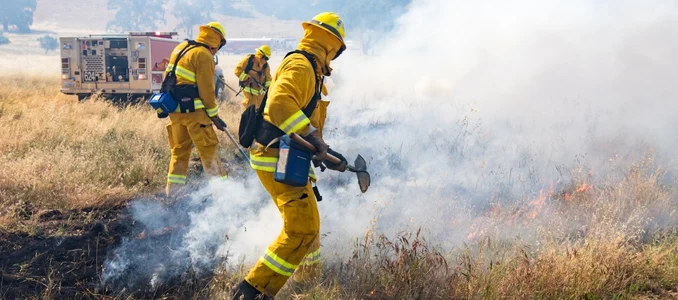
Federal wildland firefighters stand to gain historic occupational safety protections under a new legislative push moving through the United States Senate. Provisions embedded within the newly advanced 2026 Farm Bill, specifically titled the Healthy Lungs for Heroes Act, would mandate the creation of the first-ever federal smoke-exposure limits and dedicated respiratory protection standards for wildland firefighting personnel.
If passed into law, the legislation will compel the U.S. Forest Service (USFS) and the Department of the Interior (DOI) to collaborate closely with the Occupational Safety and Health Administration (OSHA) and the National Institute for Occupational Safety and Health (NIOSH). Together, these agencies are tasked with formulating science-based exposure limits designed to shield frontline personnel from the toxic hazards of long-term wildfire smoke inhalation.
Furthermore, the measure directs these federal entities to partner with the National Wildfire Coordinating Group (NWCG) and other wildfire management agencies. Their objective is clear: design and deploy a comprehensive strategy to deliver commercially viable respiratory protection gear tailored to the rigorous, high-exertion operational demands unique to wildland firefighting.
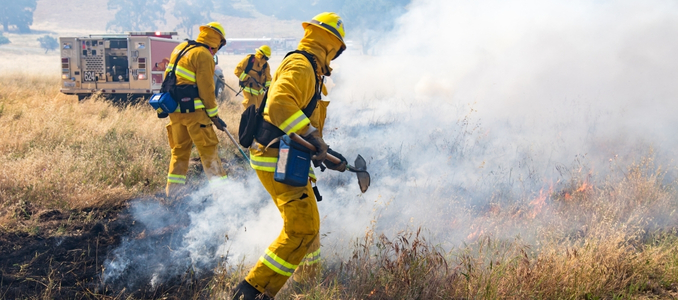
For decades, federal wildland firefighters have worked without the formal respiratory protections routinely afforded to structural firefighters and industrial workers. This legislative breakthrough signals a potential paradigm shift in federal land management agencies, prioritizing occupational health over long-standing administrative inertia regarding the feasibility of respirators on the fireline.
Chronology of the Push for Wildfire Smoke Protections
The inclusion of the Healthy Lungs for Heroes Act in the 2026 Farm Bill is the culmination of years of escalating pressure from labor advocates, medical professionals, wildland firefighter unions, and bipartisan lawmakers.
Pre-2025: The Era of Total Prohibition
For decades, federal agencies maintained strict policies effectively banning wildland firefighters from wearing respirators during active wildfire suppression. The official rationale cited by management historically centered on the belief that available commercial respirators—such as N95s or specialized half-mask respirators—would fail under extreme heat, impede necessary verbal communication, restrict the immense airflow required during arduous physical exertion, or create a false sense of security in high-danger environments. Consequently, hundreds of thousands of federal personnel inhaled carcinogenic particulate matter, carbon monoxide, formaldehyde, and other hazardous byproducts of burning timber and brush with minimal protection.
September 2025: The U.S. Forest Service Shifts Policy
The first major administrative crack in the wall of resistance appeared in September 2025. Facing mounting scientific evidence and persistent congressional inquiries, the U.S. Forest Service issued updated internal guidance formally acknowledging that respiratory protection can significantly reduce exposure to harmful particulate matter found in wildfire smoke.

This September 2025 guidance partially eased the agency’s longstanding respirator ban by allowing personnel to use respiratory gear during specific "light-duty" tasks—such as mop-up operations, staging, or administrative duties in smoky environments. However, the prohibition remained frustratingly intact for arduous, front-line firefighting work. Critics and health advocates argued that this half-measure left firefighters unprotected during the exact moments they faced the most concentrated toxic plumes.
Early 2026: Congressional Intervention via the Farm Bill
Recognizing that administrative changes within the USFS were moving too slowly to protect workers facing rapidly worsening fire seasons, lawmakers seized the opportunity presented by the 2026 Farm Bill cycle. By championing the Healthy Lungs for Heroes Act, the Senate Agriculture Committee bypassed incremental agency hesitation, writing binding statutory mandates directly into major omnibus legislation. The committee’s endorsement of the bill in mid-2026 marks the furthest legislative progress federal smoke-exposure regulations have ever achieved in Washington, D.C.
Supporting Data: The Hidden Toll of Wildfire Smoke
To understand the urgency behind the Healthy Lungs for Heroes Act, one must examine the staggering occupational health data associated with modern wildland firefighting.
Chemical Hazards on the Fireline
Wildfire smoke is not merely wood smoke; it is a complex, toxic soup of pollutants. According to industrial hygiene studies, smoke from wildland fires contains:

- Fine Particulate Matter ($PM2.5$ and $PM10$): Microscopic particles that penetrate deep into the alveolar regions of the lungs and enter the bloodstream.
- Polycyclic Aromatic Hydrocarbons (PAHs): Known human carcinogens generated by the incomplete combustion of organic material and modern synthetic building materials in the wildland-urban interface (WUI).
- Acrolein and Formaldehyde: Severe respiratory irritants that damage lung tissue and mucous membranes.
- Carbon Monoxide (CO): A colorless, odorless gas that reduces the oxygen-carrying capacity of the blood, impairing cognitive function and physical endurance.
The Long-Term Health Crisis
The health consequences of prolonged exposure to these hazards are severe and well-documented. Medical studies tracking cohort groups of wildland firefighters reveal alarming long-term statistics:
- Respiratory Decline: Career wildland firefighters frequently experience accelerated losses in lung function, chronic bronchitis, and occupational asthma.
- Cardiovascular Strain: Acute and chronic exposure to high levels of $PM_2.5$ triggers systemic inflammation, increasing the incidence of heart attacks and strokes among active and retired personnel.
- Elevated Cancer Risks: Epidemiological studies indicate that firefighters face elevated mortality rates from various cancers, including lung, brain, and bladder cancers, directly linked to occupational toxin absorption through the skin and lungs.
Despite these known risks, federal wildland firefighters have historically lacked the baseline epidemiological tracking, exposure monitoring, and protective equipment standards that protect municipal firefighters under OSHA standards. The provisions in the 2026 Farm Bill aim to bridge this dangerous gap.
Official Responses and Stakeholder Perspectives
The advancement of the Healthy Lungs for Heroes Act has drawn widespread reactions from lawmakers, federal agencies, public health experts, and firefighter advocacy groups.
Congressional Champions and Committee Stance
Members of the Senate Agriculture Committee who championed the measure emphasized that protecting the nation’s public lands requires first protecting the people who defend them.

"For too long, the brave men and women who stand between our communities and catastrophic wildfires have been expected to sacrifice their long-term health as an unwritten condition of employment," noted congressional aides familiar with the Farm Bill negotiations. "By partnering with OSHA and NIOSH, we are finally bringing modern industrial hygiene standards to the fireline."
Federal Agency Reactions
The U.S. Forest Service and the Department of the Interior have issued cautious statements acknowledging the committee’s direction. While agency leaders have historically cited logistical hurdles—such as supply chain availability, weight limits on gear packs, and the physical strain of breathing through filtration media during heavy exertion—officials have indicated a willingness to cooperate.
Representatives from NIOSH and OSHA have expressed readiness to lend their scientific expertise. NIOSH researchers have previously pointed out that while designing a respirator for wildland firefighting is technically challenging, technological advancements in lightweight, low-breathing-resistance filter media make a solution feasible if prioritized and properly funded.
Labor Unions and Firefighter Advocacy
Wildland firefighter labor organizations, which have lobbied for years for parity with structural firefighters, celebrated the committee’s action as a historic victory.

"Our members work in some of the most hazardous environments on earth, enveloped in dense smoke for months at a time," said representatives from wildland firefighter advocacy networks. "The September 2025 Forest Service guidance was a welcome acknowledgment, but it left our crews vulnerable during active suppression. The Healthy Lungs for Heroes Act ensures that science, not administrative inertia, dictates our safety standards."
Implications of the Legislation
The passage and eventual implementation of the Healthy Lungs for Heroes Act will trigger profound changes across federal land management agencies, equipment manufacturing sectors, and operational protocols.
1. Transformation of Fireline Culture and Operations
For generations, a rugged "tough it out" culture has dominated wildland firefighting. The introduction of mandatory exposure limits and approved respiratory gear will require a significant cultural adjustment. Fire commanders will need to integrate respiratory protection protocols into incident action plans (IAPs), training regimens, and daily shift briefings. Furthermore, logistics teams will face new responsibilities in distributing, maintaining, and inspecting specialized respiratory gear across remote, mobile fire camps.
2. Driving Innovation in Protective Equipment
The mandate requiring equipment to "account for the operational demands faced by wildland firefighters" will serve as a massive catalyst for the personal protective equipment (PPE) manufacturing industry. Designing a respirator that can withstand radiant heat, fit securely under standard yellow Nomex shirts and helmets, allow for clear radio communication, and—most importantly—not dangerously restrict airflow during high-aerobic exertion will require cutting-edge research and development. Companies that successfully engineer these solutions stand to secure significant federal contracts.

3. Setting a Precedent for State and Private Crews
While the federal legislation directly targets the U.S. Forest Service and the Department of the Interior, its impact will inevitably ripple outward. State forestry departments, tribal firefighting crews, and private contractor organizations often look to federal standards as the benchmark for occupational health. Establishing enforceable federal exposure limits will likely pressure state legislatures and private employers to adopt similar protections, raising the safety baseline for wildland firefighters nationwide.
4. Legal and Liability Shifts
Historically, injured or chronically ill federal firefighters have faced steep hurdles when filing workers’ compensation claims related to smoke exposure, largely because federal agencies lacked formal exposure thresholds or mandated protective gear for fireline work. By establishing official exposure limits via OSHA and NIOSH, the federal government acknowledges clear benchmarks for workplace safety. This could streamline the workers’ compensation process for personnel suffering from occupational cancers and chronic respiratory illnesses, ensuring they receive the medical retirement and support they have earned.
Conclusion
The inclusion of the Healthy Lungs for Heroes Act in the Senate Agriculture Committee’s 2026 Farm Bill represents a watershed moment for federal wildland firefighters. By dismantling decades of administrative reluctance and enlisting the scientific power of OSHA and NIOSH, Congress is poised to deliver long-overdue protections against the invisible hazards of the fireline. As the legislation moves toward final consideration, it carries the hopes of thousands of frontline personnel who have long borne the hidden costs of protecting America’s public lands.