



The CAD Revolution: How OpenAI’s GPT-6 Astra is Disrupting the Digital Manufacturing Landscape

The convergence of artificial intelligence and physical design has hit a critical inflection point. With the release of GPT-6 Astra, OpenAI has not only expanded the boundaries of multi-modal intelligence but has introduced a specialized capability that threatens to upend the traditional additive manufacturing (AM) and engineering workflows: the ability to transform two-dimensional photography into high-fidelity, parametric 3D CAD models.
While OpenAI’s latest model release is framed within a broad suite of capabilities—ranging from advanced coding assistance to sophisticated cybersecurity analysis—the introduction of "BenchCAD" is the headline for the industrial sector. For decades, the transition from a physical object to a 3D-printable digital file has been a laborious, manual process of scanning, mesh cleaning, and reverse engineering. Astra’s ability to bypass the "static mesh" phase and output editable CAD code represents a fundamental shift in how designers and engineers will interact with physical geometry in the coming years.
The Core Innovation: Beyond the Static Mesh
To understand why GPT-6 Astra is causing ripples in the manufacturing community, one must understand the difference between a mesh and a CAD file. Historically, AI-driven 3D reconstruction focused on generating "point clouds" or "meshes"—collections of vertices and faces that represent the surface of an object. While visually impressive, these meshes are notoriously difficult to modify. They lack the "intent" of the design; you cannot easily adjust a hole’s diameter, extrude a wall, or fillet an edge on a standard mesh without significant, often error-prone, computational effort.
BenchCAD, the benchmark suite utilized by OpenAI to test Astra, measures a fundamentally different capability: the model’s ability to interpret multi-view images of an object and generate the underlying code—the "recipe"—required to build that object in a CAD environment. This output is inherently parametric, meaning it is editable, scalable, and ready for integration into professional-grade engineering software like SolidWorks, Autodesk Fusion, or Siemens NX.
By generating structured geometry rather than a raw surface, Astra is effectively automating the most tedious aspect of the reverse-engineering pipeline.
Chronology of the Shift: From Research to Real-World Application
The evolution toward AI-driven CAD generation has been swift, moving from experimental academic papers to production-ready API integrations in less than three years.
- Early 2024: The industry saw the first wave of neural radiance fields (NeRFs) and Gaussian splatting, which allowed for the creation of high-quality visual representations of 3D space. However, these remained purely visual and non-editable.
- Late 2025: Specialized startups, including the likes of Backflip, began utilizing proprietary foundation models to bridge the gap between scan data and CAD, marking the beginning of the "automated reverse engineering" era.
- September 2026: The release of GPT-6 Astra marks the entry of a general-purpose, massive-scale model into this arena. Unlike niche tools, Astra leverages cross-domain knowledge—combining its understanding of physical physics, architectural principles, and coding syntax—to interpret 3D geometry with unprecedented contextual awareness.
OpenAI is currently rolling out access to Astra in phases. The initial deployment is limited to a select group of institutional partners, with a broader rollout planned for the coming days for ChatGPT Plus, Pro, and Enterprise users. Furthermore, the model is being integrated into the OpenAI API, with immediate availability on cloud platforms including Microsoft Azure and AWS Bedrock, ensuring that software developers can begin baking these capabilities into their own CAD and CAM software immediately.
Supporting Data: Benchmarking the Performance Leap
The performance metrics released by OpenAI are, by any objective measure, a significant leap forward. In the BenchCAD assessment, which evaluates how closely a reconstructed object’s geometry aligns with the ground-truth CAD source, Astra achieved a mean voxel Intersection over Union (IoU) score of 95.9%.
To put this in perspective:
- GPT-5.6 Sol (OpenAI’s previous iteration): 83.3% IoU.
- Anthropic’s Claude Fable 5.1: 84.3% IoU.
The 12.6% improvement over its predecessor is not merely an incremental gain; it represents a threshold crossing where the error rate is low enough to make the output "production-ready" with only minimal manual oversight. Perhaps more impressively, OpenAI reports that Astra achieves this level of accuracy at roughly 43% lower API cost than the Sol model, and an 86% cost reduction compared to the Fable 5.1 architecture.
This combination of higher fidelity and lower operational cost is the "holy grail" for industrial adoption. If the cost of converting a physical part to a digital CAD model drops to pennies, the economic barrier to digitizing legacy inventories, repairing discontinued parts, and customizing consumer goods evaporates.
Official Responses and Strategic Implications
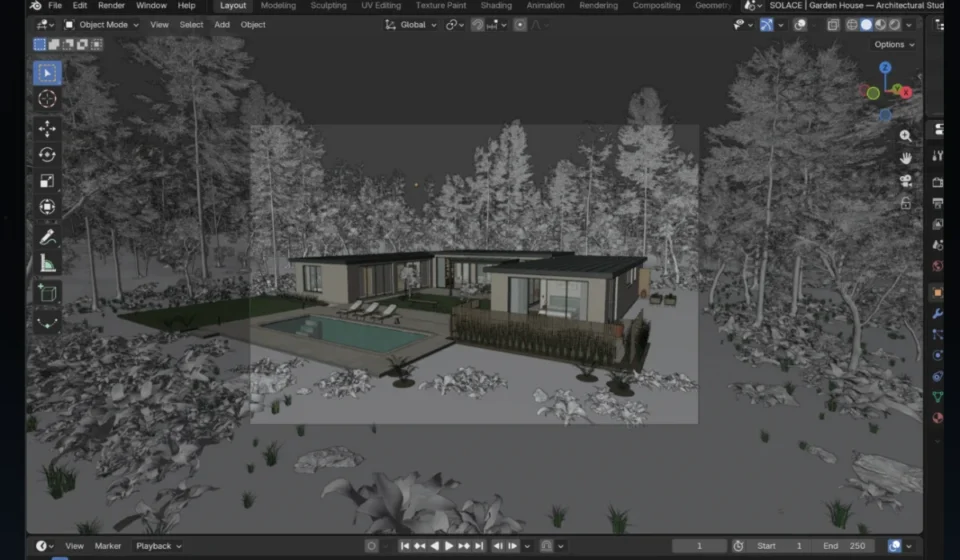
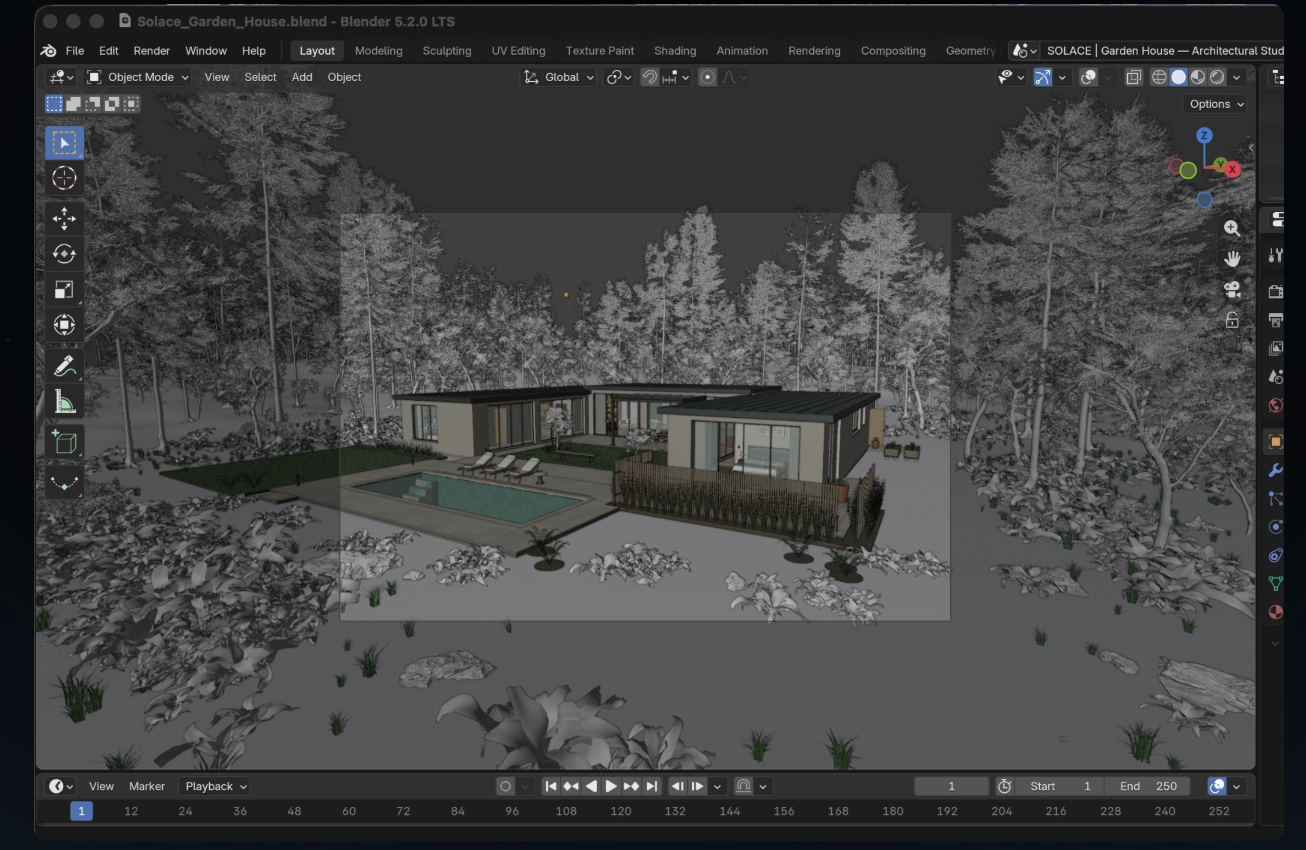
Industry analysts and OpenAI’s partners have framed this as the start of a "geometric intelligence" era. In a demonstration outside of the standard BenchCAD test, OpenAI showcased Astra’s ability to model a complex architectural space in Blender and export the result directly into Unreal Engine 5.
The implication is clear: the divide between the digital and physical is shrinking. By allowing a user to feed a series of photos of a house into a model and receive a fully editable 3D environment, OpenAI is targeting industries as diverse as construction, interior design, gaming, and—most crucially—additive manufacturing.
However, industry experts remain cautiously optimistic regarding the "real-world" transition. The BenchCAD benchmark currently uses clean, synthetic multi-view renders to test the model. The challenge, as noted by lead engineers in the 3D printing space, will be moving from pristine test data to the noisy, high-variance world of real-world photography. Imperfect lighting, occlusion, and surface reflections remain the final frontier for these models.

The Additive Manufacturing Context: A Race Against the Bottleneck
It is important to note that the AM industry has not been waiting for OpenAI to solve these problems. The "scan-to-CAD" bottleneck has been the primary inhibitor to widespread industrial adoption of 3D printing for maintenance and repair.
The Competition
Companies like Backflip have already gained significant traction by training models specifically on the logic of how engineers build parts—feature by feature, rather than by simply estimating volume. By reducing part digitization costs from $1,500 to roughly $10, firms like Backflip have proven that there is a massive market for this specific type of AI.
Similarly, the partnership between Creality and KVS Ltd demonstrates the hardware side of this movement. By integrating AI-driven workflows directly into entry-level scanning hardware, they are democratizing the ability to digitize parts for CNC and AM workflows.
Why Astra Changes the Game
Astra is a "Generalist" entering a field of "Specialists." While specialized AM models might have a deeper understanding of specific manufacturing constraints (such as minimum wall thickness or support structure requirements), Astra possesses the massive training data of a general-purpose frontier model. This allows it to understand not just the geometry, but the context of the object. If you scan a broken bracket, Astra understands it is a bracket; it understands its structural purpose and can suggest refinements that a specialized model might miss.
The Path Forward: Implications for 2027 and Beyond
As the industry looks toward the next 18 months, the integration of GPT-6 Astra into the CAD ecosystem will likely follow three distinct phases:
- Assisted Design: Engineers will use Astra as an "autocomplete" for 3D modeling, where the AI suggests features or entire geometries based on a few sketches or photos, which the human engineer then refines.
- Automated Legacy Digitization: Corporations will deploy these models to archive their physical, non-digital inventories, converting thousands of spare parts into editable CAD files to facilitate on-demand 3D printing.
- Autonomous Design Loops: In the final stage, AI agents will bridge the gap between "Scan-to-CAD" and "Design-for-Additive." An AI will scan a part, identify a weakness, redesign the geometry for improved performance using generative design principles, and output a file ready for immediate production.
The launch of GPT-6 Astra is a clear signal that the era of "manual redrawing" is coming to a close. For the additive manufacturing sector, this isn’t just an interesting software update—it is the missing link that will finally enable the mass-industrialization of on-demand, distributed manufacturing.
As we move into 2027, the 3D Printing Industry will continue to track these developments through our upcoming Additive Manufacturing Applications (AMA) series. We invite all industry practitioners to join the conversation regarding the integration of these powerful tools into the modern factory floor.