



Bridging the Gap: Why Technical Innovators Must Turn Their Book Smarts into Business

By Rachael Pasini
Editor-in-Chief, Design World
Main Facts: The Rise of the Engineer-Entrepreneur
Throughout the year, interviewing extraordinary individuals who refuse to accept the status quo has been a recurring privilege. These innovators are positive disruptors—the precise catalysts the modern world needs to keep industries advancing, infrastructure modernizing, and societies maturing. Hailing from diverse backgrounds and tackling distinct missions, they share a singular, unifying desire: to make things fundamentally better.
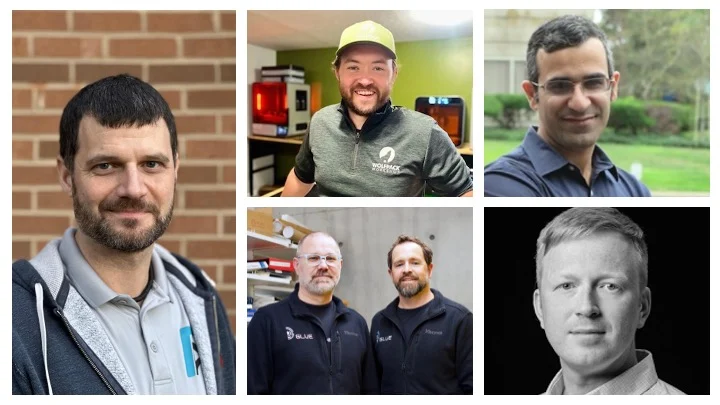
Among these notable technical minds are innovators such as David Doherty, David Helmers, Mehdi Kargar, Kristoffer Stokes, Philip Costanzo, and Dmitri Tsentalovich. While their technical disciplines vary wildly—spanning advanced materials, manufacturing bottlenecks, and workflow automation—their journeys began the same way. They encountered a persistent, frustrating limitation in their daily work, and rather than working around it, they transformed their solutions into commercial enterprises.
Yet, traditional engineering education rarely prepares professionals for the realities of the marketplace. While universities excel at teaching mechanics, thermodynamics, and electromagnetism, they routinely omit critical business fundamentals—such as how to price a job, structure a corporate entity, or walk away from a bad deal. This article explores how modern engineers are overcoming this educational gap, reframing business acumen as just another technical skill to master, and stepping up to commercialize the solutions the world desperately needs.
Chronology: From Technical Frustration to Market Disruption
The lifecycle of an engineering-led business rarely starts with a grand business plan. Instead, it typically follows a distinct, organic chronology rooted in problem-solving:
- The Professional Friction Point: It begins in the field, the lab, or on the manufacturing floor. An engineer or scientist encounters a systemic bottleneck—a material failure, an inefficient workflow, or an outdated process.
- The Obsession Phase: The individual cannot stop thinking about the problem. It transcends a standard 9-to-5 task and becomes an intellectual puzzle.
- The Prototype Breakthrough: Driven by technical curiosity, the creator designs a workaround, a novel software platform, or an advanced material that solves the bottleneck locally.
- The Accidental Enterprise: Peers, clients, or external industries notice the innovation and demand access to it. The creator realizes that a business is the only viable vehicle to scale the solution globally.
- The "Street Smarts" Education: Thrust into the marketplace, the technical founder learns accounting, negotiations, supply chain management, and leadership through trial, error, and real-world execution.
As innovator David Helmers noted during an interview, he learned his "book smarts" in school and his "street smarts" on the job, emphasizing that the second phase of education never truly stops.
Supporting Data & Industry Insights: The Skills Gap in Engineering
Engineering programs across the globe produce some of the most analytically rigorous minds in the workforce. However, a stark divide remains between technical proficiency and entrepreneurial capability.
The Traditional Curriculum vs. Real-World Demands
- What Engineering Schools Teach: Advanced mathematics, physics, structural mechanics, fluid dynamics, circuit design, and computer programming.
- What the Market Demands: Financial modeling, risk assessment, contract negotiation, customer discovery, team scaling, and go-to-market strategies.
According to workforce studies in industrial automation and advanced manufacturing, nearly 70% of technical startups founded by engineers face significant early-stage hurdles not because of product failure, but due to operational and commercial missteps. Without an MBA or prior business mentorship, technical founders are forced into a steep, sometimes expensive learning curve.

However, industry leaders argue that this narrative of the "helpless engineer" is outdated. Business acumen is increasingly viewed not as an innate, mysterious trait, but as a systematic skill set. Just as an engineer learns a new CAD software platform, finite element analysis (FEA) tool, or advanced manufacturing process, they can acquire commercial literacy.
Official Perspectives and Interviews: Redefining the Modern Innovator
The conversations held with this year’s crop of disruptors reveal a common psychological thread: a willingness to step outside the boundaries of formal training.
Engineers are inherently conditioned to look at systems and ask, "Is there a better way to do this?" When that curiosity is paired with the courage to launch a commercial enterprise, powerful transformations occur.
As highlighted by the experiences of industry trailblazers like Doherty, Kargar, Stokes, Costanzo, and Tsentalovich, success does not require a formal business background from day one. It requires:
- The Pull of Meaningful Work: Following an intractable problem simply because solving it matters.
- Trust in the Learning Process: Recognizing that business skills accumulate over time through active participation, mentorship, and operational execution.
- Resilience Against the Status Quo: Pushing past the comfort of traditional employment to build something entirely new.
Implications: A Call to Action for Technical Minds
The movement of engineers transitioning into founders carries profound implications for global industries:
- Accelerated Innovation: When creators own the commercialization of their technology, products reach the market faster, cutting through bureaucratic red tape typical of legacy corporations.
- Reshaping Engineering Education: Universities are beginning to take note, integrating minor degrees in entrepreneurship, tech-commercialization boot camps, and cross-departmental collaboration projects into traditional engineering tracks.
- Empowering the Solo Innovator: With modern software, prototyping tools, and digital platforms, launching a tech-based enterprise has never been more accessible.
The Verdict: Take the Leap
For any engineer currently mulling over an idea late at night, or carrying that nagging sense that their industry is operating below its potential, consider this a definitive nudge.
You do not need an MBA to make a difference. You do not need a multi-million-dollar venture capital backing to start. You simply need to start from where you are, trust your problem-solving instincts, and put your hard-earned book smarts to work in the real world.