





Carbon Secures Vital Legal Victory: EPO Upholds Key Dual-Cure 3D Printing Patent

In a landmark development for the additive manufacturing sector, the European Patent Office (EPO) has delivered a definitive ruling on the validity of a foundational patent held by 3D printing pioneer Carbon. The decision, issued by the EPO’s Board of Appeal on September 24, 2026, marks the conclusion of a rigorous three-and-a-half-year legal odyssey. By maintaining European Patent No. 3158400 in amended form, the EPO has reinforced the legal standing of the proprietary "dual-cure" technology that sits at the heart of Carbon’s high-performance manufacturing platform.
The patent, titled "Methods of Producing Three-Dimensional Objects from Materials Having Multiple Mechanisms of Hardening," covers a sophisticated process that integrates light-based 3D printing with a secondary thermal curing step. This technology is considered a cornerstone of Carbon’s ability to produce robust, end-use parts that meet the stringent requirements of the automotive, dental, medical, and consumer electronics industries.
The Chronology of a High-Stakes Legal Battle
The journey of European Patent No. 3158400 from filing to final appellate review reflects the complexity and intensity of patent disputes in the rapidly maturing 3D printing industry.
- June 22, 2015: Carbon files the initial patent application, setting the stage for protecting its dual-cure methodology.
- June 1, 2022: The patent is officially granted by the EPO, providing Carbon with a significant competitive advantage in the European market.
- February 27, 2023: A formal opposition is filed by Oxon IP B.V., a Dutch patent law firm. While industry analysts often view such filings as "straw man" oppositions—a mechanism allowing anonymous competitors to challenge a patent without public disclosure of their identity—the challenge initiated a lengthy review process.
- July 2023: Carbon submits its comprehensive reply, defending the scope and validity of its claims.
- November 21, 2024: The EPO’s Opposition Division holds oral proceedings to weigh the arguments.
- January 3, 2025: The Opposition Division issues its written decision, maintaining the broadest claim (Claim 1) but opting to excise several narrower dependent claims.
- February–March 2025: Both parties, dissatisfied with elements of the initial decision, file cross-appeals, leading to the assignment of the case to the Board of Appeal (Case No. T0373/25).
- September 24, 2026: The Board of Appeal concludes its review, issuing a final judgment that upholds the primary claims and reinstates the dependent claims previously removed by the lower division.
Decoding the Technology: The Dual-Cure Advantage
At the core of the dispute is the mechanism of "dual-cure" chemistry. Traditional vat polymerization (such as standard stereolithography) typically relies on light-induced cross-linking to harden resin. While effective for prototyping, these materials often lack the thermal stability or mechanical toughness required for final production parts.
Carbon’s patented method fundamentally alters this paradigm. By pairing an initial UV-light-driven printing process with a secondary thermal curing phase, the technology allows for the creation of parts with isotropic properties. This dual-stage process enables the infusion of performance-grade polymers—such as polyurethanes—into the 3D printing workflow. As noted in Carbon’s technical documentation, this enables the production of high-performance items, such as impact-resistant automotive components or high-resiliency dental appliances, that were previously deemed impractical for additive manufacturing.
Official Responses and Corporate Strategy
The survival of the patent is being hailed as a major strategic victory for Carbon. Philip DeSimone, CEO of Carbon, emphasized that the decision serves as a validation of the company’s long-term R&D investment.
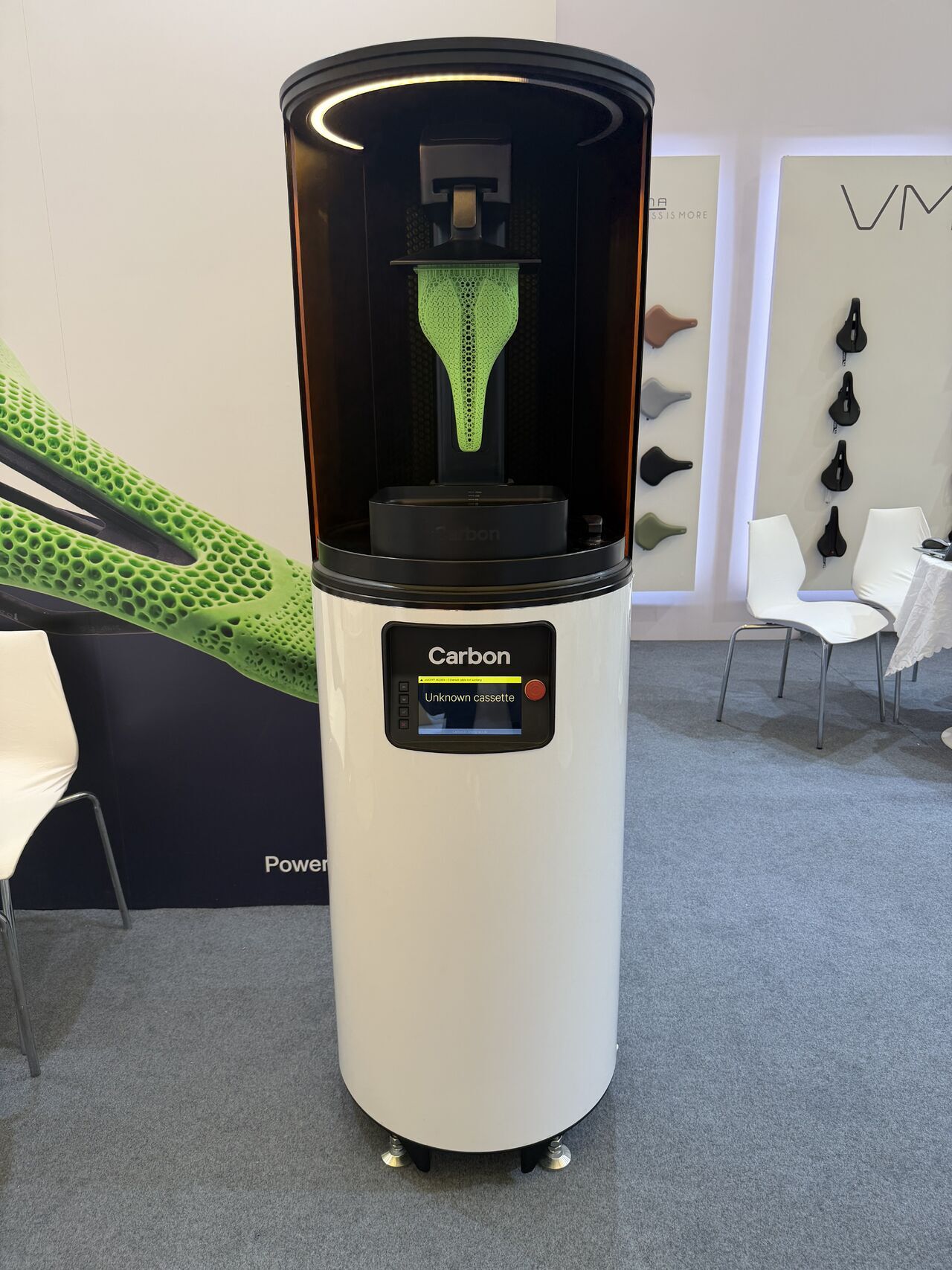
"This decision confirms the strength and breadth of the innovation that is foundational to Carbon’s platform," DeSimone stated in a press release. "Dual-cure chemistry enables the production of high-performance end-use products that previously were difficult or impractical to produce with other 3D printing technologies. We will continue to invest in and protect our innovations as we advance digital manufacturing."
Carbon’s legal defense was spearheaded by a formidable team, including Marks & Clerk LLP in London, which managed the EPO proceedings. The company also utilized the expertise of Myers Bigel for global patent prosecution, alongside litigators Kathi Vidal and Dustin Edwards of Winston Taylor.
The Broader Context: A Wave of Patent Enforcement
The resolution of this case arrives during a period of heightened litigiousness within the additive manufacturing sector. As the industry shifts from rapid prototyping to mass-scale digital manufacturing, the value of intellectual property has surged, leading to a "patent arms race."
Recent years have seen several high-profile disputes that underscore the risks and rewards of protecting 3D printing methodologies. For instance, the legal battle between Continuous Composites and Markforged regarding continuous fiber 3D printing technology resulted in a $17.34 million jury award in 2024, which eventually blossomed into a $25 million settlement involving cross-licensing agreements.
Similarly, the ongoing conflict between Continuous Composites and competitors like FibreSeek and Anisoprint in the U.S. District Court for the District of Delaware suggests that manufacturers are increasingly willing to leverage their patent portfolios to consolidate market share and define the technological boundaries of the sector.
Implications: What Lies Ahead?
The EPO’s ruling that maintains Patent No. 3158400 in "amended form" provides Carbon with a legally solidified shield. However, the industry is closely watching to see if this victory will trigger a wave of enforcement actions across Europe.
1. Strengthening Market Position
By securing its primary claims, Carbon has effectively created a barrier to entry for competitors attempting to replicate its dual-cure processes in European jurisdictions. This gives Carbon’s existing partners and clients increased confidence in the long-term viability of the Carbon DLS (Digital Light Synthesis) platform.
2. Licensing vs. Litigation
While the patent is now reinforced, the question remains whether Carbon will pursue an aggressive litigation strategy or opt for a licensing model. In the current economic climate, where "coopetition" (collaborative competition) is becoming common, cross-licensing could emerge as a favored path, allowing Carbon to monetize its intellectual property while avoiding the spiraling costs of patent litigation.
3. Setting Precedents for Additive Manufacturing
The three-and-a-half-year struggle highlights the inherent difficulty in patenting manufacturing processes. The EPO’s decision to restore dependent claims suggests a high degree of confidence in the specific technical nuances of Carbon’s claims. This could influence how other additive manufacturing firms approach patent filings, pushing them to focus on multi-stage processes that are inherently more difficult to invalidate than simple material or hardware patents.
4. The "Institutional Filter"
As highlighted in recent industry surveys, the additive manufacturing sector is currently navigating a year defined by "institutional filters." Investors and corporate boards are demanding higher levels of technological maturity and legal security before committing to large-scale adoption. The resolution of this patent challenge acts as a "de-risking" event for Carbon, potentially attracting further institutional interest and investment as the company continues to scale its industrial operations.
Conclusion
The successful defense of European Patent No. 3158400 is more than just a victory for a single company; it is a signal that the rules of the road for the additive manufacturing industry are being written through the crucible of patent law. For Carbon, the path forward is now clearer. With its foundational technology protected by the EPO, the company is well-positioned to continue its expansion into critical industrial sectors.
As the industry moves toward 2026 and beyond, the focus will undoubtedly remain on which companies can successfully marry technical innovation with the legal expertise required to defend their work. For now, the "dual-cure" process stands as a protected benchmark, and the rest of the industry will be watching closely to see how this newly reinforced intellectual property is leveraged in the global market.