




Trump Administration Announces Aggressive Tariff Roadmap for Generic Pharmaceuticals

By Phil Neuffer | Supply Chain Dive
Published: July 22, 2026
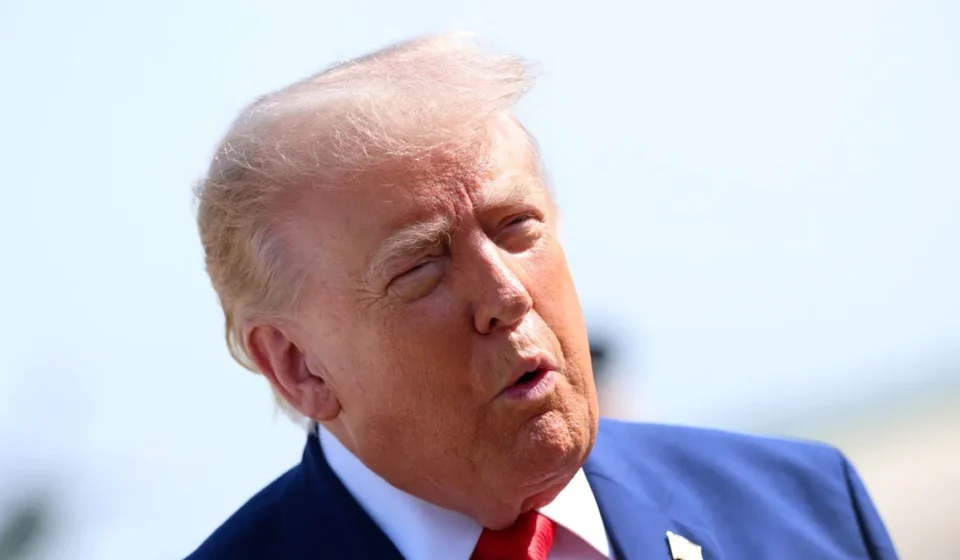
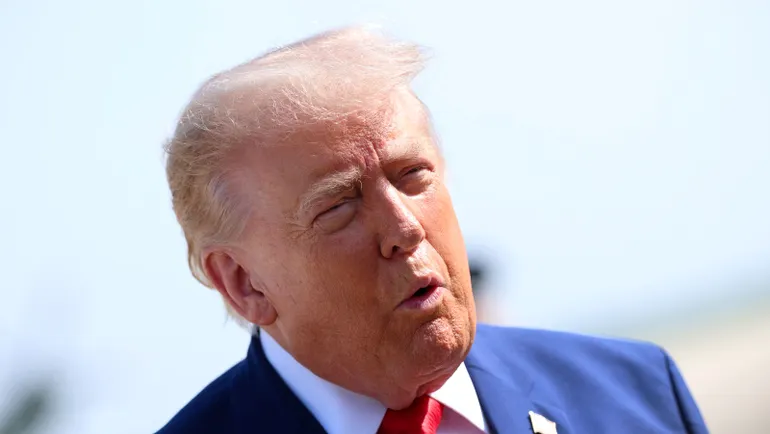
In a move that marks a significant escalation in the administration’s protectionist trade agenda, President Donald Trump announced on Tuesday a multi-year plan to impose steep tariffs on generic pharmaceutical imports. The strategy, unveiled via social media, aims to force a structural shift in the American healthcare supply chain by penalizing foreign-made generic drugs while incentivizing domestic manufacturing through a rigorous, phased-in duty schedule.
This latest development arrives amidst a broader, highly active period of trade policy implementation, characterized by a rapid succession of levies targeting international trade partners and specific industrial sectors. As the administration leans heavily on its authority under various trade statutes, the pharmaceutical industry—already reeling from recent mandates on patented medications—faces a period of profound uncertainty.
The Core Policy: A Phased Approach to Reshoring
The administration’s proposal, detailed by President Trump on Truth Social, outlines a clear timeline for the introduction of tariffs on generic pharmaceuticals. Under the new directive, these products will maintain their current duty-free status for the next 24 months, beginning August 1, 2026.
The grace period is intended to provide pharmaceutical companies with a window to adjust their supply chains. However, the subsequent trajectory is aggressive:
- Year 0–2 (Aug 2026 – Aug 2028): 0% tariff rate maintained.
- Year 3 (Aug 2028 – Aug 2029): The levy will escalate to 100%.
- Year 4 and beyond: The tariff rate will reach a punitive 200%.
President Trump emphasized that the objective is to "reshore generic pharmaceutical production into America." By setting a high threshold for entry, the White House intends to create a clear financial mandate: companies must either establish domestic plant and equipment capacity or face a prohibitive tax that would likely render imported generic products uncompetitive in the U.S. market.
Chronology of Escalating Trade Barriers
The announcement regarding generic drugs is the latest in a series of cascading trade actions that have redefined the U.S. import landscape over the past several months.
Recent Tariff Milestones:
- February 2026: Implementation of a temporary 10% tariff across various categories following a Supreme Court ruling that invalidated previous duties. This measure is set to expire on July 24, 2026.
- April 2026: Initial announcement of 100% tariffs on patented pharmaceutical imports, targeting 17 major firms including Eli Lilly, Pfizer, and Novo Nordisk.
- Mid-July 2026: A wave of specific country-based levies, including a 50% tariff on Canadian imports and a 25% duty on goods originating from Brazil.
- July 22, 2026: Formal declaration of the 200% tariff roadmap for generic pharmaceuticals.
This rapid-fire approach to trade policy has caught many industry analysts off guard, reviving concerns about the predictability of international commerce and the return of "policy by tweet."
Supporting Data and Regulatory Mechanisms
The administration is primarily utilizing Section 232 of the Trade Expansion Act of 1962, which allows for the imposition of tariffs based on national security concerns. While historically used for commodities like steel and aluminum, the administration has successfully expanded its application to the pharmaceutical sector.
The logic follows that over-reliance on foreign-made generics—specifically from overseas manufacturing hubs—constitutes a national security vulnerability. By forcing the localization of the supply chain, the White House claims it is safeguarding the American public from future shortages caused by geopolitical instability, pandemic-related shutdowns, or supply chain blockages.
However, the economic data regarding the feasibility of such a transition remains contested. Critics point out that pharmaceutical manufacturing requires specialized labor, intensive regulatory compliance through the FDA, and years of facility construction. The administration’s two-year grace period, while generous in a trade context, is considered by many in the industry as insufficient for the full-scale relocation of generic production lines.
Official Responses and Industry Outlook
The business community has reacted with a mix of alarm and cautious observation. Trade experts argue that while the intent is clear, the practical execution is fraught with risks.

"We are back to possible trade policy via tweet," said Deborah Elms, head of trade policy at the Hinrich Foundation. "This time a new threat on generic pharmaceuticals. Start date two years away, so it may well be a threat that never materializes. But because it still might happen, worth paying attention to today."
For the pharmaceutical industry, the implications are binary. Larger firms with existing domestic infrastructure may see a competitive advantage, while smaller distributors and regional providers of generic medications may struggle to absorb the transition costs.
The Pharmaceutical Research and Manufacturers of America (PhRMA) and other advocacy groups have largely remained in the background as they assess the legal ramifications of the Section 232 application. If these tariffs are challenged in court, the legal basis will likely hinge on whether the administration can effectively prove that generic drugs constitute a national security risk under the letter of the law.
Implications: A New Era for Global Supply Chains
The potential consequences of this policy are far-reaching, impacting not only the cost of healthcare but the global standing of the U.S. trade agenda.
1. Healthcare Costs and Access
Generics account for approximately 90% of all prescriptions filled in the United States. While the administration argues that domestic production will create jobs and lower costs in the long run, short-to-medium-term price spikes are a significant concern. If manufacturers pass the cost of new domestic facilities—and the potential 200% tariff—to the consumer, the impact on public health could be severe.
2. Supply Chain Relocation
Companies are now forced to evaluate a "China-plus-one" or "global-plus-domestic" strategy. The threat of a 200% tariff is effectively an existential one for any firm relying on international generic manufacturing. This may drive a wave of capital expenditure into the U.S. Midwest and other manufacturing hubs, but it could also lead to a temporary contraction in the availability of certain specialized generic medications.

3. Diplomatic Friction
The administration’s use of broad tariffs against allies (like Canada) and emerging markets (like Brazil) has created a ripple effect in diplomatic circles. As the U.S. continues to lean into protectionism, trading partners may retaliate with their own targeted measures, potentially impacting U.S. agricultural exports or technology services.
4. Policy Uncertainty
The fact that this announcement comes just days before a major tariff expiration (the 10% levy ending July 24) suggests that the administration is operating with a high degree of volatility. Investors and supply chain managers are finding it increasingly difficult to model long-term costs when the regulatory environment shifts with such frequency.
Conclusion
As the U.S. moves into the latter half of 2026, the administration’s trade strategy has shifted from a tool of negotiation to a fundamental restructuring device. The tariff roadmap for generic pharmaceuticals represents perhaps the most ambitious attempt yet to "reshoring" a critical industry.
Whether this policy will result in a robust, domestic pharmaceutical manufacturing base or an inflationary crisis remains to be seen. What is certain is that the global pharmaceutical supply chain is entering a period of forced evolution. Companies, healthcare providers, and policymakers will be watching the next two years with intense scrutiny, as the clock ticks toward the 200% tariff deadline of 2029.