






The Industrialization of Desktop 3D Printing: Inside the Massive Printer Farms of Shenzhen

When industry observers first attended Formnext Shenzhen in 2023, a familiar narrative took hold: the trade show floor dictated what the Chinese additive manufacturing (AM) sector wanted the world to buy. However, a venture beyond the exhibition halls reveals a more profound reality—not just what is being sold, but what is being manufactured at a scale previously unimaginable for desktop hardware.
At the heart of this shift is Huafast, a company whose Shenzhen operations have become a case study in the rapid industrialization of desktop 3D printing. With a staggering fleet of 5,600 Bambu Lab machines forming a core component of a 15,000-printer national network, Huafast is challenging the conventional boundaries between prototyping tools and high-volume manufacturing.
The Infrastructure of Scale: Beyond the Hardware
Buying 5,600 machines is a feat of capital expenditure; managing them is a feat of industrial engineering. During an August visit to the company’s new facility in the Guangming district—the same district where Bambu Lab is currently developing a massive 3-million-printer-capacity factory—it became clear that the printers are merely the visible tip of an operational iceberg.

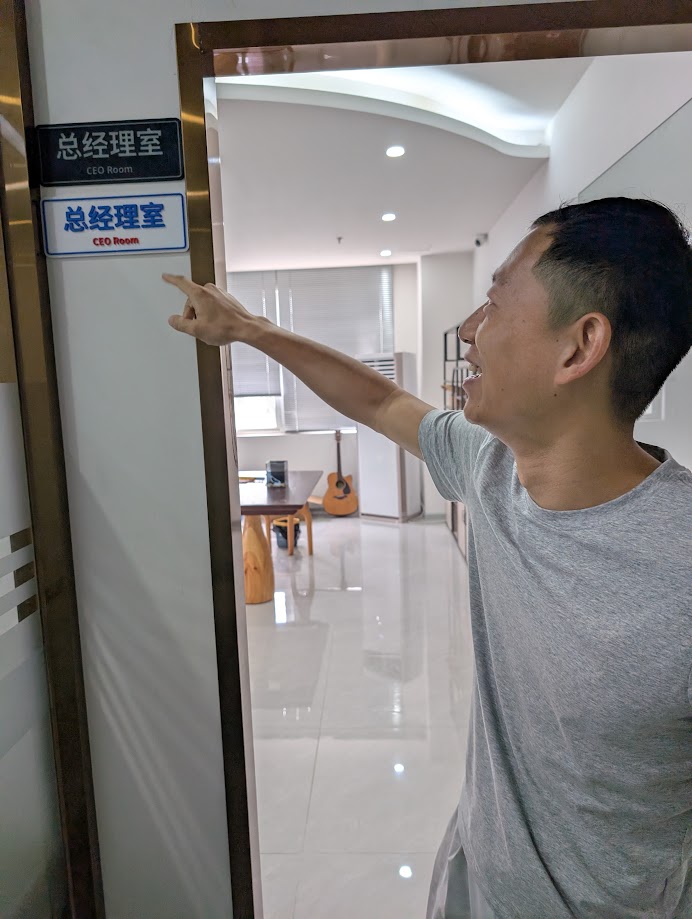
The facility is organized not by the aesthetics of a modern tech office, but by the relentless rhythm of deadlines. While the office of founder "Sven" houses personal touches like a guitar and a camp bed, the surrounding environment is a rigorous ecosystem of finance, supply chain management, administrative processing, and logistics.
The fundamental question raised by such an operation is one that traditional industry classifications handle poorly: at what point does a "desktop printer" become an industrial asset? At Huafast, the distinction lies in the workflow. It is defined by how an order is allocated, the speed of material sourcing, the rigor of quality control, and the commercial viability of the delivery. The hardware remains the same, but the organizational envelope surrounding it has shifted into a high-stakes manufacturing model.
A Seven-Day Market: The Economics of Agility
The business model at Huafast is predicated on "catching the market." In the world of social-media-driven commerce, demand for specific products can appear overnight and vanish with equal velocity.

Sven points to a recent toy order exceeding 50,000 units, which the facility completed in just seven days. To achieve this, Huafast allocated between 1,000 and 2,000 printers to the project, while maintaining capacity for existing clients. Theoretically, the company could have utilized more of its fleet to compress the timeline to three days, but the reality of a busy production schedule—and the necessity of honoring existing queues—precludes such drastic shifts.
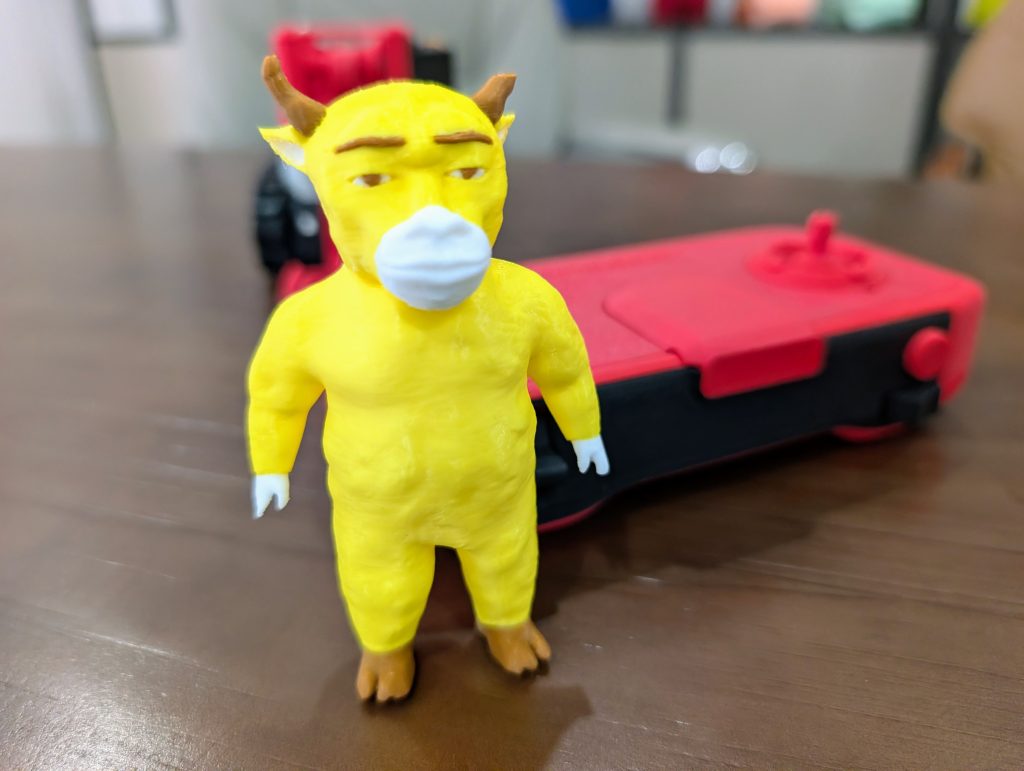
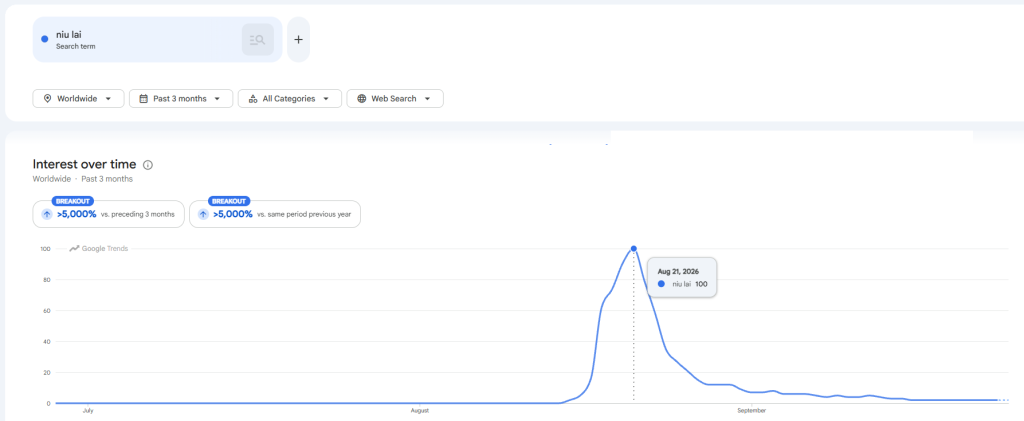
This speed is the primary competitive advantage against traditional injection molding. For meme-driven products—such as the recent viral sensation "Niu Lai" (The Cow is Coming)—the time required to design, commission, and produce a metal mold is prohibitive. By the time a traditional mold is ready, the social media trend may have already peaked and faded. Huafast treats its production capacity as a fluid, redirectable asset. Once a design gains traction, digital files are distributed across thousands of printers instantly, bypassing the weeks of lead time inherent in traditional tooling.
Chronology and Evolution of the Farm
Huafast’s journey into large-scale printing began in 2018 with the manufacturing of 3D printers themselves. By 2023, the company made a strategic pivot, exiting hardware production to focus exclusively on printing services. This transition was accelerated by an acquisition in 2025 by a listed company, which provided the necessary capital to scale the fleet from roughly 1,000 units to over 5,000 in the Shenzhen site alone.
The integration of these machines into an industrial workflow has not been without technical hurdles. The company has struggled with Wi-Fi interference—a predictable consequence of deploying thousands of 2.4 GHz-connected devices in a single confined space. While some clusters operate wirelessly, much of the operation now relies on more stable manual or hard-wired control configurations.
Furthermore, the maintenance of such a fleet is a constant battle against physical wear. With some machines logging over 10,000 hours of operation, the facility maintains a dedicated rotation for replacing nozzles, extruder gears, and belts, ensuring that downtime is minimized through planned maintenance during quieter production cycles.
Data-Driven Production and Labor Productivity
The labor structure at Huafast provides a nuanced view of what "automation" looks like in practice. The Shenzhen site employs 42 people, 30 of whom are dedicated production workers. Rather than a simple ratio of printers per person, productivity is measured by the complexity of the task.
An operator overseeing 300 machines running a single, uniform product has a drastically different workload than one managing 100 machines running a mixture of files, colors, and materials. Filament changes and quality checks remain the primary bottlenecks. While the industry often hypes autonomous part-removal systems, Huafast’s priority remains the human-centric management of materials and build-plate logistics.
Key Operational Metrics:
- Total Fleet (Group-wide): Approximately 15,000 machines.
- Shenzhen Site: 5,600 machines.
- Utilization Rate: Typically 50–60%, with peaks reaching 80–90% during high-demand cycles.
- Machine Payback Period: Estimated between 6 to 12 months, depending on order pricing and volume.
- Reject/Failure Rate: Estimated between 2.5% and 10%, depending on the complexity of the design file.
Official Perspectives and Strategic Partnerships
The relationship between Huafast and Bambu Lab is more than that of a customer and supplier. It is a strategic partnership that provides Bambu with invaluable data on how their machines perform under extreme, non-household conditions.
"If you have big orders, find us," says Sven. This invitation highlights the company’s dual identity: they are both a high-volume service provider and a reseller of equipment. Interestingly, Huafast often supports smaller, home-based printer farms, providing technical guidance and sometimes acting as a subcontractor. When Huafast’s own capacity is exhausted, or when a customer’s budget is too low for the primary facility, the company funnels work to these smaller, lower-overhead partners. This creates a flexible, tiered ecosystem that extends far beyond the 15,000 machines owned by the parent group.
Implications: The Industrialization of the Desktop
The core implication of the Huafast model is the decoupling of "industrial" results from "industrial" machinery. For decades, the industry has equated high-end manufacturing with six-figure, specialized systems. Huafast proves that for a significant segment of the market—specifically consumer goods, electronics housings, and promotional items—the constraints of traditional manufacturing (tooling costs and lead times) are now optional.
However, the "industrialization" of this sector is not without its risks. As the market becomes flooded with accessible, high-performance printers, the cost of manufacturing is dropping. Huafast faces constant downward pressure on pricing from smaller, more agile competitors.
The company’s survival in this landscape depends on its ability to provide services that a single operator cannot: reliable quality control, sophisticated project management, and the ability to handle massive, time-sensitive orders.
Ultimately, the success of a 15,000-printer factory does not rely on the printers themselves, but on the surrounding industrial infrastructure. When 15,000 desktop printers become a factory, they do not magically become "industrial machines." Instead, the entire business—from the finance department to the filament extrusion lines—must adapt to meet the rigors of professional-grade manufacturing. The lesson from Shenzhen is clear: buying the machines is the easy part; the harder task is keeping them profitably occupied in an increasingly competitive global market.