


Bridging the Security-Resilience Gap: Rockwell Automation Report Highlights the Hidden Vulnerabilities of the Connected Industrial Enterprise

INDUSTRIAL AUTOMATION & CYBERSECURITY — In an era defined by rapid digital transformation, cloud integration, and the aggressive scaling of artificial intelligence across the manufacturing sector, industrial enterprises are facing an unprecedented paradox. A newly released global study reveals that while organizations are pouring capital into cybersecurity tools and expressing near-universal confidence in their defense mechanisms, a troubling disconnect remains between perceived security and actual operational resilience.
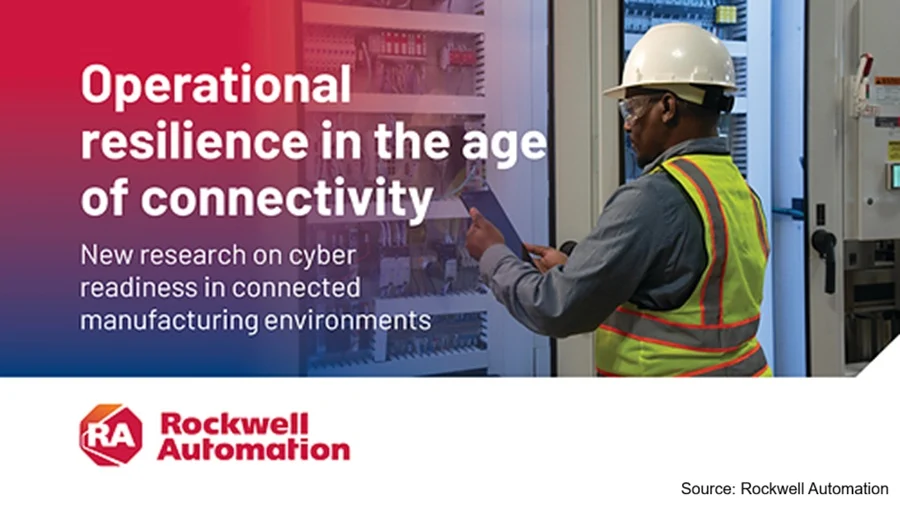
Rockwell Automation, Inc., a global leader in industrial automation and digital transformation, has published its comprehensive industry insights report titled "Operational Resilience in the Age of Connectivity." Based on exhaustive research involving 1,500 manufacturing and industrial operations decision-makers spanning 17 countries, the report delves deeply into how modern industrial organizations are navigating the complex intersection of information technology (IT), operational technology (OT), and mounting cyber threats.
The findings paint a vivid picture of a sector caught between the immense productivity gains of hyper-connectivity and the expanding threat landscape that accompanies it. While investments in cybersecurity platforms are accelerating, the report cautions that simply purchasing and deploying security technologies does not automatically translate into true operational resilience. As cybercriminals increasingly target critical infrastructure and manufacturing supply chains, industry leaders are being forced to rethink their security strategies from the ground up.
Main Facts: The State of Industrial Cybersecurity Today
The core revelation of the Rockwell Automation report is the complex relationship between capital expenditure in cybersecurity and genuine operational preparedness. As traditional manufacturing environments evolve into smart factories powered by the Industrial Internet of Things (IIOT), the boundaries separating enterprise networks from factory floors have effectively dissolved.
Key takeaways from the global study include:
- Widespread Exposure vs. High Confidence: Nearly half (46%) of all surveyed industrial organizations experienced a cyber incident over the past year. Yet, despite this high frequency of attacks, an astounding 90% of decision-makers expressed confidence in their organization’s ability to prevent, contain, or recover from a security breach.
- Strong Perceived ROI on Security Investments: Cybersecurity is no longer viewed merely as an expensive compliance burden or a back-office necessity. Approximately 62% of organizations have already invested in robust cybersecurity platforms, with respondents ranking cybersecurity as the second-highest ROI-generating technology investment in their portfolios.
- The Rise of AI-Driven Defense: Looking ahead to the next 12 months, 45% of industrial organizations plan to integrate artificial intelligence (AI) and machine learning (ML) capabilities directly into their cybersecurity frameworks to preemptively identify and neutralize threats.
- The IT/OT Convergence Dilemma: The integration points between IT and OT systems are now ranked as the second-most vulnerable entry points for cyber incidents. Conversely, 37% of leaders believe that proactively securing this converged architecture will unlock major business value and drive positive commercial outcomes over the next five years.
- External Growth Obstacles: More than one-third of industrial decision-makers explicitly identify cybersecurity risk as one of the single biggest external obstacles to their organization’s overall growth and expansion.
Chronology of the Shift: From Air-Gapped Isolation to Hyper-Connectivity
To understand the urgency behind the Rockwell Automation report, it is necessary to examine the historical trajectory of industrial control systems (ICS) and operational technology over the past two decades.
Phase 1: The Air-Gapped Era (Pre-2010s)
For decades, manufacturing plants and industrial facilities operated in relative isolation. Known as "air-gapping," operational technology networks—such as Supervisory Control and Data Acquisition (SCADA) systems and Distributed Control Systems (DCS)—were physically separated from corporate enterprise networks and the internet. Security was largely a matter of physical access control; if an unauthorized person could not physically enter the plant floor and plug a device into a local terminal, the system was considered secure. While this approach provided a high degree of digital safety, it severely limited data visibility, remote monitoring, and enterprise-wide analytics.
Phase 2: The Digital Transformation and IT/OT Convergence (2010s–2020)
As global markets demanded greater efficiency, faster time-to-market, and real-time supply chain visibility, industrial organizations began breaking down the barriers between IT and OT. Corporations realized that the vast quantities of operational data generated by factory floor sensors and programmable logic controllers (PLCs) could be leveraged to optimize production schedules, predict maintenance needs, and reduce waste.
However, this convergence was rarely executed with security as the foundational priority. Legacy OT hardware, originally designed for longevity and reliability rather than cryptographic security or remote management, was suddenly exposed to enterprise networks and, in many cases, the public cloud.
Phase 3: The Age of Connectivity and AI Integration (Present Day)
Today, industrial enterprises operate in a hyper-connected ecosystem. Cloud computing, edge devices, remote workforce management, and advanced AI analytics have become standard operating procedure. Unfortunately, threat actors have evolved alongside these technologies. Ransomware gangs, nation-state actors, and cybercriminal syndicates have recognized that disrupting a manufacturing line or water treatment facility can yield massive financial extortion payouts.
The publication of “Operational Resilience in the Age of Connectivity” marks a critical milestone in this timeline—a moment where the industrial sector is taking stock of its digital maturity and confronting the uncomfortable truth that perimeter defenses and siloed security measures are no longer sufficient.
Supporting Data: Dissecting the Metrics
A deeper dive into the data compiled across the 17 countries surveyed by Rockwell Automation reveals nuanced insights into the operational mindset of modern industrial leaders.
The Overconfidence Phenomenon
One of the most striking anomalies in the report is the disparity between actual incident rates and executive confidence. With 46% of organizations reporting a cyber incident in the past 12 months, nearly half of the global industrial sector has firsthand experience with a security breach. Yet, 90% of respondents claim confidence in their containment and recovery procedures.
Cybersecurity analysts suggest this overconfidence may stem from a narrow definition of what constitutes an "incident." While enterprise IT teams are well-versed in handling corporate data breaches or phishing attacks, OT environments present an entirely different set of stakes. A disruption in OT does not just mean lost files; it can mean halted production lines, damaged physical machinery, environmental hazards, or catastrophic safety incidents. If executives are judging their resilience primarily through an IT lens, they may be dangerously underestimating their exposure on the plant floor.
Financial Priorities and ROI
The commercial perception of cybersecurity has undergone a radical transformation. For years, security was categorized as a cost center—a necessary expenditure to satisfy regulatory bodies and insurance underwriters. Today, 62% of industrial organizations have dedicated capital to advanced cybersecurity platforms, and the market views these investments as high-yield drivers. By safeguarding uptime, protecting intellectual property, and ensuring uninterrupted supply chain fulfillment, robust cybersecurity is now recognized as a direct enabler of profitability.
Emerging Technologies: AI as Both Sword and Shield
Artificial intelligence is rapidly becoming the focal point of future technology spending. With 45% of organizations planning to incorporate AI and machine learning into their security operations within the next year, the industry is pivoting toward automated threat detection. In complex industrial environments where millions of data points are generated every second, human analysts alone cannot parse logs fast enough to stop sophisticated, automated cyberattacks. AI-driven security orchestration promises real-time anomaly detection, allowing systems to autonomously isolate compromised endpoints before an attack can propagate through the OT network.
Official Responses and Expert Insights
Industry leaders interviewed in conjunction with the report’s release emphasized that technological acquisition must be paired with cultural and strategic evolution.
Rick Kaun, Global Director of Cybersecurity Services at Rockwell Automation, offered a sobering assessment of the current industrial landscape during the report’s launch:
"Industrial organizations understand that cybersecurity directly affects uptime, continuity, productivity, and growth, but technology investments alone do not create operational resilience or confidence in an organization’s security posture," Kaun stated.
"True resilience is built when cybersecurity becomes an integral part of business strategy. Organizations that proactively manage risk and prepare for disruption are better positioned to protect operations, sustain production, and gain a competitive advantage."
Kaun’s comments underscore a fundamental shift in how leadership must approach risk management. Cybersecurity can no longer be delegated solely to the Chief Information Security Officer (CISO) or the IT department. Plant managers, operations directors, and executive board members must collaborate to ensure that operational continuity plans account for digital disruptions just as thoroughly as they account for equipment failure or supply chain bottlenecks.
Furthermore, industry analysts note that regulatory bodies are taking notice of the vulnerabilities highlighted in the report. Governments worldwide are introducing stringent cybersecurity mandates for critical infrastructure, manufacturing, and energy sectors, transforming voluntary best practices into legal obligations with severe penalties for non-compliance.
Implications for the Future of Industrial Operations
The findings of “Operational Resilience in the Age of Connectivity” carry profound implications for manufacturing and industrial enterprises over the coming decade. As the line between physical and digital operations continues to blur, organizations must adapt or risk severe operational failure.
1. Shifting from Prevention to Resilience
The traditional cybersecurity mindset focused heavily on building impenetrable walls to keep attackers out—a perimeter-defense strategy. However, in modern connected enterprises, absolute prevention is statistically impossible. Sophisticated attackers will eventually find a way in through a compromised vendor, a phishing email, or an unpatched vulnerability. Therefore, the industry must pivot toward resilience—the ability to detect intrusions rapidly, contain the blast radius, maintain core operations during an attack, and recover with minimal downtime.
2. Bridging the Cultural Divide Between IT and OT
One of the most persistent obstacles in industrial cybersecurity is the cultural divide between IT and OT personnel. IT professionals prioritize data confidentiality, rapid patching, and network agility. OT engineers prioritize availability, physical safety, system reliability, and long hardware lifecycles. For operational resilience to take root, organizations must foster cross-functional collaboration, ensuring that security policies respect the unique operational constraints of the factory floor while addressing modern threat vectors.
3. Supply Chain Security as a Weakest Link
As industrial organizations optimize their supply chains and integrate third-party vendors, cloud providers, and managed service providers, their attack surface expands exponentially. A cyberattack on a minor software vendor can cascade downstream into major manufacturing operations—a reality demonstrated by several high-profile supply chain attacks in recent years. Securing the extended ecosystem will be a primary mandate for industrial leaders seeking sustainable growth.
4. Continuous Workforce Training and Talent Acquisition
Deploying advanced AI platforms and cybersecurity software requires skilled personnel to manage them. The global cybersecurity talent shortage is acutely felt in the industrial sector, where professionals must possess a rare dual understanding of both corporate IT networks and industrial control systems. Investing in workforce training, upskilling existing plant personnel, and partnering with specialized cybersecurity service providers will be essential for maintaining a secure operational posture.
Conclusion
Rockwell Automation’s “Operational Resilience in the Age of Connectivity” serves as both a roadmap and a warning flare for the global manufacturing sector. The report proves that while the industrial world is enthusiastically embracing digital transformation and recognizing the commercial value of security investments, a dangerous complacency persists around actual risk exposure.
To thrive in the age of hyper-connectivity, industrial organizations must look beyond the false comfort of technology checklists. By embedding cybersecurity into the core of their business strategy, fostering deep collaboration between IT and OT teams, and leveraging advanced AI tools for proactive defense, manufacturers can successfully navigate the complexities of the modern digital landscape—protecting their uptime, their workforce, and their bottom line for decades to come.
The full report, "Operational Resilience in the Age of Connectivity," can be accessed via the Rockwell Automation Official Website.