


From Holiday Tradition to High-Tech Bonding: TUM Researchers Harness Mistletoe Berries to Create Revolutionary Bio-Based Adhesive

MUNICH — For centuries, mistletoe has held a paradoxical place in human culture. On one hand, it is celebrated during the winter holidays as a festive symbol of romance, luck, and affection, hung high in doorways to invite stolen kisses. On the other hand, it is a parasitic plant that drains water and nutrients from the canopy of its arboreal hosts.
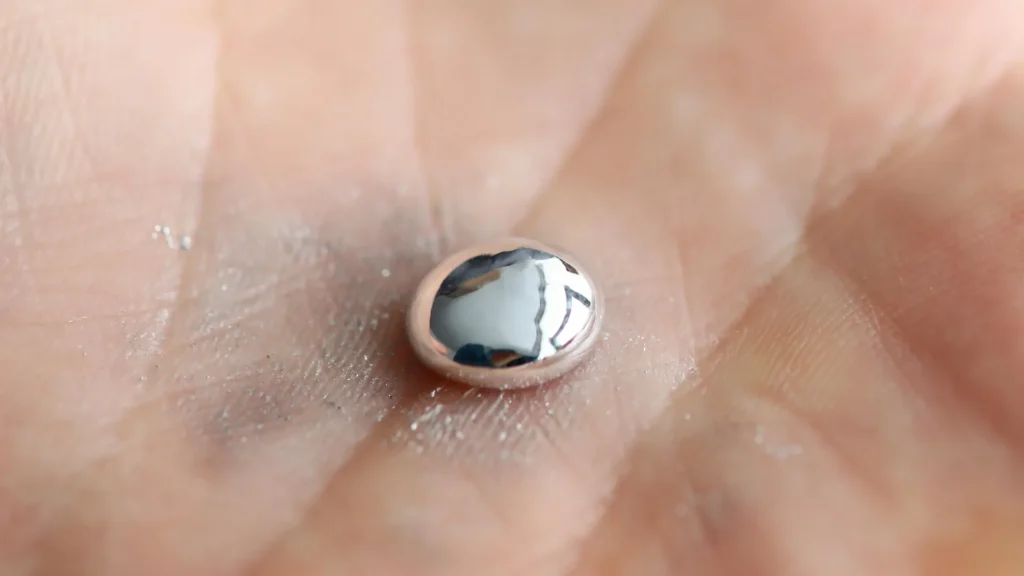
Now, this botanical parasite is poised to make a dramatic leap from the forest canopy to the cutting edge of advanced manufacturing. Researchers at the Technical University of Munich (TUM) have developed a high-performance, fully bio-based adhesive whose key ingredient is extracted directly from mistletoe berries.
This breakthrough material is capable of bonding a remarkably diverse array of notoriously difficult substrates—including wood, metal, glass, and even Teflon—with structural-grade strength. Most intriguingly, the adhesive can be repeatedly separated and reactivated through the application of moderate heat. If successfully scaled, this innovation promises to fundamentally transform modern product design, simplifying complex electronics repairs, enhancing the recyclability of consumer goods, and pushing the boundaries of cryogenic and aerospace engineering.
Main Facts: The Anatomy of a Botanical Breakthrough
At its core, the newly developed formulation represents a significant departure from conventional industrial adhesives, which rely heavily on petrochemical feedstocks, toxic cross-linkers, and elaborate synthetic pretreatments.
Led by Dr. Oliver Lieleg, professor of biopolymer materials at TUM, the research team engineered the adhesive primarily from a natural sugar mixture extracted from mistletoe berries. This primary viscous matrix is supplemented simply with tannic acid and malic acid, two naturally occurring organic compounds.
The resulting bio-based adhesive boasts several standout characteristics:
- Universal Substrate Compatibility: It forms robust, load-bearing bonds across disparate materials, including birch wood, stainless steel, aluminum, glass, and polytetrafluoroethylene (PTFE, commonly known as Teflon).
- High Structural Strength: In rigorous mechanical testing, the adhesive achieved shear strengths exceeding 10 megapascals (MPa), placing it firmly within the performance tier of conventional technical structural adhesives.
- Thermal Reversibility: Bonded joints can be intentionally severed and subsequently reactivated multiple times by heating the assembly to approximately 90 degrees Celsius.
- Extreme Thermal Resilience: The adhesive maintains its structural integrity and bonding performance under ultra-low, cryogenic conditions plunging down to -150 degrees Celsius.
Chronology: Nature’s Inspiration Meets Laboratory Innovation
The journey from a parasitic shrub clinging to an oak branch to a patented polymer formulation in a Munich laboratory followed a methodical path of biomimicry and rigorous chemical iteration.
The Biological Blueprint
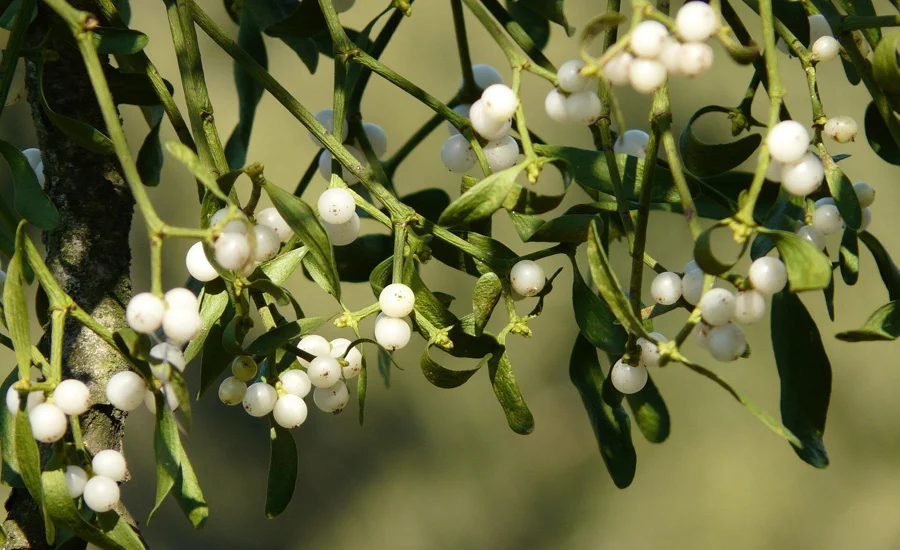
For echelons of evolutionary time, the European mistletoe (Viscum album) has relied on a remarkably sticky seed dispersal mechanism. When birds consume mistletoe berries, they excrete the seeds onto the branches of host trees. The seeds are encased in a viscous, highly adhesive pulp containing complex polysaccharide structures. This natural mucilage anchors the seed firmly against wind and rain, allowing the young plant to germinate and sink its roots into the host’s vascular system.
Recognizing the exceptional mechanical tenacity of this natural glue, Dr. Lieleg’s team at TUM began investigating whether the underlying chemical architecture could be harvested and adapted for industrial manufacturing applications.
Formulation and Initial Testing
The early phases of the research focused on isolating the sticky sugar mixture from harvested mistletoe berries without degrading its physical properties. Rather than relying on complex chemical synthesis, the researchers sought to complement the natural sugars with readily available, bio-derived additives. Through trial and error, they discovered that combining the mistletoe-derived sugars with precise proportions of tannic acid and malic acid created a stable, highly cohesive network.
When applied to test panels of birch wood, aluminum, and stainless steel, the formulation cured rapidly into a rigid, load-bearing layer. Subsequent trials tested the limits of the material on Teflon—a fluoropolymer universally known for its extreme nonstick properties and resistance to standard bonding agents. To the research team’s astonishment, the mistletoe-based formulation successfully gripped the slippery surface, creating a secure, load-bearing joint where most industrial adhesives fail entirely.
Supporting Data: Performance Metrics Under Extreme Conditions
In the realm of structural engineering, bio-based adhesives have historically suffered from a perception of inferiority. They are frequently viewed as "green" alternatives that sacrifice mechanical performance, moisture resistance, or durability in exchange for environmental credentials. The TUM research team specifically set out to dismantle this compromise.
Shear Strength Analysis
During standardized lap-shear tests, the mistletoe-derived adhesive demonstrated impressive load-bearing capabilities. Achieving shear strengths of over 10 MPa on rigid substrates, the material performs comparably to many epoxy- and acrylic-based structural adhesives currently utilized in the automotive and construction sectors. This high shear strength is attributed to the synergistic interaction between the mistletoe sugars and the added tannic acid, which facilitate strong hydrogen bonding and cross-linking across various surface chemistries.
Thermal Extremes: From -150°C to 90°C
One of the most surprising discoveries during the testing phase was the adhesive’s resilience across extreme temperature gradients.
- Cryogenic Stability: At -150 degrees Celsius, standard polymer-based adhesives often become brittle, cracking under thermal stress or losing their interfacial adhesion. The mistletoe-derived adhesive retained its mechanical flexibility and bonding strength even under these deep-freeze conditions.
- Thermal Reversibility: Conversely, when subjected to temperatures around 90 degrees Celsius, the secondary bonds within the adhesive matrix temporarily disengage, allowing bonded components to be cleanly separated without damaging the underlying substrates. Upon cooling, the adhesive can be reheated and reactivated to bond new components, establishing a closed-loop life cycle.
Official Responses and Expert Insights
The development of the mistletoe-based adhesive has drawn significant attention from the scientific community and manufacturing sectors alike, highlighting a growing demand for sustainable materials that do not compromise on industrial utility.
Dr. Ufuk Gürer, the first author of the study, emphasized the practical advantages of the team’s formulation during a recent project briefing in Munich.
"Many bio-based adhesives are either not strong enough to handle structural loads or require elaborate, environmentally taxing chemical processing to achieve basic functionality," Gürer noted. "Our approach bypasses these limitations entirely. We utilize a natural raw material that exhibits exceptional intrinsic adhesive properties, and we process it using comparatively simple, benign ingredients."
Dr. Oliver Lieleg, who heads the biopolymer materials research group at TUM, underscored the broader philosophy guiding the laboratory’s work. By looking to nature for solutions, engineers can discover material pathways that human synthesis has struggled to replicate efficiently. However, Lieleg is also pragmatic about the immediate logistical hurdles facing the technology.
Because the adhesive relies directly on extracts harvested from mistletoe berries, current production volumes are inherently constrained by the availability of the raw botanical material.
"While the material performance is exceptionally promising, large-scale commercial production using wild-harvested mistletoe is limited for obvious reasons," Lieleg explained. "Our next major research phase involves exploring ways to synthesize or produce the key adhesive components independently of the plant, utilizing biotechnological or fermentation pathways to make the entire manufacturing process fully scalable."
Implications: Transforming Electronics Assembly and Space Exploration
The unique property profile of the TUM adhesive—balancing high structural strength, thermal reversibility, and cryogenic durability—opens up transformative possibilities across multiple high-tech industries.
Revolutionizing Consumer Electronics and Circular Manufacturing
In the manufacturing of smartphones, laptops, and household appliances, adhesives are widely used to bond exterior housings, secure internal brackets, and mount delicate displays. While this ensures sleek, waterproof designs, it creates a massive impediment to the circular economy. Glued electronics are notoriously difficult to disassemble, leading to shattered glass, damaged circuit boards, and components that are shredded rather than repaired or recycled.
A thermally reversible adhesive changes this paradigm entirely. By applying localized heat (around 90°C) to a smartphone or tablet assembled with the mistletoe-based glue, manufacturers or recycling centers could cleanly separate the screen from the housing without thermal degradation or mechanical fracture. Damaged parts could be swapped out for repairs, and end-of-life devices could be dismantled rapidly, allowing valuable metals, glass, and plastics to enter high-purity recycling streams.
Pushing Boundaries in Aerospace and Cryogenic Technology
Beyond consumer goods, the adhesive’s performance under extreme cold makes it a candidate for aerospace and space exploration applications.
In cryogenic environments—such as those encountered in liquid-hydrogen fuel tanks, satellite components, or deep-space probes—conventional adhesives frequently fail due to differential thermal contraction between bonded substrates. Consequently, engineers are often forced to back up adhesive joints with heavy mechanical fasteners like rivets and bolts, adding undesirable weight to spaceflight hardware.
Because the mistletoe-derived adhesive maintains its structural integrity down to -150°C without succumbing to embrittlement, it offers a reliable alternative for bonding lightweight composite panels and insulation layers in extreme environments. This could pave the way for lighter, more structurally efficient spacecraft designed to withstand the harsh thermal fluctuations of outer space.
Looking Ahead
As the research team at the Technical University of Munich transitions from fundamental materials discovery to applied scaling and synthesis, the humble mistletoe stands validated in a new light. No longer merely a festive decoration or a garden nuisance, it may soon serve as the chemical foundation for a cleaner, more circular era of manufacturing—proving once again that nature remains the world’s most ingenious engineer.