


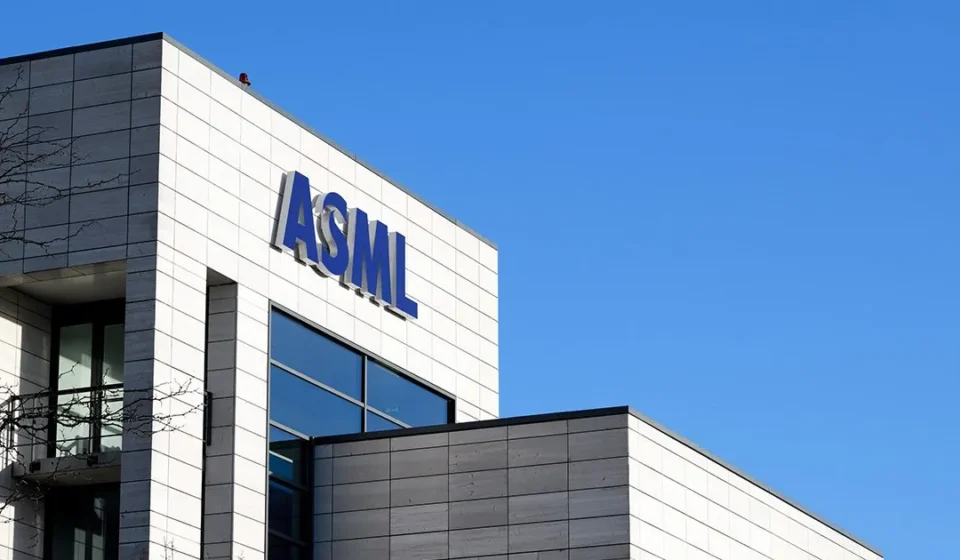

The global semiconductor landscape is undergoing a seismic shift, and at the epicenter of this transformation stands ASML. The Dutch lithography giant, which serves as the essential gatekeeper for advanced chip manufacturing, reported second-quarter 2026 financial results that not only surpassed its own internal guidance but signaled a robust, sustained expansion for the broader semiconductor industry. As the hunger for high-performance computing (HPC) and artificial intelligence (AI) infrastructure intensifies, ASML is finding itself in the enviable position of being a primary beneficiary of a massive capital expenditure cycle.
Main Facts: A Quarter of Exceptional Performance
For the fiscal quarter ending June 28, 2026, ASML delivered a masterclass in operational efficiency. The company reported net sales of €9.3 billion (~$10.7 billion) and a substantial net income of €2.9 billion (~$3.34 billion). These figures underscore the company’s dominance, supported by a healthy gross margin of 54% and an operating margin of 37.1%.
The composition of these sales reveals a balanced dependence on the two pillars of modern silicon production: logic and memory. Net system sales, which accounted for €6.6 billion (~$7.59 billion), were split with surgical precision—51% of revenue was derived from logic customers, while memory customers accounted for 49%. Perhaps most notably, the "Installed Base Management" segment outperformed expectations by €300 million, bringing in €2.8 billion (~$3.22 billion). According to CFO Roger Dassen, this unexpected windfall was driven by a surge in demand for software and hardware upgrades, as chipmakers sought to squeeze maximum productivity out of their existing fleets of lithography tools.
Chronology: The Road to Record-Breaking Growth
The trajectory toward this record-breaking quarter began in early 2026, as industry demand for AI-specific chips—specifically GPUs and high-bandwidth memory (HBM)—began to accelerate beyond initial projections.
- Q1 2026: ASML began seeing a shift in memory customer behavior, moving from inventory management to capacity expansion.
- April–May 2026: The company finalized orders for its next-generation High-NA EUV (extreme ultraviolet) tools, with major foundry partners, including Intel, confirming integration into advanced process nodes like Intel 18A.
- June 28, 2026: The fiscal quarter concluded, showing the cumulative impact of these investments.
- July 2026: Following the earnings report, ASML officially raised its full-year 2026 revenue guidance to between €43 billion and €45 billion, reflecting a confident outlook for the remainder of the year.
Supporting Data: The SEMI Industry Perspective
ASML’s internal success is not an isolated phenomenon; it is perfectly mirrored by the broader market data provided by SEMI, the industry’s leading global association. According to the latest mid-year outlook, global semiconductor manufacturing equipment sales are on track to hit a staggering $165.9 billion in 2026—a 23.2% year-over-year increase.

The data suggests this is only the beginning. SEMI projects that the total market could reach $229.5 billion by 2028. Within this growth, the Wafer Fab Equipment segment is expected to rise by 23.1% to $143.9 billion in 2026 alone. Ajit Manocha, president and CEO of SEMI, highlighted that AI is the primary catalyst, forcing manufacturers to invest heavily in more powerful and efficient chip-making machinery.
Furthermore, the memory market is experiencing a vertical climb. DRAM equipment sales are projected to skyrocket by 39% to $38.8 billion in 2026, as manufacturers rush to meet the requirements of HBM production, which is essential for training the next generation of large language models (LLMs).
Official Responses and Strategic Management
During the July 2026 earnings call, management addressed the critical question of pricing power and capacity limits. Analysts from UBS and Bank of America questioned whether ASML’s margins could be sustained in the face of shifting product mixes.
CFO Roger Dassen noted that the current market environment is uniquely favorable for pricing. "The current environment provides more flexibility for pricing than what you would have had in different days," Dassen stated. While ASML is historically known for long-term contracts, the current demand-supply imbalance allows for more favorable terms on new orders.
On the topic of capacity expansion, management emphasized a flexible, customer-led approach. To meet the projected growth for 2027 and 2028, ASML is planning a 30% increase in output for both Low-NA EUV and DUV (deep-ultraviolet) immersion systems. When asked by Wells Fargo analyst Joe Quatrochi if this was the ceiling of the supply chain’s capability, Dassen responded with characteristic resolve: "If more is needed… we’re going to roll up our sleeves and see if more can be done."

The Strategic Shift: Memory and Logic Drivers
A defining feature of this quarter was the massive 75% projected revenue increase from memory customers. CEO Christophe Fouquet clarified that this is not merely a result of volume, but of "lithography intensity." Newer memory nodes, particularly those for HBM, require a significantly higher number of layers created through EUV and immersion lithography. As memory manufacturers transition to more complex architectures, they are forced to rely more heavily on ASML’s most advanced systems.
In the logic sector, the transition to 2-nm and 1.4-nm processes is keeping demand high. Manufacturers are not only maintaining existing 3-nm, 4-nm, and 5-nm lines but are simultaneously investing in the infrastructure needed for the next generation of nodes. The successful adoption of High-NA EUV at Intel Foundry is a testament to the industry’s commitment to these sub-2-nm pathways.
Implications: A Future Defined by Capital Allocation
ASML’s financial performance has clear implications for the broader tech sector. By raising its full-year guidance and committing to a robust buyback program—having already repurchased €1.1 billion in shares in Q2—ASML is signaling deep confidence in its long-term relevance.
1. The "AI Infrastructure" Tax
The massive capital spending by chipmakers acts as a form of "infrastructure tax." Because AI models require massive amounts of compute, and compute requires advanced lithography, every major technology firm is indirectly financing ASML’s R&D. With €1.2 billion in R&D planned for Q3, ASML is reinvesting these profits into future-proofing its technology, ensuring that it remains the sole provider of the tools required for the next decade of chip advancement.
2. Geopolitical and Supply Chain Resilience
Despite the talk of tariffs and trade uncertainties, ASML’s strategy remains focused on long-term capacity building rather than short-term geopolitical volatility. By preparing the supply chain based on customer demand signals rather than waiting for signed contracts, ASML is essentially building an "insurance policy" against potential supply crunches, ensuring that it can maintain its market share in critical regions like China, Taiwan, and Korea.

3. Capital Return and Shareholder Value
The declaration of an interim dividend of €1.88 per share, coupled with the ongoing buyback program, demonstrates that ASML is not just a growth company; it is a mature, cash-generative juggernaut. Investors have much to look forward to, with a comprehensive update on the company’s long-term strategic vision expected at the next Capital Markets Day in June 2027.
Conclusion: The Horizon
As the world enters the second half of 2026, the narrative surrounding ASML is one of unprecedented stability in a volatile market. By successfully balancing the demands of logic and memory customers, managing a complex global supply chain, and maintaining significant pricing power, the company has effectively insulated itself from the typical cyclicality of the semiconductor industry.
The surge in demand for AI-ready chips is not a fleeting trend but a fundamental restructuring of global compute. ASML, by providing the very machines that define the limits of physics in chip production, remains the ultimate arbiter of how fast the digital world can evolve. With a revenue forecast of up to €45 billion for the year and a clear roadmap for capacity expansion through 2028, the company is not just keeping pace with the industry—it is setting the tempo for the next era of technological progress.