


Revolutionary Manufacturing: Boeing and ORNL Unveil Large-Scale Multi-Metal 3D-Printed Tooling

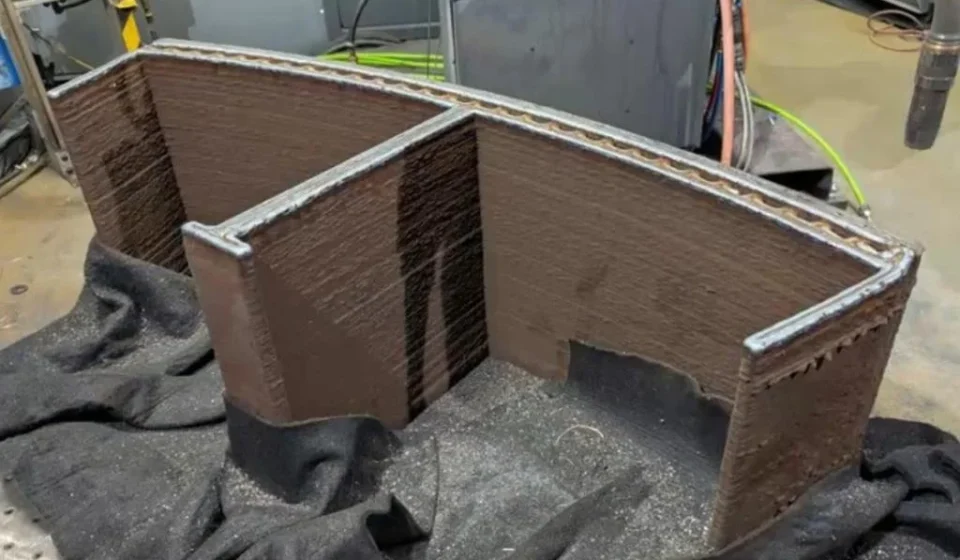
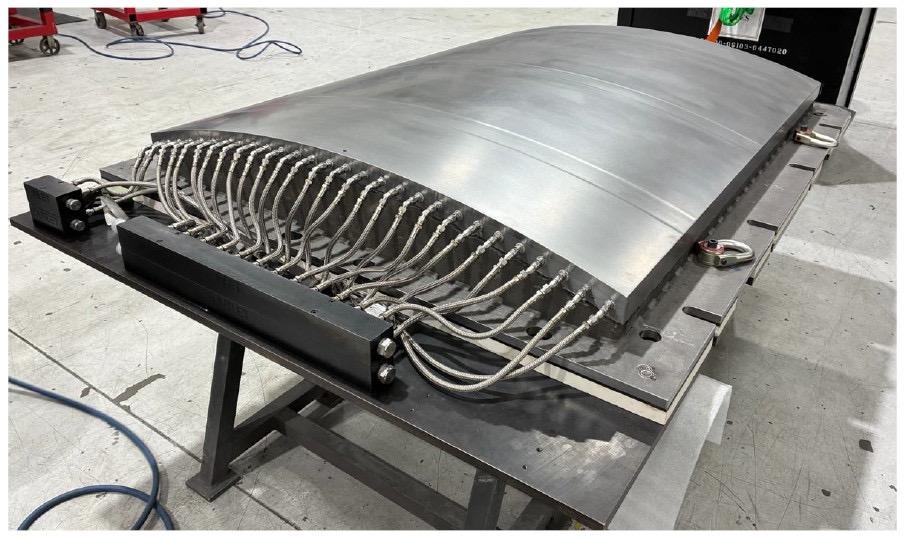
In a landmark achievement for aerospace engineering and advanced manufacturing, Oak Ridge National Laboratory (ORNL) and Boeing have successfully produced a massive Stamp Form Die (SFD) mold using wire-arc additive manufacturing (WAAM). This gargantuan tool, standing 6 feet tall and weighing nearly two tons, represents a significant leap forward in the quest to modernize aircraft production. Developed for NASA’s Hi-Rate Composite Aircraft Manufacturing (HiCAM) project, the mold serves as a proof-of-concept for the viability of metal additive manufacturing in the high-stakes world of thermoplastic composite part fabrication.
The Convergence of Innovation and Scale
The production of this mold is not merely a feat of size, but a triumph of material science and precision engineering. Measuring four feet in width and taking eight weeks to print, the SFD mold was designed to address the persistent bottlenecks associated with traditional manufacturing methods.
Conventionally, large-scale industrial molds are crafted through labor-intensive processes such as traditional machining, casting, forging, and complex drilling. These methods are not only time-consuming but also limit the design flexibility of the tools themselves. By leveraging the Department of Energy’s Manufacturing Demonstration Facility (MDF) at ORNL, the project sought to determine if metal additive manufacturing could fundamentally shorten lead times and simplify the fabrication of complex, thermally controlled tooling.
The Arc-1 Advantage
The project utilized ORNL’s proprietary "Arc-1" system, a robotic additive manufacturing platform that operates by melting wire with a welding torch to deposit layers of metal. Unlike standard WAAM setups, Arc-1 is uniquely capable of feeding multiple wires simultaneously, allowing for the creation of multi-material parts. This capability is the linchpin of the mold’s design: the base and structural ribs are composed of mild steel for optimal strength and stiffness, while the working surface is clad in stainless steel to ensure corrosion resistance, dimensional stability, and a durable interface for high-pressure thermoplastic forming.
Chronology: From Concept to Casting
The development of the SFD mold followed a rigorous, multi-stage engineering timeline designed to overcome the inherent challenges of large-scale metal deposition.
- Design and Simulation Phase: Before a single drop of metal was deposited, the team utilized advanced residual stress simulations. Because large-scale metal AM is prone to thermal distortion, engineers had to predict how the metal would warp as it cooled.
- The Printing Process: The team employed a strategy of attaching temporary structural ribs to the back of the mold to counteract the forces of contraction. Through 32 iterative simulation cycles, the team successfully adjusted the design to compensate for material shrinkage, ultimately bringing the final print within mere millimeters of the target specifications.
- Annealing and Refinement: Once printing was complete, the mold was transported to Baker Industries, a subsidiary of Lincoln Electric. There, the tool underwent an annealing process to relieve internal thermal stresses.
- Final Fabrication: Following heat treatment, the temporary support ribs were removed, and the final precision machining steps were completed to meet Boeing’s stringent aerospace tolerances. The entire endeavor was conducted under a Cooperative Research and Development Agreement (CRADA) between ORNL and Lincoln Electric, showcasing the power of public-private partnerships.
Supporting Data: Efficiency Through Conformal Cooling
One of the most transformative aspects of this project is the integration of conformal cooling channels. In traditional molds, heating and cooling fluids are routed through straight, drilled holes that rarely follow the complex geometry of the mold’s surface. This results in uneven temperature distribution and inefficient cycles.
By utilizing the additive manufacturing process, the ORNL team successfully printed curved internal channels that follow the exact contour of the mold’s surface. This allows for significantly more efficient heat transfer, ensuring that the thermoplastic composite sheets are heated and cooled uniformly. This improvement not only enhances the quality of the final composite parts—essential for the structural integrity of aerospace components—but also reduces the cycle time for the manufacturing of aircraft doors and fuselage sections.
Official Perspectives on the Future of Aerospace
The collaboration has drawn significant attention from industry leaders and government agencies, all of whom view this development as a key milestone in maintaining domestic manufacturing competitiveness.
The NASA/Boeing Nexus
Richard Young, the NASA HiCAM project manager, emphasized that the shift toward additive manufacturing is essential for the future of aviation. "NASA and its industry partners are working to increase the production rate of composite aircraft to meet the growing demand for air travel and to reduce aircraft weight," Young stated. "Reducing weight directly translates to improved fuel efficiency and lower costs for operators. Achieving this rate is critical to maintaining the U.S. competitive advantage in the global commercial aircraft market."
The Engineering Vision
William Carter, an ORNL robotics engineer at the MDF, highlighted the collaborative nature of the effort. "Boeing approached us to explore the true potential of WAAM for large-scale tooling. We worked side-by-side to evaluate the metallurgical and geometric issues involved in making a mold of this scale," Carter noted.
Andrzej Nycz, a senior robotics engineer at ORNL, added, "Multi-material WAAM allows for the realization of completely new designs. We are no longer limited to monolithic materials; we can combine fine-tuned mechanical performance with significant time and cost savings by placing the right material exactly where it is needed."
Implications for the Industrial Landscape
The success of the ORNL/Boeing mold project sends a clear signal to the aerospace, energy, and automotive sectors: the era of large-scale industrial 3D printing is no longer theoretical.
A New Standard for Tooling
While the project served as a test case, the methodology is highly replicable. As Ahmed Arabi Hassen, ORNL’s group leader for Composites Innovation, remarked, "Its success means the technology could be used to make large thermoplastic structures for other sectors of U.S. industry. We are looking at a future where the lead time for massive tooling drops from months to weeks."
Competitive Landscape
The race to industrialize metal additive manufacturing is heating up globally. Other notable efforts, such as the collaboration between Caracol and Eligio Re Fraschini in Italy, have demonstrated 50% weight reductions in spar tools using 316L stainless steel. Meanwhile, companies like Australia’s AML3D are working to qualify WAM (Wire Additive Manufacturing) to combat the industry-wide "tooling bottleneck," where lead times for conventional molds can sometimes stretch to 24 months.
However, the ORNL/Boeing project remains the most sophisticated implementation to date. By combining multi-alloy deposition with conformal thermal control in a nearly two-ton tool, the team has effectively bridged the gap between rapid prototyping and full-scale industrial production.
Future Outlook
As the industry moves toward 2026 and beyond, the focus is shifting from "can we print it?" to "how do we certify it?" The work done by ORNL and Boeing provides the blueprint for that transition. By documenting the simulation-to-fabrication workflow, the partners have laid the groundwork for a new, more agile manufacturing paradigm.
The successful deployment of this mold suggests that the next generation of aircraft—lighter, more fuel-efficient, and produced at higher rates—will be built using tools that were themselves born from the precision of a robotic arc. As additive manufacturing continues to mature, the barriers between digital design and physical reality continue to dissolve, promising a future where the complexity of an aircraft part is no longer constrained by the limitations of the mold that forms it.