


Bridging the Security Divide: Rockwell Automation Report Highlights the True Cost of Connectivity in Modern Manufacturing

By Global Industrial Reporter
Published: October 2023
Main Facts: The Connectivity Paradox in Modern Industry
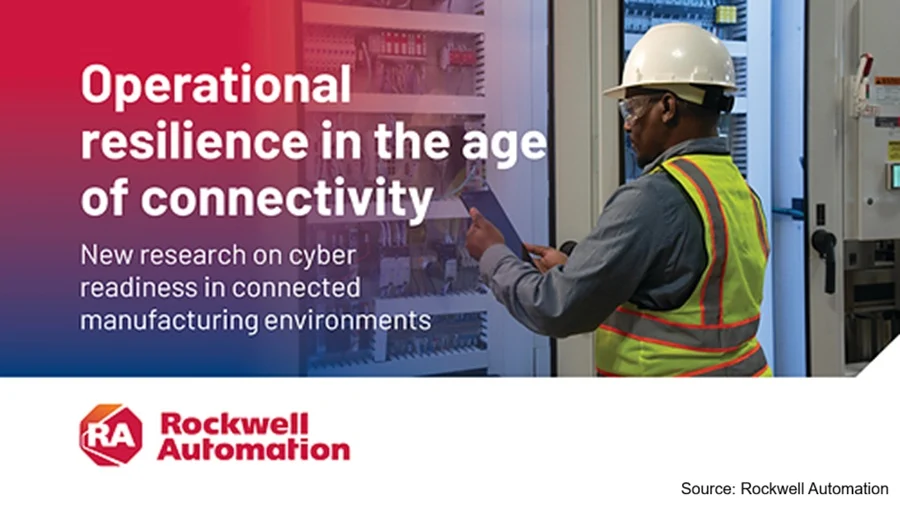
As the global manufacturing sector races to digitize, modernize, and integrate cutting-edge technologies into its core workflows, a profound vulnerability is coming to light. Rockwell Automation, Inc., a global leader in industrial automation and digital transformation, has officially released its landmark industry insights report titled "Operational Resilience in the Age of Connectivity."
The comprehensive research report—which draws upon the strategic insights, frontline experiences, and operational data of 1,500 manufacturing and industrial decision-makers spread across 17 distinct countries—reveals a striking and potentially dangerous paradox at the heart of modern industrial operations: a widespread disconnect between a company’s perceived cybersecurity confidence and its actual exposure to operational risk.
While industrial organizations are allocating substantial financial capital toward modern cybersecurity platforms, these investments do not automatically translate into true operational resilience. As businesses aggressively converge their Information Technology (IT) and Operational Technology (OT) networks, scale complex Artificial Intelligence (AI) initiatives, and circulate vast quantities of operational data across previously siloed enterprise systems, they are inadvertently manufacturing new digital dependencies. These dependencies significantly expand their attack surfaces and expose physical plants to unprecedented cyber-related threats.
According to the data, over one-third of all surveyed industrial organizations now view escalating cybersecurity risks as one of the single greatest external obstacles to their long-term corporate growth. This sobering realization underscores a non-negotiable reality for the modern industrial landscape: as operational environments become increasingly hyper-connected, safeguarding the physical infrastructure is no longer just an IT concern—it is a matter of enterprise survival.
Chronology: The Evolution of Industrial Cyber Threats
To fully understand the gravity of the findings published in Rockwell Automation’s new report, one must examine the chronological evolution of industrial connectivity and how manufacturing plants transformed from isolated, air-gapped fortresses into vulnerable nodes on the global internet.
Phase 1: The Era of Air-Gapped Isolation (Pre-2010s)
Historically, industrial control systems (ICS) and supervisory control and data acquisition (SCADA) networks operated in complete isolation from the corporate enterprise and the outside world. Referred to as "air-gapped," these operational environments relied on proprietary protocols and physical security barriers to keep malicious actors at bay. Cybersecurity in the industrial sector was largely an afterthought because physical access was required to sabotage or manipulate machinery.
Phase 2: The Push Toward IT/OT Convergence (2010s–2020)
As global market pressures demanded greater efficiency, reduced waste, and real-time visibility into supply chains, industrial organizations began breaking down the traditional walls separating IT and OT. Corporations sought to pull data directly from programmable logic controllers (PLCs) and factory-floor sensors up to enterprise resource planning (ERP) systems. While this convergence unlocked massive productivity gains, it also introduced corporate enterprise vectors—such as phishing emails and corporate network breaches—directly to the factory floor.
Phase 3: The Pandemic, Remote Work, and the Edge (2020–2022)
The COVID-19 pandemic accelerated digital transformation schedules by nearly a decade. With travel restrictions and social distancing mandates in place, remote access to industrial assets became mandatory for maintenance engineers, systems integrators, and third-party vendors. The rush to deploy remote-monitoring tools and edge-computing devices frequently outpaced the implementation of robust security frameworks, leading to a dramatic spike in ransomware attacks targeting critical infrastructure and manufacturing facilities.
Phase 4: The Age of AI and Hyper-Connectivity (Present Day)
Today, industrial organizations are rapidly scaling AI initiatives, machine learning algorithms, and cloud-based analytics to optimize production. However, as Rockwell Automation’s report highlights, this hyper-connected ecosystem has created an environment where nearly half of all industrial organizations have experienced a cyber incident in just the last 12 months. The timeline of industrial connectivity has thus completed a full circle: the very technologies deployed to drive competitive advantage are now generating the industry’s most severe operational risks.
Supporting Data: Key Findings from the Rockwell Automation Report
The data gathered from 1,500 decision-makers across 17 countries paints a detailed, quantitative picture of the current state of industrial cybersecurity. The findings challenge conventional assumptions about how manufacturing executives view risk, return on investment, and emerging technologies.
1. The Confidence Disconnect: 46% Incident Rate vs. 90% Confidence
One of the most alarming revelations in the report is the profound disconnect between historical incident exposure and executive self-assurance.
- The Reality: Nearly half (46%) of all surveyed organizations experienced a confirmed cyber incident over the past year. These incidents ranged from ransomware attacks that crippled supply chains to unauthorized network intrusions.
- The Perception: Despite this high incidence rate, an astounding 90% of respondents expressed confidence in their organization’s ability to prevent, contain, or recover from a cyberattack.
Industry analysts point out that this extreme disparity suggests a false sense of security among leadership teams. Many executives may confuse having basic perimeter defenses—such as firewalls or antivirus software—with possessing comprehensive operational resilience capable of stopping sophisticated, targeted industrial attacks.
2. High Perceived ROI on Cybersecurity Investments
Despite the challenges, industrial leadership is actively putting its money where its mouth is.
- Financial Commitment: 62% of organizations have already made substantial capital investments in advanced cybersecurity platforms.
- Value Generation: When respondents were asked to rank the technologies generating the highest return on investment (ROI) within their enterprises, cybersecurity ranked as the second-highest ROI-generating technology investment, beaten only by core production enhancements.
This metric proves that industrial leaders increasingly view cybersecurity not merely as a cost center or compliance checkbox, but as a vital business enabler that protects uptime, safeguards intellectual property, and preserves customer trust.
3. Turning to Artificial Intelligence for Defense
As cyber threats grow in scale, velocity, and sophistication, human-only security teams are struggling to keep pace. Consequently, industrial organizations are looking toward emerging digital tools to bolster their defenses.
- AI Adoption: 45% of surveyed decision-makers plan to aggressively integrate Artificial Intelligence (AI) and machine learning (ML) capabilities into their cybersecurity architectures over the next 12 months.
- Use Cases: These AI systems are expected to automate threat detection, analyze vast streams of OT network traffic in real-time, and execute automated containment protocols before human operators can even verify an anomaly.
4. The IT/OT Integration Vulnerability Paradox
The convergence of Information Technology and Operational Technology remains a double-edged sword for industrial enterprises.
- Vulnerability Hotspot: When asked to identify the weakest links in their security posture, respondents ranked IT/OT integration points as the second-most vulnerable area susceptible to cyber incidents.
- Strategic Optimism: Conversely, 37% of leaders remain convinced that properly securing and standardizing their IT/OT architecture will drive overwhelmingly positive business outcomes over the next five years, unlocking seamless data flow without compromising safety or availability.
Official Responses and Expert Analysis
To grasp the full implications of the "Operational Resilience in the Age of Connectivity" report, industry stakeholders must look closely at what cybersecurity leaders and industrial strategists are saying about its conclusions.
Rick Kaun, Global Director of Cybersecurity Services at Rockwell Automation, provided deep context regarding the mindset required to navigate today’s threat landscape.
"Industrial organizations understand that cybersecurity directly affects uptime, continuity, productivity, and growth, but technology investments alone do not create operational resilience or confidence in an organization’s security posture," stated Kaun.
He elaborated that purchasing off-the-shelf software or deploying individual security appliances is no longer sufficient. True organizational fortitude requires a fundamental cultural and strategic shift.
"True resilience is built when cybersecurity becomes an integral part of business strategy. Organizations that proactively manage risk and prepare for disruption are better positioned to protect operations, sustain production, and gain a competitive advantage."
Independent cybersecurity analysts who reviewed the report have echoed Kaun’s sentiments, noting that industrial control environments have distinct operational requirements that differ vastly from traditional corporate office IT environments. In an office setting, if a computer crashes or a server needs to be rebooted for a security patch, productivity pauses temporarily. In a manufacturing plant, an unvetted software patch or an unexpected system reboot can cause catastrophic equipment failure, environmental hazards, or severe bodily injury to plant workers. Therefore, security measures in the industrial space must be meticulously designed to preserve safety and continuous availability above all else.
Implications: What This Means for the Future of Manufacturing
The release of Rockwell Automation’s report serves as an urgent wake-up call for manufacturing executives, plant managers, Chief Information Security Officers (CISOs), and boardrooms worldwide. The implications of this research will reverberate across multiple dimensions of industrial business strategy for years to come.
1. Moving from "Security" to "Resilience"
For decades, the primary objective of industrial security was prevention—keeping unauthorized users and malicious code out of the network. However, as the report demonstrates, 100% prevention is a statistical impossibility in an era of hyper-connectivity.
The strategic imperative must now shift from absolute prevention to operational resilience. This means designing industrial systems that can withstand, absorb, adapt to, and rapidly recover from a disruptive cyber event without suffering catastrophic operational downtime. Resilient plants assume that a breach will eventually occur and focus heavily on limiting lateral movement, isolating compromised segments, and maintaining core manual override functions.
2. Bridging the Cultural Divide Between IT and OT Teams
The persistent vulnerability of IT/OT integration points highlights an ongoing organizational challenge: the cultural and operational divide between corporate IT professionals and plant-floor OT engineers.
- IT professionals prioritize data confidentiality, rapid software deployment, and enterprise-wide standardization.
- OT engineers prioritize physical safety, equipment reliability, 24/7 uptime, and deterministic real-time control.
For operational resilience to take root, enterprises must foster deep collaboration between these two groups. OT personnel must be trained in modern cybersecurity hygiene, while IT teams must gain a profound respect for the physical realities and constraints of industrial machinery.
3. Regulatory Pressures and Boardroom Accountability
As critical infrastructure attacks continue to make global headlines, governments and regulatory bodies are tightening compliance standards for manufacturers, energy producers, and supply chain operators. Regulatory frameworks are shifting from voluntary guidelines to mandatory reporting requirements, with severe legal and financial penalties for negligent organizations.
Consequently, industrial cybersecurity is no longer delegated solely to mid-level IT managers. Boards of directors and executive leadership teams are being held personally accountable for cyber governance, requiring them to ask tough questions about operational risk, incident response planning, and supply chain security.
4. The Path Forward: Strategic Recommendations
Based on the insights provided by Rockwell Automation, industrial organizations seeking to fortify their operations in the age of connectivity should consider taking the following actionable steps:
- Conduct Comprehensive Risk Assessments: Audit all IT/OT convergence points, legacy systems, third-party vendor access vectors, and cloud integrations to identify hidden vulnerabilities.
- Implement Zero-Trust Architectures: Adopt a "never trust, always verify" model across all network layers, ensuring that even authenticated users and devices undergo continuous monitoring and validation.
- Leverage Automation and AI Wisely: Deploy AI-driven threat intelligence tools capable of monitoring industrial protocols (such as Modbus, DNP3, and PROFINET) for anomalous behavior that standard IT security tools might miss.
- Establish Robust Incident Response Plans: Regularly test and drill disaster recovery and incident containment procedures with both IT and OT stakeholders to ensure seamless coordination when a crisis strikes.
Conclusion
Rockwell Automation’s "Operational Resilience in the Age of Connectivity" report makes it unmistakably clear that the future of manufacturing belongs to the connected—but survival belongs to the resilient.
As digital transformation accelerates and emerging technologies like artificial intelligence redefine what is possible on the factory floor, industrial organizations can no longer afford to rely on a false sense of security. By acknowledging the real-world gaps between investment and resilience, fostering closer collaboration between IT and OT teams, and treating cybersecurity as an essential pillar of core business strategy, manufacturers can successfully navigate the complexities of the modern connected world while safeguarding their operations, their employees, and their bottom lines.
The full report, "Operational Resilience in the Age of Connectivity," is available for download at the Rockwell Automation Official Website.