


Revolutionizing Aerospace Manufacturing: ORNL and Boeing’s Breakthrough in Large-Scale Additive Tooling

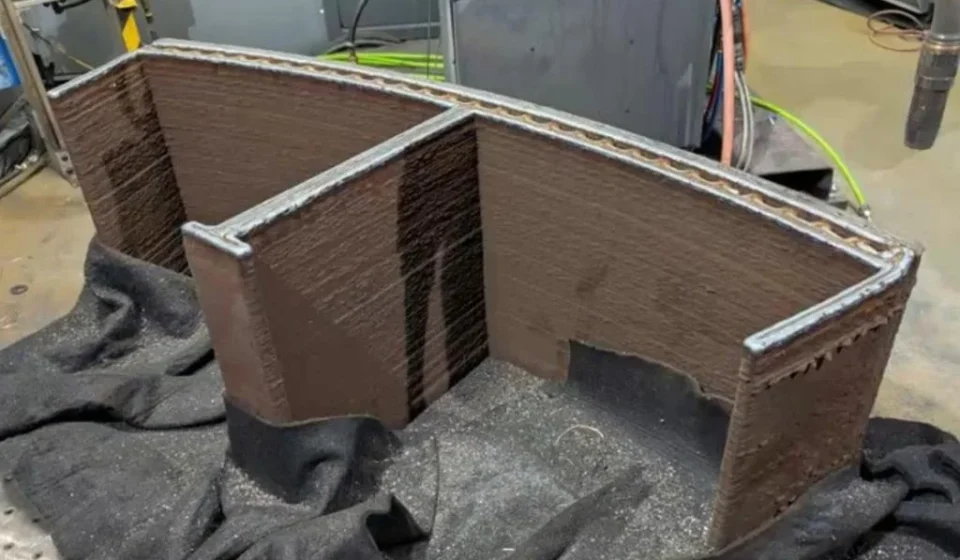
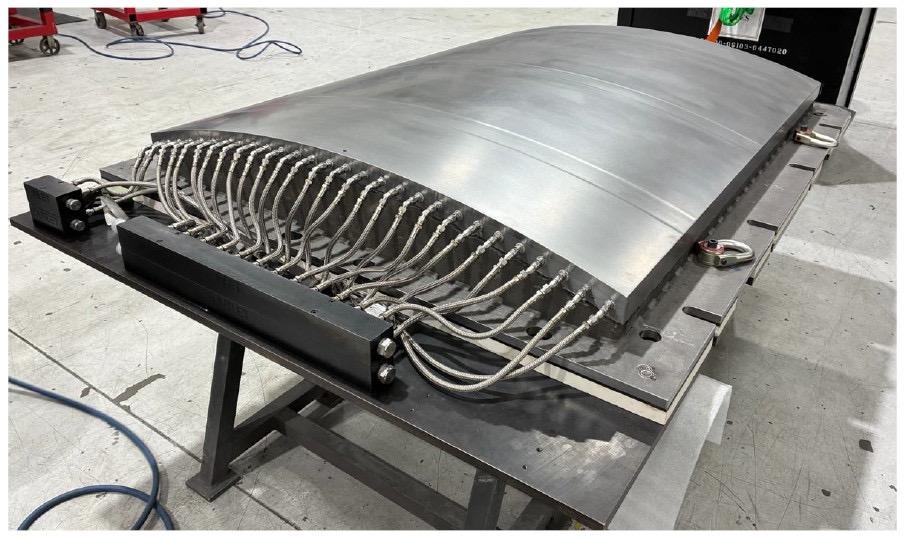
In a significant leap for industrial manufacturing, Oak Ridge National Laboratory (ORNL) and Boeing have successfully engineered a massive, two-ton steel Stamp Form Die (SFD) mold using wire-arc additive manufacturing (WAAM). This achievement, representing a paradigm shift in how high-performance aircraft components are produced, was designed to support NASA’s Hi-Rate Composite Aircraft Manufacturing (HiCAM) project. By utilizing advanced robotic welding techniques, the team has demonstrated that metal additive manufacturing can move beyond small-scale prototyping to produce the large-scale, high-durability tools required for the next generation of composite aircraft.
Main Facts: A Colossal Achievement in 3D Printing
The project centered on the fabrication of an SFD—a heavy-duty punch press used to form and cut complex materials. Measuring six feet in height and four feet in width, the two-ton mold represents a triumph of engineering scale. The build process, which spanned eight weeks, utilized the Arc-1 system at the Department of Energy’s Manufacturing Demonstration Facility (MDF) at ORNL.
Unlike traditional methods—such as machining from massive blocks of raw steel, casting, or forging—the WAAM process uses a robotic arm equipped with a welding torch to melt metal wire, depositing it in precise, structural layers. This particular tool is unique because it is a "multi-material" print. The base structure of the mold is composed of mild steel to ensure structural integrity and stiffness, while the critical working surfaces are composed of stainless steel to provide necessary corrosion resistance and a durable, high-precision interface.
Furthermore, the team incorporated "conformal cooling" channels. In conventional mold making, cooling and heating lines are restricted to straight, drilled holes. By using additive manufacturing, ORNL was able to print curved internal channels that follow the exact contour of the mold, allowing for superior thermal regulation during the thermoplastic forming process.
Chronology: From Concept to Completed Tool
The journey to produce this tool was a multi-stage, collaborative endeavor requiring iterative design and precise execution.
- Project Initiation: Boeing identified the need for more efficient tooling to support NASA’s HiCAM project. The goal was to reduce the lead time and cost associated with producing large-scale forming tools.
- Simulation Phase: Before a single layer of metal was deposited, the team at ORNL conducted extensive residual stress simulations. Because metal deposition involves extreme heat, warping is a major threat to dimensional accuracy. The team conducted 32 separate simulation iterations to predict how the metal would cool and contract.
- The Build Process: The printing phase spanned eight weeks. To counter the natural tendency of the metal to warp, the engineers attached temporary support ribs to the back of the mold. These ribs acted as a scaffold, maintaining the mold’s geometry throughout the print.
- Post-Processing: Once the printing was complete, the mold was transported to Baker Industries, a Lincoln Electric subsidiary in Michigan. Here, the tool underwent annealing—a heat treatment process used to relieve internal stresses.
- Final Finishing: Following annealing, the temporary support ribs were removed, and Baker Industries performed the final CNC machining required to bring the mold to its exact, required specifications.
Supporting Data: Addressing the Distortion Challenge
The primary technical hurdle in printing a tool of this size is thermal management. As molten metal cools, it shrinks, creating internal forces that can pull a structure out of its intended shape. In this project, the reliance on simulation was not just a convenience—it was a necessity.
By adjusting the design of the print path based on the 32-iteration simulation, the team was able to ensure that the finished print landed within only a few millimeters of its target shape. This "net-shape" approach significantly reduced the amount of subtractive machining required, saving both time and raw material.
The success of this build is further underscored by the performance of the Arc-1 system. While most WAAM systems are limited to a single feed of metal, the Arc-1 can handle multiple wires simultaneously. This capability allowed for the seamless integration of two different steel alloys in a single build, a feat that would be nearly impossible using conventional casting methods.
Official Responses and Strategic Vision
The collaboration has drawn praise from stakeholders across the aerospace and government sectors, who view this as a vital step in maintaining American manufacturing dominance.
"Boeing wanted to explore the possibility of using WAAM," said William Carter, an ORNL robotics engineer at the MDF. "They worked with us to evaluate the specific technical issues in making a mold of this scale."
The broader objective, according to Richard Young, NASA HiCAM project manager, is to solve the "bottleneck" of aircraft production. "NASA and its industry partners are working to increase the production rate of composite aircraft to meet the growing demand for air travel and to reduce aircraft weight, which improves fuel efficiency, lowering costs for aircraft operators," Young stated. "Doing so is essential to maintaining U.S. competitive advantage in the commercial aircraft industry."
Ahmed Arabi Hassen, the group leader for Composites Innovation at ORNL, echoed this sentiment, highlighting the scalability of the technology. "We used this as a test case. Its success means the technology could be used to make large thermoplastic structures for other sectors of U.S. industry, such as energy and automotive."
Implications for the Future of Aerospace Manufacturing
The implications of this successful project are far-reaching. Conventional tooling for aerospace is notoriously slow and expensive, with lead times for large tools often stretching into many months or even years. By demonstrating that large-scale WAAM is a viable alternative, ORNL and Boeing have signaled that the industry may soon be able to pivot toward a more agile, demand-responsive manufacturing model.
Comparative Landscape
The ORNL/Boeing project is part of a broader global movement to qualify WAAM for high-end industrial use. Other notable projects include:
- Eligio Re Fraschini and Caracol: This Italian collaboration successfully used the Vipra XP system to create a carbon fiber lamination spar tool. They achieved a 50% weight reduction compared to traditional methods, though their tool was significantly smaller and utilized only a single alloy.
- AML3D: This Australian firm is currently engaged in a three-year R&D project to qualify its wire-arc process (WAM) for aerospace tooling, specifically targeting the 24-month lead-time problem.
What sets the ORNL/Boeing tool apart is its complexity. While others are proving that WAAM can print parts, ORNL has proven that WAAM can produce smart tools—tools that incorporate multiple alloys and integrated thermal management systems.
A New Era of Industrial Agility
The transition from "machining from solid" to "additive deposition" represents a fundamental change in material science application. By building from the bottom up, manufacturers can eliminate the massive material waste inherent in subtractive CNC machining. Furthermore, the ability to iterate designs digitally means that if a tool needs to be modified for a new wing or fuselage shape, the design can be updated in software and printed again in a fraction of the time it would take to re-tool a foundry.
As the aerospace industry faces the dual pressure of increased production rates and the need for more fuel-efficient, lightweight materials, the integration of WAAM into the supply chain appears inevitable. The ORNL/Boeing mold is not just a one-off success; it is a blueprint for the future of industrial production, where lead times are measured in weeks rather than months, and where the tools of production are as innovative as the aircraft they build.
In the coming years, as the technology matures and becomes more accessible, it is likely that the "Arc-1" method will be adopted by sectors far beyond aerospace. From the high-speed production of automotive components to the rapid creation of energy sector infrastructure, the ability to "print" massive, multi-material tools will fundamentally alter the cost structure and efficiency of the U.S. industrial base. The success of this collaboration marks the end of the experimental phase for large-scale WAAM and the beginning of its industrial realization.