





By Hank Lacey, Colorado Newsline
The Wayne N. Aspinall Unit, Colorado’s singular contribution to the massive federal hydropower system that powers much of the American West, is currently facing a sobering reality. According to recent data from the Bureau of Reclamation, the unit is on track to generate nearly 30% less electricity than its historical average dating back to 1978. This dramatic shortfall is not merely a statistical anomaly; it is a clear symptom of a decades-long decline in the Colorado River basin—a crisis that is eroding a system responsible for approximately 3% of Colorado’s total energy supply.
As the Colorado River shrinks under the persistent, compounding stresses of climate change and over-allocation, the unit’s electrical output has plummeted. When the water stops flowing through the turbines, the gap in the grid must be filled by other, often more expensive, energy sources. For consumers already grappling with inflationary pressures, this transition to costlier power is increasingly manifesting as a hit to their monthly budgets.
The Infrastructure of a Fading Power Source
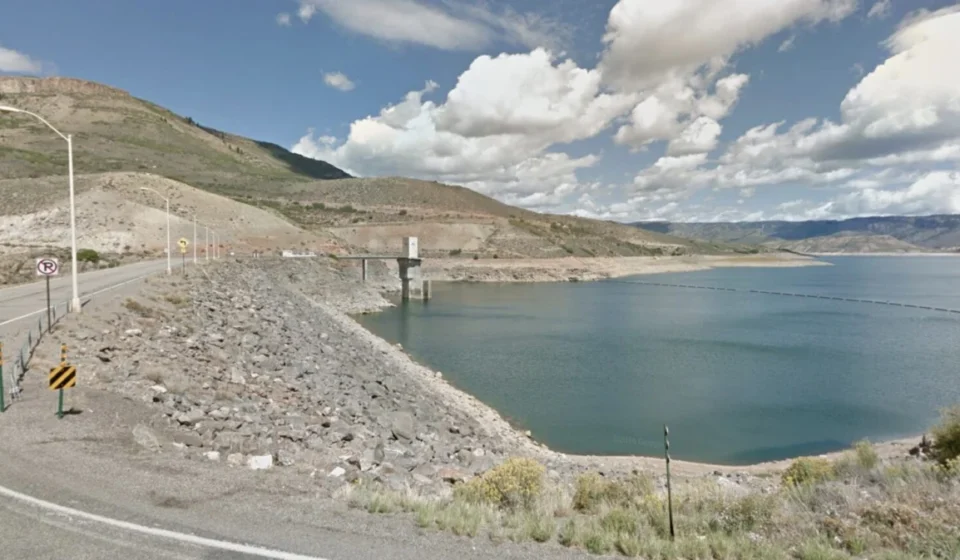
The Aspinall Unit consists of three dams on the Gunnison River: Blue Mesa, Morrow Point, and Crystal. These structures represent Colorado’s only piece of the Colorado River Storage Project (CRSP), a Depression-era network of federal dams designed to provide reliable, low-cost power to municipalities, cooperatives, tribes, and irrigation districts across the West.
The centerpiece of this unit, the Blue Mesa Reservoir—the largest body of water located entirely within Colorado—is currently projected to end the year at a precarious 17% of its live storage capacity. This is not just a water management issue; it is a fundamental engineering crisis. The system relies on "hydraulic head," the pressure exerted by the weight of the water column as it passes through turbines.
As water levels drop, that pressure diminishes. At full pool, generating one megawatt-hour at the Glen Canyon Dam requires roughly 1.9 acre-feet of water. Today, at significantly lower elevations, that same megawatt-hour requires approximately 2.9 acre-feet. According to Nick Williams, Reclamation’s power manager for the Upper Colorado Basin, Blue Mesa’s current elevation of roughly 7,446 feet leaves it with a generating capacity approximately 18% below its design specifications. Should the water level drop to 7,393 feet, the "minimum power pool," generation at the site will cease entirely.

Chronology of a Declining System
The decline of the CRSP is a story written over the last two decades, marked by a series of emergency interventions by the Bureau of Reclamation:
- 2023-2025: The Western Area Power Administration (WAPA) reports that the cost of purchasing "replacement power" to cover the shortfall from federal dams has spiked. WAPA spent $18.9 million in 2024 and $6.5 million in 2025 on replacement power alone, much of it tied to the "Cool Mix" protocol, which bypasses Glen Canyon’s turbines to maintain downstream temperatures for protected fish species.
- April 2026: Reclamation issues a dire projection for Lake Powell, anticipating inflows at just 29% of the historical average. The agency warns that without immediate action, the reservoir could dip below its minimum power-pool elevation of 3,490 feet by August.
- May 2026: While slightly more optimistic than the April outlook, the agency formalizes emergency releases from Flaming Gorge Reservoir to prop up Lake Powell, extending these measures through April 2027.
- June 2026: The Federal Energy Regulatory Commission (FERC) mandates that the nation’s six grid operators expedite transmission connections for AI data centers, setting the stage for a collision between surging electricity demand and a decaying supply side.
The Economic Consequences: Who Pays the Price?
The most immediate consequence of the hydroelectric shortfall is a shift in the cost of energy. Nationwide, residential electricity users saw an annual price increase of more than 7% in the year ending in March. In Colorado, the situation is compounded by utility requests for rate hikes. Xcel Energy has recently pursued efforts that could lead to rate increases exceeding 50% by the end of the decade.
The financial strain is clearly visible in WAPA’s own statistical data. From fiscal 2023 through 2025, WAPA has paid significantly more for replacement power than it collects from its customers at standard cost-based rates. In 2023, the agency saw its costs for market-purchased power nearly triple, leaving it in a position where the cost to provide electricity is often decoupled from the revenue generated by the dams themselves.
However, the impact is not distributed equally. Larger utilities with diversified portfolios, such as the La Plata Electric Association, have mitigated some of the risk. CEO Chris Hansen noted that while his association relies on WAPA for a portion of its supply, its integration into the Southwest Power Pool and its diversified energy portfolio provide a buffer. "Even if that 3% were to double in cost, which is possible, it would have a relatively small impact on our total cost of power purchases," Hansen explained.
For other utilities, the future is less certain. The Platte River Power Authority, which serves Fort Collins, Loveland, Longmont, and Estes Park, recently cited "reduced federal deliveries and rising WAPA rates" as significant adverse financial factors in its 2025 strategic budget.
The AI Demand Surge: A Collision Course
The timing of this supply-side decay could not be worse. As the Colorado River system struggles to maintain basic operational levels, the national grid is bracing for an unprecedented surge in demand from artificial intelligence data centers.

On June 18, FERC took decisive action to "supercharge" the grid, ordering operators to prioritize and accelerate the integration of these high-consumption facilities. Agency chair Laura Swett characterized the move as a way to "safeguard consumers," yet critics argue it ignores the reality of the supply side.
"We are setting the stage for a resilient, reliable, and forward-thinking grid," Swett stated. However, in Colorado, the gap between this mandate and the physical capacity of the grid is widening. The Lawrence Berkeley National Laboratory projects that data centers, which currently consume about 4.7% of U.S. electricity, could account for nearly 12% by 2030. In Colorado, Xcel Energy estimates that these industrial users will drive roughly two-thirds of all new energy demand.
Implications for the Future
The situation has created a precarious environment for policy makers. Colorado lawmakers attempted to address the issue with Senate Bill 26-102, which would have imposed strict accountability and efficiency requirements on data centers. The bill was defeated in the spring, leaving a regulatory vacuum as demand continues to climb.
Beyond the immediate economic concerns lies the potential for a "compact call." Under the Colorado River Compact, the Upper Basin states—Colorado, New Mexico, Utah, and Wyoming—could be required to deliver more water to the Lower Basin. While such a call has never occurred in history, legal experts like University of Wyoming professor Jason Robison warn that the increasing pressure on Western Slope water rights could force a crisis that would further jeopardize the stability of the entire hydroelectric network.
Environmental advocates, such as Jen Pelz of the Grand Canyon Trust, argue that the narrative of "electricity vs. environment" is a false dichotomy. The Grand Canyon Protection Act of 1992 mandates that dam operations must prioritize the long-term sustainability of the river ecosystem. Pelz contends that the failure to diversify energy supplies or create a dedicated fund for climate-resilient infrastructure over the last three decades has left the region with few options.
The Bureau of Reclamation is currently studying long-term infrastructure fixes for the Glen Canyon Dam, with initial findings expected in 2027. For the communities and utilities currently watching their reservoirs reach record lows, that deadline may prove to be far too late. The era of cheap, abundant hydropower from the Colorado River is ending, and the region is now in a race against time to determine how it will keep the lights on in a warmer, drier, and more energy-hungry future.