

The Electric Paradox: Why Europe’s June Sales Surge Spells Trouble for Legacy Automakers

Executive Summary
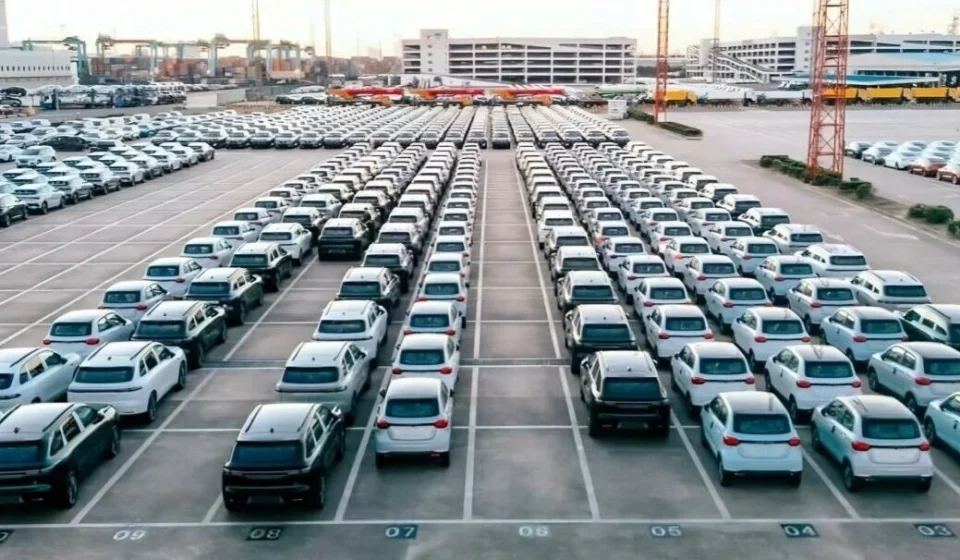
On the surface, the European automotive market achieved a remarkable milestone in June 2026. Driven by a surge in battery-electric vehicle (BEV) adoption and the implementation of aggressive government incentive programs, new-car registrations in the European Union rose by 13% year-on-year to reach 1.41 million units. This represents the steepest year-on-year gain the market has witnessed since October 2023.
However, beneath this veneer of rapid growth lies a profound structural crisis for Europe’s legacy original equipment manufacturers (OEMs). The expansion is heavily concentrated in subsidized electric vehicles and lower-cost Chinese imports—the exact segments that are eroding the profit margins of traditional European giants. As legacy brands slash prices and offer unprecedented incentives to defend their market share, the financial strain is forcing a historic wave of industrial restructuring. Notably, during the same month that the European market celebrated its best registration figures in nearly three years, Volkswagen was forced to accelerate plans for massive job cuts and domestic plant closures, signaling that the current sales boom is not a recovery, but a transition marked by severe industrial disruption.
Chronology of a Structural Shift: How the Market Inverted
The transformation of the European automotive landscape over the last twelve months represents a rapid structural inversion. To understand the current market dynamics, it is necessary to trace the convergence of regulatory, geopolitical, and competitive pressures that reshaped consumer demand between mid-2025 and mid-2026.
[June 2025] ─────────────────── [Early 2026] ─────────────────── [June 2026]
ICE Share: 36.8%                France & Germany launch         ICE Share: 28.0%
Plug-in Share: 26.1%            aggressive BEV subsidies        Plug-in Share: 33.8%
                                                                Total Electrified: 68.9%
June 2025: The Baseline of Traditional Dominance
A year ago, internal combustion engine (ICE) vehicles still held a comfortable lead in the European market. Combined sales of gasoline and diesel vehicles sat at 36.8%, while plug-in vehicles (BEVs and plug-in hybrids) accounted for 26.1%. At this stage, legacy manufacturers relied on high-margin ICE sales to fund their capital-intensive electric vehicle transition programs.
Autumn 2025: Geopolitical Disruption and Fuel Price Shocks
The macroeconomic landscape shifted dramatically in the second half of 2025. The outbreak of the US-Israeli war on Iran severely disrupted global energy markets, sending crude oil prices soaring. Persistently high fuel prices at European pumps quickly began to suppress consumer appetite for traditional gasoline and diesel vehicles, accelerating interest in electrified alternatives.
Early 2026: The Subsidy Intervention
Fearing a stagnation in green transitions amid high interest rates, France and Germany—the European Union’s two largest automotive markets—implemented sweeping new subsidy and incentive programs at the start of 2026. These programs effectively lowered the barrier to entry for battery-electric vehicles, triggering a sudden release of pent-up consumer demand.
March 2026: The Chinese Breakthrough
By the end of the first quarter of 2026, the competitive threat from China reached a critical tipping point. In March, Chery’s Jaecoo 7 established itself as the United Kingdom’s best-selling car overall, proving that Chinese brands were no longer niche players but mainstream market leaders.
June 2026: The Structural Inversion
The cumulative impact of these events culminated in the June 2026 registration data. For the first time, the market share of plug-in vehicles (33.8%) comfortably surpassed the combined market share of gasoline and diesel vehicles (28.0%), marking a near-total reversal of the market structure recorded just twelve months prior.
Supporting Data: Breaking Down the Numbers
The June 2026 registrations data, compiled by the European Automobile Manufacturers’ Association (ACEA), highlights a market in rapid transition, characterized by declining ICE volumes and surging electrified options.
June 2026 Market Share Breakdown
| Powertrain Type | June 2026 Market Share | June 2025 Market Share | Year-on-Year Change (Percentage Points) |
|---|---|---|---|
| Battery Electric (BEV) | 23.6% | 16.7% | +6.9% |
| Plug-in Hybrid (PHEV) | 10.1% | 9.4% | +0.7% |
| Full Hybrid (HEV) | 35.2% | N/A | N/A (Remains dominant single tech) |
| Combined Plug-ins | 33.8% | 26.1% | +7.7% |
| Combined ICE (Gas/Diesel) | 28.0% | 36.8% | -8.8% |
- Total Market Growth: European new-car registrations reached 1.41 million units in June 2026, a 13% increase compared to June 2025.
- The Electrified Majority: When combining BEVs, PHEVs, and traditional hybrids (HEVs), electrified models of all configurations accounted for 68.9% of all European sales in June.
- BEV Growth Velocity: Pure battery-electric vehicle sales soared by 51% year-on-year, driven heavily by German and French subsidy schemes.
First-Half (H1) 2026 Cumulative Performance
The half-year figures confirm that the June surge is part of a broader, though slightly more moderate, year-to-date trend:
- YTD Registration Growth: Overall EU registrations rose 5.7% in H1 2026 compared to H1 2025.
- H1 BEV Share: Pure electric vehicles claimed a 20.7% market share for the first six months of the year, up from 15.6% in the same period last year.
- The Hybrid Cushion: Traditional hybrids remained the single most popular consumer choice across the first half of the year, securing a 37.3% market share.
- The ICE Decline: Combined gasoline and diesel market share fell to 29.7% for H1 2026, down from 37.8% a year earlier.
- Regional ICE Collapses: France and Spain posted the most dramatic declines in gasoline-powered passenger car sales, dropping by 34.2% and 18.5% respectively. Poland stood out as the sole European market that did not record an increase in BEV sales in June.
Chinese Expansion and the Legacy Defensive Response
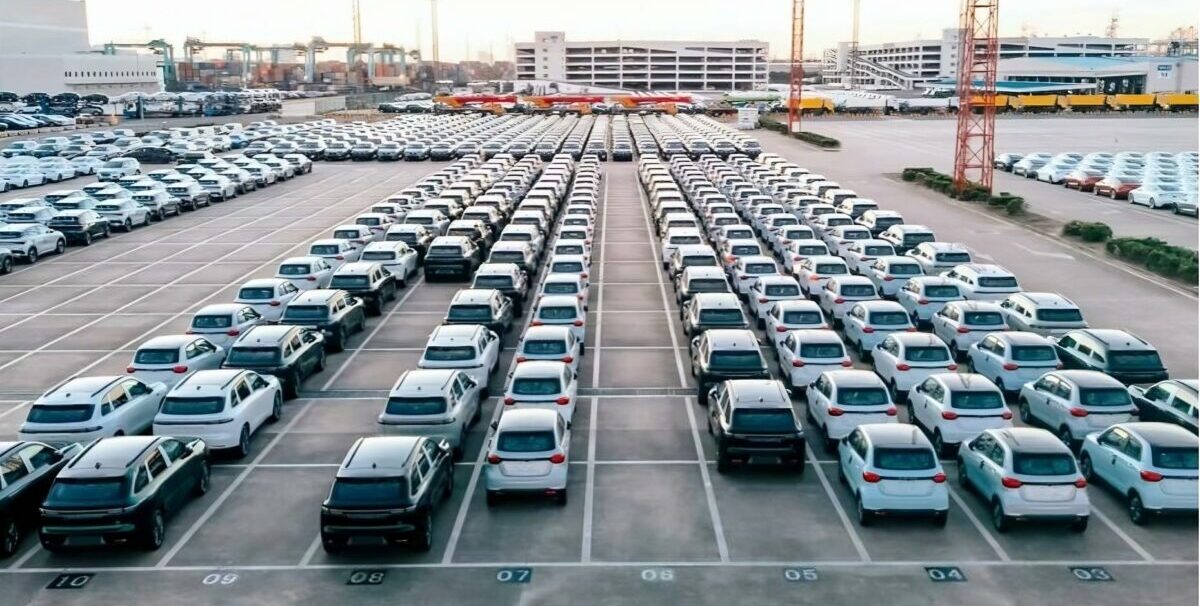
The primary beneficiaries of this rapid pivot toward electrification are Chinese automotive manufacturers, whose aggressive pricing and advanced software integration have allowed them to capture a disproportionate share of European market growth.
The Rise of Chinese Brands
According to market data cited by Reuters, Chinese brands are experiencing exponential volume growth in Europe:
- BYD and MG (SAIC): Both brands expanded their UK registrations by more than 33% in June, lifting their combined European market share to 5.4% (up from 3.4% in June 2025).
- Exponential Scaling: BYD, Chery, and Geely-backed Leapmotor all recorded sales volumes in June 2026 that were three to six times higher than their June 2025 volumes.
- Product Success: Chery’s Jaecoo 7 SUV has cemented its status as a major market disruptor, maintaining high sales velocities across the UK and Southern Europe since its breakthrough in March.
Industrial Realignment and Defensive Partnerships
To avoid being locked out of the market by potential tariffs and to mitigate logistic costs, Chinese OEMs are rapidly transitioning from exporters to local European producers. Conversely, struggling legacy brands are entering defensive joint ventures to survive.
                       [European Automotive Ecosystem]
                                      │
             ┌────────────────────────┴────────────────────────┐
             ▼                                                 ▼
   [Industrial Expansion]                           [Defensive Alliances]
   • BYD: Building Hungary Plant                    • Ford & Geely: Spain JV
• Stellantis: Hosting Leapmotor/Dongfeng • VW & Xpeng: Brownfield Talks- BYD’s Manufacturing Footprint: BYD is accelerating the construction of its passenger car assembly plant in Hungary, aiming to localize production and bypass European import duties.
- The Ford-Geely Alliance: In Spain, Ford has entered a joint manufacturing agreement with China’s Geely to utilize under capacity at its Spanish facilities, sharing the financial burden of vehicle production.
- Stellantis’s Open-Door Policy: Stellantis has opened its European manufacturing facilities to its joint-venture partners Leapmotor and Dongfeng, effectively allowing Chinese brands to build vehicles directly within the EU’s borders.
- Brownfield Negotiations: To quickly establish European manufacturing bases, both BYD and Xpeng are in active negotiations with Stellantis and Volkswagen, respectively, regarding the acquisition of "brownfield" sites—older, underutilized legacy factories that can be retrofitted for modern EV production.
Official Responses and Corporate Restructuring
While European legacy automakers have publicly welcomed the June sales bump, their internal corporate actions tell a far more sobering story. The modest registration gains recorded by Volkswagen Group, Stellantis, and Renault Group—which grew between 3.6% and 7.3% in June—pale in comparison to the scale of industrial downscaling currently underway.
Volkswagen Group’s Historic Consolidation
In internal memos and corporate communications, Volkswagen executives have acknowledged that the company’s cost structure is no longer competitive in an electrified, price-sensitive market.
- Job Cuts: Volkswagen is currently weighing an additional 50,000 job cuts on top of the 50,000 layoffs already announced earlier in the restructuring cycle, representing a massive reduction in its global workforce.
- Plant Closures: The company is actively planning the closure of up to four German manufacturing plants—a historic and politically sensitive move that has drawn fierce opposition from local labor unions.
- Portfolio Rationalization: To reduce complexity and engineering costs, VW is halving its current lineup of 150 models, focusing strictly on high-volume, standardized electric and hybrid platforms.
Industry-Wide Efficiency Drives
The pressure is not isolated to Wolfsburg. Across the European automotive sector, executives are implementing drastic efficiency measures:
- Renault Group: Renault is pursuing deeper structural efficiencies, spinning off its EV operations and continuing to seek partnerships to share development costs.
- BMW and Mercedes-Benz: Both premium manufacturers are actively adjusting their product roadmaps, focusing heavily on margin-preservation and flexible manufacturing architectures that can shift between ICE and BEV based on localized demand, while aggressively cutting administrative overhead.
Strategic Implications: The Dilemma of the "Incentive Trap"
The June 2026 sales figures expose a fundamental vulnerability in the European automotive industry’s transition strategy: the reliance on artificial market stimulants.
The Incentive Trap and Margin Erosion
The 51% surge in BEV sales is highly dependent on government subsidies in Germany and France. These subsidies create a temporary surge in demand but force legacy OEMs into a highly destructive pricing war. To compete with subsidized Chinese imports, European manufacturers must cut their own prices, severely eroding the profit margins of their electric portfolios. Because these companies cannot yet produce BEVs at the same cost parity as Chinese vertical integrators like BYD, every electric vehicle sold under current market conditions actively dilutes their corporate profitability.
The De-Industrialization of European Manufacturing
The rapid growth of Chinese manufacturing within Europe, combined with legacy plant closures, points to a fundamental shift in the continent’s industrial base. As legacy brands sell off brownfield sites or hand over factory space to Chinese partners, the high-value R&D and battery supply chain profits are increasingly captured by non-European entities.
Geopolitical and Policy Complications
The transition is being accelerated by external forces—specifically, high fuel prices driven by the US-Israeli conflict with Iran—rather than organic consumer preference. This means that if geopolitical tensions ease and oil prices drop, demand could shift back toward ICEs, leaving legacy OEMs caught between expensive, underutilized EV production lines and a regulatory framework that penalizes carbon emissions.
Ultimately, the record-setting June registrations do not signal a healthy, recovering European automotive industry. Instead, they represent the acceleration of a highly disruptive transition. The market is growing, but it is growing in a way that benefits agile, vertically integrated Chinese competitors while exposing the deep structural, financial, and operational vulnerabilities of Europe’s traditional automotive giants.