



BYD’s Xi’an Mega-Hub Launches Massive 8,000-Worker Recruitment Drive as Surging Global Demand Overtakes Domestic Market Shifts

By Stewart Burnett
Main Facts: The Global Export Engine Roars Back to Life
Electric vehicle (EV) giant BYD is aggressively scaling up its workforce, launching a massive recruitment drive to onboard more than 8,000 skilled workers across its sprawling manufacturing facilities in Xi’an, Shaanxi Province. According to recruitment notices published by local employment agencies and verified by Chinese financial media outlet Yicai, the hiring blitz is designed to fortify the company’s largest global manufacturing hub.
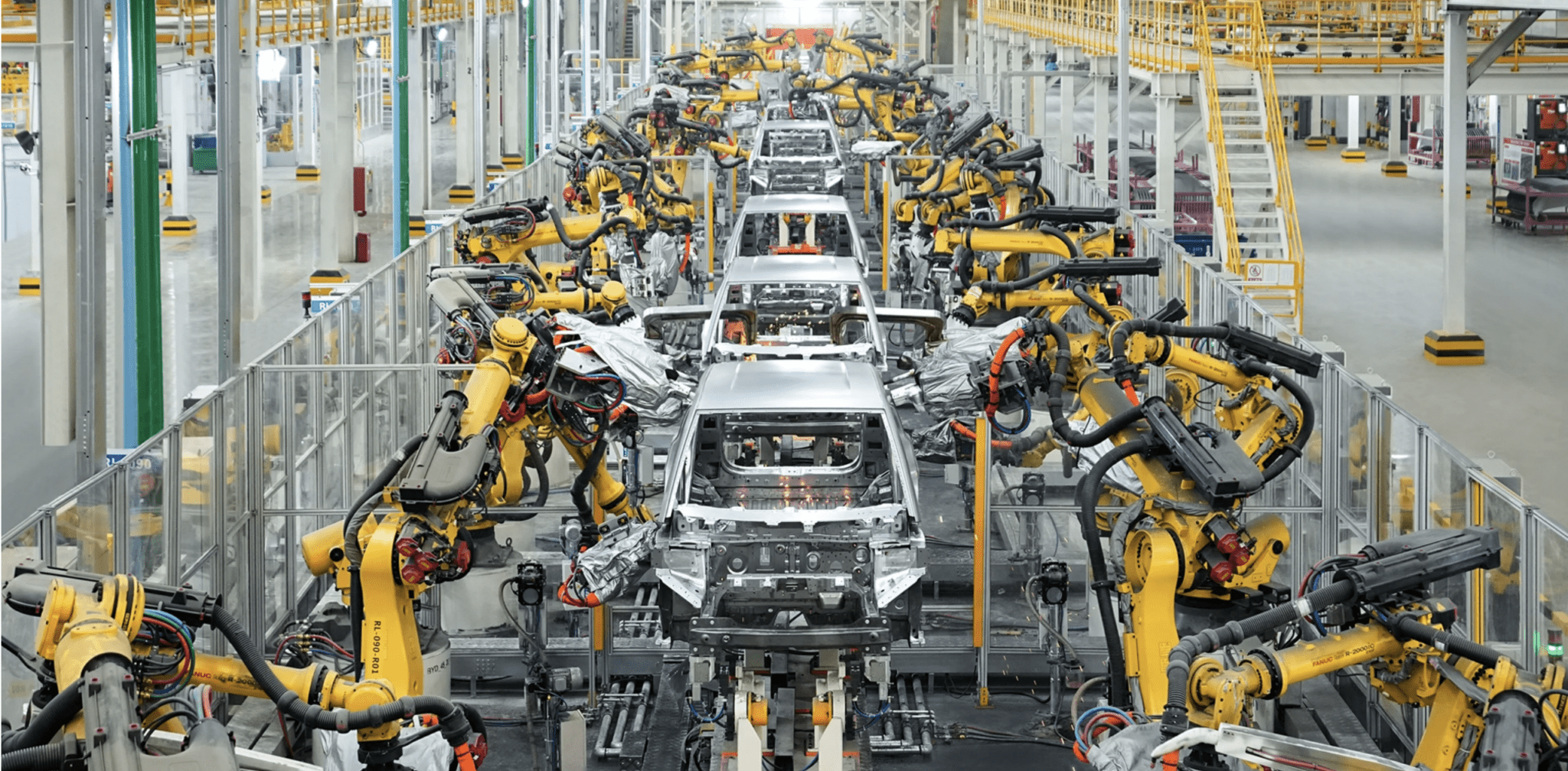
The Xi’an production base is a monumental industrial complex boasting a combined annual capacity of up to 1.5 million vehicles across four distinct factory phases. In 2024 alone, the site rolled out more than one million vehicles. Today, it serves as the critical beating heart of BYD’s international export strategy.
The rationale behind this rapid hiring spree underscores a profound structural shift in the global automotive landscape: export demand is now aggressively absorbing manufacturing capacity that domestic Chinese market competition alone can no longer entirely fill. While China’s hyper-competitive domestic market faces severe margin pressures, saturation, and shifting consumer preferences, surging international orders are pushing BYD’s flagship Xi’an plants to operate at maximum velocity.
To attract top-tier talent quickly, BYD and its partner agencies are offering lucrative compensation packages. The recruitment drive specifically targets skilled positions in core manufacturing verticals, including welding, painting, and final assembly. Experienced production workers are being incentivized with signing bonuses of up to CNY 6,000 (approximately US$890) and monthly wages reaching as high as CNY 10,000. This focus on skilled labor rather than general entry-level hiring highlights the intricate precision required to build high-volume models from BYD’s popular Dynasty and Ocean lineups, alongside select units from its expanding portfolio of premium brands.
Chronology: From Battery Bottlenecks to Regional Rebound
To understand the sudden urgency of the current hiring push, one must examine the operational hurdles BYD navigated earlier in the year.
Early 2024: The Strategic Transition and Production Lulls
The year began with a period of constrained output across BYD’s manufacturing network. The automaker initiated a company-wide technological pivot, upgrading its production lines to accommodate the rollout of its second-generation Blade Battery cells. While this next-generation battery technology promised superior energy density, safety, and thermal efficiency, the necessary retooling of assembly lines caused temporary production bottlenecks for several key model lines.
Faced with constrained output at its premier hub, BYD temporarily reduced its Xi’an workforce. To optimize operations and retain valuable human capital, the company strategically transferred a portion of its Xi’an employees to rapidly expanding operations in other emerging manufacturing hubs, such as Zhengzhou, Hefei, and the Shenzhen-Shanwei cooperation zone.
Mid-2024: Normalization and the Labor Squeeze
According to Feng Lei, head of the industrial research institute at market research firm HSMAP, all four Xi’an manufacturing phases have successfully resumed normal production schedules following the battery-line upgrades. However, this operational recovery—compounded by an exponential spike in global export orders—has thrust labor shortages back to the forefront of operational challenges.
August 2024: The Sharp Turnaround
Regional economic data confirms that the operational turnaround has been dramatic. Vehicle production in the broader Shaanxi province suffered a steep decline, falling nearly 50% year-on-year over the first seven months of the year due to the aforementioned line transitions.
However, official figures from China’s National Bureau of Statistics reveal that the tide turned sharply in August. Output in Shaanxi reached 138,900 vehicles in August alone—representing a staggering 55.4% surge from July and a crucial 17.9% increase compared to the same period in the previous year.
Supporting Data: Decoding BYD’s Record-Breaking August
The urgency of BYD’s ongoing recruitment campaign is laid bare by the company’s financial and sales disclosures for August, which illustrate a widening divergence between domestic and international market performance.
Record Sales Driven by Overseas Expansion
In August, BYD shattered previous records by selling a total of 440,293 new energy vehicles (NEVs), marking an impressive 17.8% increase year-on-year. A granular look at the data, however, reveals a fascinating geographic dichotomy:
- Domestic Sales: Domestic sales contracted by 14.3% year-on-year, reflecting the brutal price wars and intense localized competition currently plaguing China’s domestic EV sector.
- Overseas Sales: International sales skyrocketed by a phenomenal 134.5% year-on-year, hitting an all-time monthly record of 189,466 vehicles.
Overseas shipments were entirely responsible for BYD’s net monthly growth, proving that international markets are now the primary shock absorber for domestic overcapacity.
Production Pressures and Market Realities
Analyst Feng Lei notes that while production at the Xi’an hub has clawed its way back toward historical peak levels, the nature of that production has fundamentally changed. Export-facing vehicle lines are currently locked into relentless, full-capacity production schedules to meet overseas demand. Conversely, production lines dedicated to domestic models continue to grapple with fierce market competition, making a full, unmitigated recovery to peak annual output considerably more complex to sustain across the board.
Official Responses and Industry Insights: The Myth of Localization
A common narrative across the global automotive sector is that Chinese automakers like BYD are rapidly decoupling from domestic factories by building self-sufficient manufacturing plants overseas. However, industry experts and company insiders emphasize that domestic Chinese manufacturing hubs remain inextricably linked to the brand’s global expansion.
The True Nature of Regional Overseas Plants
BYD has announced and initiated construction on several regional assembly plants in key international markets, including Thailand, Brazil, and Hungary. These facilities are frequently cited by market observers as evidence of true globalization.
However, industry reality paints a different picture. These overseas regional plants function primarily as tariff-compliant final assembly sites. They rely heavily on core components—including advanced Blade Batteries, e-Platform 3.0 powertrains, and highly integrated vehicle electronics—that continue to be manufactured within China’s vertically integrated domestic supply chain.
For instance, while Alfredo Altavilla, BYD’s Special Adviser for Europe, boldly asserted earlier in September that the company eventually aims to manufacture everything it sells in Europe locally—requiring up to three local assembly plants and a dedicated European battery factory—the interim reality remains tethered to Chinese soil. Until those localized European and Latin American supply chains are fully realized years down the line, assembly hubs like Xi’an remain the indispensable engine room for global operations.
Implications: Vulnerabilities in the Global Supply Chain
The heavy reliance of BYD’s international growth on domestic manufacturing hubs carries significant strategic implications for the automaker, its investors, and global consumers.
The Centrality of the Domestic Base
The Xi’an hiring surge illustrates that BYD’s domestic manufacturing base is not being phased out by overseas expansion; rather, it is doubling down to feed the global machine. Whether a vehicle is ultimately registered in Bogotá, Bangkok, or Berlin, its foundational DNA—its battery cells, chips, and structural platforms—is largely forged in Chinese factories.
Bottlenecks Scale Globally
Because overseas assembly operations depend on components shipped from or standardized by domestic hubs, any disruption at a mega-facility like Xi’an reverberates globally.
If bottlenecks resurface—whether triggered by future battery technology transitions, sudden localized labor shortages, or upstream component supply constraints—the resulting delays will not merely manifest as localized domestic production dips. Instead, they will instantly cascade into export delivery delays. Consequently, international supply chain managers must recognize that a labor shortage in Shaanxi Province is, by extension, a potential delivery delay for a customer waiting for a BYD Atto 3 or Seal in international markets.
As BYD navigates the delicate balancing act between domestic market saturation and explosive international demand, the success of its 8,000-worker recruitment drive in Xi’an will serve as a bellwether for the brand’s ability to maintain its breakneck global momentum through the remainder of the decade.