





By Jim Story, Senior Consultant, IDCON INC, a TRM Company
Published July 21, 2026
In the high-stakes world of industrial maintenance, reliability, and operations (MRO), the question of what constitutes a "world-class" storeroom often draws a response as nuanced as the logistics of Napoleon’s Waterloo campaign: it depends.
For too long, organizations have treated the storeroom as a black box—a necessary evil of overhead costs to be minimized at all times. However, a shift is occurring. Forward-thinking reliability leaders are moving away from the simplistic goal of "reducing inventory value" and toward a more sophisticated model: aligning storeroom performance with the ultimate mission of reliability.
The Core Philosophy: Why Does the Storeroom Exist?
The primary mission of an MRO storeroom is not to maintain the lowest possible dollar value on the balance sheet; it is to ensure the right part is available at the precise moment it is needed. When a facility measures success solely by inventory reduction, it often triggers a dangerous chain reaction: bureaucratic hurdles make it difficult to add critical parts to stock, technicians bypass the system to "hoard" spares, and the very assets intended to be protected suffer from avoidable downtime.

A truly world-class storeroom functions as a strategic partner to the maintenance department. It acts as a bridge between procurement and the shop floor, ensuring that the critical spares required to keep the line running are not just present, but organized, accurate, and ready for deployment.
The Overused Metric: The Trap of "Total Inventory Value"
If a storeroom measures only one thing, it is almost invariably "total inventory value." While businesses must certainly maintain financial transparency regarding their assets, using this figure as the sole Key Performance Indicator (KPI) is a fundamental error in strategy.
"Lower is better" is a dangerous mantra when applied blindly to MRO inventory. If you reduce your inventory value by 20%, have you succeeded? Not necessarily. If that reduction in value coincides with a 30% increase in emergency air-freight shipping costs or a spike in downtime due to missing critical seals or bearings, you haven’t optimized your storeroom; you have merely shifted the costs from the balance sheet to the production floor.
Total inventory value is a lagging indicator. It tells you what happened, but it tells you nothing about your readiness. To build a world-class operation, leaders must look beyond the dollar sign and begin measuring behavior and availability.

The Underutilized Metric: The Power of Tracking Stock-Outs
If inventory value is the most overused metric, "stock-outs" is the most underutilized. A stock-out occurs every time a part is needed for a work order and is not available—regardless of whether that part was intended to be in stock or not.
Few organizations formally track the true cost of parts unavailability. When a line goes down, the cost is rarely just the price of the part; it is the lost production, the idle labor of the maintenance crew, and the often-exorbitant price of expedited shipping or local sourcing.

By tracking the frequency of stock-outs, an organization gains a direct window into the effectiveness of its inventory strategy. If a part is requested and missing, that data point should be the primary trigger for a review of the inventory policy for that item. When we track the "lost time" associated with these events, we can finally assign a tangible value to the cost of poor storeroom management.
A Case Study in Logistics: The U.S. Antarctic Program
The challenges of industrial maintenance are often magnified by environment and logistics. During my time leading equipment maintenance for the U.S. Antarctic Program, I encountered a culture of failure rooted in a lack of inventory visibility. We were positioned at the end of the world’s longest, most difficult supply chain.

When I arrived, the prevailing sentiment in the shop was that we "never" had the parts we needed. This was despite a massive, inherited store of parts from the U.S. Navy. The physical evidence of this failure was the "deadline" line—a row of hulks and machines sitting idle, awaiting parts that existed somewhere in our labyrinthine system but could not be located or were simply never reordered.
We implemented a radical shift: we began tracking stock-outs for every missing part. Initially, the team viewed this as administrative busywork. However, as the data began to accumulate, the impact was profound:

- Demand-Based Resupply: We used the stock-out data to prioritize our annual resupply orders.
- Systemic Accuracy: We identified which parts were consistently missing and automatically added them to our inventory catalog.
- De-cluttering: We identified obsolete parts that were taking up space and resources, clearing the way for high-turnover, critical spares.
The result was a total transformation. The "deadline" line disappeared. We reduced our resupply costs because we were no longer guessing what to order, and the morale of the mechanics soared because they were finally empowered to fix what they broke.
The Pillars of Success: Inventory Accuracy and Cycle Counting
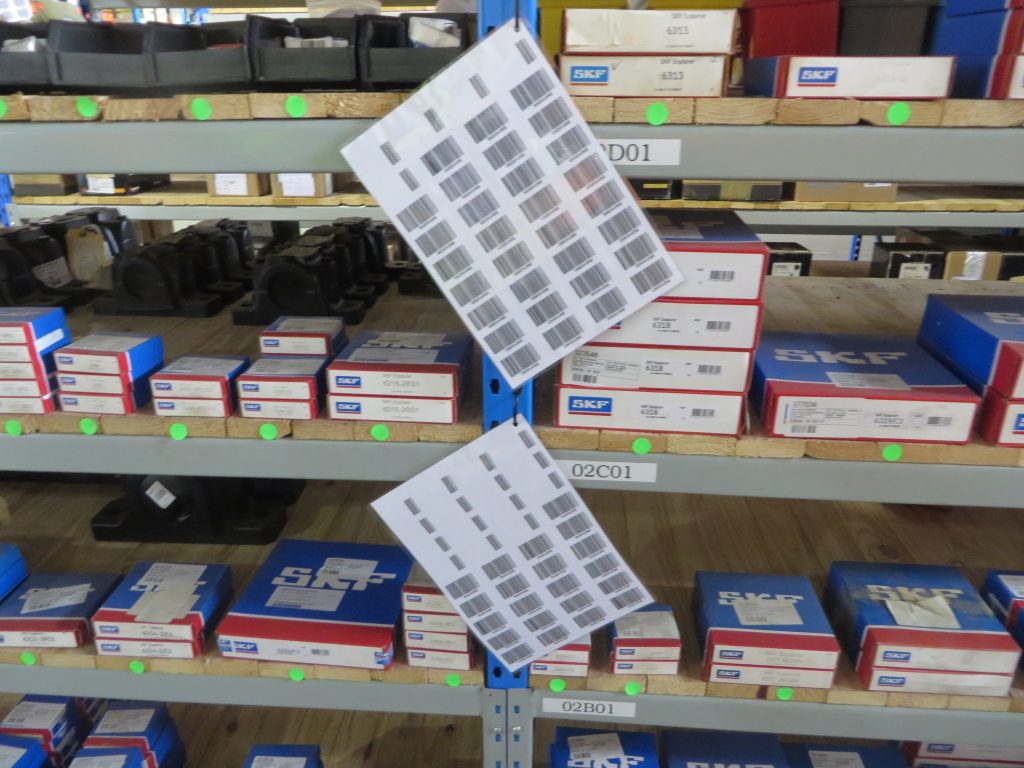
While stock-outs measure the outcome of your reliability efforts, inventory record accuracy (IRA) is the bedrock of the system. You cannot manage what you cannot trust. If your CMMS (Computerized Maintenance Management System) says you have ten units of a critical pump seal, but your shelf holds zero, you have a failure that is often more damaging than having no stock at all.

To achieve world-class status, organizations must strive for inventory accuracy levels approaching 100%. This is achieved through a rigorous cycle counting program.
- Prioritization: Not all parts are created equal. Critical, high-cost, or long-lead-time items should be counted more frequently—perhaps quarterly—while low-value, high-turnover items can be managed via different sampling methods.
- The "Turns" Myth: While "inventory turns" is a common retail metric, it should be applied with caution in an MRO environment. Critical spares that have a high risk of causing catastrophic downtime should be "exempted" from standard turn metrics. Their purpose is insurance, not rapid consumption.
The Dangers of Bureaucratic Friction
A common reaction to rising costs is to make it "harder" to add parts to the storeroom. This is almost always a mistake. If the process for adding a part to the system requires multiple levels of management approval, technicians will inevitably find a way around the system. They will hide parts in their toolboxes or, worse, purchase them on personal credit cards, leading to a "shadow inventory" that is invisible to the organization.

A proactive storeroom team should be encouraged to manage supply and demand. If a technician identifies a need for a new stock item, the process should be streamlined. When you make the system easy to use, you gain visibility. When you gain visibility, you gain control.
Conclusion: The Weakest Link
The storeroom is often the "weakest link" in a facility’s workflow. It is the hidden engine that either powers or stalls your reliability efforts. By shifting focus away from simple cost-cutting and toward the mission-critical metrics of stock-out reduction and inventory accuracy, organizations can move from a state of reactive firefighting to proactive, world-class reliability.

Industry experts at organizations like TRM and IDCON INC have spent years identifying these critical shortfalls. The path to improvement is rarely about buying more software or building a larger warehouse; it is about changing the behavior of the people who manage the parts and the processes that dictate how those parts are deployed.
If you are struggling with "long faces" in the shop and machines that stay broken for want of a simple component, it is time to stop looking at your inventory as a balance sheet liability and start looking at it as a reliability asset. Your storeroom should not be a place where parts go to hide; it should be the place where your operational success begins.