


One Intelligence, a Thousand Hands: Generalist’s GEN-1 Model Breaks the Embodiment Barrier

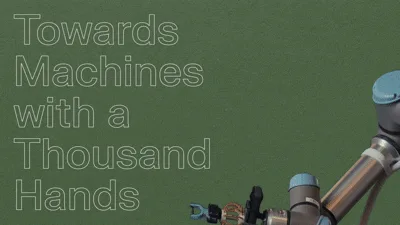
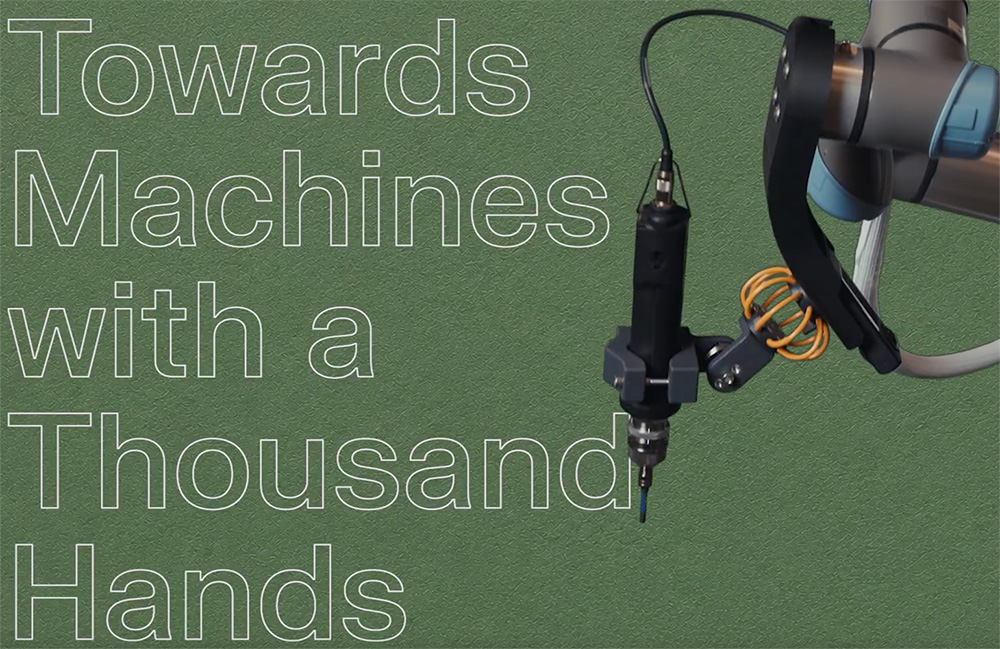
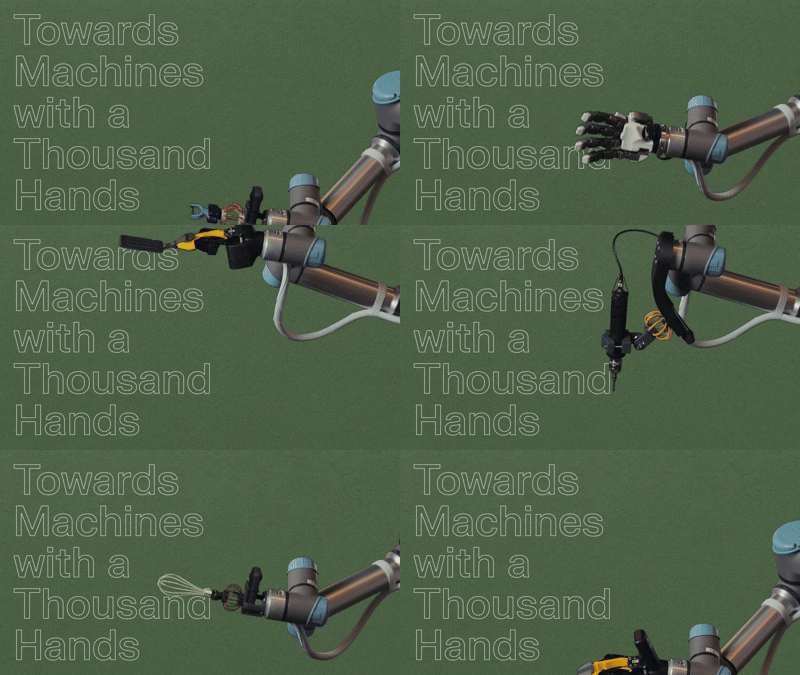
The field of robotics is currently witnessing a paradigm shift from specialized, single-purpose machines toward general-purpose physical intelligence. At the forefront of this evolution is Generalist, an AI firm that recently announced a significant milestone for its GEN-1 foundation model. The latest iteration of GEN-1 has demonstrated the ability to support a vast and diverse range of robot end effectors—the "hands" of the robot—ranging from human-like five-fingered appendages to specialized industrial tools like spatulas, whisks, and power screwdrivers.
This development marks a departure from traditional robotics, where software was typically hard-coded or narrowly trained for a specific hardware configuration. By enabling a single AI "brain" to command thousands of different physical interfaces, Generalist is proving that sensorimotor policies can be generalized across radically different modes of interaction with the physical world.
Main Facts: The Universal Sensorimotor Interface
The core breakthrough of GEN-1 lies in its ability to decouple intelligence from specific hardware. Historically, if a researcher changed a robot’s gripper, the underlying control model would often fail, requiring extensive retraining. GEN-1 bypasses this limitation through "cross-embodiment" learning.
A Massive Scale of Interaction
Generalist has pretrained GEN-1 on an expansive in-house robotics dataset. This dataset comprises more than 500,000 hours of real-world interaction data. Unlike simulated data, which often fails to capture the nuances of friction and micro-collisions, this real-world data allows the model to experience the "messiness" of the physical environment.
9,000 Variations and Counting
The model has been exposed to approximately 9,000 variations of end effectors. These include:
- Standard Two-Finger Grippers: The baseline for most industrial pick-and-place tasks.
- Five-Fingered Hands: Complex appendages capable of anthropomorphic manipulation.
- Specialized Tools: Off-the-shelf items like tongs, metal spatulas, box cutters, and vegetable peelers.
- Custom Modifications: 3D-printed parts and modified grippers designed to test specific contact physics.
The company asserts that by training on such a diverse array of "hands," GEN-1 learns a "general physical commonsense." It understands that while the tool may change, the underlying laws of physics—gravity, torque, tension, and friction—remain constant.
Chronology: From Specialized Grippers to Generalist Intelligence
The journey toward GEN-1 began with the recognition that the "data bottleneck" was the primary obstacle to robotic intelligence. Early iterations of robotic AI were often confined to a single laboratory setup with a single type of arm and gripper.
Phase 1: The Foundation of GEN-1
Generalist initially introduced GEN-1 as a general-purpose model for physical AI, focusing on basic manipulation tasks using standard grippers. The goal was to see if a transformer-based architecture could predict the next physical action in the same way a Large Language Model (LLM) predicts the next word in a sentence.
Phase 2: Expanding the Vocabulary
As the dataset grew to half a million hours, Generalist began introducing "hardware noise"—purposefully changing the end effectors to see if the model could adapt. They discovered that rather than confusing the AI, the variety of tools actually strengthened the model’s understanding of geometry and force.
Phase 3: The Multi-Tool Breakthrough
In its current stage, the company has successfully demonstrated that GEN-1 can switch between tools on-the-fly. By analyzing the "task updates" within the model’s neural weights, researchers can now quantify how much a new tool teaches the AI. This has led to the current state where the model treats every new hand not as a new problem, but as a "new language" for the same physical reality.
Supporting Data: Quantifying "Physical Reasoning"
To understand how GEN-1 adapts, Generalist researchers utilized a technique known as "task vector analysis." This involves comparing the weights of the pretrained GEN-1 model against the weights after it has been fine-tuned for a specific new tool.
Weight Space Analysis
The difference between these two states is treated as a "task update." By decomposing these updates, Generalist can see which parts of the AI’s architecture are working hardest.
- Sensor Processing: When introduced to a whisk, the model’s sensor-processing weights shifted significantly. This is because a whisk consists of thin, visually sparse wires that are difficult for standard computer vision to resolve.
- Actuation Logic: When using a power screwdriver, the model had to adjust its actuation schemes to account for high-speed rotation, a mode of movement not found in standard grippers.
Learning from Diversity
Generalist draws a direct parallel to Large Language Models. Research has shown that training an AI on multiple languages (multilingual training) makes it better at reasoning even in its primary language. Similarly, Generalist found that learning to use tongs (which involve spring-force dynamics) improved the model’s ability to handle compliant objects with standard grippers.
The company’s data indicates that "physical reasoning" emerges when the model is forced to choose the right tool for the right job. For example, the model learns that a spatula is better for "distributed contact" (scraping a surface), whereas a two-finger gripper is better for "point contact" (picking up a pebble).
Official Responses: The Vision of a "Cambrian Explosion"
Generalist’s leadership and research teams have been vocal about the philosophical implications of their findings. They argue that the obsession with "humanoid" robots—machines that look and act exactly like people—may actually be a "failure of imagination."
"Nature didn’t converge on just a single solution for manipulating the physical world; it exploded into millions," the company stated in a recent technical blog. They cite the diversity of biological "end effectors" like the trunk of an elephant, the suction pads of an octopus, and the beak of a bird as inspiration for the future of robotics.
On-the-Fly Adaptation
In a series of demonstrations, Generalist showed GEN-1 adapting to a mid-task hardware swap. While the robot was in the middle of a "rollout" (performing a task), researchers physically swapped its hand for a different tool. The model did not crash or freeze; instead, it perceived the new tool through its sensors, conditioned its behavior on the new geometry, and found a new trajectory to reach the same goal.
"The result is a single model that recognizes its own tooling and adapts," the company noted. This suggests that the intelligence is now "embodiment-agnostic"—it knows what it wants to do and figures out how to do it based on the "hand" it currently possesses.
Implications: Reshaping Industry and Automation
The successful generalization of GEN-1 across thousands of end effectors has profound implications for several sectors, ranging from manufacturing to domestic service.
1. Revolutionizing Industrial Automation
Currently, changing a production line in a factory requires weeks of reprogramming and hardware calibration. If a model like GEN-1 can control any tool, "retooling" a factory could become as simple as swapping a mechanical head and uploading a new task description. The AI would handle the nuances of how to use the new tool without human intervention.
2. Beyond Human Capability
By moving away from a purely humanoid form factor, robots can perform tasks humans cannot. A robot equipped with a plasma welding nozzle, a high-speed rotating brush, and a vacuum suction pad—all controlled by the same GEN-1 brain—could perform complex assembly and cleaning tasks that are physically impossible for a human hand.
3. The Future of Robot Design
This research paves the way for what Generalist calls a "Cambrian explosion of robot form factors." If the AI "brain" is no longer the bottleneck, engineers are free to design robots that are optimized for their environment rather than their resemblance to humans. We may see robots with telescopic arms, multi-jointed "tentacle" grippers, or micro-tools for precision surgery, all powered by the same underlying foundation model.
4. Solving the Data Problem
One of the most significant implications is the efficiency of data collection. If every robot, regardless of its shape, can contribute to the same foundation model, the rate of learning will accelerate exponentially. A robot using a spatula in a kitchen in London can contribute to the "physical commonsense" of a robot using a wrench in a factory in Tokyo.
Conclusion: One Intelligence for Many Worlds
Generalist’s GEN-1 is proving that the future of robotics is not about building the perfect mechanical hand, but about building the perfect digital mind. By mastering the physics of interaction across 9,000 variations of tools, Generalist has moved closer to a "General Physical Intelligence."
As the company continues to expand its dataset and refine its "task vector" interventions—such as collecting more data on thin-wire tools like whisks to strengthen sensor processing—the gap between robotic and human dexterity will continue to close. The ultimate goal is a world where robots are not just tools, but versatile extensions of human intent, capable of picking up any "hand" in the toolbox to shape the physical world in ways we have only begun to imagine.