

Made Here: New Docuseries Explores the Deep Roots Connecting American Manufacturing, Culture, and Community

By Puja Mitra | Adapted for Digital Publication
Published in Infrastructure & Design Engineering Trends
Main Facts: A New Lens on the Backbone of American Industry
Manufacturing is far more than assembly lines, raw materials, CNC machines, and finished goods shipped in corrugated cardboard boxes. At its core, manufacturing is the lifeblood of local employment, the catalyst for regional business development, and a foundational pillar of community identity across the United States.
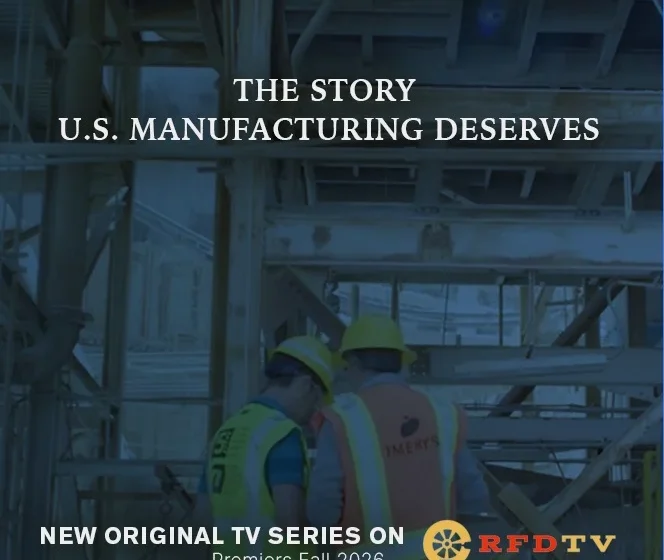
This autumn, these vital themes will take center stage in Made Here, an upcoming six-episode television docuseries slated to premiere on RFD-TV.
Hosted by Chris Luecke—widely recognized as the founder and host of the popular Manufacturing Happy Hour podcast—Made Here takes viewers on an immersive cross-country journey. The series examines the intricate, symbiotic relationship between American manufacturing, local culture, and community vitality. Each of the six episodes zeroes in on a distinct geographic region, putting a human face on the economic engines that drive modern industry by showcasing the people, public-private partnerships, and heritage industries that sustain local economies.
The production is a collaborative powerhouse. Made Here is presented and made possible by the Industrial Solutions Network of CED, Inc., produced by the creative teams at Match/Cut Productions, and powered by industry automation giant Rockwell Automation. The first season is scheduled to hit television screens nationwide in fall 2026, with exact broadcast schedules and supplementary programming details expected to be rolled out by the network in the coming months.
Chronology: The Journey From Concept to Screen
The path to bringing Made Here to national television reflects a growing industry-wide movement to shift public perception about modern careers in the skilled trades, engineering, and advanced manufacturing.
- The Pre-Production Vision: Long before cameras began rolling, industry stakeholders recognized a critical disconnect in the public consciousness. While consumer goods, infrastructure components, and high-tech hardware are ubiquitous, the stories behind where and by whom they are made often remain invisible.
- Assembling the Creative and Financial Coalition: The project took definitive shape when the Industrial Solutions Network of CED, Inc., joined forces with Match/Cut Productions and tech heavyweight Rockwell Automation. Seeking an authentic voice to lead the project, producers tapped Chris Luecke, whose extensive background interviewing industrial leaders on Manufacturing Happy Hour uniquely positioned him to bridge the gap between complex industrial processes and compelling human narratives.
- On the Road Across America: Production teams fanned out across six distinct regions of the United States. Rather than focusing solely on corporate boardrooms or high-tech cleanrooms, the cameras captured the daily rhythms of industrial towns, profiling business leaders, boots-on-the-ground skilled tradespeople, technology innovators, vocational educators, and multi-generational community members.
- The 2026 Premiere Announcement: With principal photography and editing underway, official announcements regarding the series debut in early 2026 set the stage for a fall 2026 launch on RFD-TV, a network celebrated for reaching heartland communities and audiences deeply connected to American enterprise.
- Future Roadmap: Industry observers anticipate further announcements regarding digital streaming extensions, educational toolkits for high schools and vocational colleges, and community screening events as the autumn 2026 premiere approaches.
Supporting Data: The Landscape of Modern American Manufacturing
To understand why a series like Made Here is both timely and necessary, one must examine the broader economic and demographic landscape of the U.S. industrial sector.
Economic Impact and Local Footprints
According to data from the National Association of Manufacturers (NAM) and the Bureau of Labor Statistics (BLS):

- GDP Contribution: Manufacturing contributes trillions of dollars annually to the U.S. GDP, representing roughly 11% to 12% of the total economic output.
- The Multiplier Effect: For every $1.00 spent in manufacturing, another $2.60 is added to the economy—the highest multiplier effect of any major economic sector. This translates directly into supporting local service economies, hospitality, real estate, and small businesses in manufacturing towns.
- Employment Scale: The sector employs nearly 13 million Americans, offering stable, high-paying careers with robust benefits packages.
The Workforce Crisis and the Skills Gap
Despite these impressive economic indicators, the industry faces a well-documented talent crisis:
- The Skills Gap: Industry projections by Deloitte and The Manufacturing Institute suggest that millions of manufacturing jobs risk going unfilled over the next decade due to an aging workforce and a persistent perception gap among younger generations.
- The Awareness Deficit: Many Gen Z and younger millennial workers remain unaware of how high-tech, automated, and digitally transformed modern manufacturing has become. Concepts like automation, industrial IoT (IIoT), CAD/CAM integration, and advanced robotics have fundamentally changed factory floors, yet public stereotypes often lag decades behind reality.
Made Here directly addresses this data-driven challenge by leveraging visual storytelling to demystify factory floors and showcase the rewarding nature of modern industrial careers.
Official Responses: Behind the Vision of Made Here
While formal press releases from the network and production partners emphasize the collaborative nature of the project, industry leaders involved in the series have highlighted its core mission: transforming how the public views the industrial sector.
Bridging the Gap Between Industry and Community
Producers from Match/Cut Productions note that the series was built on a foundational premise: that products, technological innovations, and the geographic communities where manufacturing takes place are inextricably linked. It is impossible to separate the economic health of a town from the industrial facilities that anchor its property tax base, fund its local sports leagues, and employ its families.
The Role of Technology and Leadership
With the backing of Rockwell Automation and the Industrial Solutions Network of CED, Inc., the series highlights how cutting-edge hardware and software intersect with human ingenuity.
"Manufacturing is not a relic of the past; it is the engine of our collective future," notes production commentary surrounding the series. By embedding hosts and camera crews directly into regional hubs, Made Here aims to highlight how local manufacturers adapt to global supply chain shifts, embrace digital transformation, and invest heavily in their local workforces.
Furthermore, the involvement of Chris Luecke ensures an approachable, conversational tone. Luecke’s background is rooted in making industrial automation and engineering accessible to everyday listeners, making him an ideal guide for viewers who may never have set foot inside a modern production facility.
Implications: Cultural Resonance and Workforce Development
The premiere of Made Here arrives at a critical juncture for American infrastructure, education, and labor markets. The implications of this docuseries stretch far beyond television ratings, touching on several key areas of societal development:

1. Rebuilding Local Pride and Community Identity
For decades, many American manufacturing towns experienced economic disinvestment, plant closures, and subsequent cultural decline. However, a modern renaissance is underway, driven by reshoring initiatives, government infrastructure funding, and advanced manufacturing hubs. Made Here captures this narrative of resilience. By spotlighting local triumphs, the series helps restore a sense of civic pride and shared identity in regions that have historically powered the nation.
2. Inspiring the Next Generation of Innovators
One of the most profound challenges facing educators and industrial leaders is recruitment. Traditional career days often fail to convey the dynamic nature of advanced manufacturing. By showcasing real people—engineers solving complex automation challenges, machinists programming multi-axis CNC mills, and young apprentices learning the ropes—Made Here serves as a visual recruitment tool. It speaks directly to students, parents, and guidance counselors, demonstrating that the trades and industrial engineering offer lucrative, creative, and future-proof career paths.
3. Fostering Public-Private Partnerships
The series underscores the importance of collaboration between businesses, local government entities, and educational institutions (such as community colleges and vocational high schools). Successful episodes illustrate how regional ecosystems thrive when local factories partner with schools to create custom training programs, internships, and apprenticeship pathways.
4. Shifting the National Narrative
Ultimately, Made Here challenges the antiquated notion of manufacturing as dirty, dark, and dangerous. By revealing the gleaming facilities, advanced safety protocols, collaborative robotics, and computer-driven processes that define the modern plant floor, the series repositions manufacturing as a cutting-edge career choice where digital technology meets physical creation.
Looking Ahead to Fall 2026
As the broadcast date on RFD-TV approaches, anticipation is building across the industrial and media landscapes. For viewers seeking authentic stories about American resilience, craftsmanship, and innovation, Made Here promises to offer an illuminating window into the workshops and factories that quietly shape our daily lives.
Additional programming announcements, trailer releases, and broadcast schedules will be shared in the coming months. For educators, industry professionals, and curious viewers looking to learn more about the series, official updates and background materials can be accessed directly at industrialsolutionsnetwork.com/madehere.