

Updated First Aid Standard Expands Overdose Response and Emergency Training to Protect Modern Workplaces

By Danielle Naidu
Assistant Editor, Occupational Health & Safety
Employers across the globe are constantly evaluating and re-evaluating their environmental health and safety protocols to protect their most valuable asset: their workforce. As the nature of occupational hazards shifts—driven by public health crises, changing community demographics, and evolving technological landscapes—safety standards must adapt in tandem. In response to these pressing modern demands, safety organizations have rolled out a vital update designed to bridge critical gaps in emergency medical care.
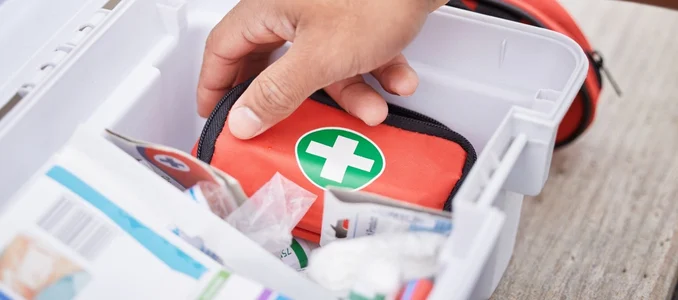
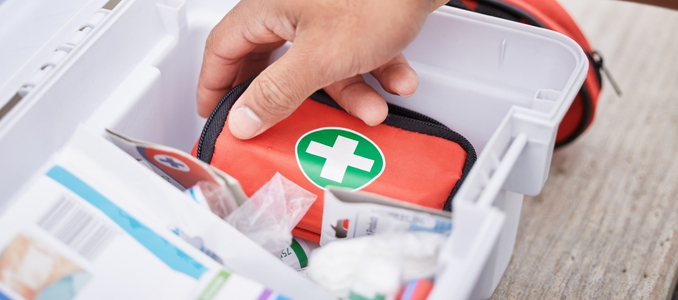
The American National Standards Institute (ANSI) and the International Safety Equipment Association (ISEA) have officially published ANSI/ISEA Z308.1-2026, marking a comprehensive revision of the minimum requirements for workplace first-aid kits and supplies. Most notably, this voluntary yet highly influential standard identifies naloxone as a vital supplemental supply for businesses to consider when conducting risk assessments. Furthermore, the updated guidelines introduce expanded protocols for training workplace personnel in essential life-saving techniques, including first aid, cardiopulmonary resuscitation (CPR), and the deployment of automated external defibrillators (AEDs).
As organizations review their emergency preparedness programs, safety professionals emphasize that these updates are not merely bureaucratic checkboxes; they represent a fundamental shift in how commercial, industrial, and corporate spaces handle acute medical crises, particularly where professional emergency medical services (EMS) face response time delays.
Main Facts: What the ANSI/ISEA Z308.1-2026 Standard Changes
The publication of the ANSI/ISEA Z308.1-2026 standard introduces several distinct updates to workplace safety requirements. While compliance with the standard remains technically voluntary, its widespread adoption is heavily encouraged by regulatory bodies like the Occupational Safety and Health Administration (OSHA), which relies on these consensus standards as benchmarks for safe operations.
The key components of the 2026 revision include:
- Inclusion of Naloxone as a Supplemental Supply: For the first time, the standard explicitly recognizes naloxone—an opioid antagonist capable of reversing opioid overdoses—as a supplemental item that employers should weigh when determining their specific workplace risks.
- Enhanced Training Recommendations: Beyond physical supplies, the revision provides explicit, updated guidance for training employees in comprehensive first aid, CPR, and AED usage. This holistic approach ensures that having life-saving tools is matched by the human capability to use them effectively.
- Context-Driven Application: The standard encourages a risk-based approach, allowing safety managers to customize their first-aid provisions based on unique operational hazards, facility locations, and workforce demographics, rather than relying on a rigid, one-size-fits-all model.
According to safety advocates, including the National Safety Council (NSC), these modifications are particularly relevant for facilities located in remote areas, sprawling industrial parks, or multi-shift operations where standard emergency response times may be severely compromised.
Chronology of Workplace First-Aid Standards and the Path to 2026
To understand the significance of the ANSI/ISEA Z308.1-2026 revision, it is helpful to examine the historical trajectory of workplace first-aid standards and how public health emergencies have forced them to evolve over the decades.

Early Foundations and Standardization
For much of the 20th century, workplace first-aid kits were largely unregulated by unified national standards, leading to a fragmented landscape where employers assembled arbitrary collections of bandages and antiseptics. Recognizing the need for consistency, ANSI and the ISEA joined forces to establish baseline requirements under the Z308.1 standard.
Over subsequent revisions, the standard evolved to categorize kits into distinct classes (such as Class A for general indoor workplaces and Class B for high-risk, industrial environments) and mandated specific quantities of bandages, burn treatments, and personal protective equipment (PPE).
The Opioid Epidemic Intersects with the Workplace
As the opioid crisis deepened throughout the 2010s and early 2020s, its impacts inevitably bled into the American workforce. What was once viewed strictly as a community or public health issue increasingly manifested on factory floors, in retail backrooms, and at corporate office parks.
Public health officials and safety advocates recognized that traditional first-aid kits—traditionally stocked for cuts, scrapes, and minor burns—were completely unprepared to address acute overdoses. Despite this growing threat, regulatory updates lagged behind the rapid escalation of opioid-related fatalities.

The Development and Release of the 2026 Revision
Recognizing the widening gap between traditional first-aid preparedness and modern workplace realities, ANSI and ISEA initiated the review process culminating in the 2026 standard. Committee members, comprising industrial hygienists, safety engineers, medical professionals, and labor representatives, evaluated epidemiological data, workplace fatality reports, and emerging best practices.
The resulting consensus document, published in early 2026, officially integrated opioid overdose reversal agents and reinforced the imperative for hands-on medical training, setting a new benchmark for corporate emergency preparedness.
Supporting Data: The Stark Realities of Modern Workplace Hazards
The impetus behind updating the Z308.1 standard is rooted in sobering statistical data concerning workplace fatalities, medical emergencies, and the current state of employer preparedness.
The Toll of Drug Overdoses on the Workforce
Data compiled by the National Safety Council reveals a grim reality: drug overdoses currently account for approximately 8% of all workplace deaths. This figure underscores the reality that the broader public health crisis sparing no demographic has deeply penetrated the occupational sphere. Whether through prescription medication misuse, accidental exposure, or illicit drug use, workers are experiencing fatal and non-fatal overdoses while on the clock in unprecedented numbers.

A Concerning Preparedness Gap
Despite the escalating risk, empirical research indicates that corporate America remains largely underprepared to manage this specific medical emergency. A comprehensive survey conducted by the NSC uncovered a striking vulnerability:
- Only 28% of employers report having naloxone readily available at their worksites.
This staggering 72% deficit highlights a profound disconnect between the prevalence of workplace overdose risks and the proactive measures taken by safety managers. For many organizations, the hesitation to stock naloxone stems from lingering stigma, lack of regulatory clarity, or uncertainty regarding legal liabilities. The introduction of the 2026 standard directly addresses this ambiguity, providing a formal framework that legitimizes naloxone as a standard component of comprehensive workplace safety.
Official Responses and Industry Stakeholder Perspectives
The rollout of ANSI/ISEA Z308.1-2026 has generated widespread discussion among occupational safety organizations, standard-setting bodies, and regulatory agencies. Industry stakeholders have universally praised the update for its pragmatism and timeliness.
The National Safety Council (NSC) Perspective
Representatives from the NSC have been vocal champions of the updated standard, emphasizing that traditional emergency response models are no longer sufficient in a changing world.

"The guidance provided in this revision is particularly relevant at workplaces where emergency medical services may not be immediately available," notes the NSC.
Furthermore, safety advocates stress that while compliance with ANSI/ISEA Z308.1-2026 is voluntary, OSHA’s reliance on the consensus standard gives it de facto regulatory weight. When OSHA inspectors evaluate a facility’s emergency action plan and first-aid provisions following an incident, adherence to the Z308.1 standard serves as a primary benchmark for demonstrating due diligence.
The Role of ISEA and Safety Equipment Manufacturers
The International Safety Equipment Association has underscored that the inclusion of naloxone as a supplemental supply does not mandate its presence in every single basic kit. Instead, it empowers safety directors to perform localized risk assessments.
If a manufacturing plant, logistics hub, or municipal worksite operates in an area heavily impacted by opioid abuse, or if workforce demographics suggest elevated vulnerability, the standard provides the necessary justification to incorporate naloxone. To assist employers in this transition, ISEA has rolled out specialized educational resources to help safety professionals navigate the procurement, storage, and administration of overdose-reversal supplies.

Practical Implications for Employers and Safety Professionals
The publication of ANSI/ISEA Z308.1-2026 requires safety directors, human resources professionals, and facility managers to take proactive steps to review and upgrade their current emergency preparedness infrastructure. Adopting the new standard involves several critical operational phases:
1. Conducting Comprehensive Workplace Risk Assessments
Employers cannot adopt a generic approach to first-aid provisioning. Safety teams must evaluate specific site risks, including geographic isolation, historical medical incident data, employee demographics, and local community health statistics. Facilities operating in high-stress environments or areas with high rates of substance use disorders should seriously consider supplementing standard kits with naloxone.
2. Upgrading First-Aid Supplies and Storage
Organizations must audit their existing first-aid inventories against the updated Z308.1 requirements. If naloxone is deemed necessary during the risk assessment, it should be stored in a secure yet easily accessible location alongside clear, pictorial instructions for use. Employers can utilize ISEA’s dedicated naloxone resources to ensure proper storage temperatures and product integrity.
3. Implementing Robust Training Programs
As the standard emphasizes, having supplies on-site is insufficient if employees do not know how to deploy them. Employers must invest in comprehensive training programs covering:

- Basic First Aid: Treating trauma, managing bleeding, and stabilizing injured workers.
- CPR Execution: Ensuring staff members know how to maintain circulation during cardiac events.
- AED Deployment: Training personnel to locate and operate automated external defibrillators swiftly.
- Overdose Response Protocols: Educating staff on recognizing the signs of an opioid overdose—such as slowed breathing, unresponsiveness, and blue-tinted lips—and training them on how and when to administer naloxone safely.
For structured guidance, employers are encouraged to leverage specialized tools like the NSC’s overdose-response planning tool, which assists organizations in drafting clear, legally sound, and compassionate workplace procedures.
Conclusion: A New Era of Comprehensive Workplace Safety
The release of ANSI/ISEA Z308.1-2026 marks a pivotal turning point in occupational health and safety. By formally recognizing the reality of modern medical emergencies—most notably the devastating impact of the opioid crisis—and reinforcing the absolute necessity of hands-on medical training, the updated standard elevates the baseline of care in the modern workplace.
For employers, compliance with this voluntary standard is much more than a box-ticking exercise; it is an active investment in human life. By bridging the gap between traditional first-aid kits and advanced life-saving interventions, organizations can foster safer, more resilient workplaces capable of responding swiftly and effectively when every second counts.