





From the Training Ground to the Shop Floor: How Humanoid Robots are Learning Industrial Maintenance

By Ahmed Rezika, SimpleWays OU
Published: September 3, 2026
Main Facts: Bridging the Gap Between Showmanship and Utility
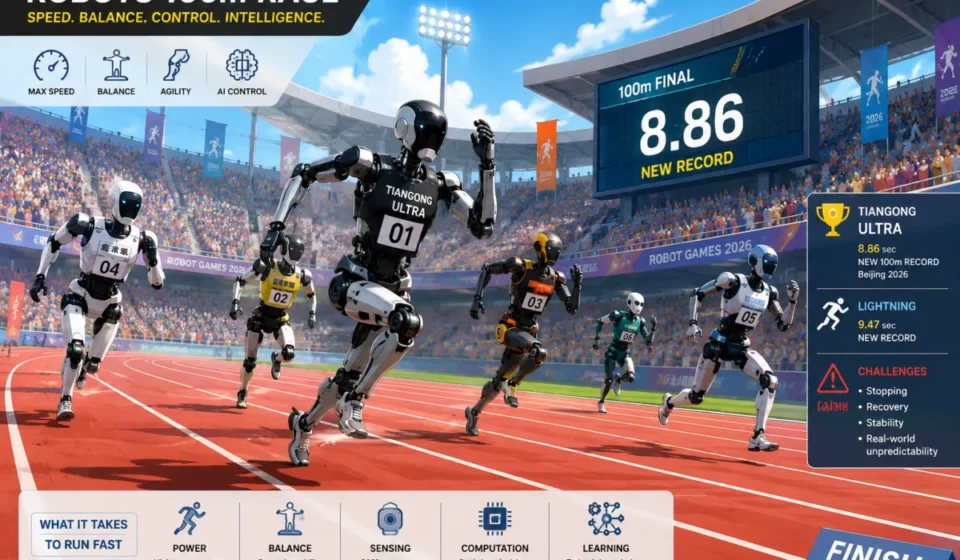
We have all seen the viral videos: humanoid robots performing backflips, running marathons, and gracefully navigating obstacle courses with uncanny agility. These demonstrations never fail to capture the imagination, prompting an inevitable question from spectators and engineers alike: Is it real, or is there a trick?
More importantly, industrial professionals are beginning to ask a harder question: If we can train a robot to dance, why aren’t we training them for something genuinely useful, like industrial maintenance?
A closer look behind the curtain reveals that these physical feats are not smoke and mirrors. They are the product of rigorous, cutting-edge training methodologies—humans demonstrating physical actions, operators taking the controls via teleoperation, digital simulations generating millions of trial runs, and algorithms refining behavior through continuous feedback loops.

The core inquiry for the modern maintenance manager is simple yet profound: Can we leverage these exact training principles to teach a humanoid robot to perform real, high-value industrial maintenance work?
Transitioning from theoretical physical AI on the shop floor to functional robotics requires solving a fundamental puzzle: How do you transfer human physical intelligence into an artificial body? Recent advancements in imitation learning, human-to-robot video transfer, and large-scale simulation suggest that the answer is no longer a matter of if, but how.
Chronology of Progress: Key Milestones in Robot Training
The journey toward deploying autonomous or semi-autonomous humanoids in industrial settings has accelerated rapidly over the last several years. The evolution of machine learning and robotic embodiment is marked by several watershed moments:
- Late 2024 (CoRL 2024 / Published 2025): Researchers introduced systems like Open-TeleVision, demonstrating immersive active visual feedback that allowed operators to mirror their arm and hand movements onto humanoid robots, successfully training policies for complex tasks like sorting, insertion, and folding. Concurrently, systems like OmniH2O advanced whole-body humanoid control using virtual reality and verbal instructions.
- Early to Mid-2025: Companies like Figure made waves with Project Go-Big, utilizing first-person human video-to-robot transfer (Helix system) to navigate novel, cluttered environments via natural language. Around the same time, NVIDIA’s Isaac GR00T framework revolutionized synthetic data generation, outputting over 750,000 synthetic trajectories in a matter of hours to supercharge robot pre-training.
- Late 2025: Large-scale infrastructure investments took root. Notably, China’s largest humanoid robot training center opened in Beijing’s Shijingshan district, spanning over 10,000 square meters to replicate full-scale industrial and commercial environments, where robots practiced foundational "atomic" skills using VR and motion-capture tools.
- June 2026: The University of Maryland unveiled HumanEgo, a project proving that robots could successfully learn dexterous manipulation skills directly from first-person human videos without requiring pre-existing robot training data—achieving a 92.5% average success rate across real-world manipulation tasks.
Supporting Data: The Mechanics of Machine Learning
Teaching a humanoid robot to perform maintenance requires a multi-pronged approach that bridges human expertise and machine scalability. Current industry implementations rely on four primary pillars of training data:

1. Learning by Watching (Imitation Learning & Video Transfer)
Every maintenance professional remembers learning their trade by observing a seasoned technician—noting stance, tool selection, approach angles, and unwritten nuances. Today, artificial intelligence is mimicking this dynamic.
Systems utilizing human video-to-robot transfer allow machines to watch first-person human recordings and translate those visual cues into functional objectives. However, this introduces the embodiment gap: a technician and a humanoid robot do not share identical anatomy. Joint ranges, link lengths, hand geometries, actuator strengths, and balance dynamics differ wildly.
Rather than blindly copying human motions, advanced frameworks (such as the 2025 Human2Sim2Robot and 2026 UMD HumanEgo projects) focus on teaching the intent of the task—such as locating a connector, aligning a plug, and controlling insertion force—while letting the robot calculate its own optimal physical posture. UMD’s framework notably achieved zero-shot transfer with an average success rate of 92.5% using roughly 30 minutes of human video per task.
2. Learning by Doing (Immersive Teleoperation)
When observation is insufficient to capture subtle physical feedback—such as variable insertion resistance, torque limits, or tactile adjustments—teleoperation bridges the gap. Technicians use VR headsets, motion-capture rigs, and specialized controllers to temporarily pilot the robot.

Every successful action, along with human corrections when obstacles or misalignments occur, is recorded as high-value training data. In Beijing’s industrial training hubs, operators guide humanoids through repetitive sequences like key alignment and lock-turning, translating human muscle memory directly into AI training sets.
3. Learning in Simulation (Synthetic Scale)
Training a robot directly on a live production asset carries unacceptable risks of collision, downtime, and equipment damage. Consequently, digital twins and physics simulations have become vital.
NVIDIA’s Isaac GR00T demonstrated the power of synthetic data generation, creating 750,000 synthetic trajectories in just 11 hours—equivalent to roughly 6,500 hours of manual human demonstration. By combining this synthetic data with real-world inputs, developers witnessed a 40% performance boost compared to real-world data alone. Simulations allow robots to practice inspecting pumps, opening access panels, and handling cables across millions of randomized environmental variations (lighting, clutter, noise) safely away from the factory floor.
Official Perspectives and Industry Insights
Industry leaders emphasize that introducing humanoids to the shop floor is not about displacing human expertise, but rather redefining it.

Maintenance departments have long grappled with the "brain drain" of retiring Baby Boomers and experienced technicians. Humanoid robotics introduces a paradigm shift: instead of relying solely on written manuals and classroom training, part of a senior technician’s practical knowledge can be captured directly through demonstrations and teleoperated sessions.
Rather than rendering the human workforce obsolete, experienced technicians transition into a new, vital role: the master instructors who teach the mechanical workforce how the job is genuinely executed in the real world.
Furthermore, experts outline a structured, four-tier pathway for integrating humanoids into maintenance routines:
- Direct Control: The technician handles all decision-making via teleoperation while the robot acts as the physical proxy.
- Partial Autonomy: Simple, repetitive sub-tasks become automated while the technician retains overarching command.
- Supervised Routine Execution: The robot handles routine inspection or servicing paths independently, with the technician stepping in only for exceptions.
- Advanced Autonomy: Broader responsibilities are transferred to the machine only after prolonged, flawless reliability metrics are met.
Implications for the Future of Maintenance
As physical AI matures, the conversation must shift from how humanoids learn to what they should learn first. Not every maintenance task warrants a humanoid solution; specialized automation and traditional tools remain optimal for many shop floor applications.

The true competitive advantage for maintenance managers will lie in identifying high-frequency, repetitive, or hazardous tasks where a humanoid can immediately alleviate labor shortages and enhance safety.
By combining observation (watching human videos), active intervention (teleoperation), risk-free practice (simulation), and iterative feedback, the industry is paving a realistic road toward reliable machine colleagues. The future shop floor will not be a sterile, human-free zone, but a collaborative ecosystem where human wisdom trains artificial capability, taking industrial maintenance to unprecedented levels of efficiency and resilience.
Must-Know Jargon
- Learning from Demonstration (LfD): A paradigm where a robot learns a task by observing human execution rather than relying on manual code.
- Imitation Learning: A machine learning approach where a robot copies behaviors, requiring adaptation algorithms to fit the target robot’s morphology.
- Embodiment Gap: The physical and mechanical discrepancies between a human body and a robotic chassis, affecting reach, balance, and joint capabilities.
- Motion Retargeting: The computational translation of human-centric joint trajectories into kinematically viable movements for a robot.
- Teleoperation: Real-time remote control of a robot by a human operator using VR, motion capture, or specialized interfaces.
- Demonstration Data: Multi-modal datasets captured during human demonstrations, including video, joint telemetry, force feedback, and environmental outcomes.