
Toyota Eyes Massive $6.4 Billion Annual Automation Overhaul, Weighing 400,000 Robots for Global Manufacturing Network

TOKYO — In a move that could redefine the boundaries of modern automotive manufacturing, Toyota Motor Corp. is charting an ambitious path toward next-generation factory automation. According to recent reports, the world’s largest automaker has estimated that modernizing its sprawling global production network could require a staggering deployment of approximately 400,000 robots. This massive technological pivot carries an estimated price tag of roughly $6.4 billion annually, with spending projected to begin around 2028.
While the figures reflect internal projections rather than a finalized capital expenditure commitment, the sheer scale of the proposal highlights the profound transformation currently underway in industrial manufacturing. As legacy automakers grapple with demographic shifts, soaring labor costs, and the need for unprecedented production flexibility, Toyota’s blueprint offers a fascinating glimpse into the future of the factory floor.
Main Facts: The Scope of Toyota’s Automation Vision
The sweeping modernization blueprint under consideration by Toyota is not limited to the automaker’s primary assembly lines. Instead, the estimates—which were shared with investors earlier this month—encompass a vast ecosystem of manufacturing partners and supply chains.
Key Highlights of the Initiative:
- Total Scope: The $6.4 billion annual estimate and the 400,000-unit robot deployment cover Toyota Motor Corp., its extensive network of group companies, and its tier-one suppliers.
- Equipment Types: The projection accounts for both the replacement of aging factory equipment and the integration of entirely new automated systems.
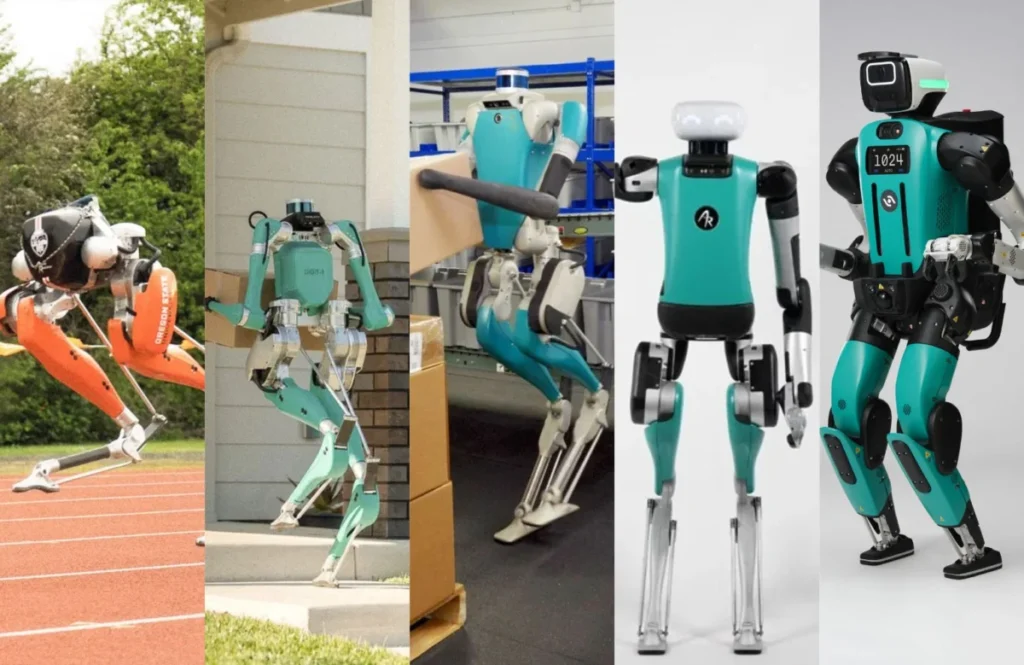
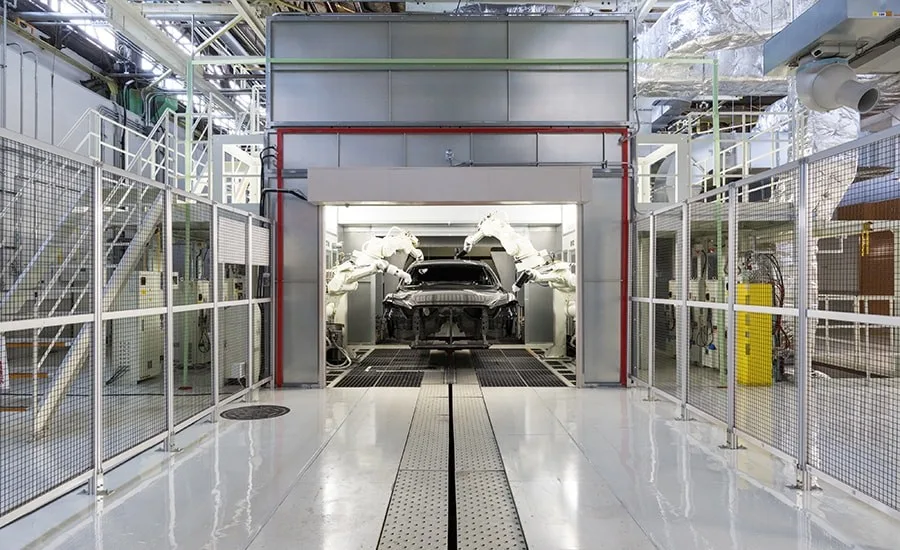
- Robot Varieties: The envisioned robotic workforce is not restricted to traditional, caged industrial arms; it features a diverse mix of non-humanoid automated equipment, automated material handling systems, and cutting-edge humanoid robots.
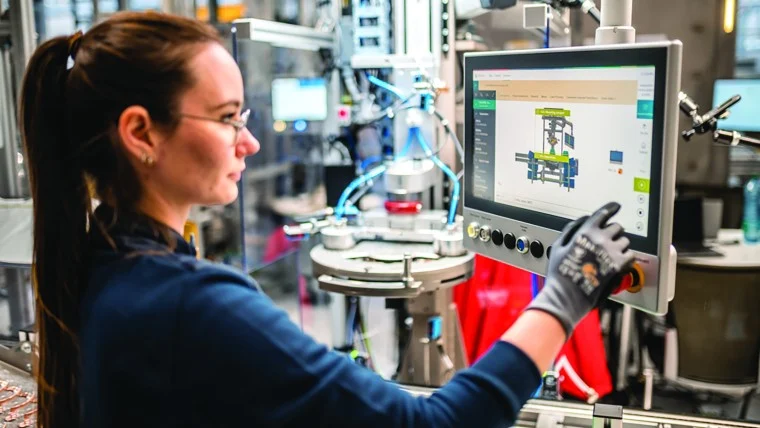
- Human-Robot Collaboration: A central pillar of the proposed spending is the development of safe, collaborative workspaces where human operators and advanced robots work side-by-side on the factory floor.
Despite the boldness of these figures, Toyota leadership has maintained a measured stance. The company has not yet formally committed to the investment timeline, nor has it specified how many years this high-level annual spending would be sustained.
Chronology: How Toyota Arrived at the 2028 Horizon
The path toward Toyota’s current automation calculus has been shaped by decades of pioneering manufacturing philosophy, followed by recent accelerations in artificial intelligence and robotics hardware.
From TPS to Advanced Robotics
Toyota is globally renowned as the birthplace of the Toyota Production System (TPS), which revolutionized manufacturing through concepts like just-in-time production and jidoka (automation with a human touch). For decades, the company relied on fixed automation—rigid, heavy machinery designed to perform repetitive tasks with high precision. However, these traditional systems lacked adaptability.
The Shift Toward Flexible Automation
Over the last five years, rapid advancements in computer vision, machine learning, and sensor technology began closing the gap between fixed automation and human dexterity. Recognizing that future market demands require unprecedented production agility—such as transitioning a single line between electric vehicles (EVs), hybrids, and internal combustion engines—Toyota’s engineering divisions began intensely studying scalable robotics.
Investor Briefings and Future Projections
Earlier this month, Toyota executives briefed investors on these exploratory findings. By laying out the potential requirement of 400,000 robots and a $6.4 billion annual run-rate starting around 2028, the company signaled to the financial markets that maintaining global manufacturing leadership will require capital investments of an entirely new magnitude. The year 2028 has thus emerged as a critical milestone across the automotive sector for the commercialization of next-generation manufacturing technology.
Supporting Data: The Drivers Behind the Robotic Revolution
To understand why Toyota is contemplating an annual multi-billion-dollar injection into robotics, one must examine the macroeconomic and structural pressures facing the global manufacturing sector.
1. The Global Labor Shortage
Industrialized nations, particularly Japan, are facing rapidly aging populations and shrinking domestic workforces. Manufacturing sectors worldwide struggle to attract younger workers to factory environments, leading to chronic labor shortages. Automation is no longer viewed merely as a tool for efficiency, but as an existential necessity to maintain baseline production output.
2. Aging Factory Infrastructure
Many automotive manufacturing plants around the world rely on infrastructure that is decades old. Retrofitting these legacy facilities to handle modern vehicle architectures—particularly heavy battery packs for electric vehicles—requires a complete overhaul of material handling, weight-bearing floors, and power grids.

3. Escalating Production and Complexity Costs
Automakers are currently navigating a turbulent transition period characterized by fluctuating consumer demand, regulatory shifts, and the high cost of raw materials. To protect operating margins, companies must drive down production costs through continuous optimization.
Industry-Wide Capital Commitments
Toyota is far from alone in eyeing massive automation expenditures. Capital allocation toward robotics has surged across the global automotive sector:
- Global Industrial Robot Density: According to data from the International Federation of Robotics (IFR), robot density in the automotive industry continues to break records year-over-year, with Asia leading adoption rates, followed closely by Europe and the Americas.
- Software and AI Integration: A significant portion of modern automation budgets is shifting away from hardware alone and toward the software stacks, neural networks, and fleet-management systems required to make robots interoperable and adaptive.
Official Responses and Industry Context
While Toyota has emphasized that the $6.4 billion figure is an exploratory estimate rather than a locked-in budget, the reaction from the broader manufacturing and robotics community has been immediate and profound.
Industry analysts note that Toyota’s methodical approach—consulting with investors and mapping out supply chain impacts years in advance—is characteristic of the automaker’s deliberate corporate culture. Toyota rarely rushes into unproven technology; thus, its serious consideration of a 400,000-robot deployment signals that the technology has matured past the experimental phase.
The Competitive Landscape: Hyundai and Boston Dynamics
Toyota’s strategic horizon lines up directly with moves being made by rival global automakers. Most notably, Hyundai Motor Group—which acquired a controlling stake in advanced robotics pioneer Boston Dynamics—has already announced concrete deployment plans. Hyundai has stated its intention to begin utilizing humanoid robots in production environments at its heavily anticipated manufacturing plant in Georgia starting in 2028.
This convergence around the 2028 timeline suggests a tipping point for the industry. While non-humanoid industrial robots and automated guided vehicles (AGVs) have been fixtures of automotive plants for decades, the upcoming wave represents the commercial integration of bipedal humanoid robots capable of navigating unmodulated human workspaces.
Implications: What a 400,000-Robot Fleet Means for the Future
If Toyota—or the broader automotive sector—proceeds with investments of this magnitude, the ripple effects will be felt across labor markets, technology development, and supply chain logistics.
Transforming the Factory Floor
The integration of 400,000 advanced and humanoid robots will fundamentally alter what an assembly plant looks and feels like. Traditional safety cages, which isolate heavy machinery from human workers, are expected to give way to collaborative workspaces. Lightweight, sensor-equipped robots will work alongside humans, handling ergonomics-heavy tasks—such as overhead installations or lifting heavy components—while relying on human judgment for complex quality control and problem-solving.
Redefining the Workforce
The prospect of hundreds of thousands of new robots entering the automotive supply chain naturally raises questions about the future of human labor. However, industry experts emphasize that the primary driver is augmentation rather than wholesale replacement. As labor shortages persist, robots will absorb repetitive, hazardous, and physically taxing jobs, freeing human workers to upskill into roles focused on system programming, maintenance, quality assurance, and engineering oversight.
Supply Chain and Tech Sector Impact
A multi-billion-dollar annual commitment by Toyota will act as a massive economic stimulus for the robotics, AI, and sensor manufacturing sectors. Tier-one robotics developers, actuator manufacturers, computer chip designers, and vision-system providers will need to scale up production dramatically to meet the hardware and software demands of automotive giants.
Looking Ahead
Toyota has not yet put pen to paper on a finalized contract for its 2028 automation vision, but the conversation has firmly begun. As the automotive industry races toward an electrified, highly digitized future, the factories of tomorrow are rapidly taking shape on the drawing boards of today. Whether Toyota’s exploratory estimates translate into the largest single automation rollout in automotive history remains to be seen, but the direction of travel is unmistakable: the future of manufacturing is robotic, collaborative, and closer than ever.