






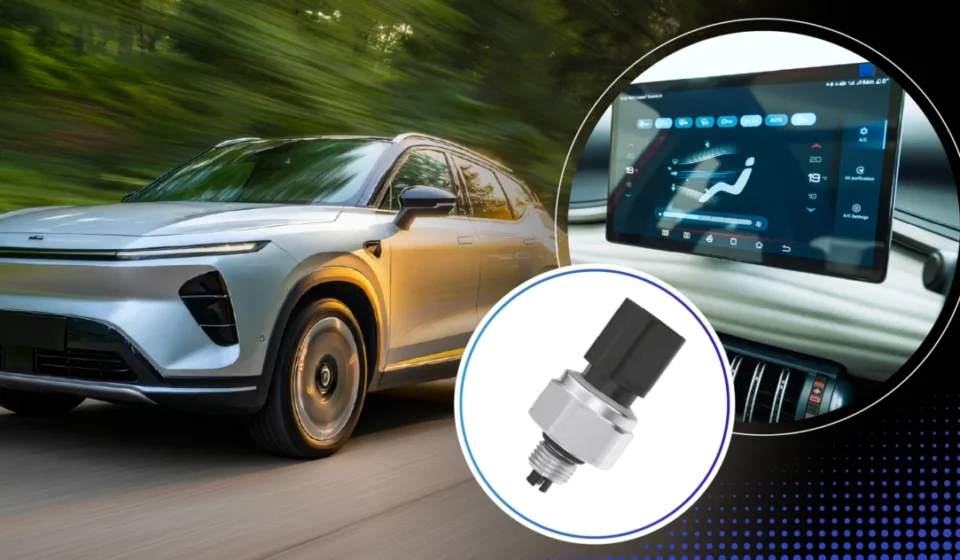
Driving Efficiency: Sensata’s R290 P+T Sensor Revolutionizes Electric Vehicle Thermal Management

Executive Summary: A Milestone in Sustainable EV Engineering
In the rapidly evolving landscape of electric vehicle (EV) engineering, thermal management has emerged as the linchpin for both performance and range optimization. Sensata Technologies, a global leader in industrial and automotive sensing solutions, has officially unveiled its R290 Pressure + Temperature (P+T) Sensor. Designed specifically for next-generation thermal management systems utilizing R290 (propane) refrigerant, this integrated device marks a significant departure from traditional, bulky sensing arrays.
By consolidating two critical measurements—pressure and temperature—into a single, compact unit, Sensata is addressing the automotive industry’s dual mandate: reducing physical footprint while transitioning to environmentally sustainable, low-Global Warming Potential (GWP) refrigerants. This innovation arrives at a critical juncture as manufacturers of Battery Electric Vehicles (BEVs) and Plug-in Hybrid Electric Vehicles (PHEVs) scramble to meet increasingly stringent global emissions regulations and the industry-wide phase-out of traditional hydrofluorocarbons (HFCs).
The Technical Evolution: From Conventional Systems to R290
The Shift Toward Propane Refrigerants
For decades, the automotive industry relied on synthetic refrigerants like R-134a and R-1234yf. However, as the focus shifts toward "Green Engineering," the industry is pivoting toward natural refrigerants. R290, or high-purity propane, has gained significant traction due to its thermodynamic efficiency and an exceptionally low GWP of less than 3.
Unlike synthetic alternatives, R290 is inherently flammable, requiring a rigorous approach to system safety. This is where Sensata’s new sensor becomes a transformative component. The R290 P+T sensor is not merely an instrument of measurement; it is a critical safety and efficiency node within the thermal loop.
Integrated Sensing: The Power of Consolidation
The core value proposition of the Sensata R290 P+T sensor lies in its integration. In legacy thermal management systems, engineers were required to install separate transducers for pressure and thermistors for temperature. This "two-component" approach introduced unnecessary failure points:
- Increased Leak Paths: Every physical connection (port) in a high-pressure refrigeration system represents a potential site for leaks. By combining two functions into one port, Sensata effectively halves the leakage risk.
- Reduced Complexity: A single sensor simplifies the wiring harness and the electronic control unit (ECU) interface.
- Precision Timing: By measuring pressure and temperature at the exact same physical point, the sensor provides real-time, synchronized data, allowing the EV’s thermal management controller to make more accurate decisions regarding compressor speed and refrigerant flow.
Chronology of Development: A Strategic Response to Market Needs
The development of the R290 P+T sensor did not happen in a vacuum. It is the result of a multi-year trend in the automotive sector:
- Phase I (2020–2022): The Search for PFAS-Free Alternatives. As regulatory bodies in Europe and North America began signaling the end of life for various "forever chemicals" (PFAS) used in traditional sealings and refrigerants, Sensata began R&D efforts into components compatible with natural refrigerants.
- Phase II (2023–2024): Automotive-Grade Robustness Testing. R290 operates under specific pressures and temperatures that differ from legacy fluids. Sensata conducted extensive material compatibility tests to ensure the sensor’s O-rings, housing materials, and internal electronics could withstand the chemical and physical demands of a high-pressure propane environment.
- Phase III (2025): Leakage-Optimized Engineering. Recognizing the flammability profile of R290, Sensata’s engineering team prioritized the "leakage-optimized" construction. This involved specialized welding and hermetic sealing techniques that go beyond standard automotive IP67 or IP69K ratings.
- Phase IV (2026): Launch and Industrial Adoption. The official product launch marks the transition from prototype to mass-market availability, enabling automotive OEMs to integrate the technology into 2027 and 2028 model-year vehicle platforms.
Supporting Data and Technical Specifications
To understand the significance of this component, one must look at the technical specifications that differentiate it from generic industrial sensors.

Leakage Integrity
In a thermal management loop, refrigerant loss is the primary cause of system inefficiency. The Sensata R290 P+T sensor is engineered with a focus on structural longevity. Its metal-to-seal interface is designed to maintain seal integrity across a wide thermal range, specifically tailored for the thermal cycling inherent in EV battery conditioning.
Compatibility with PFAS-Free Standards
The push to remove PFAS (per- and polyfluoroalkyl substances) is transforming the automotive supply chain. The materials used in this sensor are curated to comply with the latest environmental mandates, ensuring that the sensor does not become a point of environmental contamination.
Data Throughput and Interface
The sensor is designed to integrate seamlessly with standard automotive communication protocols, such as CAN (Controller Area Network) or LIN (Local Interconnect Network), depending on the OEM’s architecture. This ensures that the high-fidelity data captured—temperature accuracy within ±X°C and pressure resolution at Y-bit—can be processed by the vehicle’s central thermal brain without latency.
Official Perspectives: The Engineering Philosophy
In conversations regarding this launch, industry experts at Sensata emphasize the philosophy of "Integrated Intelligent Sensing."
"The goal is not just to measure, but to enable," says an internal source familiar with the development. "By simplifying the physical architecture, we provide the OEM with a lighter, more reliable, and more environmentally compliant vehicle. When you remove a connection point, you aren’t just saving weight; you are removing a future warranty claim for a refrigerant leak. That is the true value of the R290 P+T solution."
The focus remains on the vehicle lifecycle. An EV that maintains its thermal efficiency for 15 years is vastly more sustainable than one that requires multiple refrigerant top-offs or sensor replacements due to seal degradation.
Implications for the Future of Electric Mobility
The introduction of this sensor has broad-reaching implications for the automotive ecosystem.

1. The "Green" Thermal Loop
As automakers race to declare "Net Zero" factories and products, the transition to R290 is inevitable. However, the safety requirements for using propane in a passenger vehicle are immense. Sensata’s sensor provides the reliable data streams necessary for advanced leak-detection algorithms, essentially acting as a gatekeeper for the safety of the entire cabin heating and battery cooling system.
2. Streamlining the Supply Chain
For tier-one suppliers and OEMs, the consolidation of two sensors into one streamlines the Bill of Materials (BOM). In mass-market vehicle production, reducing the SKU count—even by one—can result in significant logistical savings, simplified inventory management, and reduced assembly time on the production line.
3. Enabling Longer Range through Efficiency
Thermal management is one of the largest parasitic loads on an EV battery. If a system is running inefficiently due to sensor drift or improper data, the vehicle’s range suffers. By providing more precise, real-time feedback, the Sensata sensor allows the thermal system to operate in its "sweet spot" for longer periods. This marginal gain in efficiency translates to real-world range increases, a metric that remains the primary competitive battleground for EV manufacturers.
4. Setting the Standard for Future Refrigerants
While R290 is the current focus, the architectural lessons learned from this P+T sensor development will likely inform the next generation of sensors for CO2 (R744) systems and other emerging refrigerants. Sensata has effectively built a platform that can be adapted, rather than a single-use tool.
Conclusion: A Small Component with Large Impacts
The Sensata R290 P+T Sensor is a quintessential example of how specialized engineering solves macro-level problems. While a sensor may seem like a modest component in the massive architecture of a modern electric vehicle, it is the fundamental building block upon which efficiency, safety, and sustainability rest.
As the automotive industry continues to move away from the synthetic chemicals of the 20th century toward the clean-energy, natural-refrigerant solutions of the 21st, components that facilitate this transition will become the most valuable assets in the supply chain. Sensata Technologies has positioned itself not just as a hardware manufacturer, but as a critical enabler of the electric vehicle revolution. With its leakage-optimized, dual-sensing capability, the R290 P+T sensor is set to become a standard-bearer for the next wave of high-efficiency, environmentally conscious electric mobility.