



Next-Generation Motion Control and Industrial Automation: Innovations Reshaping Modern Manufacturing

By Austin Weber
Senior Editor, ASSEMBLY Magazine
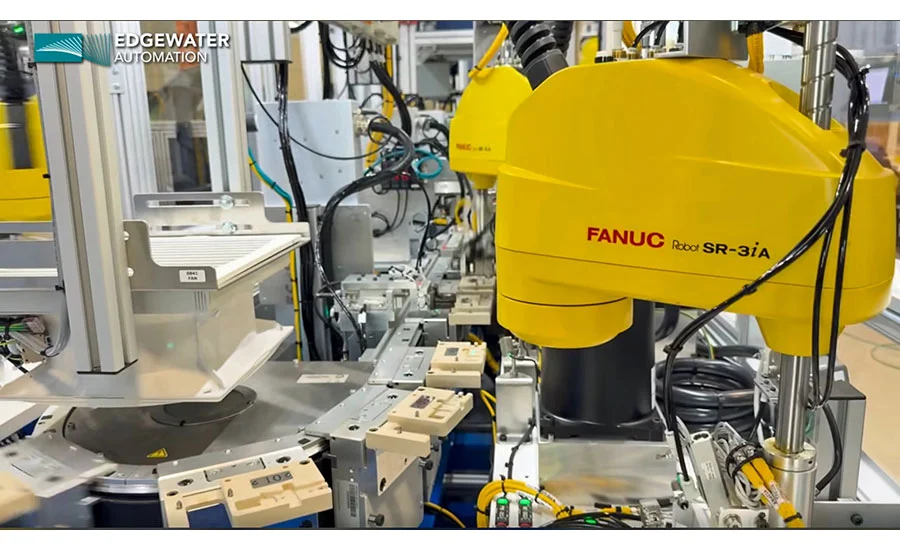
Modern manufacturing relies heavily on the seamless intersection of digital software and physical hardware. At the core of this industrial evolution is advanced motion control technology. By translating digital commands into precise, repeatable movements across actuators, motors, conveyors, and complex robotics, motion control empowers manufacturers to elevate the accuracy, flexibility, and reliability of their assembly lines.
As global demand for higher throughput, tighter tolerances, and more sustainable production methods accelerates, component manufacturers are responding with pioneering solutions. From virtual prototyping tools that reduce physical waste to ultra-low-profile rotary stages, rugged safety switches, and AI-driven predictive maintenance sensors, the latest innovations are transforming how factories are designed, operated, and maintained.
Main Facts: The Cutting Edge of Industrial Motion and Safety
The landscape of industrial automation is being reshaped by several key hardware and software introductions from industry leaders. These advancements target critical pain points in modern production environments, ranging from design-stage efficiencies to real-time operational safety and equipment longevity.

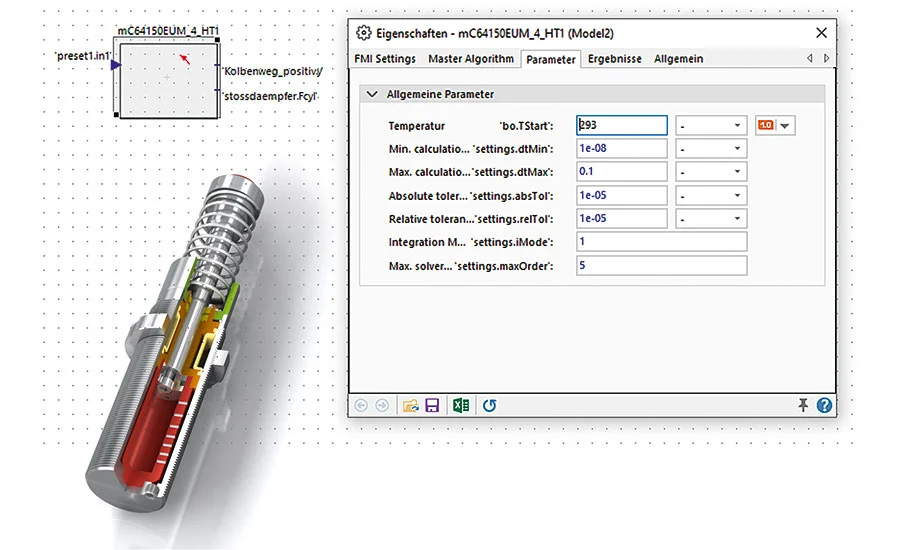
- Virtual Prototyping for Shock Absorbers (ACE Controls Inc.): By utilizing digital twins and Functional Mockup Units (FMUs), engineers can integrate the exact physical behavior of hydraulic, thermal, and mechanical industrial shock absorbers into virtual simulation models. This enables precise calculations of input temperatures on damping performance prior to physical assembly.
- Ultra-Low Profile Rotary Stage (Allient Inc.): The ThruSight-Theta continuous rotation rotary stage combines axial flux technology and an ironless motor architecture to achieve zero cogging torque. It features a large 110-millimeter through-hole aperture and an overall height of just 25 millimeters, optimized for high-precision automation, photonics, and semiconductor applications.
- Configurable Safety Switches (IDEM Safety Switches Ltd.): The DS range of safety switches provides preconfigured and configurable push-button control units built into a narrow 40-millimeter profile. Designed for direct mounting to guard frames, these heavy-duty, die-cast units standardize control station design while fulfilling specific safety safeguarding requirements.
- Edge AI Predictive Maintenance Sensor (TDK Corp.): The edge RX Pro sensor module merges vibration, acoustic, magnetic, temperature, and rotational motion sensing. Powered by an integrated six-axis IMU and edge AI processing within an IP67-rated enclosure, it delivers deep diagnostic insights for applications such as compressed air leak detection and bearing anomaly analysis.
Chronology: How the Industry Reached Current Automation Standards
To understand the weight of these modern developments, it is essential to examine the historical trajectory of motion control and factory automation. The journey from rudimentary mechanization to today’s interconnected, AI-driven ecosystems highlights a rapid acceleration in technological capability.
Mid-to-Late 20th Century: The Mechanical and Electrical Foundation
- The Era of Hard Automation: Early assembly lines relied primarily on fixed mechanical linkages, cams, and pneumatic cylinders to move parts. Changes in product design required extensive, time-consuming mechanical overhauls.
- Introduction of CNC and PLCs: The advent of computer numerical control (CNC) and programmable logic controllers (PLCs) in the 1960s and 1970s introduced programmable flexibility to machine tools and automation cells, allowing operators to alter routines via digital logic rather than physical rewiring.
The Turn of the Millennium: Servos, Networks, and Digital Integration
- Rise of AC Servo Systems: The 1990s and early 2000s saw the widespread adoption of digital AC brushless servo motors and drives, providing closed-loop control over speed, torque, and position with unprecedented precision.
- Industrial Ethernet: Fieldbus systems matured into high-speed Industrial Ethernet protocols, enabling real-time deterministic communication across complex networks of robots, PLCs, and human-machine interfaces (HMIs).
The Present Era: Digital Twins, Edge AI, and Smart Components
- Virtual Commissioning: Engineers began shifting away from trial-and-error physical testing, adopting digital twin environments to test automation logic, kinematics, and collision detection before cutting metal.
- Smart Sensors and Decentralized Intelligence: Today, components are no longer passive actors. Devices embedded with microprocessors, AI capabilities, and IoT connectivity—such as TDK’s edge RX Pro and ACE Controls’ FMU models—actively participate in optimizing machine design and predicting maintenance needs before failures occur.
Supporting Data: Specifications and Technical Impact
Advanced automation technologies can only be evaluated through hard performance metrics. The technical profiles of these recent innovations underscore their value in high-performance manufacturing environments.
| Manufacturer / Product | Core Technology | Key Technical Specifications | Primary Industrial Application |
|---|---|---|---|
| ACE Controls Inc. Virtual Prototyping |
Functional Mockup Units (FMUs) & Digital Twins | Integrates thermal, hydraulic, and mechanical physics into simulation suites. | Design and specification of industrial dampers and shock absorbers. |
| Allient Inc. ThruSight-Theta |
Axial flux, ironless motor architecture | 110 mm through-hole aperture, 25 mm overall height, zero cogging torque. | High-precision move-and-settle applications in photonics and semiconductors. |
| IDEM Safety Switches Ltd. DS Range |
Heavy-duty die-cast construction | Narrow 40 mm profile for direct guard-frame mounting; pre/configurable push-buttons. | Operator control and safeguarding in demanding industrial environments. |
| TDK Corp. edge RX Pro |
Six-axis IMU, Edge AI processing | IP67 enclosure; monitors vibration, acoustic, magnetic, temperature, and rotation. | Predictive maintenance, compressed air/gas leak detection, and bearing analysis. |
Official Responses and Industry Insights
Manufacturers and system integrators are increasingly demanding hardware that offers both high performance and design flexibility. Industry leaders emphasize that the convergence of simulation software and smart hardware is no longer a luxury, but a baseline requirement for competitive manufacturing.
Engineering experts note that virtual prototyping—exemplified by ACE Controls’ integration of shock absorber FMUs—fundamentally changes the product development lifecycle. By predicting how input temperatures affect damping behavior prior to physical construction, engineers eliminate costly iteration loops. This capability drastically cuts time-to-market while aligning with corporate sustainability initiatives by minimizing physical material waste and prototype machining.

On the factory floor, hardware compactness and multi-functionality reign supreme. Representatives from Allient highlight that modern automation cells, particularly in semiconductor and life sciences sectors, are bound by strict spatial constraints. The ability to pack zero-cogging-torque performance into an ultra-low 25-millimeter profile with a large through-hole aperture grants machine builders the mechanical freedom previously thought impossible.
Similarly, safety integration has evolved from an afterthought into a modular design discipline. IDEM Safety Switches points out that machine builders and system integrators require standardized control stations that do not sacrifice durability. The deployment of narrow-profile, heavy-duty die-cast switch units allows safety features to blend seamlessly into tight guard frames without compromising operator ergonomics or safety compliance.
Finally, the shift toward decentralized intelligence is validated by TDK’s sensor module developments. By processing multi-axis vibration, acoustic, and environmental data directly at the edge via AI algorithms, facilities can transition away from reactive repairs. Instead, they can embrace true predictive maintenance, capturing micro-anomalies in bearings, alignments, and fluid systems before they manifest into catastrophic line stoppages.
Implications for the Future of Manufacturing
The integration of these advanced motion control technologies, simulation models, and smart sensing systems carries profound implications for the global manufacturing sector.

1. Accelerated Engineering Cycles and Sustainability
The widespread adoption of digital twins and physics-based simulation models will continue to compress product development timelines. As engineers increasingly rely on virtual validation tools, the physical prototyping phase will shrink, translating directly into reduced raw material consumption, lower energy expenditures during development, and a smaller carbon footprint for machinery builders.
2. Maximized OEE (Overall Equipment Effectiveness)
The combination of zero-cogging-torque precision staging, reliable safety architecture, and edge-AI-driven predictive maintenance directly targets the reduction of unplanned downtime. When components can autonomously report micro-vibrations or acoustic shifts indicative of wear—long before an operator notices a drop in quality—manufacturing plants can execute targeted maintenance during scheduled shifts, driving OEE to unprecedented heights.
3. Democratization of Complex Automation
As components become more intelligent, compact, and modular (such as preconfigured safety switches and plug-and-play simulation units), the barrier to entry for deploying complex automation systems lowers. System integrators and small-to-medium-sized manufacturers can deploy high-end robotics, precision rotary stages, and sophisticated motion profiles with greater ease, ensuring that the benefits of Industry 4.0 are distributed evenly across the entire industrial supply chain.
Looking for quick answers on assembly and manufacturing topics? Try Ask ASM, our new smart AI search tool, available on Assembly Magazine.