




Precision Engineering Meets Cost Efficiency: How Ruland’s Modified Oldham Coupling Revolutionized Dialysis Equipment

In the highly regulated and capital-intensive world of medical device manufacturing, the pursuit of performance excellence is often balanced against the relentless need for cost optimization. Recently, a leading dialysis equipment manufacturer successfully navigated this challenge by rethinking a critical component within their pump-and-valve assembly. By collaborating with Ruland Manufacturing to implement a modified standard Oldham coupling, the OEM achieved a remarkable cost reduction of approximately $300 per unit without compromising the rigorous standards required for life-sustaining medical treatment.
This case study highlights a growing trend in the medical device industry: the transition from over-engineered custom parts to high-performance, standardized components that utilize specialized modifications to meet unique application needs.
The Challenge: Balancing Precision with Profitability
Dialysis equipment serves as a critical lifeline for patients suffering from kidney failure, whether in hospital settings or through home-based treatment programs. Within these complex machines, the pump-and-valve system is responsible for the precise, controlled movement of fluids—a process that demands absolute reliability.
For years, the manufacturer had relied on a custom-machined bronze coupling with a metallic center element. While this component performed adequately, it was a holdover from early design iterations. Because the original design featured custom, non-standard specifications, it was expensive to produce. As the company moved to develop a new generation of equipment, engineering teams were tasked with identifying areas where design efficiency could be improved without sacrificing the system’s operational integrity.
The primary technical constraints for the coupling were non-negotiable:
- Zero-Backlash Operation: To ensure the precision of fluid flow, the coupling had to maintain exact valve positioning without any "play" or dead zone in the mechanical linkage.
- Anti-Slip Integrity: Given the sensitive nature of dialysis treatment, the connection needed to be mechanically secure. The original design utilized "D-shaped" shafts on both sides to provide this mechanical resistance to slippage.
- Operational Requirements: The application functioned under relatively low-speed and low-torque conditions, yet required high reliability over thousands of hours of operation.
Chronology of the Engineering Pivot
The journey toward this cost-saving innovation followed a structured engineering lifecycle, moving from legacy reliance to modern optimization.
Phase 1: Design Review and Gap Analysis
During the R&D phase for the next-generation dialysis system, the OEM’s engineering team performed a comprehensive value-stream mapping of their pump-and-valve assembly. They discovered that the custom bronze coupling was significantly over-specified for the actual torque and speed requirements of the system. The machine shop producing these parts was essentially performing "custom-grade" work for a component that could potentially be satisfied by a mass-produced, high-precision industrial alternative.
Phase 2: Evaluating Alternatives
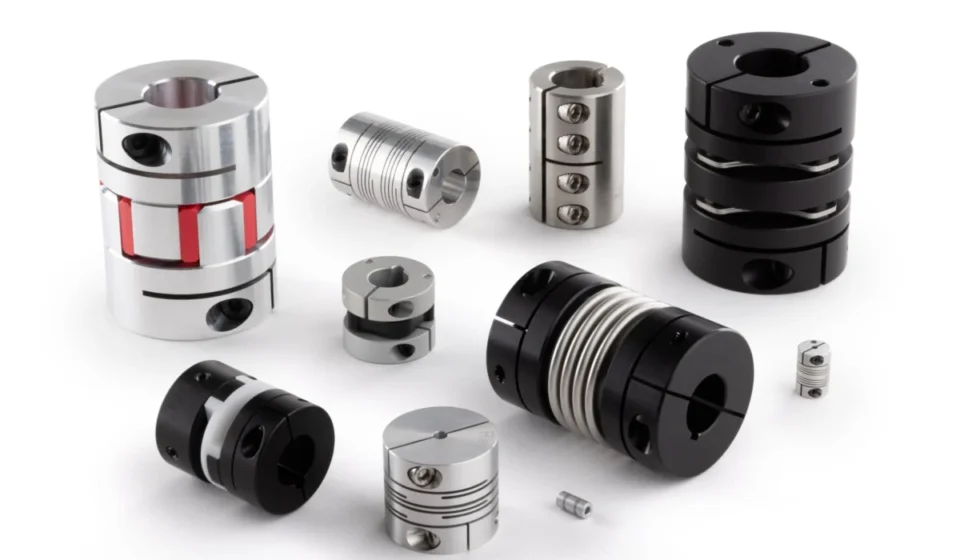
The OEM brought in an external engineering design firm to analyze the viability of replacing the custom bronze part with a commercial off-the-shelf (COTS) component. The evaluation team scrutinized three primary coupling styles:

- Bellows Couplings: Typically used for high-precision motion control where torsional stiffness is the primary requirement.
- Jaw Couplings: Known for their vibration-damping capabilities, often used in motor-to-pump applications.
- Oldham Couplings: A three-piece design consisting of two hubs and a center disk. They are highly effective at accommodating parallel misalignment and provide excellent zero-backlash performance in low-speed, low-torque applications.
After rigorous testing, the team determined that the Oldham coupling was the superior choice. Its inherent design perfectly matched the low-speed, low-torque parameters of the pump-and-valve system.
Phase 3: The "Modified Standard" Approach
The hurdle remained the unique D-shaped shaft geometry of the existing equipment. Rather than forcing a redesign of the entire pump system to fit a standard circular-bore coupling, the team opted for a "modified standard" solution. Ruland Manufacturing was selected to take a standard, proven Oldham coupling design and apply custom D-bore machining to the hubs. This allowed the manufacturer to drop the new component directly into existing assemblies without requiring any modifications to the rest of the machine’s architecture.
Supporting Data: Performance vs. Economics
The shift in manufacturing philosophy resulted in a clear, quantifiable impact on the bottom line. By moving away from custom-machined, boutique components to a mass-produced product with a specific modification, the OEM realized a cost savings of $300 per unit.
Financial Implications
When scaled across annual production volumes ranging from hundreds to thousands of units, the cumulative savings reach into the hundreds of thousands of dollars per year. This capital, previously locked into the BOM (Bill of Materials) of a single component, has been redirected toward further R&D and digital integration of the dialysis platforms.
Performance Metrics
The transition did not result in a degradation of performance. In fact, by utilizing Ruland’s manufacturing processes, the OEM gained consistency.
- Torsional Rigidity: The Oldham coupling design successfully eliminated the backlash found in some loose-tolerance assemblies.
- Reliability: By utilizing standardized components, the OEM benefited from Ruland’s quality assurance protocols, which are optimized for high-volume, repeatable manufacturing.
- Mechanical Integrity: The custom D-bore modification ensured that the mechanical resistance to slippage remained as effective as the original bronze design, ensuring that fluid flow remains constant and predictable.
Official Perspectives: The Value of Customization
In the medical manufacturing sector, the "not invented here" syndrome is slowly being replaced by a pragmatic focus on modular design. Experts from Ruland emphasize that the key to this success was the collaborative effort between the OEM’s engineers and the coupling manufacturer’s application specialists.
"The application illustrates how selecting a standard coupling with application-specific modifications can meet performance requirements while reducing component costs," says a company spokesperson. "Customization doesn’t always mean starting from scratch. It often means taking a high-quality, standard platform and adapting it just enough to fit the specific needs of the machine."
For the OEM, the decision was validated during the field-testing of the new-generation machines. The coupling performed seamlessly across both hospital-grade systems and home-use dialysis devices, proving that the solution was not only cost-effective but robust enough to handle the varying environments of dialysis care.

Broader Implications for Medical Device Manufacturing
The Ruland case study serves as a bellwether for the medical device industry at large. As healthcare providers demand lower costs for medical equipment to combat rising insurance and operational expenses, OEMs are under immense pressure to squeeze inefficiencies out of their supply chains.
1. The Death of Over-Engineering
For decades, medical devices were characterized by bespoke, over-engineered parts because of the fear that standardized parts would fail in critical applications. This case study proves that when performance data is analyzed correctly, standard components—when correctly selected and slightly modified—can meet and often exceed the requirements of custom-machined parts.
2. Streamlined Design Cycles
By using a standard coupling, the OEM significantly reduced the time-to-market for the new generation of equipment. They did not have to spend months validating a new custom part; they were able to use a proven design with a minor, well-understood modification.
3. Sustainability through Simplicity
Beyond cost, there is an environmental argument for using standard components. Standard parts often have more efficient manufacturing processes, lower scrap rates, and more readily available replacement parts, which simplifies the supply chain and reduces the carbon footprint of the production cycle.
Conclusion
The successful implementation of a modified Oldham coupling in dialysis equipment is a textbook example of modern engineering excellence. By stripping away unnecessary complexity and focusing on the core functional requirements—zero-backlash, anti-slip, and fluid control—the manufacturer achieved a rare "win-win" scenario. They delivered a superior product to patients while significantly lowering the cost of production.
As the medical device industry continues to evolve, the partnership between OEMs and component manufacturers will become increasingly critical. The ability to identify where standard technology can replace custom fabrication will define the competitive edge for manufacturers in the years to come. For those in the motion control and medical device sectors, the lesson is clear: sometimes the most advanced solution is the one that simplifies, rather than complicates, the design.