




Next-Gen Firefighter Safety: MSA Safety Unveils the G1 City Edition SCBA Featuring Advanced LUNAR Beacon Technology

By Danielle Naidu
Assistant Editor, Occupational Health & Safety
Introduction: A New Paradigm in Fireground Safety and Accountability
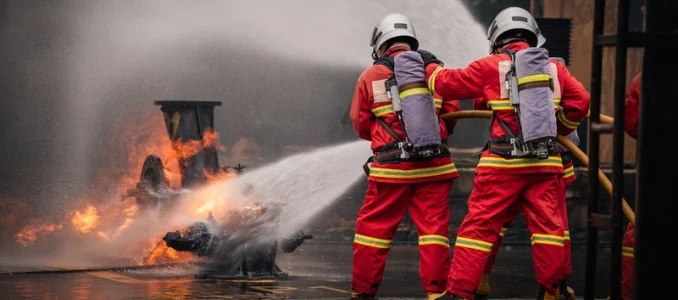
In the high-stakes, unpredictable environment of structural firefighting, every second counts. When smoke obscures vision, structural integrity fails, and communication breaks down, locating a downed or disoriented firefighter is one of the most critical challenges incident commanders face. Recognizing this persistent danger, safety equipment manufacturer MSA Safety has introduced its latest innovation: the G1 City Edition self-contained breathing apparatus (SCBA).
Designed to meet the rigorous demands of modern urban firefighting while shaving off valuable ounces of weight, the G1 City Edition integrates cutting-edge beacon technology directly into its core systems. By combining advanced tracking capabilities, real-time telemetry, and ergonomic enhancements, this new SCBA represents a significant leap forward in firefighter safety, accountability, and operational efficiency.
Main Facts: What is the G1 City Edition SCBA?
At its core, the MSA Safety G1 City Edition is a reimagined breathing apparatus tailored for the unique challenges faced by structural and proximity firefighting crews. Meeting the stringent benchmarks of the newly consolidated 2025 NFPA 1970 standard, the apparatus introduces several critical technological and structural updates designed to keep personnel safer in hazardous environments.
1. Integrated LUNAR Beacon Technology
The standout feature of the G1 City Edition is the seamless integration of MSA’s proprietary LUNAR Beacon Technology directly into the SCBA’s power module. When a firefighter activates their alarm—whether manually or automatically via a pass-device function—crew members equipped with a compatible handheld LUNAR Connected Device can pinpoint the downed firefighter’s exact location.
The handheld unit provides intuitive directional information, effectively transforming rescue operations from blind searches into targeted extractions. This capability drastically reduces Search and Rescue (SAR) times, which is often the decisive factor between life and death in a toxic, oxygen-depleted atmosphere.
2. Real-Time Telemetry and Data Connectivity
Beyond peer-to-peer tracking, the G1 City Edition operates within a connected ecosystem. When paired with a handheld device, the SCBA continuously relays vital telemetry data, including:
- Real-time air-pressure levels and estimated breathing time remaining.
- Immediate transmission of the wearer’s alarm status.
- Precise positional data broadcasted to command.
Where data or radio connectivity is available, this telemetry feeds directly into MSA’s FireGrid Monitor application. This allows incident commanders and safety officers at the command post to monitor the status of an entire crew simultaneously, ensuring proactive intervention before a firefighter exhausts their air supply.

3. Ergonomic Weight Reduction and Design Overhauls
Physical fatigue is a primary contributor to firefighter injuries and exhaustion on the fireground. In its standard configuration, the G1 City Edition weighs up to half a pound less than its predecessor, the classic G1 model.
While half a pound may seem modest, cumulative weight savings on structural gear significantly reduce metabolic strain over grueling multi-hour shifts. This weight reduction is achieved through a redesigned cylinder-retention system paired with a low-profile, swiveling lumbar pad. These updates optimize load distribution, enhance user balance, and improve overall physical comfort during high-exertion tasks.
4. Tactile and Usability Improvements
Navigating low-visibility environments wearing heavy, thick thermal gloves makes manipulating fine machinery nearly impossible. To address this, MSA has introduced several tactile enhancements to the G1 City Edition:
- Thicker Controls: Both the regulator and cylinder-valve controls have been enlarged and thickened to allow effortless operation with bulky firefighting gloves.
- Streamlined Straps and Pads: The shoulder pads have been thinned to prevent interference with turnout gear and radio straps, while the adjustment straps have been lengthened to accommodate a broader range of body types and gear configurations.
- Clear Visual Interface: The control-module display has been optimized to provide instant, high-visibility readouts of cylinder pressure and estimated time remaining, even in dense smoke or total darkness.
Chronology: The Evolution Leading to the 2025 NFPA 1970 Standard
The development of the G1 City Edition does not happen in a vacuum; it is the culmination of years of technological evolution, regulatory updates, and field feedback within the fire service industry.

The Shift Toward Connected Firegrounds
For decades, accountability on the fireground relied heavily on manual board tracking, voice radio check-ins, and tethered lines. As interior firefighting tactics evolved to handle modern synthetic building materials—which burn faster and produce more toxic smoke—the limitations of analog tracking became glaringly apparent.
In the late 2010s, manufacturers began introducing telemetry systems that transmitted SCBA air levels to command. However, these systems often operated in silos, requiring bulky auxiliary packs or separate battery systems that added unnecessary weight to the firefighter’s load.
The Integration of LUNAR Technology
The introduction of MSA’s LUNAR device marked a turning point by introducing personal thermal imaging and direct peer-to-peer ranging and tracking. Initially deployed as a standalone handheld device, engineers quickly realized that embedding this tracking capability directly into the SCBA’s power module would streamline gear donning, reduce snag hazards, and ensure that tracking technology is always present whenever a firefighter puts on their air pack.
The 2025 NFPA 1970 Standard
Regulatory standards play a massive role in shaping equipment development. The National Fire Protection Association (NFPA) consolidated several previously separate standards into the comprehensive NFPA 1970 standard, which covers structural and proximity firefighting equipment, personal alert safety systems (PASS), and SCBA performance benchmarks.

Meeting the 2025 edition of NFPA 1970 requires passing rigorous tests regarding thermal endurance, structural integrity, drop resistance, and digital reliability. The G1 City Edition was engineered from the ground up to clear these elevated safety benchmarks, ensuring departments investing in the platform are fully compliant with the latest national safety directives.
Supporting Data: Understanding Fireground Risks and Ergonomics
To fully appreciate the impact of the G1 City Edition, it is essential to examine the data surrounding firefighter fatalities, injuries, and physical ergonomics.
The Cost of Physical Fatigue
According to data from the National Fire Protection Association (NFPA), overexertion, stress, and medical issues consistently account for the majority of on-duty firefighter fatalities. Physical exhaustion impairs cognitive function, increases susceptibility to thermal burns, and slows down reaction times.
- Weight Management: Reducing the load on a firefighter’s back by half a pound directly lowers the physiological cost of carrying equipment. Studies in occupational ergonomics show that reducing spinal load decreases compressive forces on the lumbar spine, lowering the incidence of chronic back injuries—one of the leading causes of early retirement among career firefighters.
- Thermal and Physical Stress: Firefighters frequently operate in environments exceeding 200°F (93°C) at chest height. Minimizing bulk and improving the mobility of the lumbar pad allows for a more natural gait and posture, conserving vital cardiovascular energy.
The Reality of Rapid Intervention
When a firefighter becomes lost, disoriented, or trapped, the window for a successful rescue is notoriously narrow.

- The "Air Management" Clock: A standard 45-minute carbon-composite cylinder rarely yields 45 minutes of actual working time under heavy exertion. Elevated heart rates can deplete an air supply in under 15 minutes.
- Search Efficiency: Traditional search and rescue protocols rely on grid searches or acoustic calls for help, which can fail if ambient noise on the fireground is high (e.g., roof ventilation saws, collapsing structures, roaring fire dynamics). By integrating direct radio-frequency directional guidance via the LUNAR Beacon, the G1 City Edition cuts down the time required to locate a downed firefighter’s exact coordinate vector, drastically improving survival probabilities during Rapid Intervention Crew (RIC) deployments.
Official Responses and Industry Perspectives
The introduction of the G1 City Edition has generated significant discussion among safety experts, apparatus designers, and municipal fire departments looking to upgrade their fleet safety equipment.
Manufacturer Perspective: Prioritizing Crew-Centric Design
In public statements regarding the release, MSA Safety underscored its commitment to listening to end-users on the front lines. Company engineers noted that urban and municipal departments face unique spatial and tactical challenges—ranging from tight apartment corridors to complex industrial complexes.
"The goal with the G1 City Edition was not merely to meet regulatory minimums, but to solve real-world friction points experienced by interior crews," noted product development representatives. By integrating beacon technology directly into the power module, MSA aimed to eliminate the "forgotten piece of gear" phenomenon. If a firefighter wears their SCBA, they are automatically carrying a rescue beacon.
Fire Service and Safety Analyst Reactions
Safety analysts and municipal safety officers have praised the focus on weight reduction and glove-friendly modifications. For years, firefighters have complained that modern safety regulations often resulted in heavier, bulkier equipment that impeded mobility.

- Ergonomic Validation: Initial field previews from veteran training officers highlight the noticeable difference in weight distribution provided by the swiveling lumbar pad. Unlike rigid backplates that can dig into the lower back during crawling or climbing maneuvers, the swiveling pad moves dynamically with the firefighter’s torso.
- Accountability Upgrades: Chief officers have emphasized the value of the FireGrid Monitor integration. In large-scale commercial fires or multi-story structures where incident commanders are stationed hundreds of feet away from the seat of the fire, having continuous, automated visibility into air levels and crew location provides an unprecedented layer of strategic oversight.
Implications: Transforming Municipal Fire Operations
The rollout of the G1 City Edition SCBA carries broad implications for municipal budgeting, training protocols, and departmental safety culture.
1. Financial and Procurement Considerations
Investing in next-generation safety gear requires substantial capital expenditure. Municipalities operating on tight municipal budgets must weigh the upfront costs of upgrading SCBA fleets against the long-term savings associated with reduced injuries, enhanced equipment longevity, and compliance with the 2025 NFPA 1970 standard. However, as standards tighten, departments utilizing aging legacy equipment will face mandatory replacement cycles, making compliant units like the G1 City Edition a natural focal point for grant applications (such as FEMA’s Assistance to Firefighters Grant program).
2. Evolution of Training and Standard Operating Procedures (SOPs)
Introducing connected tracking technology necessitates a shift in how fire departments train their Rapid Intervention Crews (RIC).
- Digital Literacy on the Fireground: Firefighters must become as proficient with handheld digital tracking devices as they are with forcible entry tools and hoselines.
- Command Integration: Incident commanders and company officers must integrate telemetry monitoring into their standard size-up and tactical deployment models. Monitoring air supplies digitally should complement, rather than replace, traditional voice radio traffic.
3. Raising the Safety Baseline Across the Industry
When industry leaders introduce advanced safety features like integrated beacon technology into standard-tier production lines, it raises the bar for the entire protective equipment market. Competitors will be pressured to innovate similarly, accelerating the adoption of connected safety ecosystems across all levels of the fire service—from major metropolitan departments to volunteer rural companies.

Conclusion
The release of MSA Safety’s G1 City Edition SCBA marks an important milestone in the ongoing quest to make firefighting safer, smarter, and more ergonomic. By addressing the dual challenges of physical exhaustion and emergency location tracking, the apparatus bridges the gap between rugged durability and high-tech connectivity.
As departments transition to meet the 2025 NFPA 1970 standards, innovations that prioritize weight reduction, glove-friendly operation, and integrated rescue beacons—such as the LUNAR technology embedded within the G1 City Edition—will undoubtedly play a pivotal role in ensuring that every firefighter returns home safely at the end of their shift.