



Beyond the Ocean: How Maersk is Reinventing Itself as an End-to-End Supply Chain Giant

For decades, the name "Maersk" has conjured a singular, monumental image: colossal container ships cutting through deep blue oceans, stacked high with multi-colored metal boxes, anchoring global trade. Mention the Danish enterprise to anyone in international commerce, and they immediately picture maritime dominance.
Yet, behind the scenes, a profound operational transformation is underway. The logistics titan has spent the last several years aggressively dismantling the traditional boundaries of ocean shipping, steering its massive corporate ship toward a new horizon: comprehensive, end-to-end landside logistics, domestic distribution, and omnichannel fulfillment.
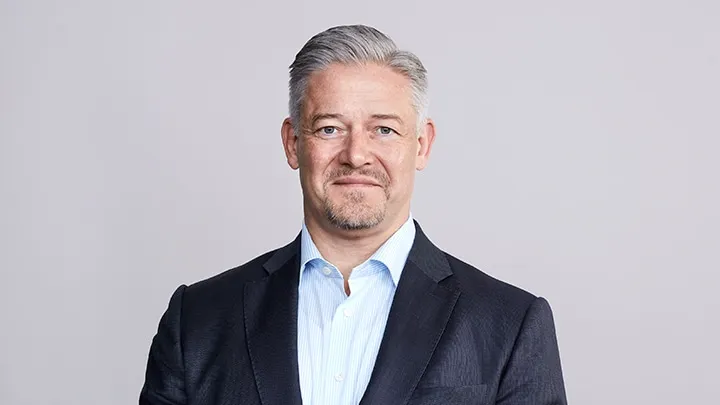
According to Ditlev Blicher, Maersk’s President of North America, this is no longer just a strategic experiment—it is a fully realized market reality.
"When I look at our setup here, we’re now a material player in the domestic space in North America, actually across supply chains," Blicher said in a recent interview with Supply Chain Dive.
By bridging the gap between port-side logistics and final-mile delivery, Maersk is seeking to solve some of the most persistent bottlenecks in modern commerce. Through multi-billion-dollar infrastructure investments, targeted strategic acquisitions, and a radical overhaul of its global vessel scheduling, the company is proving that it can navigate the complexities of dry land just as effectively as the high seas.
Main Facts
The strategic metamorphosis of A.P. Møller-Mærsk A/S represents one of the most ambitious corporate pivots in modern supply chain history. Moving far beyond its foundational role as an ocean carrier, the company has methodically built out a robust North American landside network—encompassing Maersk Ground Freight and specialized Maersk E-commerce services—to exert greater control and visibility over entire supply chains.
At the heart of this transformation is a deliberate effort to eliminate operational waste. For shippers, this means drastically reducing unnecessary transload disruptions, overcoming historically unreliable transportation networks, and cutting out the duplicated infrastructure and redundant software systems that traditionally plague multi-vendor logistics.
Rather than striving to become a monopolistic "one-stop shop," Maersk’s leadership emphasizes that the goal is to offer a modular, highly reliable suite of interoperable capabilities. By integrating warehousing, domestic freight forwarding, ocean transit, and digital hubs, the company is targeting a seamless flow of goods from factory floor to consumer doorstep—a capability highlighted by recent high-profile omnichannel fulfillment centers established for global brands like Levi Strauss & Co.
Chronology of Transformation
Maersk’s journey from a port-to-port ocean carrier to an integrated logistics provider did not happen overnight. It has been carefully orchestrated through a timeline of strategic acquisitions, structural network shifts, and major capital investments:
- 2020 — Laying the Groundwork: Maersk acquired Performance Team, a major U.S.-based warehousing and distribution company. At the time of purchase, Performance Team operated 24 warehousing sites totaling approximately 800,000 square meters. This acquisition immediately doubled Maersk’s North American warehousing footprint, signaling the company’s serious intent to enter the omnichannel and e-commerce fulfillment arena.
- 2021 — The Strategic Pivot: Led by CEO Vincent Clerc, Maersk formally articulated its vision to move its network away from simple port-side flow logistics and into comprehensive omnichannel fulfillment and e-commerce. The core philosophy shifted from merely moving cargo across oceans to managing the entire lifecycle of retail inventory.
- 2022 — Expanding Global Reach: Building on its North American momentum, Maersk completed the acquisition of LF Logistics, a major Asia-based contract logistics provider. This multi-billion-dollar deal supercharged the company’s omnichannel fulfillment expertise, positioning it competitively within fast-growing global e-commerce markets.
- 2023–2024 — Network Realignment & Infrastructure Scaling: Maersk poured more than $3 billion into digitizing and expanding its transload hubs. Concurrently, the company laid the groundwork for the Gemini Cooperation—its upcoming ocean alliance with Hapag-Lloyd—which officially marked a structural departure from the traditional "string" shipping model to a resilient "hub and spoke" architecture.
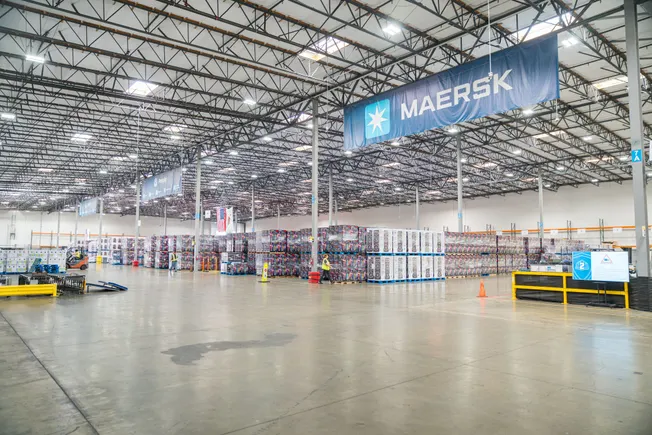
- Late 2024 — Domestic Milestones: Demonstrating the success of its omnichannel strategy, Maersk opened a massive fulfillment center in Groveport, Ohio, designed specifically to service Levi Strauss & Co.’s wholesale, retail, and e-commerce channels simultaneously under one roof.
- July 2025 — Continued Footprint Growth: Maersk announced plans for a new $100 million fulfillment hub in Hopedale, Massachusetts, further expanding its regional logistics network to support a major, undisclosed e-commerce retail partner.
Supporting Data and Operational Metrics
The shift from maritime dominance to landside integration is backed by massive capital expenditures and measurable performance gains.
To understand the scale of the challenge Maersk set out to solve, one must look at the historical friction points of international shipping. According to Ditlev Blicher, the industry had long struggled with what Maersk defines as the "transload problem."
"Every time you had to shift a container from one vessel to another in a hub, it would take at best a week," Blicher noted.
To dismantle this systemic inefficiency, Maersk injected over $3 billion into modernizing and digitizing its core transload hubs. This capital injection dramatically expanded operational capacity and enabled a fundamental architectural change in how the company moves goods across East-West trade lanes.
Instead of adhering to the traditional maritime "string principle"—where cargo vessels make sequential stops across a sprawling string of up to 22 ports—Maersk transitioned its networks to a hub and spoke model. Under this framework, utilized heavily through the Gemini Cooperation with Hapag-Lloyd, vessels make concentrated calls at primary origin and destination hubs, utilizing optimized regional connections to feed outlying ports.
The financial and operational dividends of this transition have been stark. Since rolling out the hub-and-spoke model, Maersk has reported that its schedule reliability has consistently hovered at or above 90%. Furthermore, the company has successfully cut transload times in half, saving shippers critical days in transit and drastically reducing the need for costly buffer inventory.
On the real estate front, the company’s footprint has exploded. What began with Performance Team’s 800,000-square-meter warehouse network has been aggressively expanded through facilities like the sprawling Groveport, Ohio center and the upcoming Hopedale, Massachusetts hub, cementing a scalable physical presence across critical North American trade corridors.
Official Responses and Strategic Vision
Leadership at Maersk is quick to frame these structural changes not as a diversification experiment, but as a direct response to the evolving demands of modern supply chain directors. Shippers today cannot afford the domino effect of port delays or the administrative headache of managing fragmented vendor networks.
"If you are port number three out of a string of 22, you know that if something happens there, you have a choice," Blicher explained, illustrating the fragility of the legacy string model. "If there’s a delay, either you have a domino effect all the way through or you say, ‘I’m going to have to catch up, so I’m going to omit the next port.’"
By eliminating these chaotic portfolio decisions through standardized hub operations, Maersk is offering predictability.
Furthermore, the company’s omnichannel fulfillment strategy is designed to resolve internal silos within retail operations. Traditional supply chains often force wholesalers, physical retail storefronts, and e-commerce channels to operate out of separate distribution centers, utilizing disparate software systems and inventory pools. Maersk’s integrated omnichannel model collapses these silos.
Wholesalers requiring heavy palletized warehouse operations now share logistical real estate and digital architecture with e-commerce brands requiring granular, item-level sorting and pick-and-pack fulfillment.
"We’re in a great space right now," Blicher said, reflecting on the journey. "We’re nowhere near done, but we’re a scalable player in the market, and it’s resonating really, really great with the fantastic clients that we have in North America."
Implications for the Global Supply Chain
The evolution of Maersk carries profound implications for the broader logistics landscape, freight forwarders, and retail shippers alike.
For decades, the global supply chain was characterized by a strict division of labor: ocean carriers moved boxes across the water, port operators handled terminal lifts, drayage truckers moved containers to local yards, and third-party logistics (3PL) providers or warehouse operators managed domestic storage and fulfillment. This fractured ecosystem often left shippers holding the bag when disruptions occurred, forcing them to mediate disputes between ocean lines and landside truckers.
Maersk’s aggressive vertical integration challenges this legacy status quo. By controlling the vessel, the port hub, the domestic freight network, and the omnichannel fulfillment center, Maersk is redefining what a carrier can—and should—do.
This model puts pressure on competing ocean liners and legacy 3PLs to either scale up their own end-to-end capabilities or risk losing market share to fully integrated giants. Shippers, meanwhile, stand to benefit from end-to-end data visibility. When a single provider oversees a container from a factory in Asia through an ocean voyage, a digitized transload hub, a domestic rail or truck line, and finally into a domestic retail fulfillment center, the dreaded "black holes" of supply chain visibility begin to disappear.
However, this consolidation is not without its risks. As massive carriers swallow up regional warehousing and domestic transport providers, market concentration increases. Shippers will need to carefully weigh the operational efficiencies and high reliability of integrated ecosystems against the potential long-term impacts of reduced vendor diversity.
Nevertheless, as global trade continues to face geopolitical volatility, climate-related shipping canal disruptions, and fluctuating consumer demand, the value proposition of resilience and predictability is clear. Maersk’s multi-billion-dollar bet on landside logistics and hub-and-spoke efficiency has permanently altered its corporate identity. The ocean carrier is evolving into a comprehensive supply chain architect—and in doing so, it is reshaping the future of how goods move around the world.