


Preventing White Rust in Galvanized Cooling Towers: The Critical Need for Proper Water Chemistry and Pre-Conditioning

By Brad Buecker, Senior Technical Consultant, SAMCO Technologies
Published: October 6, 2026
Main Facts
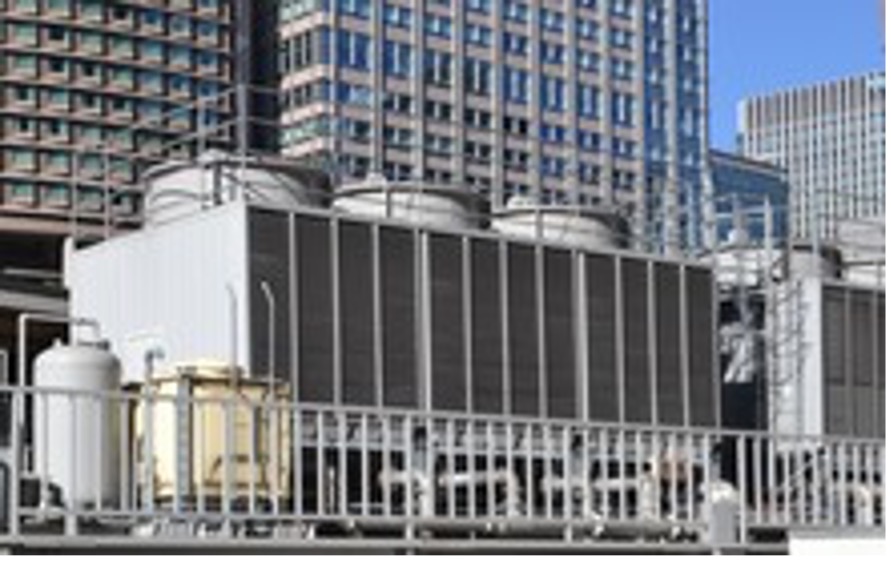
The practice of coating steel with zinc—widely known as galvanizing—has a rich history dating back to its discovery in 1732. Over nearly three centuries, manufacturing and application methodologies have undergone continuous refinement. Today, galvanized steel remains a bedrock material for commercial and industrial infrastructure, serving as a primary construction material for small- and moderately-sized cooling towers found in commercial complexes, light industrial plants, and specific unit operations within heavy industrial facilities.

When fabricated using modern processes, galvanized steel features a tight, uniform zinc coating. When commissioned into service under optimal conditions, the exposed outer surface develops a stable, passivated layer that shields the underlying metal from aggressive corrosion. However, a major industrial vulnerability arises during the initial startup phase. If a newly installed galvanized cooling tower is not conditioned properly, or if it is subjected to unfavorable chemical parameters, it can bypass the formation of protective barriers and instead develop a destructive, non-protective oxide layer commonly referred to as "white rust."
Once white rust establishes a foothold, the degradation process accelerates. Unlike the thin, protective passivation layer that halts corrosion, white rust is a porous, voluminous accumulation of zinc corrosion products that fails to safeguard the base metal. If left unmitigated, this localized failure can rapidly degrade structural integrity, leading to premature equipment failure, expensive component replacements, and unplanned downtime. Preventing this phenomenon requires rigorous project planning, precise initial pre-conditioning, strict adherence to recommended water chemistry parameters, and continuous collaboration with water treatment specialists.
Chronology and Historical Context
The evolution of corrosion protection in industrial metallurgy spans nearly three hundred years, marked by key milestones in chemical engineering and material science:
- 1732: The foundational anti-corrosion benefits of applying molten zinc coatings to structural steel—galvanizing—are first discovered, introducing a reliable method to extend the service life of ferrous metals.
- 19th and 20th Centuries: Industrial manufacturing scales up galvanizing processes, transitioning from rudimentary hot-dipping techniques to tightly controlled, uniform coating methods. This makes galvanized steel an economical and durable choice for HVAC systems, commercial architecture, and industrial heat rejection equipment.
- Mid-to-Late 20th Century: As cooling tower technology expands across petrochemical, power generation, and heavy manufacturing plants, engineers notice localized, premature equipment degradation in newly commissioned units—even those constructed with heavy mill galvanized (HMG) steel.
- Establishment of Industry Standards: Recognizing the widespread nature of premature zinc failure, organizations such as the Cooling Technology Institute (CTI) and the National Association of Corrosion Engineers (NACE, now the Association for Materials Protection and Performance, AMPP) begin issuing comprehensive technical bulletins. These documents establish standardized operational guidelines and pre-conditioning protocols to prevent premature zinc attack.
- Present Day: Modern industrial asset management underscores the integration of technical databases, predictive maintenance, and proactive water chemistry control from day one of a project lifecycle to safeguard capital investments like cooling towers.
Supporting Data and Technical Mechanics
To understand why white rust forms, one must examine the delicate chemical balance required during a cooling tower’s initial commissioning phase.
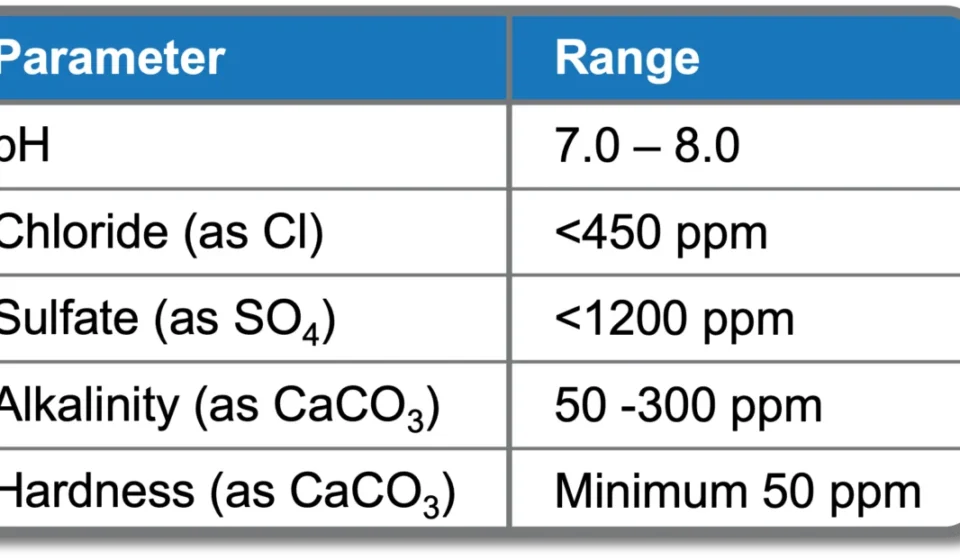
According to historical and current technical bulletins issued by the Cooling Technology Institute (CTI), heavy mill galvanized (HMG) steel generally delivers exceptional corrosion resistance under normal operating conditions. When a galvanized structure is exposed to a neutral pH, moderately hard water environment—typically defined as a minimum of 100 parts per million (ppm) calcium (as $textCaCO_3$), a bicarbonate alkalinity ranging from 100 to 300 ppm (as $textCaCO_3$), and a pH between 7.0 and 8.0—a resilient surface barrier forms naturally. This barrier is composed of non-porous zinc carbonate and zinc hydroxide, chemically expressed as:
$$text3Zn(OH)_2 cdot textZnCO_3 cdot textH_2textO$$
This tightly bound film acts as a shield, preventing further rapid galvanic corrosion of the underlying zinc coating.
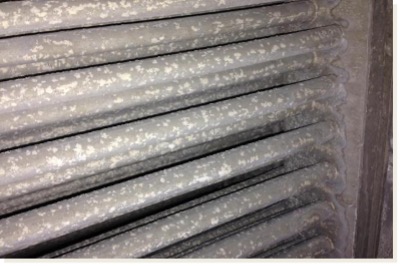
Conversely, white rust is an entirely different chemical phenomenon. It represents an accumulation of fluffy, waxy, or chalky non-protective zinc corrosion products. White rust forms rapidly when new galvanized steel cooling towers are exposed to cooling water with unfavorable chemical parameters during their crucial first weeks of operation. Once this loose, porous corrosion layer establishes itself, the underlying metal remains exposed to aggressive electrochemical attacks, leading to rapid thinning of the protective zinc layer and, eventually, exposure of the bare steel substrate.
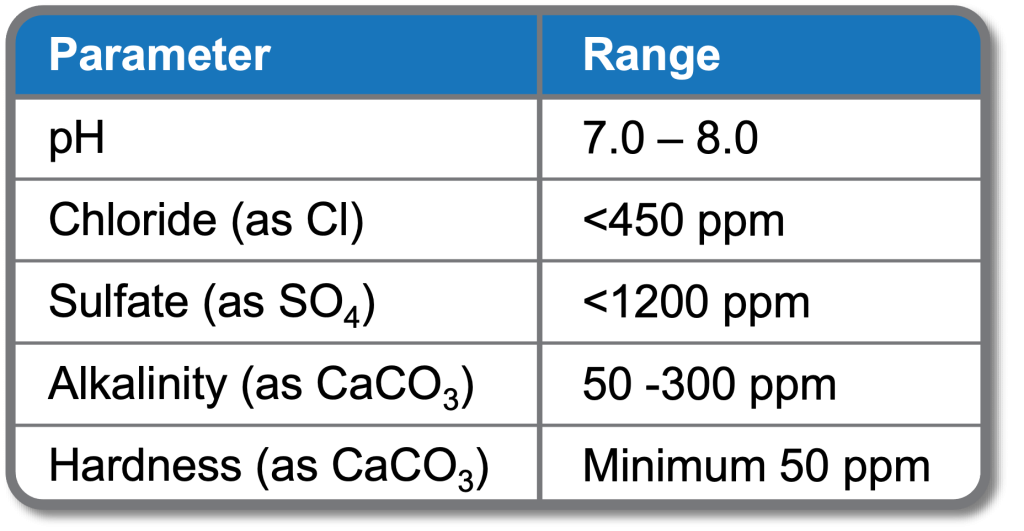
Recommended Cooling Water Operating Parameters
To maintain the integrity of galvanized surfaces and prevent both white rust and scale, industrial operators must monitor and control specific water quality parameters within established thresholds:
| Parameter | Recommended Operating Range |
|---|---|
| pH | 7.0 to 8.0 (Avoid aggressive acidic or caustic excursions) |
| Calcium Hardness | Minimum 100 ppm as $textCaCO_3$ |
| Bicarbonate Alkalinity | 100 to 300 ppm as $textCaCO_3$ |
| Total Dissolved Solids (TDS) | Maintained within facility design limits via controlled blowdown |
| Microbiological Control | Continuous or intermittent biocide dosing to prevent biological fouling |
Achieving and maintaining these parameters is rarely straightforward. Industrial water systems are subject to fluctuations in raw water quality, seasonal temperature variations, shifting evaporation rates, and biological contaminants. Without proactive chemical conditioning, even high-quality cooling towers can fall victim to rapid chemical degradation.

Official Responses and Industry Guidance
Recognizing the complex interplay between metallurgy, water chemistry, and operational longevity, leading industrial authorities have issued comprehensive guidelines to assist plant operators, engineers, and maintenance teams.
The Cooling Technology Institute (CTI) emphasizes that pretreatment and initial passivating procedures are non-negotiable for new galvanized equipment. Industry experts advise that if a cooling tower must be started up with soft water or water lacking adequate calcium and alkalinity, artificial passivation or chemical pre-treatment must be implemented. Failing to condition the water risks immediate, irreversible damage to the zinc coating within the first few days of operation.

Furthermore, the Association for Materials Protection and Performance (AMPP) stresses that corrosion control programs cannot be treated as an afterthought. Maintenance managers are urged to integrate water treatment strategies into the earliest phases of project planning. According to AMPP and CTI guidelines, best practices for preventing white rust include:
- Controlled Startup Chemistry: Ensuring that initial fill water meets or exceeds minimum calcium hardness and alkalinity requirements.
- Passivation Treatments: Utilizing targeted chemical additives during the first 30 to 60 days of operation to encourage the uniform formation of the protective zinc carbonate/hydroxide film.
- Supplemental Raw Water Treatment: Employing external water conditioning equipment (such as softeners, reverse osmosis units, or chemical feed systems) to treat makeup water before it enters the basin.
- Microbiological Management: Integrating reliable biocide feed systems to suppress microbiological growth, which can create localized differential aeration cells and accelerate under-deposit corrosion.
Implications for Plant Operations and Asset Management
The formation of white rust and the broader challenges of cooling water chemistry carry profound implications for plant reliability, operational efficiency, and capital expenditure.
1. Financial and Structural Impact
Cooling towers represent significant capital investments. When protective zinc coatings fail prematurely due to white rust, the structural skeleton of the tower is compromised. Repairing or replacing corroded structural members, louvers, and fill supports incurs steep material and labor costs. More critically, unexpected cooling tower failures can force facilities to reduce operating capacity or shut down entirely, resulting in massive production losses.
2. The Intersection of Chemistry and Reliability
Modern reliability engineering often focuses on rotating equipment—such as pumps, motors, and compressors—while overlooking stationary assets like heat exchangers and cooling towers. However, as industry experts note, water chemistry is a foundational pillar of overall plant health. Just as boiler water chemistry prevents catastrophic tube failures, cooling tower water management prevents structural and thermal degradation. Integrating chemical monitoring into computerized maintenance management systems (CMMS) ensures that routine water testing, biocide replenishment, and blowdown cycles are treated with the same rigor as mechanical lubrication routines.

3. Holistic Plant Water Strategies
Effective cooling tower protection requires a holistic approach. Makeup water must be evaluated not just for corrosion potential, but also for its tendency to cause scale formation and suspended solids deposition. As highlighted in broader industrial studies on water system protection, scale control, corrosion inhibition, and microbiological fouling control are deeply interconnected. A change implemented to stop scale formation (such as lowering pH) can inadvertently trigger conditions favorable to white rust formation on galvanized surfaces. Therefore, plant operators must work closely with specialized water treatment chemical vendors and metallurgical consultants to design balanced, comprehensive operational programs.
Conclusion
Galvanized steel cooling towers offer robust, cost-effective heat rejection for commercial and industrial applications, provided they are commissioned and maintained with metallurgical realities in mind. The threat of white rust underscores the danger of neglecting initial water chemistry during startup. By adhering to established guidelines from organizations like the Cooling Technology Institute and the Association for Materials Protection and Performance, and by prioritizing meticulous project planning and proactive chemical control, industrial facilities can protect their investments, ensure continuous operational reliability, and prevent premature asset degradation.

For further study on industrial water treatment, corrosion mechanisms, and asset preservation, industry professionals are encouraged to consult resources provided by the Cooling Technology Institute (www.CTI.org) and the Association for Materials Protection and Performance (www.AMPP.org).